
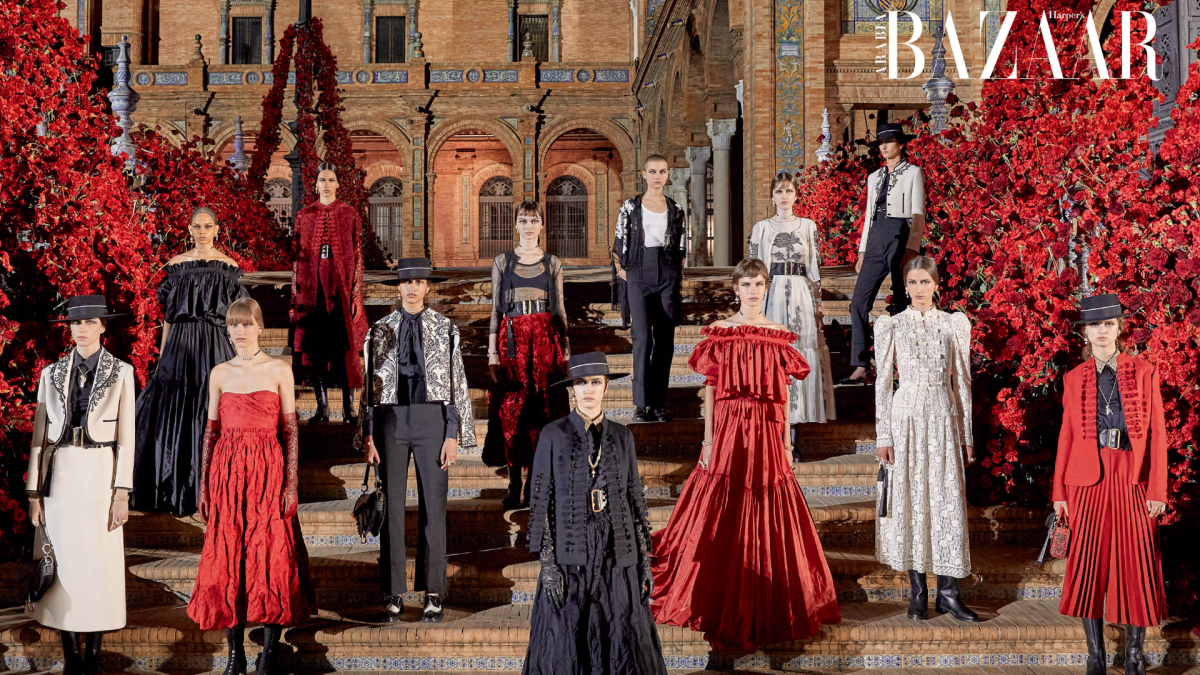
The Talking Point: A Tribute To Seville
Dior’s creative director Maria Grazia Chiuri speaks exclusively with Harper’s Bazaar Arabia about why the southern Spanish city means so much to her
The timing could not have been better. Designer Maria Grazia Chiuri decided to bring her 2023 cruise collection to Seville right as the Andalusian city was marking its annual Corpus Christi celebration. This meant that no matter which winding city street you turned down, makeshift religious altars were on display to honour the occasion. And in a place already steeped in cultural pride and history, it underlined even further the skill of the local artisans. The gilded embellishments, the draped embroidered shawls and the overall attention to detail of each shrine pointed to a city that takes particular pride in its past.
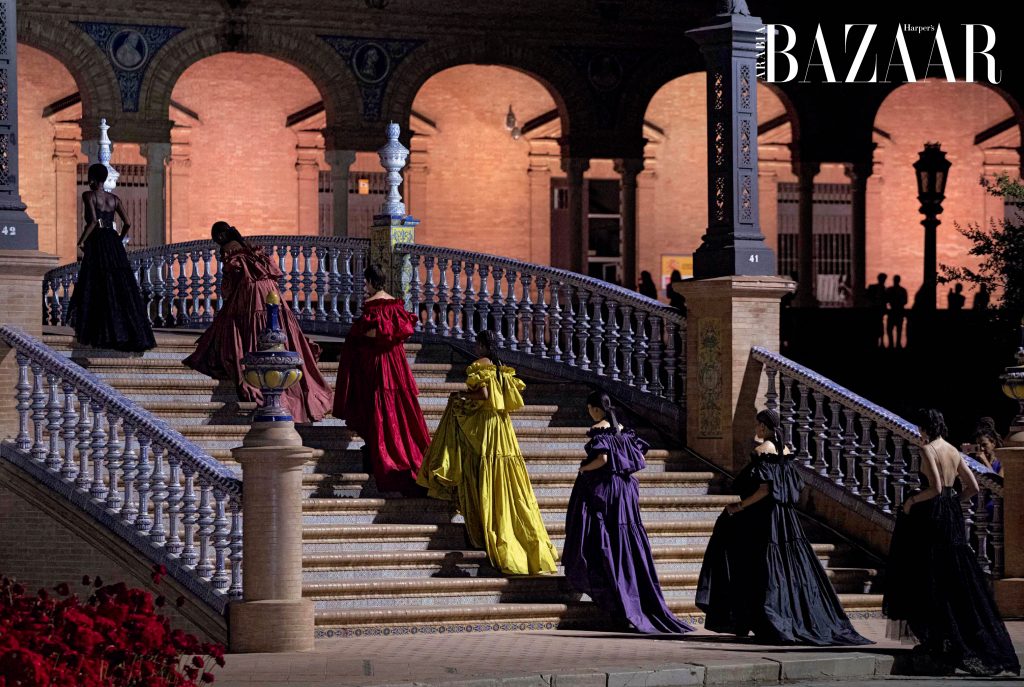
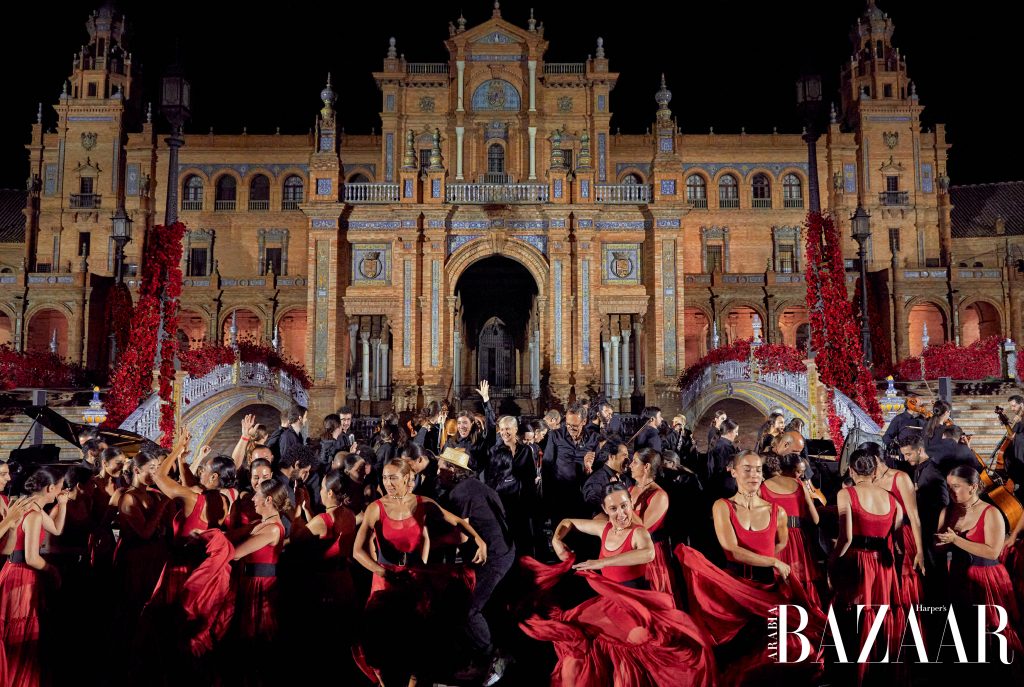
The people of Seville are “very Mediterranean,” says Maria Grazia, looking relaxed after a night filled with post-show reverie that took place right in the centre of Seville’s historic Plaza de España. She had celebrated the end of the show alongside a bevvy of flamenco dancers dressed in red Dior gowns as her friend, the Italian singer Lorenzo Jovanotti had guests on their feet chanting Maria Grazia’s name over and over.
Sevillanos are “used to celebrating on the square, to celebrating with the whole community together. They are a really strong community. And this is a very emotional thing. I think this is also part of my own background. This kind of idea that we celebrate all together, that we dress up, that we dance and we sing, this is very familiar to me, this kind of attitude,” reflects the designer.

With her cruise collection, Maria Grazia also wanted to pay homage to the many local artisans, who for generations have laboured to keep their unique vestimentary forms of self-expression alive. And unlike other travelling-circus Cruise collections that some maisons present, which choose show locations more for a particular venue, or the wow-factor of the destination rather than regional artistry, the designer delved deeply into the local way of life, and took inspiration from the strong women who helped define its history.
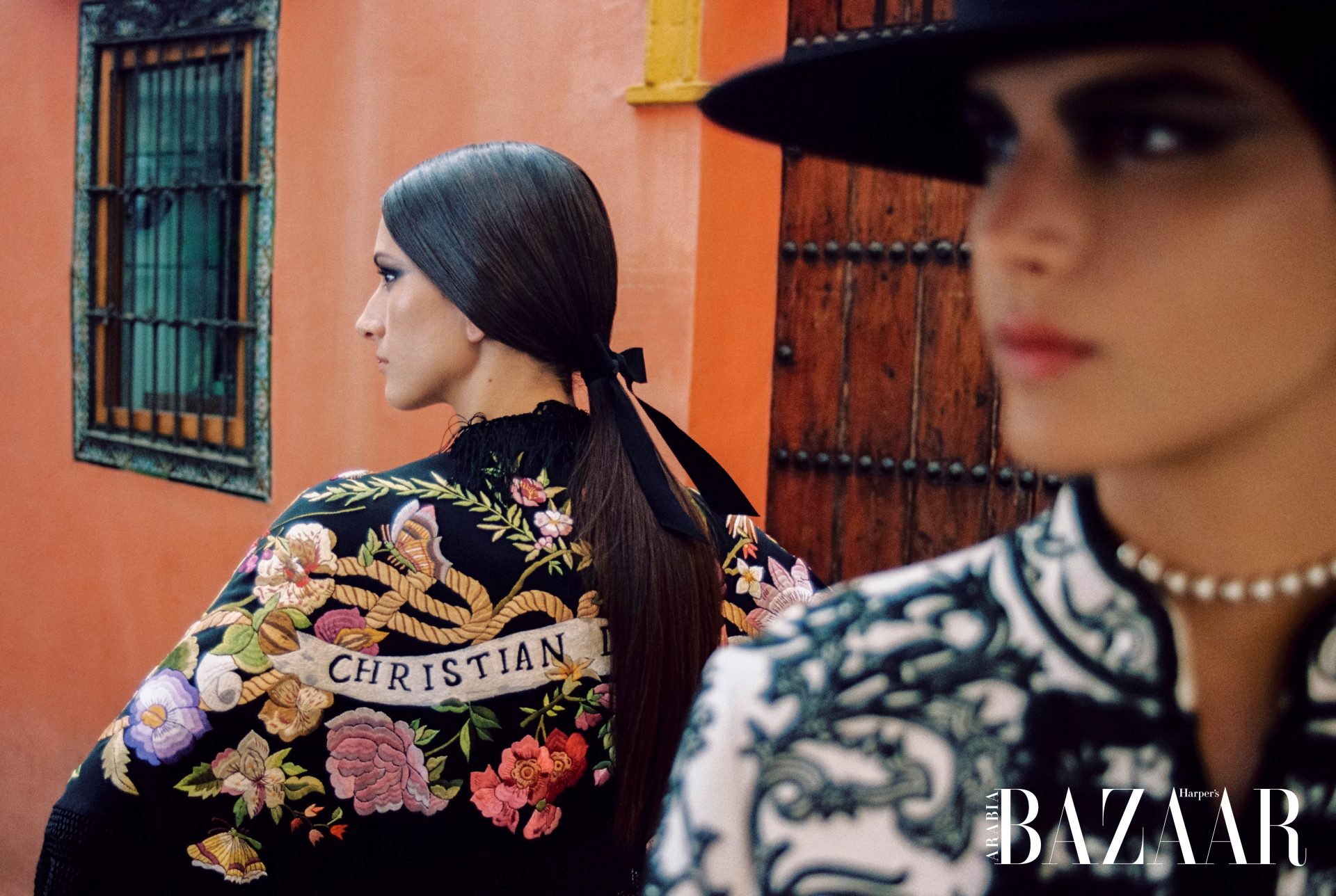
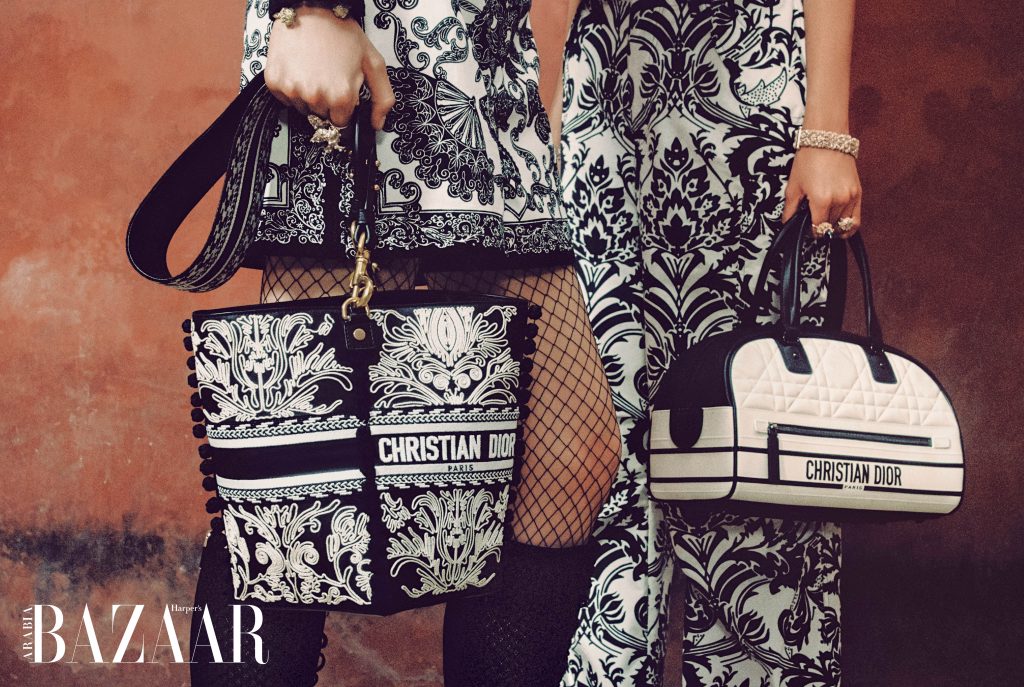
“The embroidery that is done in silk and real gold that we used, for example, on the bar jacket, the atelier [that did it] is one of the best haute couture ateliers that I have ever seen in my life,” remarks Maria Grazia about one of the more than half a dozen local artisans that Dior worked hand in hand with to create pieces for the show, from hats and shawls to bags and jewellery. “In fact, I think I want to continue to work with them [in the future]. I spoke with my own couture team about this atelier as I want them to come [back] with me to visit them, because this kind of embroidery that they are doing, you can’t find it in France. The culture here has really protected all these handicraft skills. It’s a shame that people consider this craftsmanship as arte minore, because it is not true,” adds the designer.

For Maria Grazia, her Cruise shows are not just about learning from local artisans. It is also an opportunity for Dior to help those craftsmen to see what they do in a new light. To recognise their labours, and unique skills through fresh eyes. The expert eyes of world-travelled artists and connoisseurs who can show appreciation and shine a light on their work in a way they might never have imagined. “When it is something so local, and you have no contact with international brands, you don’t think [what you are doing] is so special,” explains the designer. “We can show it. We can highlight this work. Especially a haute couture brand like ours, which has couture clients that always want something very special and can appreciate it. For me, it’s really about building a bridge between the different traditions.”
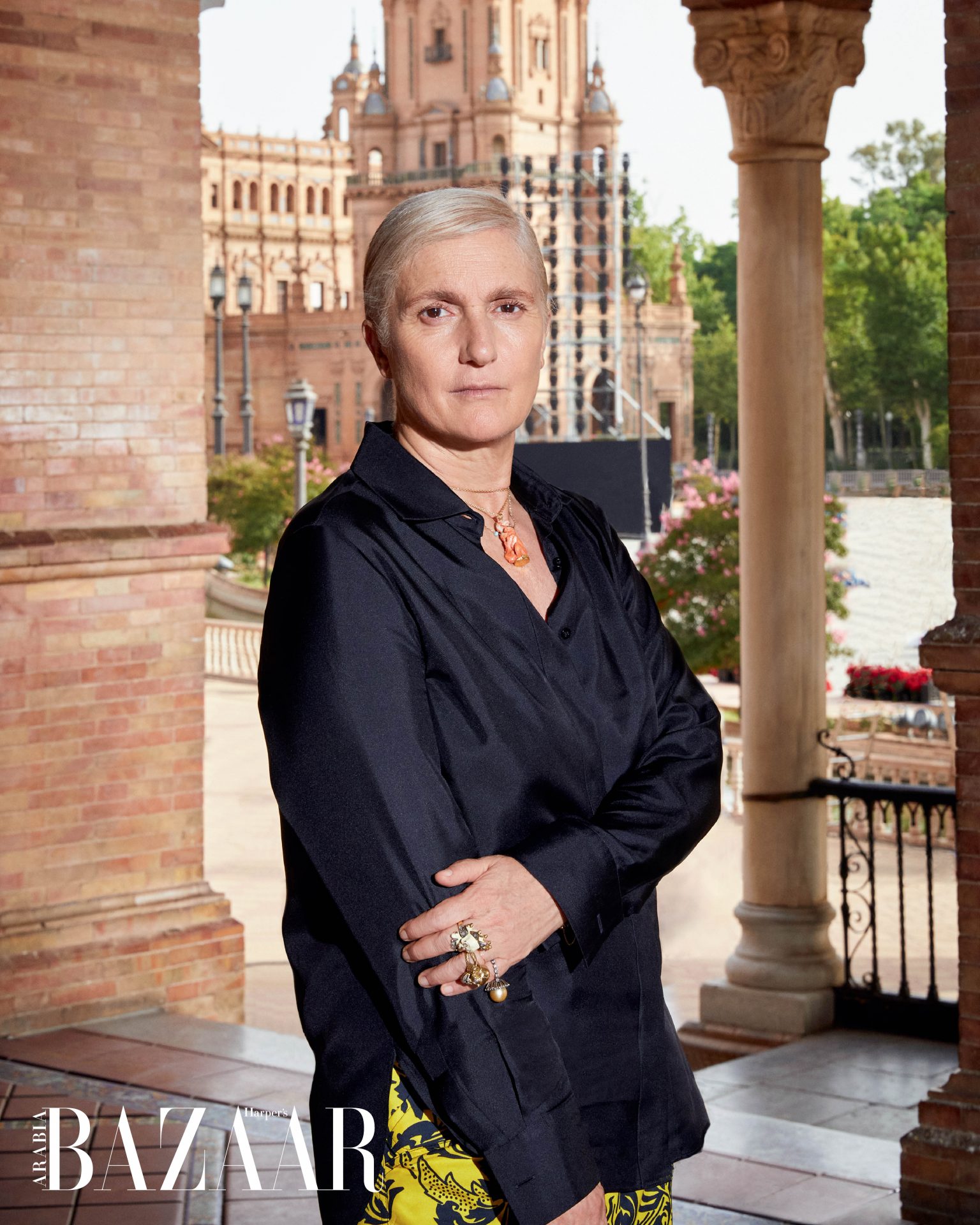
What sets a Cruise show apart from any other fashion show is that it becomes the main event of an all-encompassing experience that can go on for days. It is not the harried rush of ready-to-wear, which finds guests attending back-to-back shows, with little time to appreciate designs that had been months in the making. Or even couture, with its more elitist connotations. A Dior Cruise show, as the word implies, takes its guests on a journey of discovery. From wandering the grounds of a century-old haçienda and taking carriage rides drawn by Andalusian horses to a night spent exploring the Moorish architecture of the Alcázar Real de Sevilla, the Royal Palace of Seville while being serenaded by the sounds of poignant guitar playing as vocal peacocks parade by. A Dior Cruise show is a fully immersive affair.
“For me, it’s really about building a bridge between the different traditions,”
Maria Grazia Chiuri
Since Maria Grazia took over at Dior, a foundational building block of her tenure at the house has been to highlight the work of talented women who have marked history and those shaping it today. As luck would have it Spain’s matriarchal culture is filled with amazing women to spark the designer’s creativity. Look no further than the inspiring spirit of the Duchess of Alba. She lived life by her own rules, wearing menswear pieces while riding her beloved horses in the 1960s, choosing to marry for the third time – to a man over a quarter of a century younger than her – and proudly donning bikinis into her 80s. That rebellious attitude is clearly something that Maria Grazia wants to telegraph to her clients. That they dare to be themselves, ignore the confines of societal norms, and follow their unique calling.

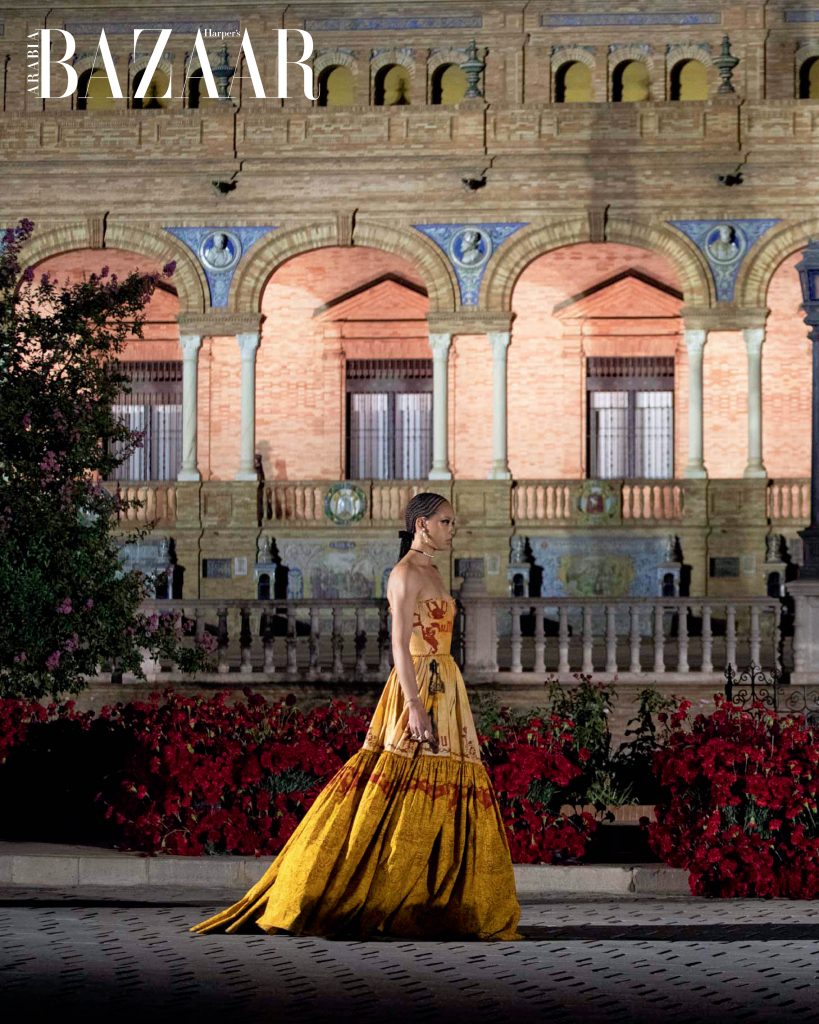
That is what drew the designer to the paradigm-shifting flamenco dancer Carmen Amaya, who became the lodestar of this Dior cruise collection. Known as La Capitana, Carmen’s fiery performances in the 1950s made headlines not only for their daring footwork but also her choice to perform the passionate dances in men’s clothing. In fact, in the show itself, Maria Grazia asked the artist María Ángeles Vila to create modern versions of posters depicting Carmen as she danced, so that they could then in turn be used as prints on some of the fabric in her show.
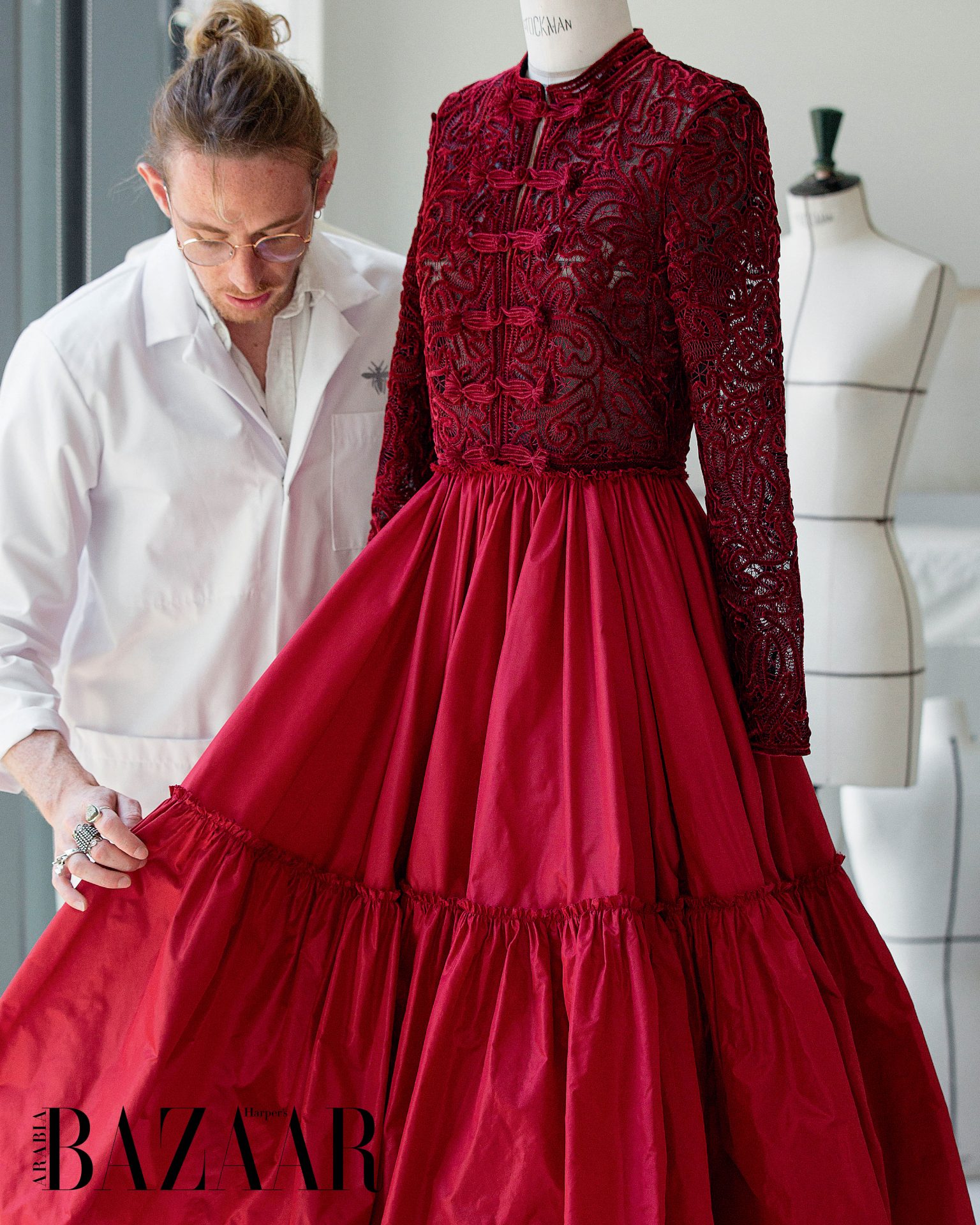
“I want to celebrate all the women that have renovated culture,” confirms Maria Grazia. “For me, my work at Dior has also been a way to better understand myself. I grew up in a Mediterranean area of Italy. And in a Mediterranean family, the women are always at the centre. It’s a very matriarchal society, in the south, and the women here [in Seville] show that power in a way that is much more evident.”

“I want to celebrate all the women that have renovated culture,”
Maria Grazia Chiuri
And so it made sense that in the vast Plaza de España, the impressive backdrop to the show, Maria Grazia would have a pair of gypsy flamenco stars – one of which was the renowned female dancer Belén López – in a head-to-toe black men’s ensemble, take centre stage. They were backlit by 40 dancers dressed in red who moved as one in a melodic counterpoint, in a performance created by Spanish choreographer Blanca Li, to the heated pasodoble the duo performed. All of this while guests sat on brightly hand-painted chairs and listened as a live orchestra played a score by the Spanish composer Alberto Iglesias, known to many for his work on creating music for Pedro Almodóvar’s cinematic oeuvre, and watched the fashion show unfold.
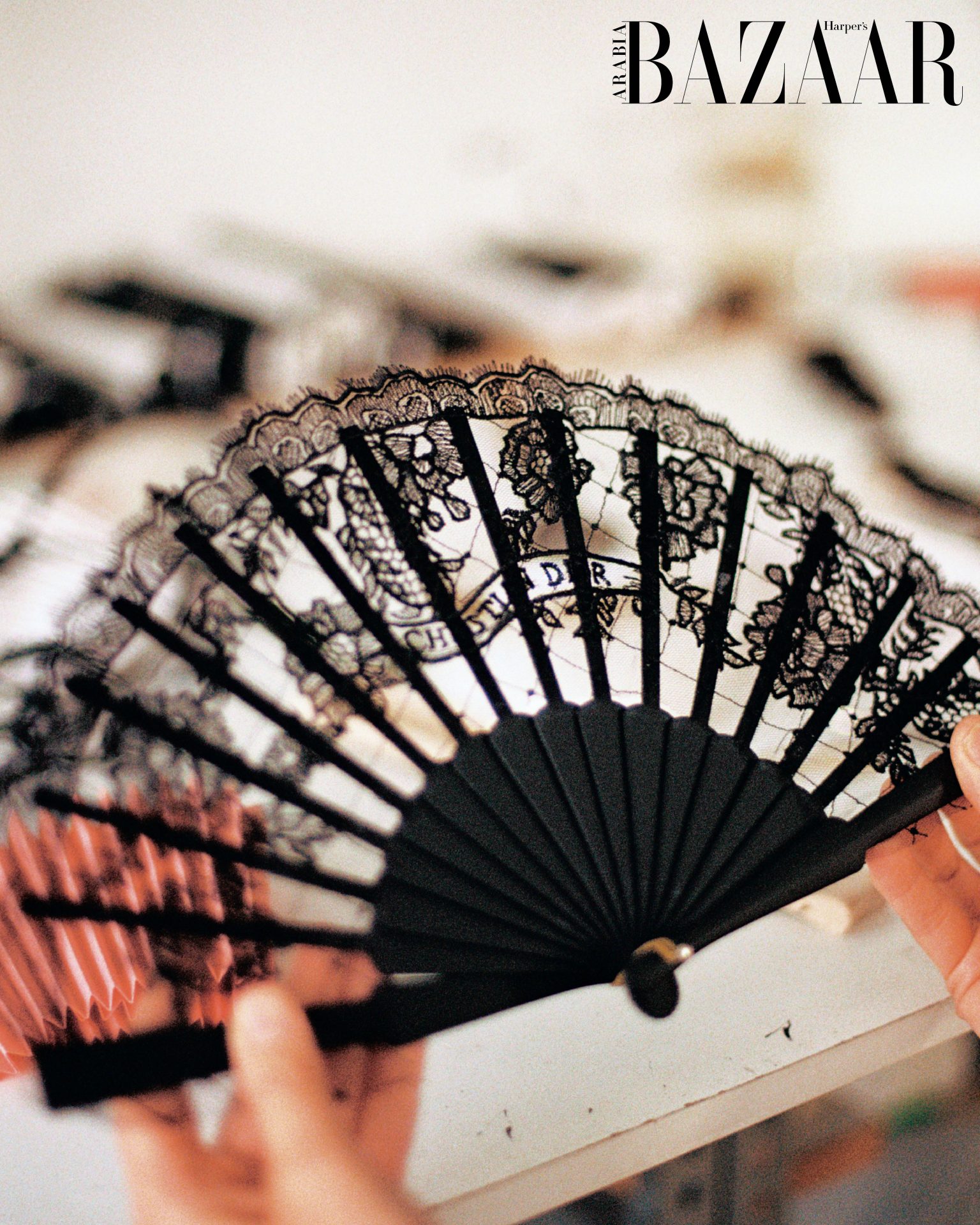
The designer admitted that the true challenge of this show wasn’t so much the collection itself – filled with differential nods to local sartorial codes, from embroidered Spanish shawls, lace-embellished matador pants and tiered ruffled skits, to traditional Cordobes hats and expertly tooled leather accessories – but the dancers. “The fitting was so difficult,” says the designer with a laugh as she recounts how the dancers would slip on their red dresses and then begin to move – leaping, turning and making sure that they could still fully express themselves through their bodies while wearing the Dior designs. “It was one of the most difficult fittings of my life, they were so full of freedom,” recounts the designer
with a happy smile.
But as much as this collection was deeply rooted in the apparel history of Seville, Maria Grazia never fell into the trap of creating pieces that looked like costumes. For example, polka-dots played a very minor role on the catwalk. Instead, the Dior logo was the most dominant print, used memorably on chaps worn on a dark denim look. Striking and strong leather dresses were softened through the use of laser-cut lace patterns and structured matador jackets were giving a sense of freedom with cutaway sleeves. The entire collection, much of it shown with practical flats, low heels or leather boots, looked regal, refined and composed.

“I wanted the people to look beautiful but feel comfortable,” explains Maria Grazia about the throughline in all of her work at Dior. “I don’t understand this idea that to be beautiful you have to feel uncomfortable. Beauty comes from feeling comfortable, this is very personal to me.”
Once the impressive procession of 110 looks in the collection had come to an end, it was Maria Grazia herself who lead the models, dancers, musicians and her VIP audience across the square in one long flowing joyful parade. A smile lit up her face as the flamenco dancers in their swirling red dresses whorled by her. “Couture is one thing, prêt-à-porter is another story. But Cruise is really about community work,” says the designer. “I don’t think of this as my show. I think it’s the show of the whole community. I was obsessed with the idea of closing the show with everybody on stage, all together. We started this work all together and we had to finish it all together and we are definitely going to celebrate all together!”
From Harper’s Bazaar Arabia’s November 2022 issue