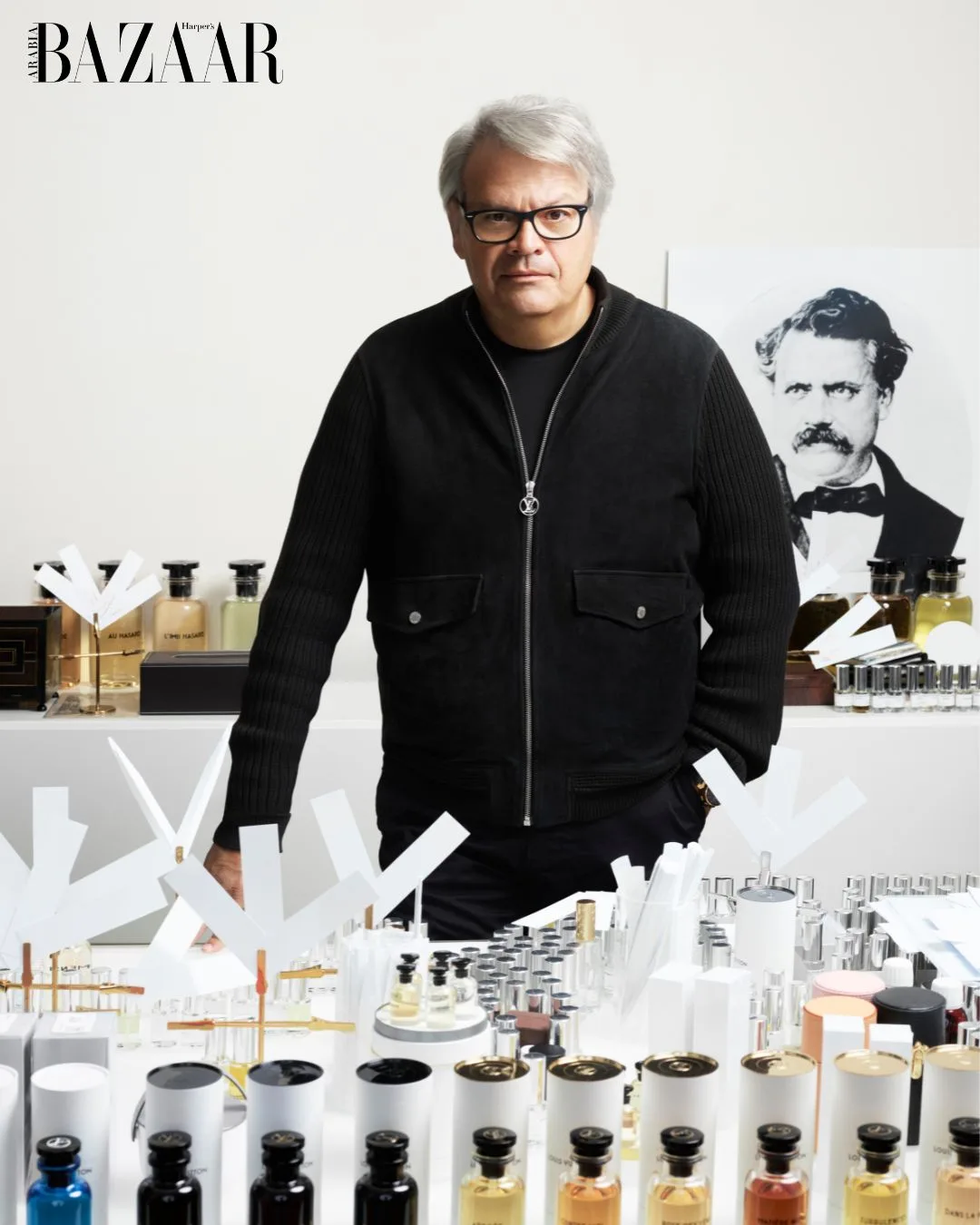
Golden Hour: Perfume Guru Jacques Cavallier Belletrud Decodes Louis Vuitton’s Latest Luxury Scent

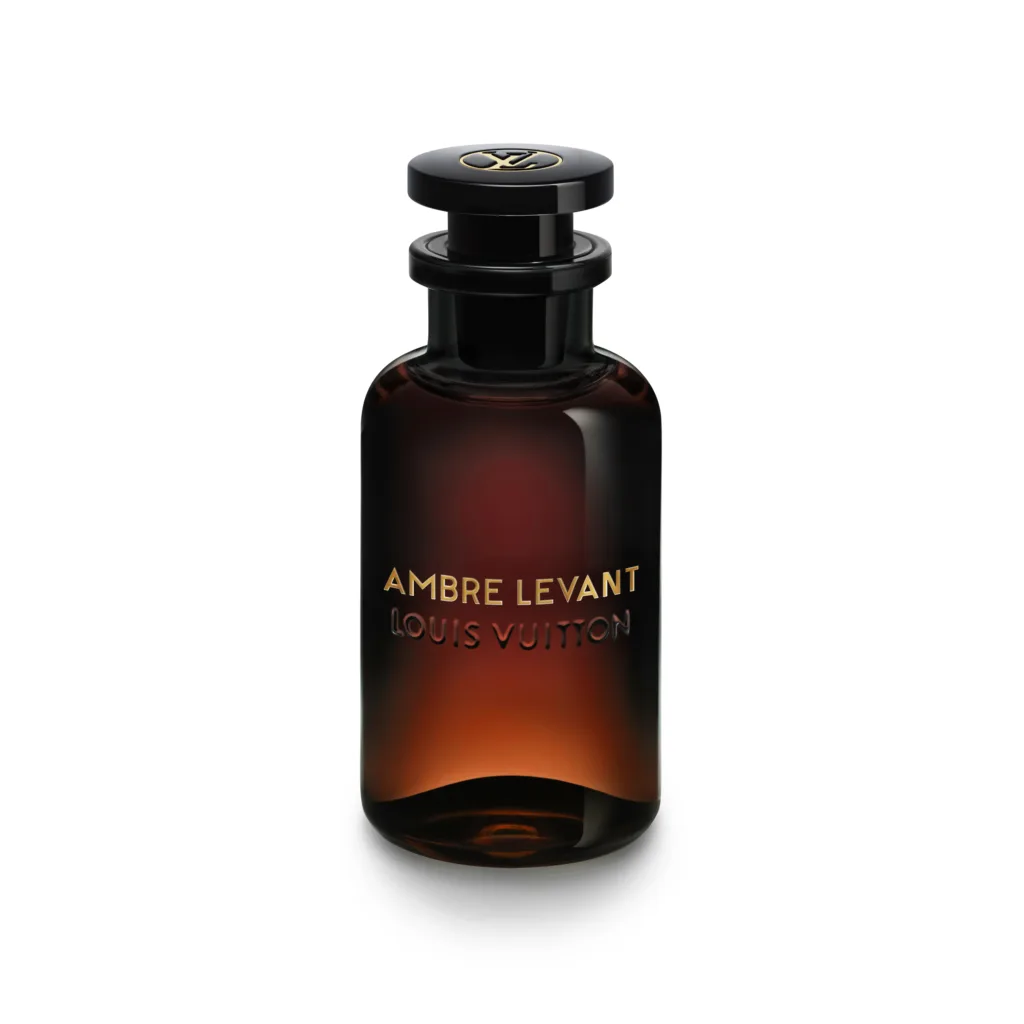
Jacques Cavallier Belletrud unveils Ambre Levant a new chapter in Louis Vuitton’s olfactory voyage, where mandarin glows, saffron shimmers and oud lingers long after sunset
The way that Jacques Cavallier Belletrud talks about perfume is like a poet. He speaks of ingredients like a storyteller, eliciting memories, weaving in personal anecdotes, evoking
ephemeral concepts. So, it’s no surprise that the master perfumer’s latest potion is an ode to a fleeting moment, just before dusk surrenders to night, when the sky burns amber. It is this mythical golden hour of the Middle East that inspires Ambre Levant, the newest addition to Louis Vuitton’s Fragrances of the World collection. The scent is a study in contrasts: joyful yet sensual, fresh mandarin colliding with spicy saffron, cinnamon, amber and an exceptional oud. Here, during a trip to Dubai for its launch in the evocative Bab Al Shams Desert Resort, he spoke to Bazaar Arabia about memory, modernity and why the Middle East remains perfumery’s eternal muse.
Ambre Levant feels like a very cinematic fragrance. Where did the story begin for you?
It began with light. That precise moment when the sun descends and everything becomes amber – the stone, the wood, the air itself. In the Middle East, this hour is magical. The heat softens, the celebration begins. I wanted to capture that density of light, that sensual warmth, but with movement – not something heavy or static.
Tell us about some of its key notes.
Heart of mandarin – very natural, very vibrant, creates the hook. Many citrus notes disappear after five minutes. This one dances until the very end of evaporation. It stays in the story. It’s simple, but powerful. That is paired with saffron. Saffron brings light, but also joy. Sometimes perfumes become too serious. Saffron opens the door. It smiles. And then there’s cinnamon. When you smell raw cinnamon bark, it’s green, almost luminous, not sugary. For me, cinnamon is the first step toward the Orient. As a child, I studied the spice routes with my father and dreamed of that journey: from India to Arabia, to Istanbul, to Marseille. Cinnamon was always the beginning of the dream. I also have a very personal connection to amber molecules. When I was a young perfumer, I discovered their diffusion almost by accident – and I never forgot it. Amber is modern. It works for men, for women, in florals, in woods, in musks. It brings sophistication and incredible volume.
Ambergis and oud both play a powerful role here.
It took me three years to find the right quality ambergis. I didn’t want something animalic or aggressive. I was searching for harmony – woodiness, a hint of saffron, leather, depth. The oud has strength, but also tenderness. It diffuses beautifully. There’s a misconception that the Middle East only loves heavy perfumes. That’s not true. What people love is quality. Fresh fragrances are also very successful here. With Ambre Levant, I wanted contrast – mandarin against oud, light against shadow. When you place opposites together, you see only their beauty.
Oud has clearly become central to your work. Do you see other ingredients following a similar trajectory?
Oud is probably number one for Louis Vuitton, if we rank them. It has endless facets – you can use it in tiny proportions or very high ones. But there are others. Sandalwood notes. Musks – we work with several, including vegetal musk from ambrette. Fruits can surprise you too, especially natural green or red fruits.
You’ve said a good perfume should last “five showers.”
[Laughs.] That was advice given to me 25 years ago in Saudi Arabia. A great perfume must have presence. Oud gives that dimension. It creates diffusion and memory. It lingers on skin, on fabric, in the air. It becomes part of you.
You speak about this region as perfumery’s heartland.
It is the land of perfume. The knowledge here is ancient, deeper than ours in Europe. That’s why when we create something inspired by this region, it is not only for this region. Seventy per cent of the buyers of our Middle Eastern-inspired fragrances come from outside the area. That is important. It is a dialogue, not a cliché.
So, would you say that there is common a thread across Louis Vuitton perfumes?
Yes, quality. It sounds simple, but it means everything. Like leather goods – you have exceptional skins and you have ordinary ones. In perfumery, exotic skins are oud and rare woods. It’s jasmine sambac of a specific origin. Osmanthus selected for its floral, fruity facets rather than leathery heaviness. We choose for aesthetic precision.
Do you follow trends? What are the dominant movements in scent right now?
You cannot ignore trends, but perfume moves slowly – 10, 15, 20 years. Today, the shift is toward fruitiness and fluidity, rather than heaviness. Fresh fruits – mandarin, mango, raspberry – not sticky sweetness. And an interesting inversion: woody strength in women’s scents, softer gourmand facets in men’s. Masculinity and femininity are borrowing from one another.
Do you see genderless perfumery becoming the norm?
In the Middle East, gender is already fluid in perfume. If it smells good, you wear it. Creatively, however, femininity and masculinity remain endless sources of inspiration. They are rich worlds. Marketing may segment, but luxury should feel universal. That’s why our bottles are not aggressively masculine or feminine. The scent decides.
You also recently revisited bakhoor in a contemporary way with a collaboration with Lebanese designer Nada Debs. Why was that important?
Tradition must be respected before it is modernised. If you break tradition without understanding it, you create something banal. I love reinterpreting ritual in a chic way. Scent floating in the air – depending on humidity, season, atmosphere – is very different from wearing perfume on skin. It’s cultural memory.
Did you always know you would become a perfumer?
I was born in Grasse. My grandfather was a perfumer. My father too. I grew up speaking perfume at the dinner table. But there is no “gift.” Only passion and work. A lot of work. People think creativity is magic. No, it is discipline.
Where does your inspiration come from?
Contrast. Light and shadow. Freshness against depth. When opposites meet, you see only their beauty. And the Middle East – its materials, its refinement, its generosity – remains an endless source of inspiration.
Is your tribute to the Middle East now complete?
This tribute is not finished. Not at all. This region is endless inspiration – the raw materials, the sophistication, the friendship. In my office in Grasse, when I work with oud and amber, it smells like Saudi, like Oman, like Dubai. The dialogue continues. Something is always cooking.
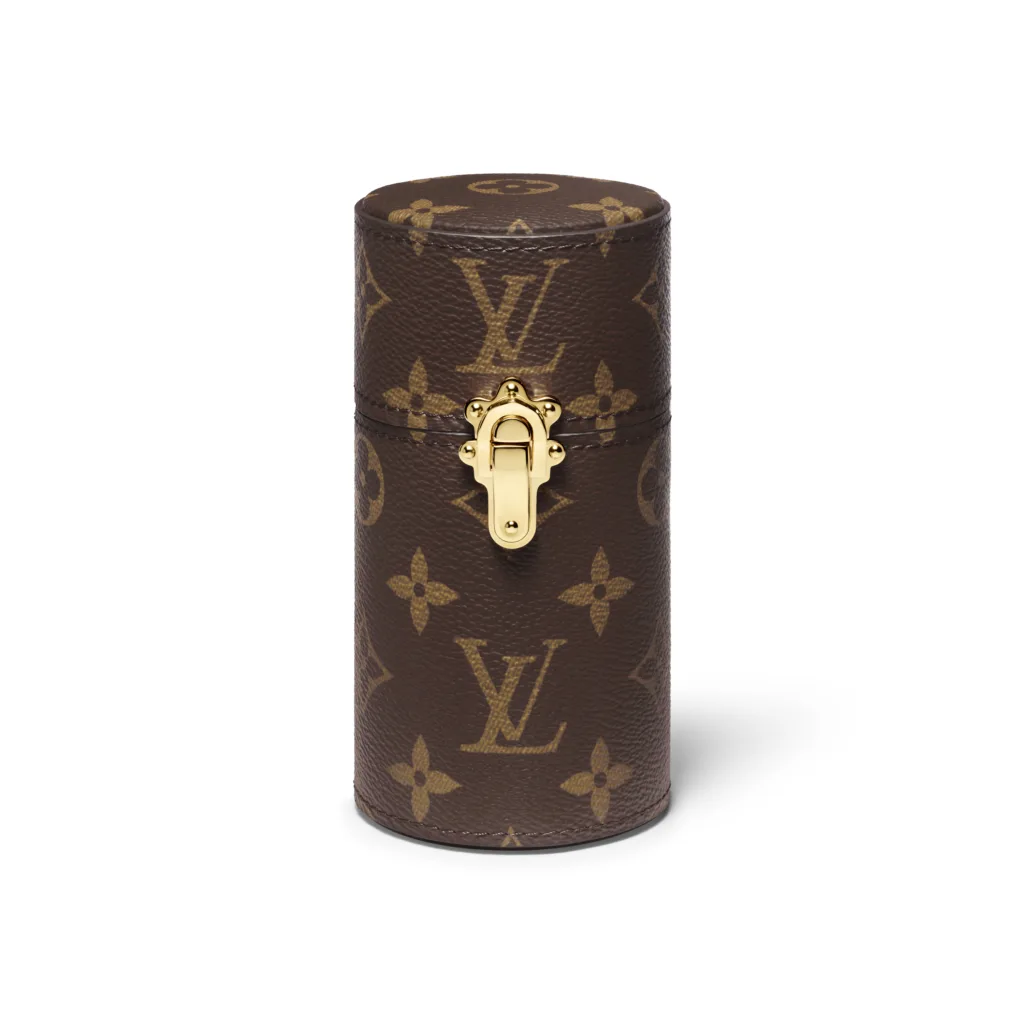
From Dhs1,770 for 100ml; louisvuitton.com
Imagery Supplied
Note: This content was created and printed prior to February 28, 2026
From the Harper’s Bazaar Arabia March 2026 issue
