
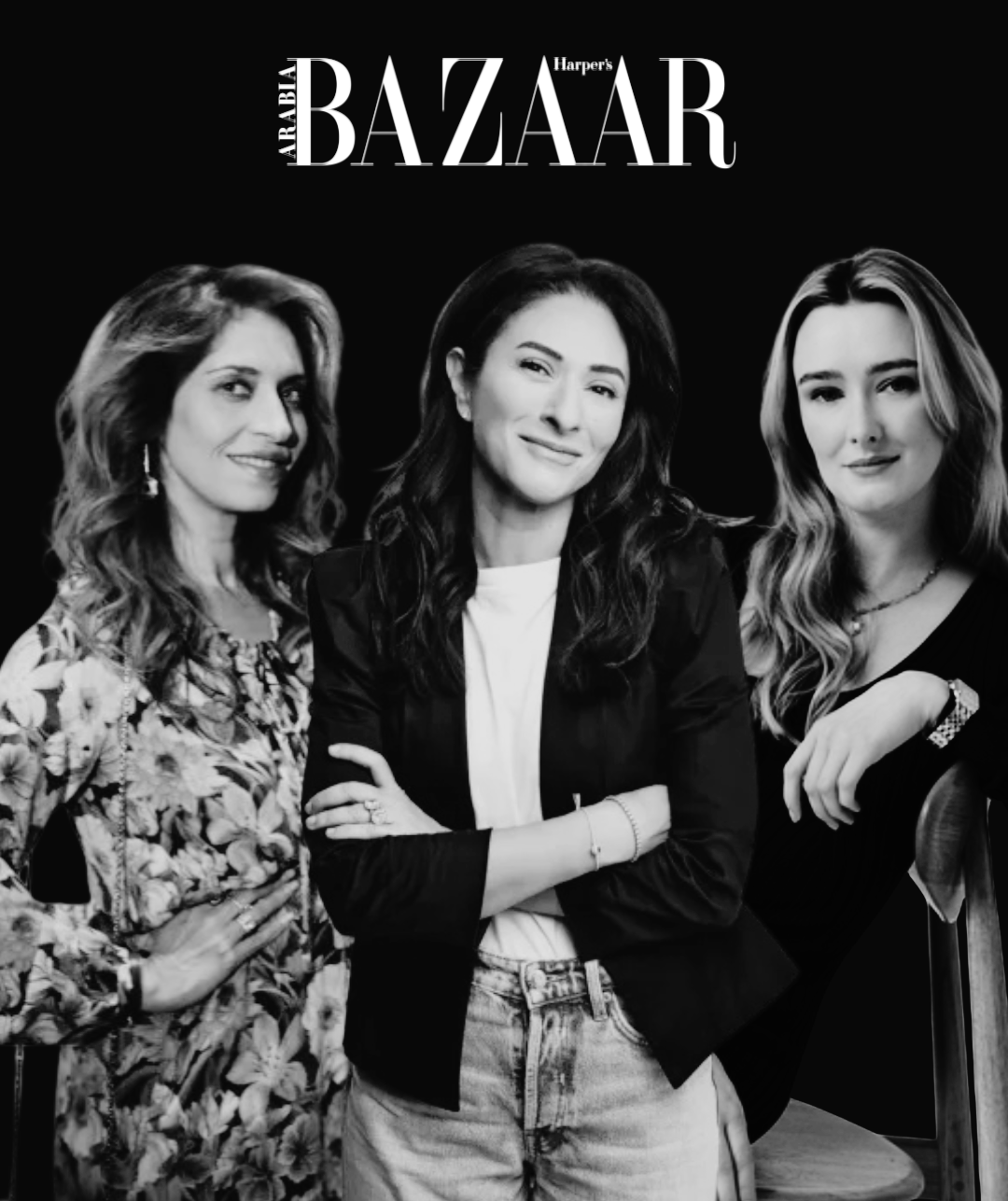
Three Bazaar Arabia Editors Answer The Questions Every Aspiring Fashion Girl Is Too Afraid To Ask
Three senior editors, three different perspectives, one honest conversation…
“Don’t be ridiculous, Andrea. Everybody wants this.” For nearly two decades, that line from The Devil Wears Prada has defined what many young women imagine a career in fashion looks like: front rows, fashion weeks, beautiful clothes and glamorous offices. But does everybody still want it in 2026?
Behind every issue of Harper’s Bazaar Arabia is a team of women shaping the stories, conversations and culture that make it to the page. Here, we ask three of our senior editors to discuss the grit behind the gloss – answering questions on ambition, sacrifice, success, motherhood, and everything else they wish they’d known when they were first stepping in stilettos onto the fashion magazine career ladder.
On Starting Out
What is a dream that you had in your twenties that came true?
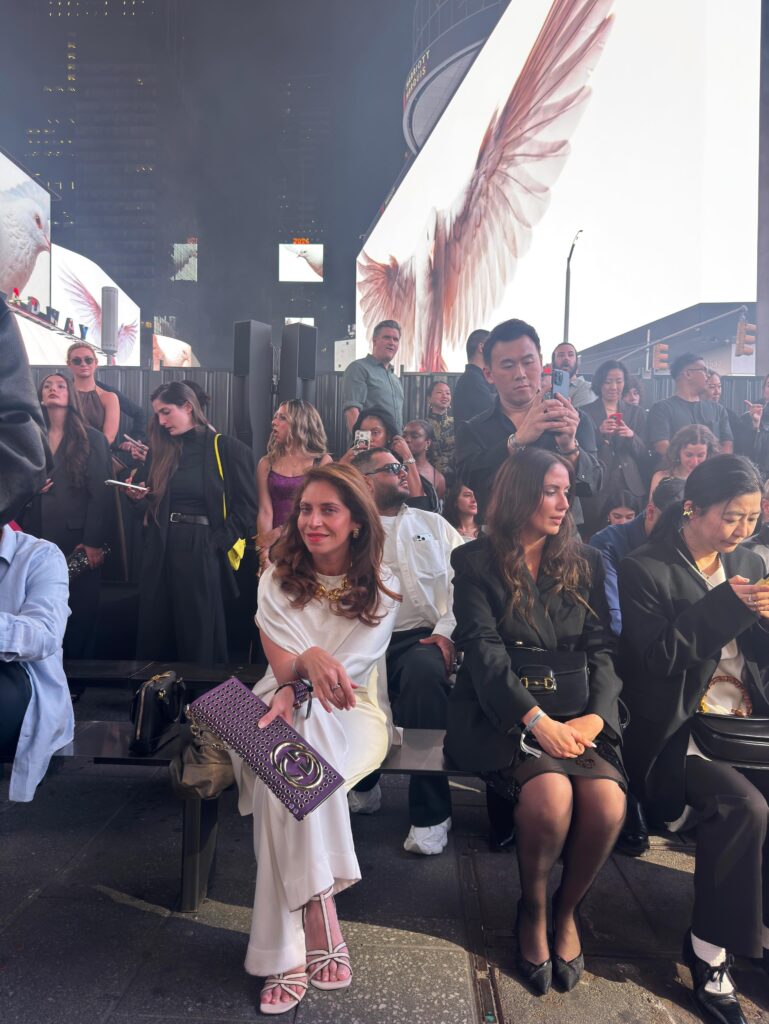
Charlie Boyd, Digital, Jewellery & Watches Editor: Many. One that really stands out – because it became true really early on – was that I always wanted to go to Milan or Paris to cover the shows. And at age 25, covering Milan Fashion Week solo for The Times, I found myself sitting front row. It was completely unexpected, and in hindsight I look back and I don’t really know how it happened. I still vividly remember the all-gold looks at the Dolce & Gabbana show; it’s a career moment I will never forget.
Sophia Serin, Group Deputy Editor: Professionally, it was that I became editor in chief and I was very successful. I was really reporting, I was really editing, and we were doing exactly what magazines are supposed to do. We were educating people by doing ground-breaking stories on female mutilation, child brides and fertility – content that I couldn’t believe we were publishing. I will never forget that. I feel that I really made a difference in women’s lives – I was known for it and I’m very proud of that.
Natasha Faruque, Acting Editor in Chief: I think reaching the pinnacle of my chosen career. It’s a huge honour to lead Harper’s Bazaar Arabia, and it’s certainly not something that’s a given. There are lots of my friends who started alongside me, some of whom were much more talented than me, who didn’t reach this level, who changed jobs, or who went into adjacent industries, or who stayed in the industry but never reached the top. So I would definitely say… getting this job.
What did you think your career would look like in your early twenties?
CB: I hoped it would look like this. I wanted to end up as a senior editor and I probably had that scheduled in my head for my early 40s. So there have been subtle deviations, but it has largely followed the track that I wanted it to.
SS: I thought I was going to be a dancer. I felt like I always had a really good sense of style, and I could write really well, but then I also really loved to dance. Then I realised that it was never going to be a full-time profession for me, and that was when I thought I would become a broadcast journalist. I was going to read the news or make documentaries.
NF: When I was in university deciding what my career would be, I was definitely going to follow a conventional path, like becoming a banker or a lawyer. I then fell into this industry, but in the early years you weren’t paid very much if you were paid at all, so it seemed like an interlude – something fun to do for a short while when you were young, until you got a proper job. So at first I very much thought it would be a short term thing, but then I was lucky, and I was promoted quite quickly.
On a scale of 1-10, how much of the movie The Devil Wears Prada reflected your actual experience while you were climbing your fashion career ladder?
CB: Ten. But it will always differ depending on where you are, magazine to magazine, and territory to territory. I’ve barely seen any of that behaviour since I’ve worked in the Middle East, but certainly in the UK at that time, magazine culture was very toxic.
SS: Pretty high. I do think it is the job that a million people want, but I get a lot of comments about “Oh, it’s so glamorous….” and it’s really not. There are parts of it that are – and I’m so grateful – but it’s not what you see in the movie. People think we’re just walking around drinking champagne. That stereotype still exists, which I just cannot believe. It is an incredibly tough business.
NF: A lot, especially in the early days, although I think the industry has now changed. When the first movie came out, I felt it really had so many parallels with my early starts. I got to work an hour early so I could get five different lattes from five different shops for five different editors. I walked a famous designer’s dog because one of our fashion editors had had a chat with him, and he said he needed someone to walk the dog. I had to go to Hamley’s and get a sold-out toy at Christmas. But those sort of things don’t happen anymore. I know when I come into the office, I think twice before asking one of the interns to get me a coffee, even if it’s essential. So it was very relevant to my life, but I don’t know if it’s relevant to many editors’ lives now.
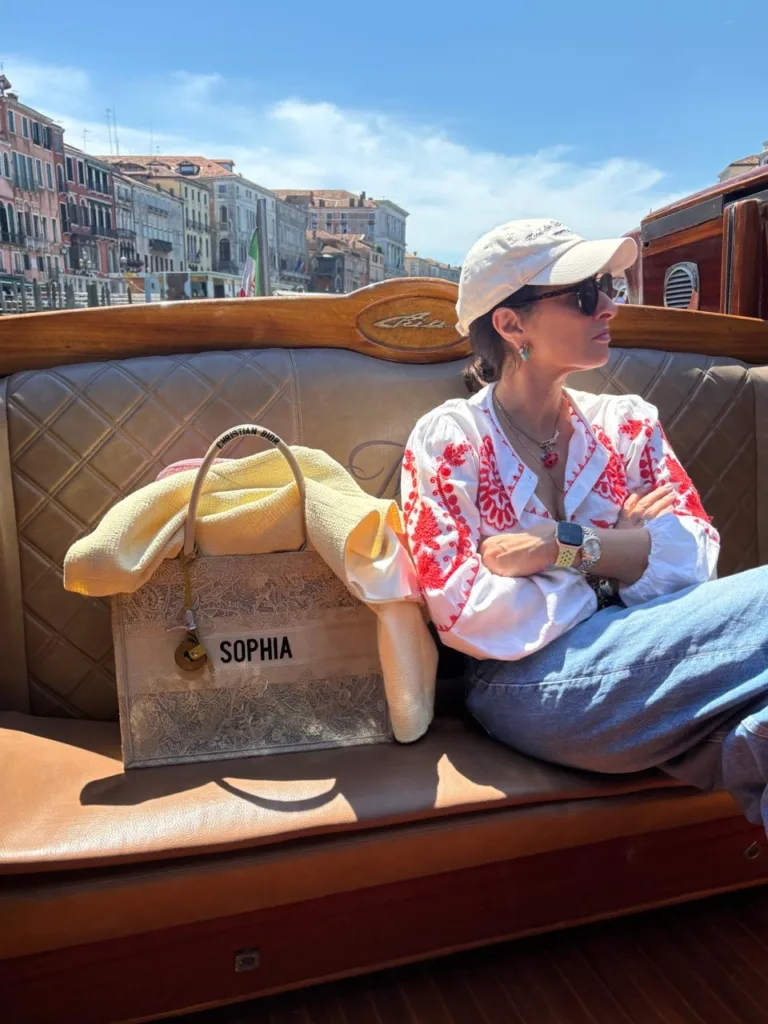
What is something you feared in your twenties that turned out not to matter?
CB: I should have been more relaxed about my broader life plan, because I knew that I wanted to have a family at some point and I think I worried about that too soon.
SS: What other people think. I think people who judge you are the most insecure of all, and if you really know deeply that you can do something, you just have to follow that instinct. Try to speak up and to show people that you’re there for a reason.
NF: I don’t think I had many fears in my 20s. I think in your 20s you are more fearless.
What is a dream you had in your twenties that did not come true – and why are you grateful for that?
CB: Becoming an editor in chief (yet). The closer you get to that level of seniority the more you get visibility on the sacrifices that come with it, and especially now as a single mum my young kids need my attention. Michelle Obama famously once said, “You can have it all but you can’t have it all at the same time”, and I really believe there is a right time for each life chapter. It doesn’t have to happen all at once.
SS: I met, but didn’t marry my Mr. Big. I married my Aidan (and best friend) and it was the single best thing I have ever done in my life.
NF: Is it terrible to say nothing?
What is one thing about working in fashion media that nobody tells you?
CB: How obsessed you have to be with your job for the lack of financial reward. Most people who end up this far into this career are motivated by the love of the work and the craft. And if you don’t have that, you’re not cut out for it.
SS: A lot of people are lying about what they do. Especially with social media, I feel that a lot of that is a smoke screen and not authentic.
NF: The sacrifices. There are perks to it, sure. But the downside is that you’re experiencing those perks whilst on deadline. You might be in these amazing places, but no one sees the laptop that’s open next to you, or the fact that you’re constantly on your phone answering emails. The industry is a 24-hour industry. It doesn’t matter if you’re on holiday or not. You can’t switch off.
On Success
If you were hiring for potential rather than experience, what would you look for?
CB: Enthusiasm. Someone who is super keen to learn.
SS: If I’m in a meeting with someone and they don’t have a pen and paper or a computer to write down notes, they’re out. If someone spells my name wrong, they’re off my list. Also, if someone is late for a meeting with me – if I can be on time with my busy schedule and you’re 25 years younger than me, and you want a job… you can do it too.
NF: Enthusiasm. Diligence. The ability to take feedback and work on it.
What separates someone who makes it in fashion media from someone who does not?
CB: Perseverance, and being willing to go to the ends of the earth to get the job done. Even if there’s not going to be much of a ‘thank you’ for it.
SS: An honest person. Everyone can say, “Oh, I love that jacket”, but it’s the person that can eloquently justify why they love it – or why they don’t – who stands out.
NF: There’s a huge element of luck. Being at the right place at the right time, you might get a break. You definitely have to prove yourself later, but luck plays a large part and anyone who says it doesn’t… isn’t being truthful.
For a young girl hoping to build a career in fashion, what matters more: who you know or what you know?
CB: Who you know. It’s an opportunistic industry and in order to build a successful career, you have to create a network where you are valued and respected. You have to make a good impression wherever you go.
SS: I hate to say this, but now it’s who you know. I think that your skills get you so far, but it’s very helpful if you know a few people. Because they can open a door for you – even if you don’t crack it immediately, at least you’re in.
NF: I think to open doors, it certainly helps who you know. But what you know then comes into play to keep those doors open and to flourish in the role.
What’s the worst career advice you have received?
CB: “Why don’t you stop pursuing journalism and start a blog because you look great in earrings.”
SS: I don’t think they dare. The only people I have ever really taken career advice from are people that I really care about. So, I don’t think I’ve ever had really had any bad career advice.
NF: Honestly, I don’t think I’ve received bad career advice, but I don’t really ask people for career advice. I think you’re the only person in your position. So you could say that, oh, you know, accepting a job that doesn’t have a good salary is a terrible thing to do, but no one knows what your actual finances are and whether those experiences are worth it.
On Work-Life Balance
What advice would you give to women who worry that having a family might slow down their career?
CB: It will. It won’t necessarily hinder your career long-term. But the periods that you take out of working will slow your career down temporarily, and if you’re ambitious that can feel frustrating at the time. That said, it’s so dependent on your personality, your family structure and your kids’ needs.
SS: Get married and start a family whenever the time feels right for you. Don’t put those things on hold because you’re worried about your career. If you are good at what you do, there will always be opportunities for you. Your career may evolve and take different turns, but that doesn’t mean it has to stop. I only wish someone had told me that 25 years ago.
NF: Have a good support system. Be that family, or friends, or your husband. A support structure you trust and who doesn’t feel resentful is very important.
On The Future
What does success mean to you now compared to twenty years ago?
CB: Success to me 20 years ago was getting onto a big title and finding prestige. But success now is the stories I get to write, the people I get to work with, the young talent I get to develop, the amount I get to see the world, and my ability to balance all of that with the needs of my children. But I’d be lying if I said being on a major magazine wasn’t still important to me.
SS: Earlier in my career, my focus was very much on achievement: being on a big title, producing the strongest content, securing high-profile cover stars and building a magazine with the best commercial partners – all the things that come with being an editor in chief. I was always pushing forward, always looking for the next step and rarely allowing myself to pause. Now, I think my priorities have changed. I want to enjoy the work itself. I know I’m not going to make my millions from being an editor, but that’s not really the point anymore. This career is who I am, and it’s something I genuinely love spending my days doing.
NF: Something that’s really important to me – that perhaps is not important to everyone – is being respected and liked in my industry. I would hope that all my previous bosses would definitely be open to rehiring me. For me, that’s an indicator that I was good at my job.
What is something that you are still figuring out?
CB: How to look back and think that I was really satisfied by how I spent my time. I’m still working out career-wise what that looks like. You know, did I write the stories that I wanted to write? What impact did I have? And what made it feel worthwhile? What did I achieve in the time I was given?
SS: How to deal with different personalities in the workplace. I’m still trying to navigate that. I always understand when effort is being made. I appreciate a ‘thank you’, and I support people. And when other people don’t do that, it’s hard for me.
NF: Having boundaries. I don’t think that’s ever going to change, though.
