
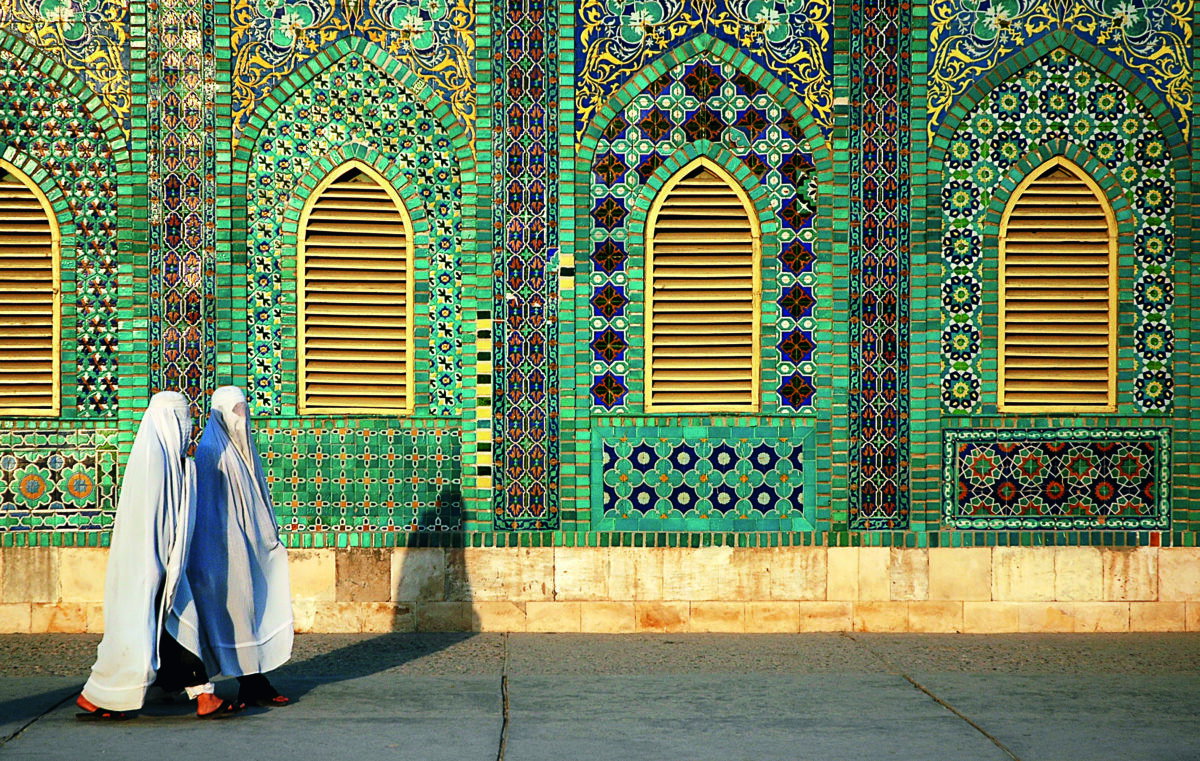
Forces For Good: How UN Women Is Keeping Its Promise To Afghan Women And Girls
Bazaar Arabia’s Laura Kell sits down with Mohammad Naciri, UN Women’s Regional Director for Asia and the Pacific and formerly the Arab States, as he shares insight into how it’s best supporting the most vulnerable members of Afghanistan’s society during these dark times
Back in August UN Women released a statement pledging to continue to do its work in the Afghanistan, highlighting how the organisation would remain “operational and engaged with our partners at this critical juncture for the country”— a bold one, indeed, considering the challenges at hand: an on-ground humanitarian crisis, coupled with the repercussions of a pandemic and global climate change. While it’s certainly no secret that the situation continues to remain down right dire for Afghan women and girls, the organisation has refused, against all odds, to leave them behind.
Speaking with Bazaar Arabia, Mohammad Naciri, UN Women’s Regional Director for Asia and the Pacific and formerly the Arab States, shared insight into how the organisation is supporting the most vulnerable members of Afghanistan’s society during these dark times; a feat in its own right, considering how drastically life has changed for the people of Afghanistan throughout the past few weeks.
“We are there to stay, we never left. Our international team is still there, our national colleagues are still active and we are working across on few fronts,” he firmly noted, confirming UN Women’s commitment to supporting women and girls, while also providing them with a platform to share their voices both within the organisation and on an international spectrum.
“We have been talking on behalf of the Afghan women. I think it’s about time that the Afghan women come and [tell us] what it is that they are going through, what it is that they need from us and what are the expectations from the UN Women,” he said.
Mohammad also highlighted how the organisation is continuing its work on ground during these incredibly difficult times, joining forces with its sister agencies to priorities the needs of women and girls when it comes to administering aid, while also providing safe spaces for those who have found themselves in unsafe situations at home. “We have protection centres, we have shelters for women… and those centers, some of them are still operational, and we are still managing them,” he noted.
Despite the support and resources the organisation is providing women and girls the situation is still, quite clearly, very bleak. Throughout many parts of Afghanistan women are not allowed to go to work and have reported difficulties in accessing health services; many girls throughout the country have been restricted from going back to school.
“Education is not across the 34 provinces; only five have reported that girls have access to full education,” he said. “But this is not across the board. You really have a dramatic change on all fronts… It’s going back to times that were the darkest of Afghanistan’s history. Girls’ schools were opened… at the beginning of the 20th century – way before many other countries in the region.”
But it’s the uncertainty surrounding the status of women and girls in Afghanistan that is most unsettling. “We don’t know what will happen tomorrow and that is equally worrying,” Mohammad stated in our conversation.
Nevertheless the strength of female spirit perseveres, optimistic and ready to tackle the formidable task of taking back her respectful place in Afghan society.
“We are definitely seeing that the spirit, the energy and the determination of Afghan women is not dying. It is not going away anytime soon,” he said. “This is where we need to facilitate and harness that energy and to bring it to the international forum. This is one glimpse of hope, because you do have half of the population saying no to what’s happening now, and that will have definitely an effect sooner or later.”
For more information, visit unwomen.org
Lead image courtesy of Shutterstock/Jono Photography
