
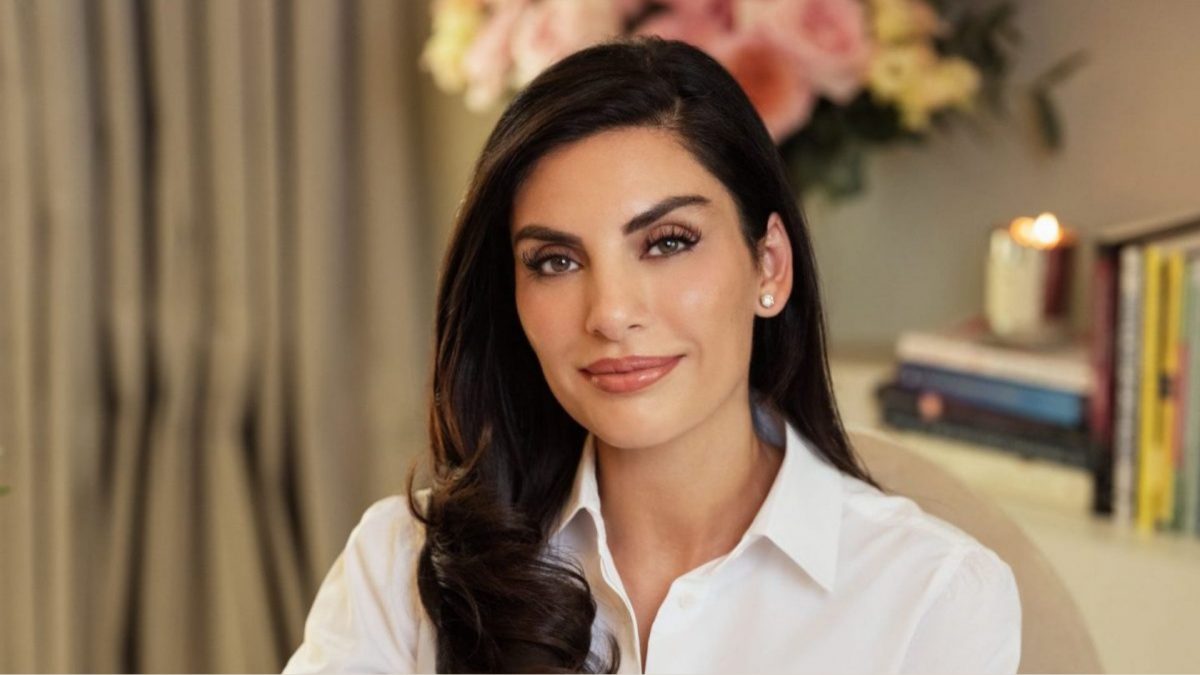
Dr. Saliha Afridi On What Should Be The Real Body-Positivity Agenda
The clinical psychologist, Managing Director of The LightHouse Arabia and Bazaar Arabia’s columnist, discusses the missing link in the body positivity movement
In recent years there has been a real movement toward body positivity. While I first found it refreshing, there was still something unsettling about it. As I work on healing my relationship with my body, I am realising that the messaging around the body-positivity movement has been incomplete at best and objectifying at worst.
Disconnection from the body
From adolescence to adulthood, I have gone through the spectrum of ways of being with my body – it went from being a friend to something that betrayed me, to something that I tried to dominate and control, to something that I objectified, to something that caused a lot of disease in me, to something I now have committed to and call my home.
Growing up in a Pakistani-Muslim household, puberty meant the end of childhood and all its freedoms. I could no longer dress how I felt. I couldn’t swim, run or dance without being conscious of my body. One day I was a child, the next, I was ‘a woman’ and all because my body said it was so. I felt betrayed by my body as it changed without notice or warning. I desperately tried to gain control over my body, and longed for it to revert back to how it used to be before any sign of puberty showed up – when no will or prayer worked, I developed an eating disorder. I was back in control.
There, in the early years of adolescence, was the beginning of my dysfunctional relationship to my body which continued on for the following three decades – a relationship of control, dominance, and a long list of expectations mostly managed by the media. Whether it was me as a college student that was pulling all-nighters, neglecting my body’s pleas for sleep and sustenance, or me becoming a first-time mother during my doctoral studies, dissociated from my body’s need to rest or recover during or after my pregnancies – I told my body what to do, when to do it, and how long to do it for – if my body asked for anything else, I dismissed its requests. My body had no choice but to obey.
In adulthood, I continued this neglectful relationship with my body. I had two more children, worked as a business owner and clinician, and prided myself on ‘recovering quickly’ from pregnancies, heartaches, and demanding work days. The truth is that I wasn’t recovering, I was simply unable to feel the pain. I now see that that’s what happens over time with anything you ignore or dismiss – it stops communicating with you, until one day it withdraws completely.
The bionic woman burns out
The first burnout happened in my early 30s. It came as a total surprise, slowly and then all at once. I was working as tirelessly as I always had, but on this day I couldn’t get myself to get out of bed and when I finally did, I walked apathetically and disengaged through my day. Over the next few weeks, my colleagues would bring me their concerns and my children would ask me for affection and I couldn’t will any part of me to show up for them. My body stopped working. After years of abuse, it finally withdrew its support – it finally left me.
But being as I am, I dealt with the burnout with the same force as I did with my changing adolescent body or my post-partum recoveries – with callousness, judgment, control, and dominance. I harshly gave it rest and I allowed it to recuperate but with a firm expectation that it needed to do it quickly, so I could get back to my life. And it did what it had always done – it obliged. It recovered and we were back to business as usual within a few weeks.
This pattern of burnout and recovery happened twice over the span of five years. It was not until a few years ago, as I worked on healing my emotional and psychological wounds, that I started to consider my body and its wounds as well.
The body remembers
When I first started to listen to my body, it did not speak or respond. I had to show up again and again, softly and kindly, without expectation, for it to trust me again. And as it started to tell its story of pain, my heart broke as I realised how abusive and oppressive I had been to it. I cried rivers full of tears, full of guilt and grief for how I had treated my body, and how it had silently endured and showed up in my service every day. I didn’t listen when it said ‘please sleep,’ I didn’t listen when it said ‘can you nourish me?’ I didn’t listen when it said ‘I am hurting.’ Instead, I told her, ‘You don’t stop. You power through. You sleep when you are dead. No pain no gain.’
So I re-committed to my body and as I did, I realised how forgiving and resilient it is. As I listened to its needs, it healed the diseases. Once I started to show up for it, my body showed up for me too, and all of a sudden I had access to what people call intuition, the sixth sense, the gut feeling. It had been there all along – if only I had listened.
I also realised that the things I thought didn’t affect me or caused me no emotional pain, they were all trapped in my tissues, as hardened fascia and a dysregulated nervous system. I had to go pain by pain and breath by breath to release the emotional distress and let my body know it was safe again. And as it felt safe, my body and my heart opened up and I felt an engagement, a playfulness, a spontaneity that I had not felt since childhood.
So as I asked my body what it thinks of the body-positivity movement, its response was clear: The body-positivity movement, which started off with good intentions, is still focused on the image of the body rather than the body itself. A body-positivity movement is incomplete if it focuses only on accepting outward appearances.
The messaging about our bodies from an early age is one of expectations, control, and judgment. I understand that we should love the way we look, but ask yourself are you really positively engaging with your whole body? And even if you go beyond image to ‘health,’ these messages are all reinforcing the same controlling agenda: make the body serve your end goal – whether it’s societal acceptance or longevity.
The truth is that there is no body positivity unless and until you change your relationship with your body. If we really want to be body positive, we need to start to build a relationship with our bodies again. Listen, communicate, engage, be kind, support, nourish, be committed, forgive, appreciate and thank it – this is what is needed in any loving, healthy, and positive relationship, including the one with your body.
Lead Image Supplied
From Harper’s Bazaar Arabia’s September 2022 issue.