
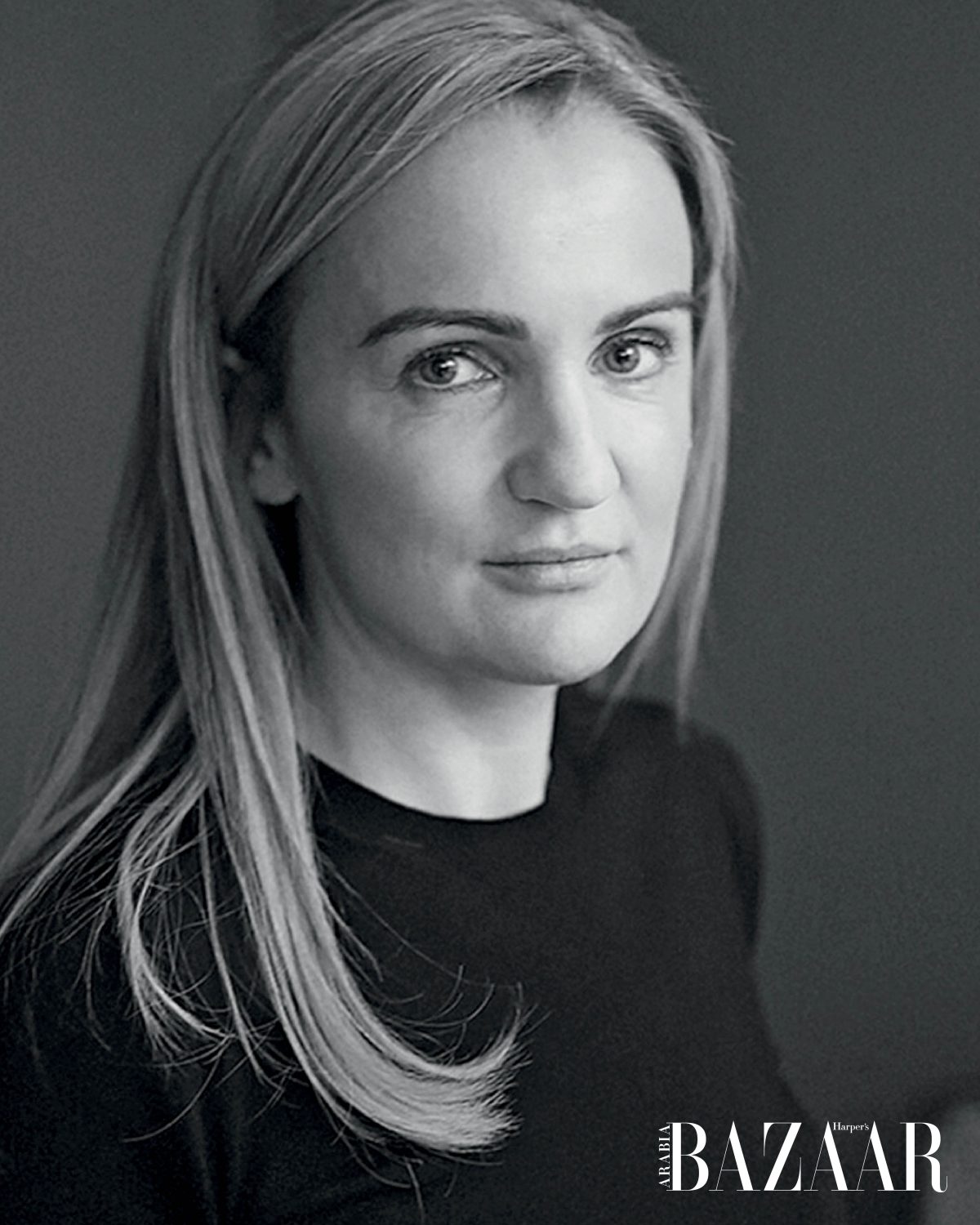
Lyma Founder Lucy Goff On Creating Super-Supplements and Reinvented The Wellness Category
“It’s like the Apple iPhone of the supplement world,” the founder tells Bazaar Arabia contributor Fiona Embleton, as she shares what truly makes Lyma unique
Lucy Goff, the founder of Lyma, is at the forefront of “well-tech”, a new movement where garden-variety multivitamin tablets are being replaced by cutting-edge ingestibles. Supplements that offer profound results for skin, sleep, gut health and mood, as well as complete transparency on the medical evidence that proves they work. And when a supplement is created by a former journalist and PR, who just so happens to be a time-poor mum, you immediately know you’re going to cut through the nutritional white noise.
“Wellness is a made-up industry,” says Lucy. “Wellness could be a candle. It could be a smiling session. It could be anything. Well-tech is about clinically proven formulations that take people beyond the ceiling of a healthy, balanced diet to deliver mental and physical advantages.”
Lucy’s lightbulb moment came in 2012 after a personal health scare exposed the number of poor-quality supplements peddled by a largely unregulated industry. “I caught septicaemia following the birth of my daughter,” she explains. “I was in the hospital for weeks and it was very touch and go. Then they found the bacteria strain, I was given the right antibiotics and I recovered, but my body was completely finished. I felt terrible. I started taking loads of supplements and was eating well, but nothing was really helping me.”
In 2014, while convalescing in Geneva, a chance meeting with Dr Paul Clayton, an Oxford professor and world authority in nutritional science, changed everything. Lucy told him her story and, in return, Dr Clayton explained that many of the supplements sold today offer no proven benefits. Instead, he introduced Lucy to a subset of the nutrition industry, known as pharmco-nutrition, and prescribed eight patented ingredients that saw her out of bed and back at work within a month, full of energy.
“Nobody was really using pharmco-nutrition because the ingredients were too expensive and went through the same rigorous testing as a pharmaceutical drug,” recalls Goff. When she couldn’t get more of these ingredients because they weren’t available to consumers, the seed for her pioneering pills was sown. She left her job in PR and started working with Dr Clayton to create the ultimate ‘super supplement’, eventually launching Lyma The Supplement in 2018.
At Dhs1,015 for the starter kit, it’s one of the world’s most expensive supplements. But fans including industry insiders, models and Hollywood actresses (Chloe Grace Moretz is apparently a convert) swear the results are worth it.
Lucy says it’s become so popular because it’s not a supplement in the traditional sense. “The supplement industry tends to feed off consumer neuroses, rather than anything evidence-based, by making you feel as though you’re not getting what you need from your diet,” she explains. “This is why most supplement brands include a fairly generic list of vitamins, minerals and phytonutrients, when in fact it’s far more beneficial to eat nutritious, unprocessed foods, rather than pop a multivitamin. We take a different approach. We exclusively formulate with patented ingredients that you can’t find in effective doses through food. That’s the true premise of a supplement.”
“Lyma is like the Apple iPhone of the supplement world. As new ingredients come into the arena, we evolve the formula”
Lucy Goff
In fact, every one of Lyma’s ingredients is backed by over 200 peer-reviewed medical journals to work at specific doses for preventative ageing – a rarity in the supplement industry notes Lucy. “What this means is the ingredient has been validated in preclinical trials and tested for toxicity, stability, bioavailability and efficacy. A clinical trial then proves the results are robust enough for the ingredient to be published in a peer-reviewed medical journal. As a consumer, you know exactly how that ingredient will perform once ingested.”
With over 30 scientists now working at the brand, Lucy’s one formula is updated on an annual basis. “It’s like the Apple iPhone of the supplement world,” she laughs. “As new ingredients come into the arena we have the opportunity to evolve the formula to make sure it’s always the best.”
The current line-up includes cynatine, which contains keratin for hair and skin, cognizin for supplying the brain with energy and the most bioavailable form of curcumin, a powerful anti-inflammatory. “Cellular inflammation is the root cause of most things going wrong in your body,” says Lucy. “Once you reduce it, you’ll find you sleep better, feel less stressed and have stronger immunity.” There’s also vitamin D2 and K2. “You could never get enough of these in your diet – you’d have eat something like 50 eggs a day, so those are the only two vitamins that you really need to supplement with,” she adds.
In 2020, Lyma branched out into beauty tech with the Lyma Laser (it just launched in the USA this summer). It is the world’s first and only FDA-approved clinic-grade at-home laser device. It combines a high-power laser beam with four blue LED lights, which work on the skin’s top layers to kill the bacteria responsible for acne. Rather than heat or damage the skin, the beam travels deep into the skin where it communicates with the mitochondria (the energy source of the skin’s cells) to improve collagen production, fade hyperpigmentation and improve the look of scars.)
“The laser light works by triggering a genetic switch inside each of your cells,” says Lucy. “It ensures those cells associated with renewal are switched on and empowered to behave like they did when you were in your early 20s.”
As for what’s next? Lucy says a new laser is on the horizon. “Lyma is a disruptive brand so it will only go into categories where there’s a need for a proper medical-grade solution.” In other words, brace yourselves for something game-changing.
Lead image supplied
Written by Fiona Embleton for Harper’s Bazaar Arabia’s September 2022 issue.