

More Valuable Than Gold: The Mystical Marvels of Musk in The Arab World
Bazaar Arabia uncovers the intricacies of musk in the spiritual realm, and how it filters down into our modern-day world
An enchanting aroma that transcends time and space, musk is more than just a popular perfume. Its mysticism lies in its duality: valued for being a versatile substance while simultaneously holding spiritual significance.
In Islam, it’s considered the most fragrant of scents, and was frequently worn by the Prophet Muhammad (PBUH). “Musk is essentially a mood enhancer. It uplifts our energy and brings feelings of happiness. It was loved by the prophet for these psychological effects,” says Islamic scholar, Sheikh Dr. Fares Al Mustafa.
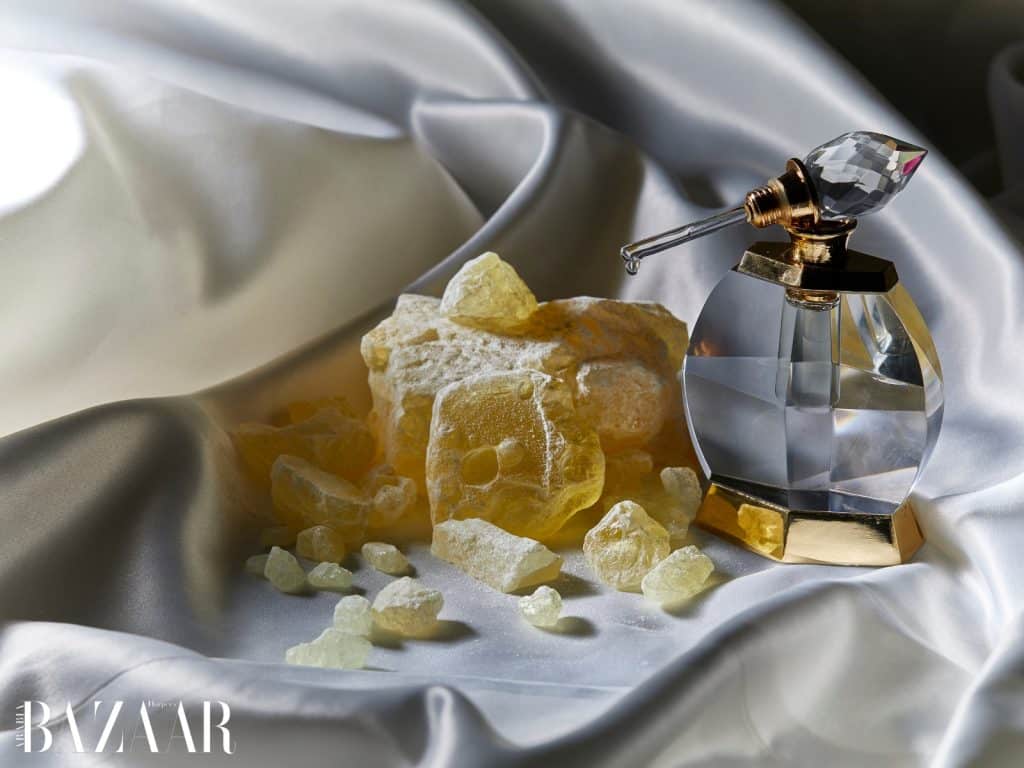
Amidst the complex tapestry of perfumes throughout history, musk is the thread that weaves each scent into an olfactory garment, shrouding the wearer in intangible allure. But where does this ingredient originate? And what makes it such a vital component in fragrance concoctions and esoteric phenomena?
Bazaar Arabia delves into the mystical marvels of musk in the Arab world, uncovering its treasure trove of uses and symbolism.
Musk: The Fascinating Story of Its Origins
For an ingredient that holds such a profound cultural impact, musk certainly has an obscure place of origin. The authentic substance is derived from the musk deer, a now endangered species found in the mountainous regions of the Himalayas.
The male musk deer were valued for their secretions, characterised by a pungent musky smell excreted to attract mates. In the past, the glandular sacks would be removed from the animal, and dried on hot stones or in the sun to produce what is known as the musk pod.
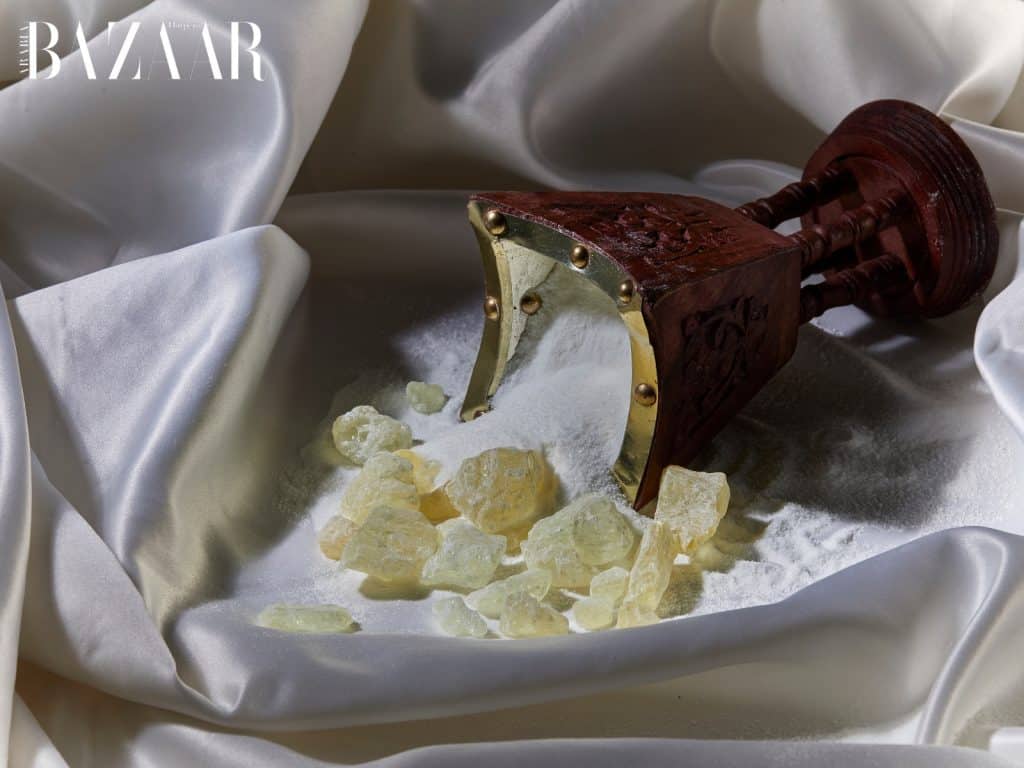
Black musk powder was obtained from inside the pod, which was then soaked in ethanol to produce its renowned rich, woody scent. Characterised by earthy notes and spicy elements, black musk has been valued for centuries for its long-lasting aroma and ambient exclusivity, and was even considered more valuable than gold.
“Musk was seen as extremely desirable in the Arab world,” says Forat Al Haider, fragrance expert and director of beauty innovation at Chalhoub Group, and the owners of luxury perfume brand Ghawali. “Just like oud, musk was considered exotic and valuable because it didn’t come from this region, it came from the Orient.”
The ingredient quickly became an expensive commodity, and propelled in appeal once perfumers began using it in their fragrance blends. The potent scent soon permeated the Middle East, ingraining its notes into the fabric of society.
“It eventually became embedded in the heritage and. now, it’s embedded in the lifestyle of the region,” says Forat.
Layered Relations
By the 1970s, animal musk was banned in the commercial perfume industry, and instead was replaced with synthetic and botanical versions.
This gave rise to the popularity of white musk which, in its natural form, is derived from granite stones found in the mountainous regions of India and Europe, or from seeds of the Ambrette flower, native to India and the tropical forests of Asia.
Each with their distinct profiles, black and white musk offer unique characteristics to fragrance blends and perfume layering.
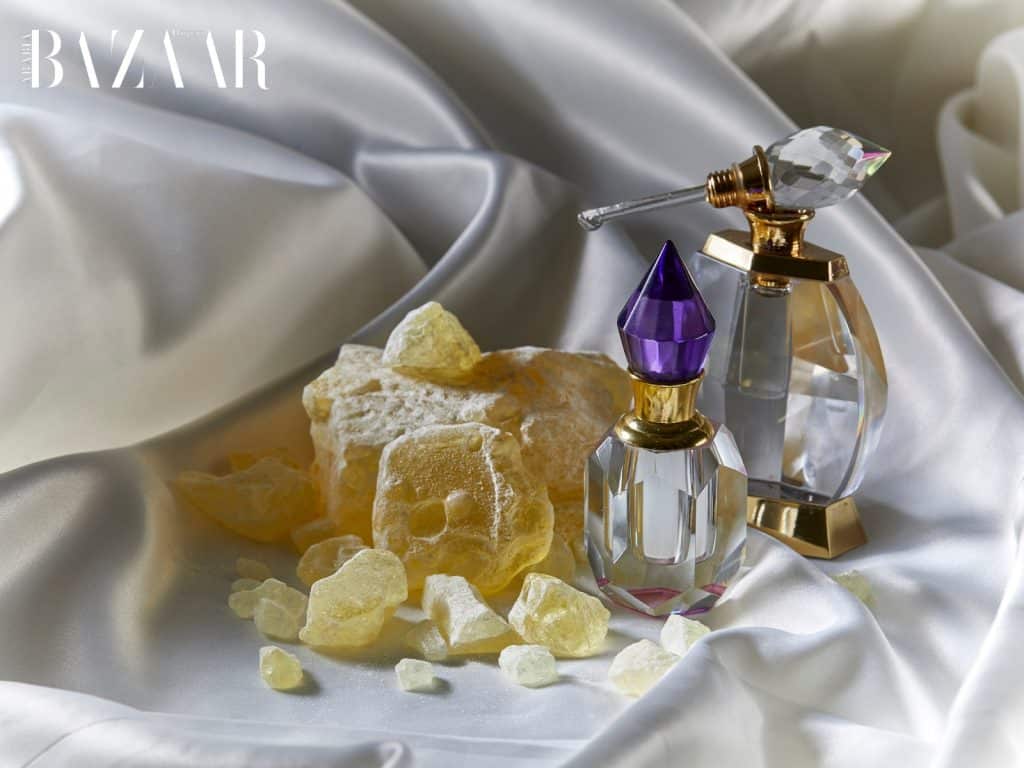
With its fresh, powdery scent, white musk is revered for its versatility. “I like white musk because, when it comes to perfume, it sets a beautiful bed of cleanliness for your fragrances,” says Forat. “It has a fresh aroma and penetrating evaporation, that ascends step-by-step through the different fragrance layers.”
“It’s great, even for your clothing or your linen,” he adds
Black musk, in contrast, is a lot more powerful and intense. “It has a strong odour, and can be a bit more difficult to play with,” says Forat. He highlights how both black and white musk are widely used as a base note in Arab perfumes for their durable scent and ability to withstand the region’s harsh heat and humidity.
“Some people use musk in the base of their perfumes for it to have a long lasting effect, but also to give it that beautiful scented trail, where it doesn’t ruin the structure of the perfume. Rather, it keeps the various notes of the fragrance while extending it’s scent, and ties it all together into a beautiful perfume identity.”
The Essence Of Purity
White musk, also known as Musk Tahara (meaning purity in Arabic) presents an opposing force to its animal-derived counterpart.
The light, delicate fragrance comes in different forms – from powder and stone to oil or perfume – and is valued in Islam for its cleansing properties.
A significant concept in the religion, the word tahara embodies the essence of purity and cleanliness that is intrinsic in Islam.
In a hadith by Abu Musa al-Ash’ari, Prophet Muhammed once emphasised that cleanliness is half of faith, and those devout in faith are always striving in this endeavour. In fact, in the Gardens of Paradise, blessed individuals are said to exude the fragrance of musk, a concept which on Earth, is reflected in the goodness of a human being.
“Musk is synonymous with cleanliness and goodness,” says Yusuf Madappen, prominent Dubai-based fragrance expert, with over 20 years of experience in the perfume industry.
Renowned for his exceptional olfactory knowledge, and his ability to recreate almost any scent presented to him, Yusuf believes that our natural bodily scents reveal the character of an individual – and musk is of the highest moral standing.
“Those who smell of musk are pure. Your body is clean. Your thoughts are clean. Your character is clean. Good people smell of musk,” he says.
In a more literal sense, white musk is used for a number of cleansing and healing rituals. Women in the Arab world are known to use white musk for ceremonial baths, applying it to their bodies for both physical and spiritual purification, which usually takes place after menstruation or childbirth.
White musk is also said to be a natural antiseptic, cleansing the body of infections or wounds.
It is recommended to use musk after taking a hot shower, when the pores are ready to receive its benefits. The white musk products can be applied in layers, first moisturising the skin with powder or oil, and then finishing off with a spritz of perfume.
Scented Connection
Another important aspect in the Arab world is charity, and fragrance is thought to be a form of such.
Referencing the notion that in Islam, even smiling at someone is considered an act of charity, Yusuf likens the lingering aroma of musk as a gift one gives unto others.
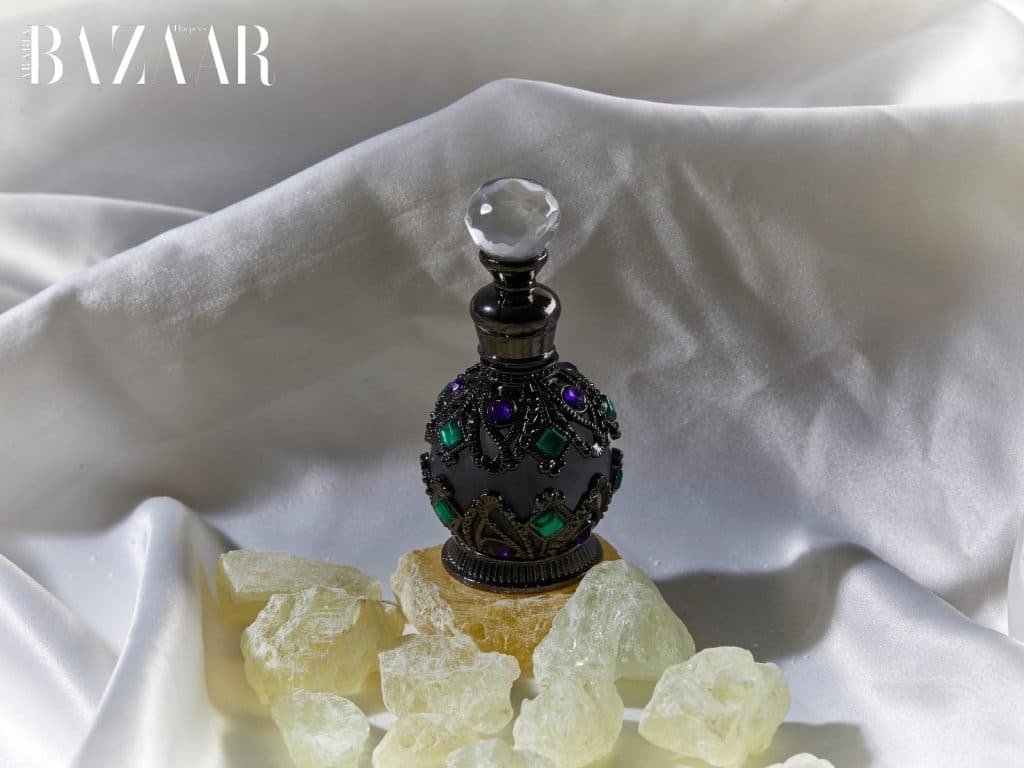
“Sadaqah,” he says, meaning a righteous act of charity, yet given in the most simple and subtle of ways. “The scent you leave in places you’ve been or on the people you love is a way of leaving a bit of yourself behind,” he says. “You are imparting your character through your aroma.” And those who smell of musk are sharing their good qualities.”
“The scent you associate with me will be determined by the way you view me as a person. My scent will always be pleasant to you if you think I’m a pleasant person,” he emphasises.
Stairway to Heaven
Through an intricate web of authentic hadith and Quranic verses, Islam enshrines a link between heaven and fragrance. Dr Fares points to a Quranic verse, stating heavenly bodies will indulge in wine from a cup emanating the scent of musk, while prolific theologian, Al-Masudi from Iraq, affirmed that musk is indeed “the lost perfumes of Eden.”
The tradition espouses that when the prophet Adam fell from heaven, he imparted the land with the perfumes of paradise.
Another belief from Islam’s Sufi sect touts that musk is a metaphor for opposing forces – heaven and earth, light and dark, pure and impure – and how humanity continuously oscillates between the two.
Through the contrasting qualities of black and white musk – one with its sensual, dark aroma and the other with a fresh, light airy essence – these narratives remain embedded in the fragrance, giving wearers the freedom to choose their path.
Photography: Efraim Evidor