

The Six Iconic Design Signatures Of Cartier’s New High Jewellery Collection
The illustrious French Maison has called upon its rich legacy of inimitable motifs to create its latest oeuvre-d’art — the perfect pieces to pair with this season’s most coveted couture looks
When Cartier presents a new high jewellery collection, the entire industry – artisans, editors, collectors, couturiers and avid tastemakers – collectively pauses and holds its breath.
Unveiled to the world during a decadent three-day extravaganza in Vienna last month, the new Nature Sauvage collection was as devastatingly beautiful as expected; a colourful and scintillating romp that effortlessly echoed the maison’s rich legacy for breathing light, splendour and witty, playful charm into the earth’s most precious materials.
Renowned for its fauna-inspired creations, the Maison introduced an 87-piece strong collection that explored its signature menagerie with a new perspective – these were jewels to delight, surprise and intrigue, with a chic critter to discover at every turn. The Maison’s first foray into animal-inspired jewels dates to the 1860s, when Cartier’s animal motif brooches were its best-selling creations.
Over the decades, its menagerie has burgeoned and bloomed to include majestic predators, elegant birds and mythical beasts alike. Incorporating this whimsical wildlife into the Maison’s wider creative language – vivid, arresting gemstones, transformable silhouettes and surreal, sinuous forms – results in a high jewellery collection that embodies the very essence of couture itself; rarefied materials, singular savoir-faire and designs that defy the imagination.
Here, we explore each design code within the collection, journeying through Cartier’s animal kingdom and creative expression to discover the symbolic meaning and stylistic heritage behind each piece.
The Panther
Undoubtedly the most famous creature within Cartier’s roster of beasts, the panther sits pride of place in the Nature Sauvage collection, drawing on a century of design history. First appearing in 1914 upon an onyx and diamond wristwatch, a flurry of notable designs then followed – from a yellow gold and black enamel double panther ring crafted in 1935 which was the first three-dimensional interpretation, to the first two-headed panther bangle commissioned by Prince Sadruddin Aga Khan in 1958, and ultimately the Panthère timepiece – an icon of contemporary watch design.
No one could have predicted the phenomenon that would ensue – the motif is now visual short-hand for the Maison itself. Early interpretations celebrated its strength, sensuality and exoticism, but in time the Maison began to explore the playful energy and fluid lines afforded by its elegant silhouette.
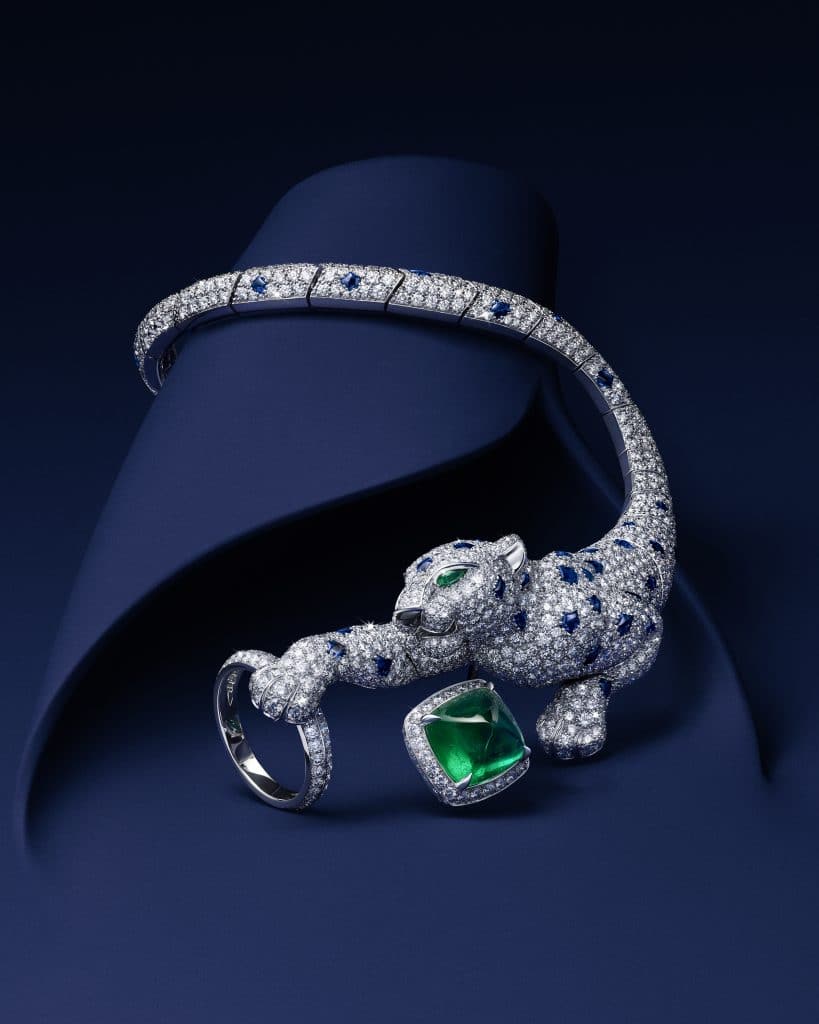
The Panthère Jaillissante hand jewel, a centrepiece of the Nature Sauvage collection, is perhaps its most dynamic and playful interpretation yet. Much like the manipulation of fine fabric, Cartier’s challenge with its figurative couture pieces is to shape precious materials into perfect form – its slender limbs, textured coat and gleaming eyes are all expertly sculpted.
Rare and Vivid Gemstones
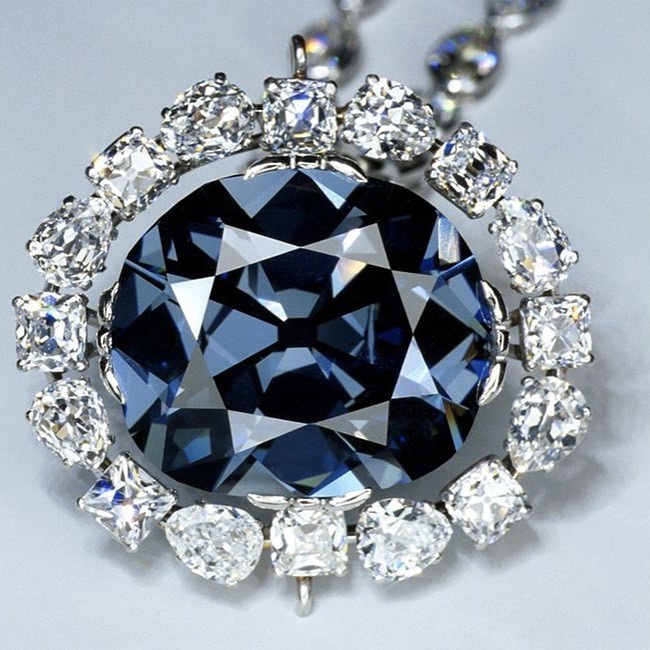
Any haute couturier understands that materials mean everything – to craft one-of-a-kind exclusive creations, one must work with only the finest fabrics and finishes. Since it was founded in 1847, Cartier has tirelessly sought out the world’s most extraordinary coloured gems to bring vivid, daring vibrancy to its finest creations. The maison’s most famous marvel? In 1910 Cartier set the Hope Diamond, a historic 45-carat blue cushion-shaped diamond, into an elegant pendant, shortly followed by the Bérénice emerald in 1925, which was a historic 141.13 carat carved emerald that Cartier set upon a magnificent shoulder jewel.
This tireless quest to source nature’s most striking miracles continues with the maison’s high jewellery collections today, and within the Nature Sauvage collection several such gems stand out – an 8.63 carat Zambian emerald, a 71.90 carat rubellite and a 38.50 carat aquamarine perfectly illustrate the maison’s continued talent for extraordinary gem-sourcing, with each specimen hand-selected to ensure its exceptional quality and unique charisma.
The Zebra
Monochrome Haute Couture ensembles are often the most striking, and the same can be said of high jewels. Offering the perfect colour palette for dramatic effect, Zebras are a much-loved motif within Cartier’s haute collections, notably celebrated last year in the maison’s Les Indomtables collection of high jewels, where tigers, giraffes and panthers were playfully paired with this monochrome motif in a series of extraordinary tête-a-tête bangles.
Cartier’s zebra motifs feature bold stripes crafted from an onyx, a blacker than black hardstone that must be deftly polished to achieve its extraordinary shine. This inky gleam is contrasted with the finest white diamonds, enabling Cartier’s zebras to become some of the most graphic, modern and striking jewels within its rich history.

Transformable silhouettes
While there are countless maisons adept at crafting fine jewels, a true high jeweller is adept at creating exquisite transformable designs that can seamlessly morph to be worn in various ways, much like a bridal couturier shifting hemlines, sleeves and trains to achieve a totally different look.

In the Nature Sauvage collection, the Mochelys necklace conceals a clever adaptation; thanks to its ingenious tiny clips, the turtle motif may be removed to be worn as a brooch. This feat is the fruit of over 150 years of ingenuity, which has given rise to many magnificent pieces, such as the pearl and diamond tiara presented at the Biennale des Antiquaires in 2016 that contained a historic detachable pearl to be worn as a pendant, and the high jewellery ‘Imperio’ necklace crafted in 2021, which could be worn an astonishing 29 ways.
The Flamingo
Flamingos are a familiar friend within the Cartier bestiary, and across cultures are widely considered to be symbols of elegance, beauty and extravagance. One of the most famous Cartier designs celebrating this graceful bird was the Duchess of Windsor’s Flamingo brooch, crafted in 1940 under the charge of the maison’s legendary creative director of the era, Jeanne Toussaint.

While the flamingo in the Nature Sauvage collection is entirely diamond-set, allowing it to subtly peep from a glittering diamond and emerald reed bush, the Duchess of Windsor’s design was set with calibré-cut rubies, sapphires and emeralds, illustrating its deftness for reinterpreting each motif in a multitude of ways across generations.
