
How The Menart Fair is Celebrating Female Artists From The MENA Region
Shining a spotlight on artists from across the MENA region, the Menart Fair offers an important platform for female creatives
This September, the Menart Fair in Paris celebrated a major milestone, having reached its fifth edition. Championing both new and established artistic talents from across the MENA region in Europe, the event serves as both a boutique commercial fair and a destination for international art aficionados eager to learn more about this incredibly diverse creative scene.

Founded in 2021 as a spiritual successor to Beirut Art Fair, the raison d’ être of Menart Fair is to provide the creativity and rich cultural heritage of the Middle East and North Africa with a dedicated international platform, holding biannual exhibitions in both Paris and Brussels.
In celebration of the show’s fifth year, and in response to the unfolding crises in the Middle East, Menart Founder and Director Laure d’Hauteville elected to focus the event’s latest edition entirely on women, searching for a different perspective.

“As in many other sectors, women artists suffer from under-representation and consequently under-valuation of their work,” d’Hauteville told Harper’s Bazaar. “They have their own ways of dealing with identity, autonomy, the body, sexuality, everyday experiences, and social and political justice.”
“Arab artists have always historically been very advanced, even when compared to those of the Occident,” she continued. “This is what I want to show at Menart, and I want to show that through women. We have many responsibilities that people don’t think about, and we have a dialogue, so perhaps we can talk about what is happening in the region and show things differently.”
Featuring 29 participating galleries exhibiting a selection of almost one-hundred artists, many of which are newcomers to the fair, this female-led Menart took a closer look at the significant artistic contributions of women working within the multifaceted and complex creative ecosystems of the MENA region, hosted by Galerie Joseph Paris.

Despite the quality of their work, MENA artists are frequently overlooked in a global art marketplace primarily interested in Western talents, especially when it comes to those who are also women.
“Collectors, gallerists and institutions are not only collecting and encouraging fewer female artists; they’re afraid to do so,” explained Lebanese artist and designer Sama Beydoun. “The galleries were saying their female artists sell less, and we were saying they only sell less because they have less space. It’s very hard to belong in such spaces when you’re not represented in a gallery and you haven’t made a name for yourself.”
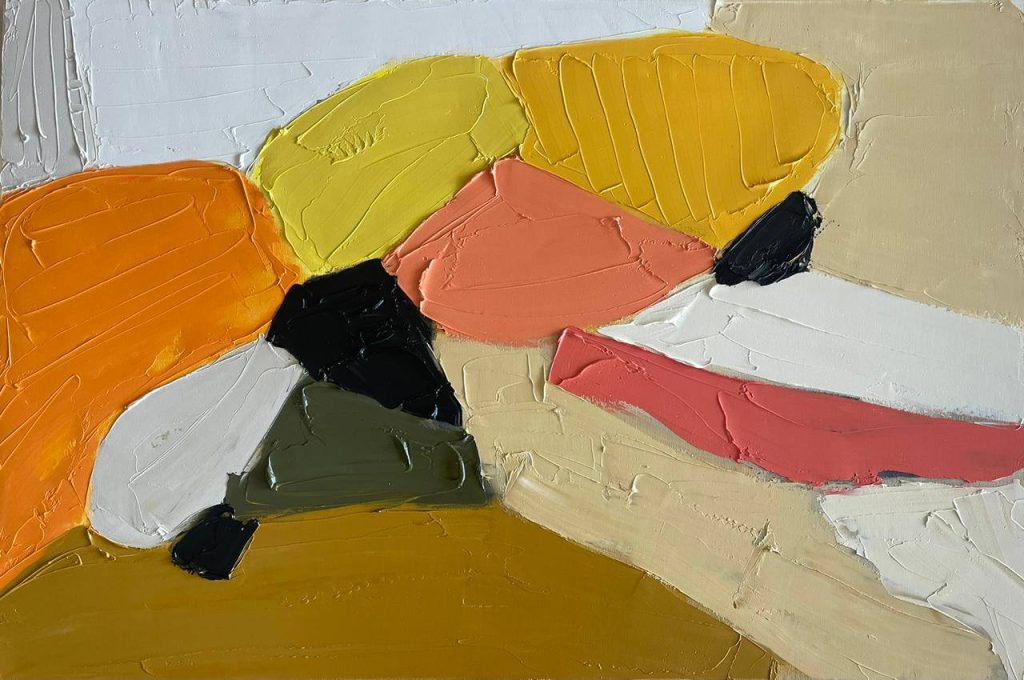
Currently based in Paris, Beydoun’s style spans graphic design, photography, typography and painting, drawing inspiration from urban life to explore topics related to visual culture, social causes and collective narratives. She was also selected to act as curator for Menart’s section for emerging artists, where she also exhibited two of her own works, ‘Leave Me Alone’ and ‘No One’s Ok’, a pair of graphic printed posters inspired street advertisements that contrast her own desire to be left in peace with an eye-catching, graffiti style.
“We all come from different countries of the Arab world – Lebanon; Palestine; Syria; Jordan; Egypt – and we also belong to this new visual language that doesn’t always receive a place at more typical art fairs,” said Beydoun. “It’s a very digital, pop-cultural visual language and dialect. It’s empowering to give those thoughts power, because it unites us and brings us together.”
Qatari multidisciplinary artist Amna AlBaker’s works delve into the intricacies of hidden lives, fuelled by her own desire to express her experiences of being an Arab woman. Using an experimental process involving photography, visual research and writing, she aims to capture the ‘internal wilderness’ navigated by women, specifically in the Arab world, incorporating both the terrain of Qatar and the mythologies of the Arabian Peninsula.
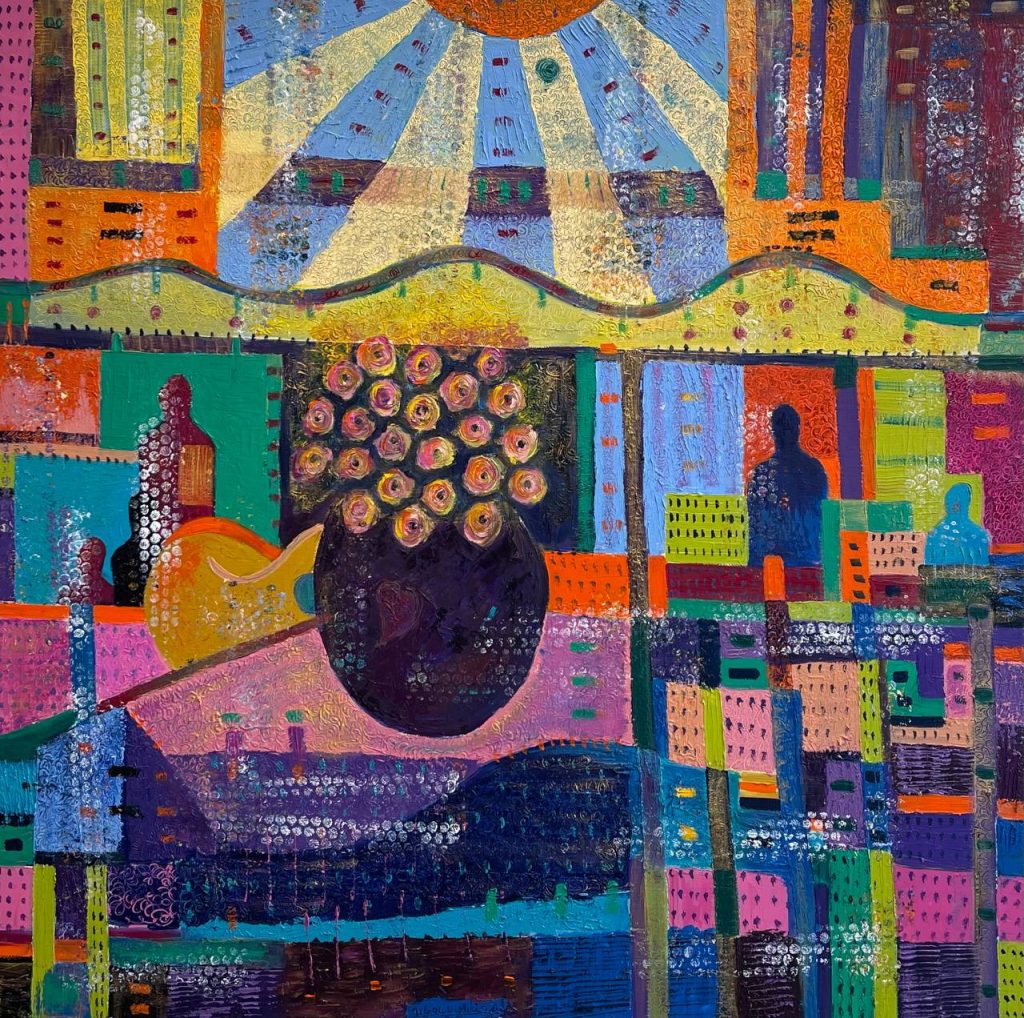
Her installation ‘Solve/Coagula’ takes the form of a metal and fabric structure, crafted meticulously using various traditional embroidery and dyeing techniques, representing the skin of the womb. The upper section reflects the artist’s own personal journal, embroidered with text exploring the notion of transformation through surrender. The lower section symbolises the metaphorical wounds that must be opened, closed and reopened to allow for spiritual development, evoking elements of the archetypal journey through the underworld.
“I’ve always explored the theme of female experience through my own experiences; my own inner world, and the way that I interact with the space and time around me,” said AlBaker. “With this work, I’m hoping to get people to reflect on an encounter with darkness, and consider what it means to ascend through such experiences and be able to transform through them.”
“It’s very heart-warming to see all the different female artists that are exhibiting,” she added. “It’s so empowering to know that there are so many people who care and want to highlight the voices of women.”
Lead Image by Valérie Ohana, Untitled, 2023, acrylic and cotton thread on canvas