
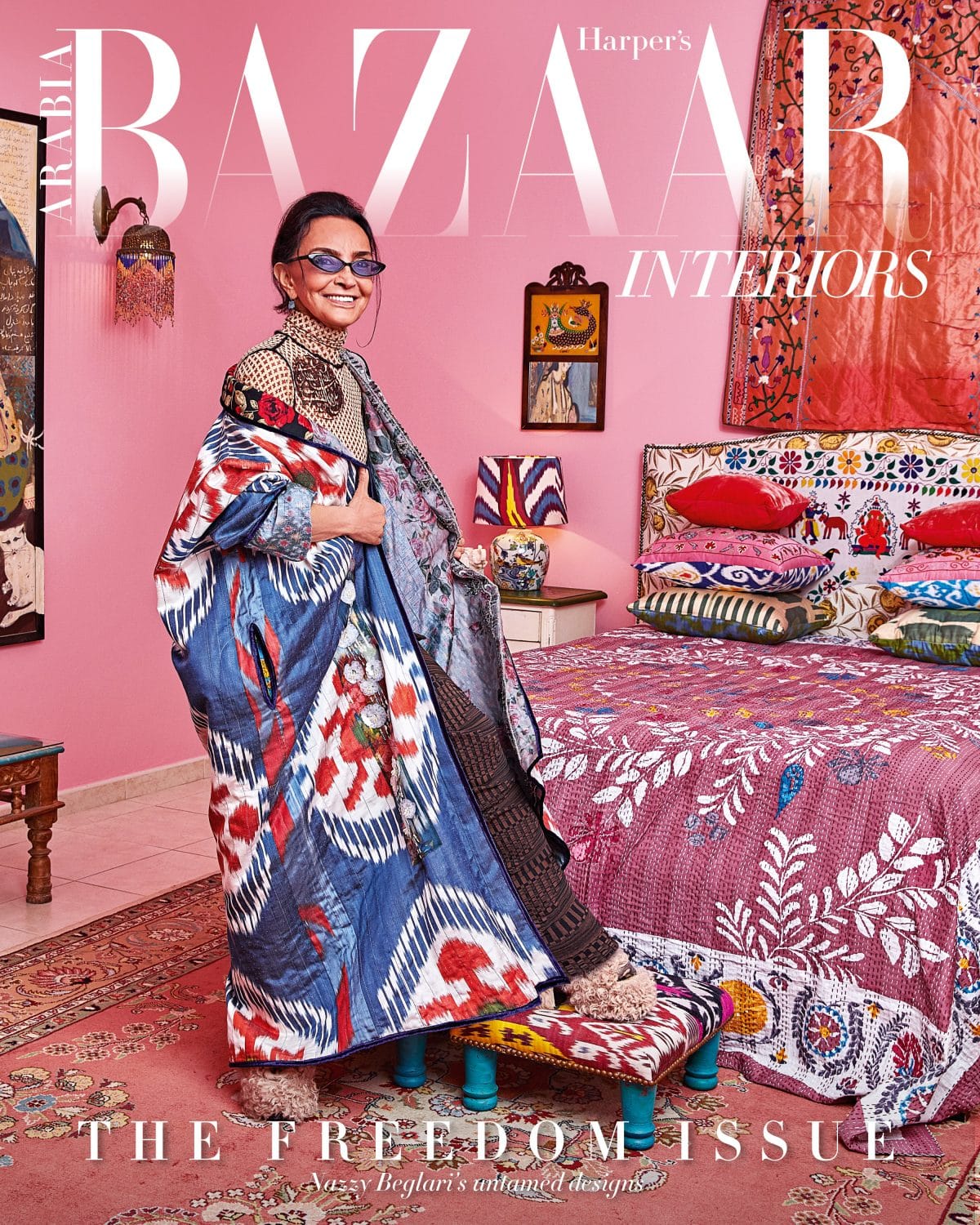
Fabric of Freedom: Nazzy Beglari’s Home Is A Lesson In Free Expression
An inimitable collection of fashionable furniture, vintage décor and art, designer Nazzy Beglari’s home reflects the beauty of several cultures
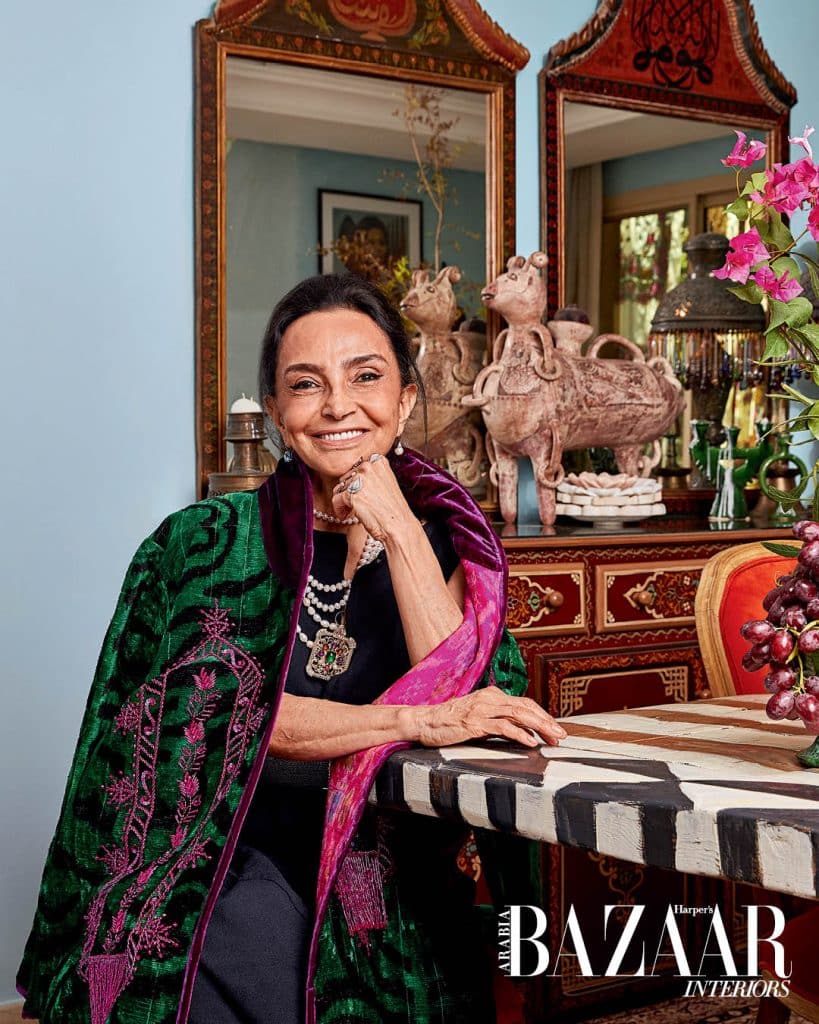
Nazzy Beglari calls herself an “accidental designer”. Growing up – especially on occasions like Christmas or Nowruz, the Persian New Year – she was surrounded by her grandmother’s collection of ikat and suzani textiles; a collection which would go on to have a profound influence on her work, although she didn’t quite realise it at the time. Her multicultural heritage, combined with homes in several countries, from France and Switzerland to North Carolina and New York City, shaped her multidimensional approach to life and her distinctive taste.
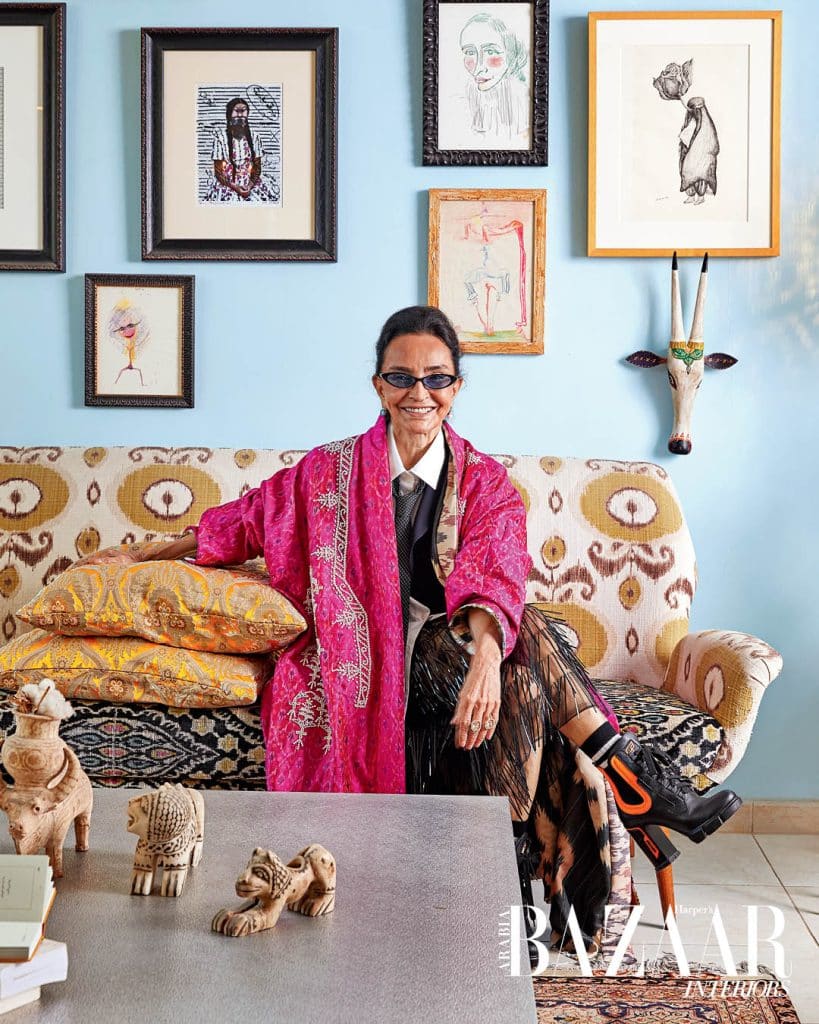
“I’m curious about other cultures because I believe we can borrow many things from different countries,” she smiles, reminiscing, “When I first travelled to Uzbekistan in 2012 and saw the ikat textiles and the labour-intensive production with my own eyes, it was an emotional moment – not only because of the exquisite beauty of the work, but also because it reminded me of my grandmother’s collection and of her home in Tehran.” On that first trip, she bought so much ikat that she had to get an extra suitcase. “When I returned home, I designed a few dresses just for myself. My friend Rita Aoun, then the head of Abu Dhabi Art Fair, saw them and asked for one. She also invited me to exhibit my ikat designs at the fair. The rest is history.”
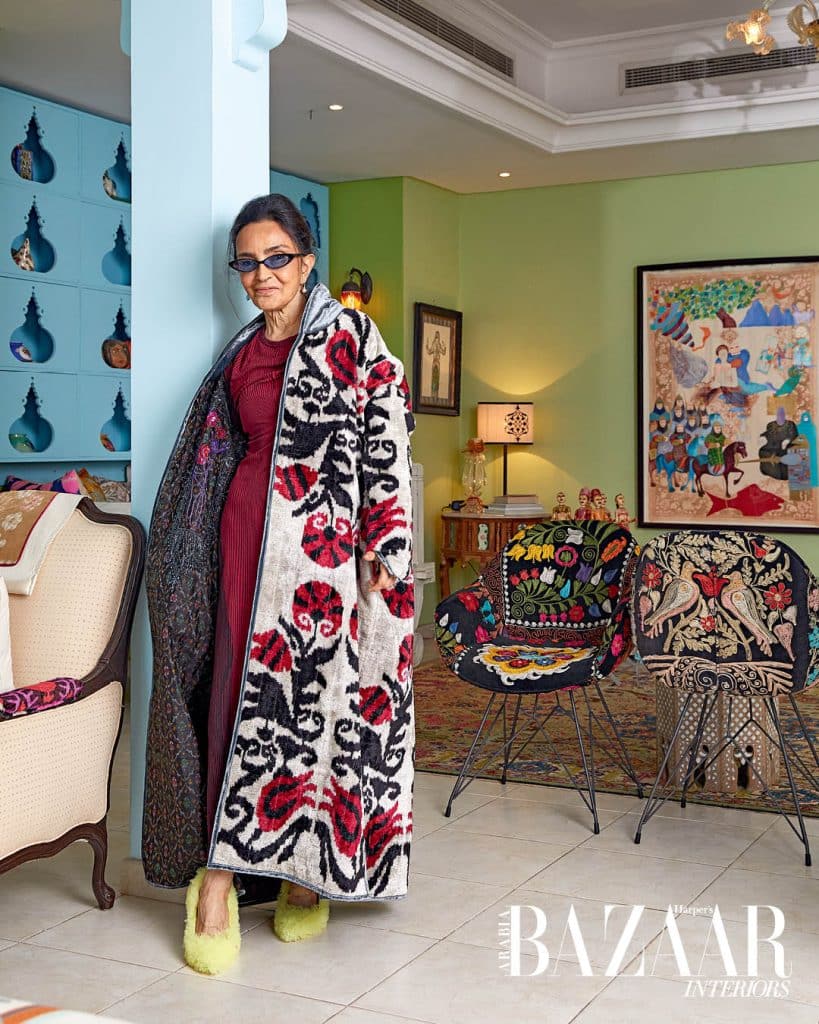
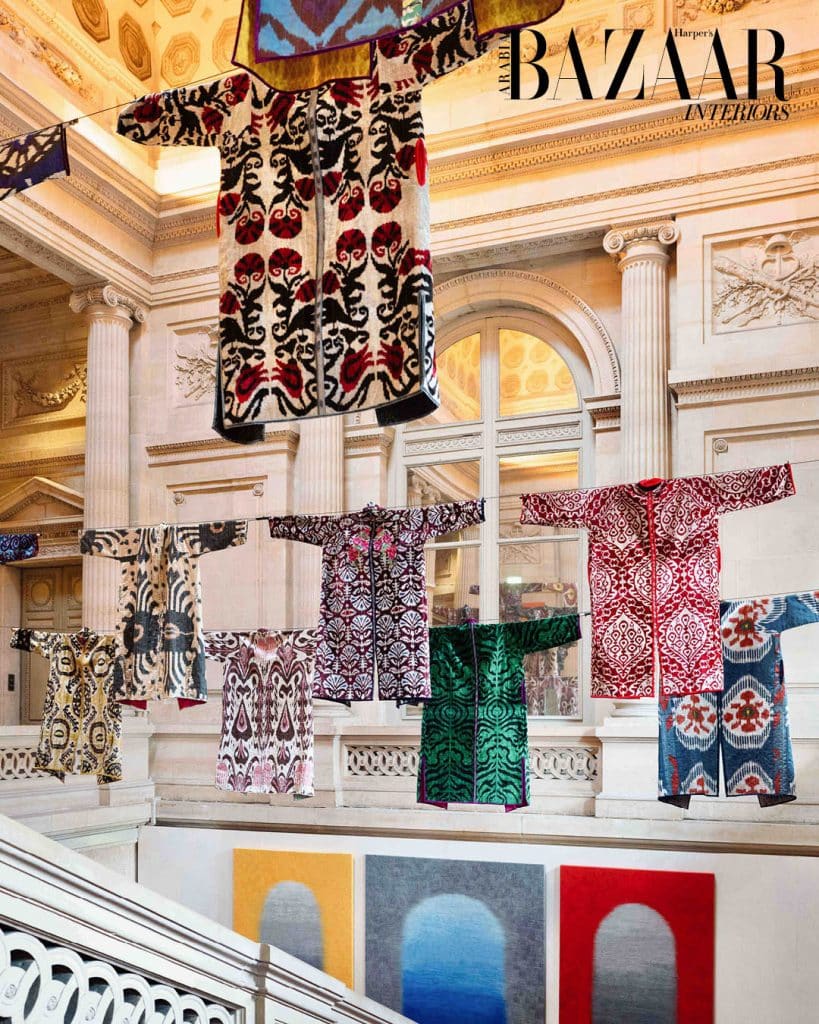
In October this year, Nazzy’s work was showcased at the prestigious Asia NOW art fair in Paris, as part of a group exhibition curated by the renowned art collective, Slavs and Tatars. It’s no surprise that her installation – 16 coats made with fabrics sourced from Central Asia, India and Japan – was the centre of attention. The coats were hung from wires attached to giant columns at the entrance and were visible from every angle. “It was a challenging installation, even for the experienced French technicians,” Nazzy admits. “The result was simply stunning.”
The designer likens finding the right source of fabric to finding the right source for a news story; her training as a journalist has influenced her eye for creative weavers. “Often, the best recommendations come by word of mouth – just as news tips do,” she says.
“For instance, double ikat is rare and therefore challenging to track down. I learned that there was only one single family in India weaving double ikat, and that they’ve been doing it for generations – since the 11th century, in fact. Weaving this double ikat is even more labour-intensive than single ikat, and therefore it’s much more precious. This family’s passion for creating beauty and meaningful art has kept them going for centuries. For me, this is both inspiring and humbling. I had also heard about a UNESCO master weaver in Central Asia. It took me a few months to locate him and when I did, it was a thrilling moment. He is the one who revived the art of velvet ikat weaving which had almost been forgotten.”
Nazzy’s vibrant, unisex kaftans – as graceful as herself – have been shown off by notable artists and tastemakers including none other than Isabella Rossellini, Tilda Swinton, Yousra and Hend Sabri, as well as by Martin Scorsese, and members of the royal families of the Gulf countries. “I’d be lying if I said I don’t get excited when international artists wear my designs,” she beams, humbly adding, “That’s simply because they have access to the best and yet, they choose me.”
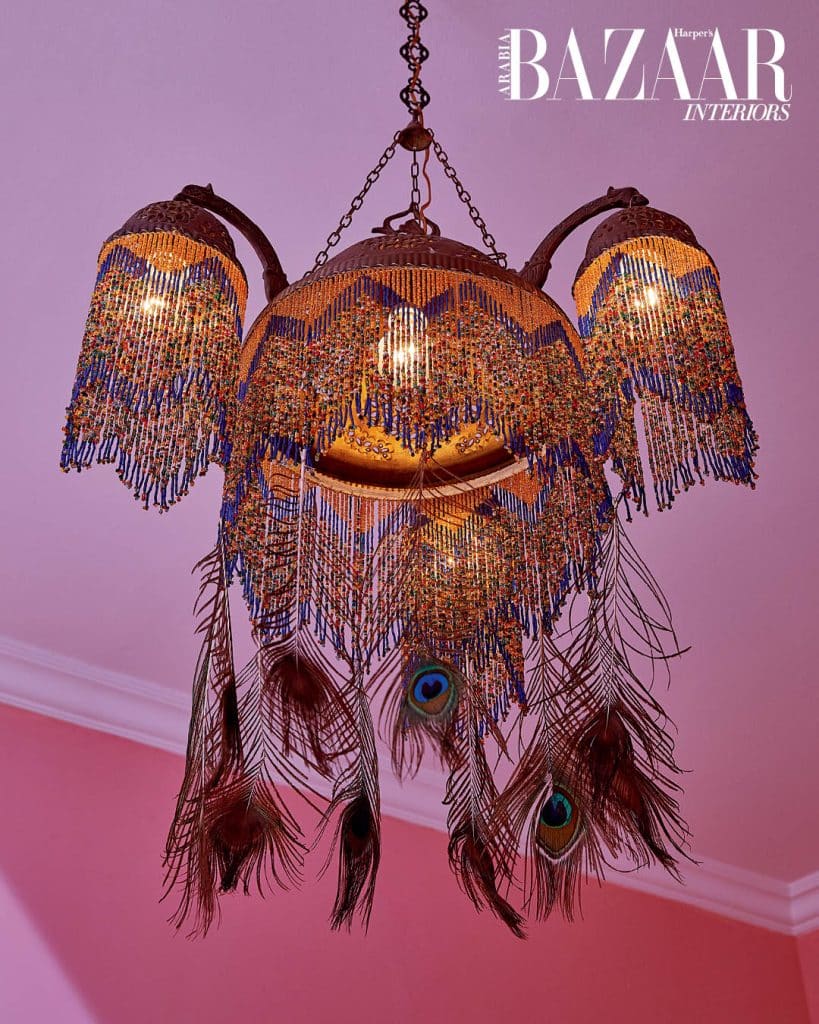
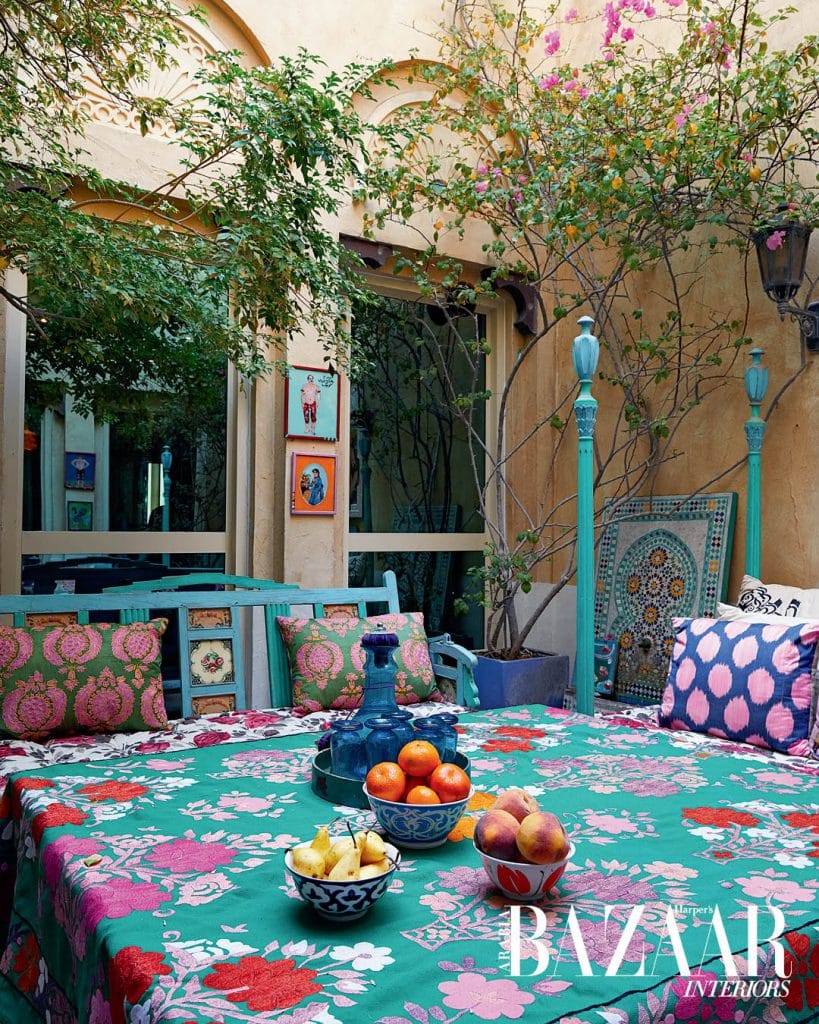
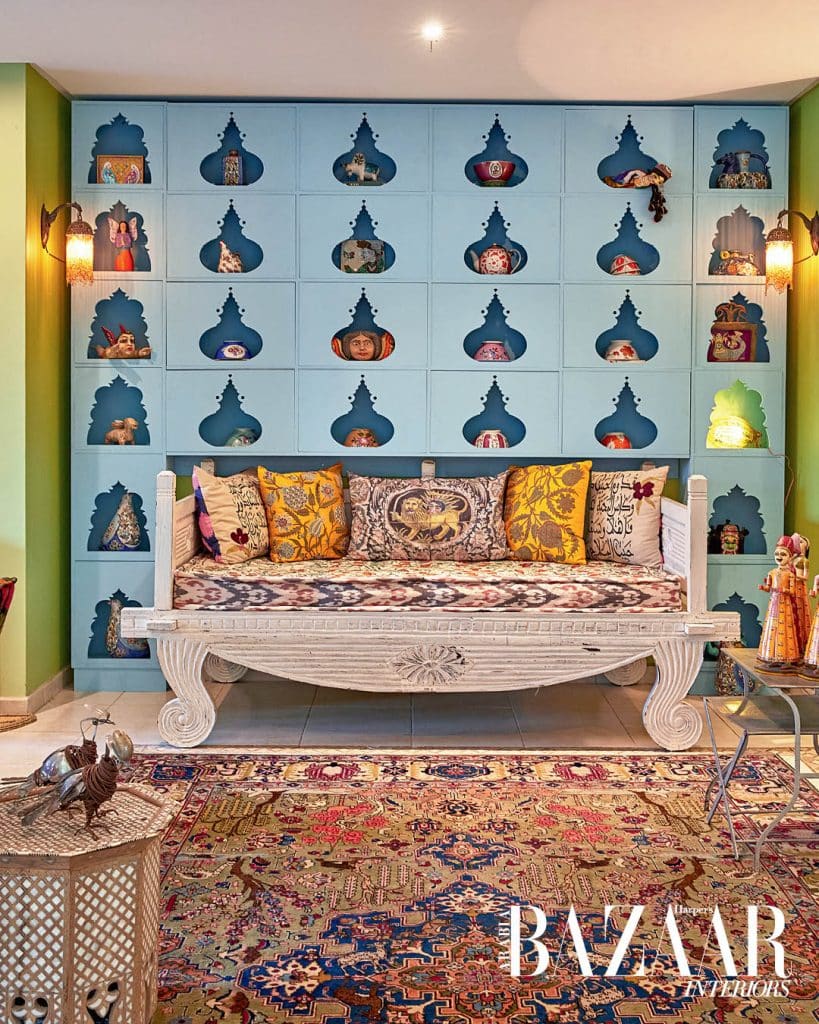
Her home in Abu Dhabi reflects the beauty and vibrancy of her kaftans – a perfect depiction of ‘fashion to furniture’. Inside, every book, rug, plant pot, design and furniture piece tells a story. “Doing anything creative and working with my hands makes me feel satisfied and content,” the designer enthuses. “I enjoy the way a minor change can rejuvenate a tired-looking house.”
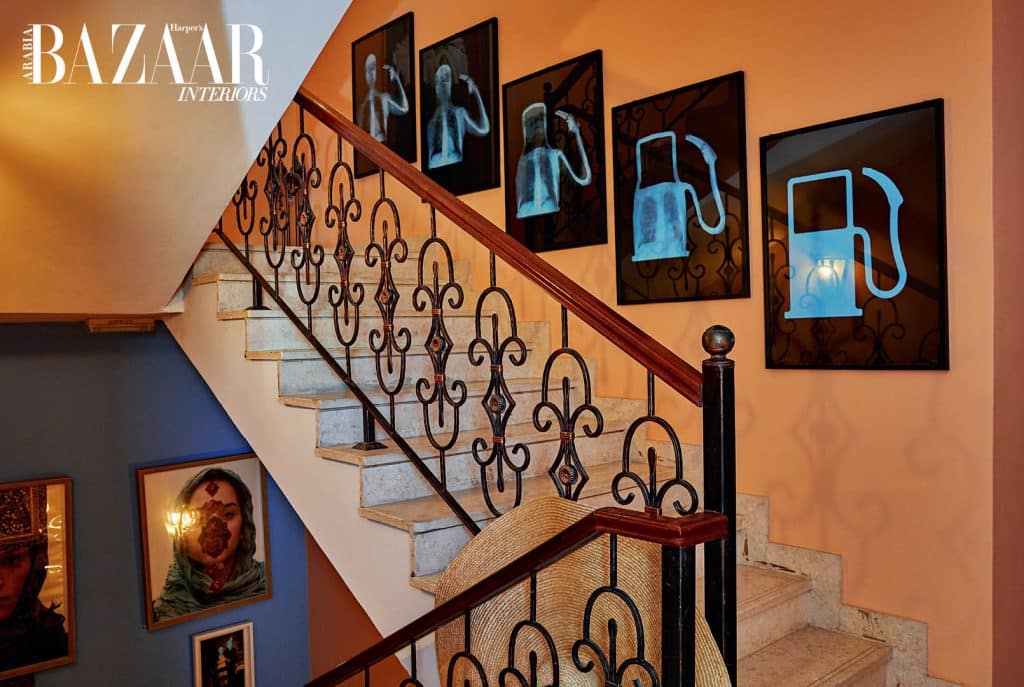
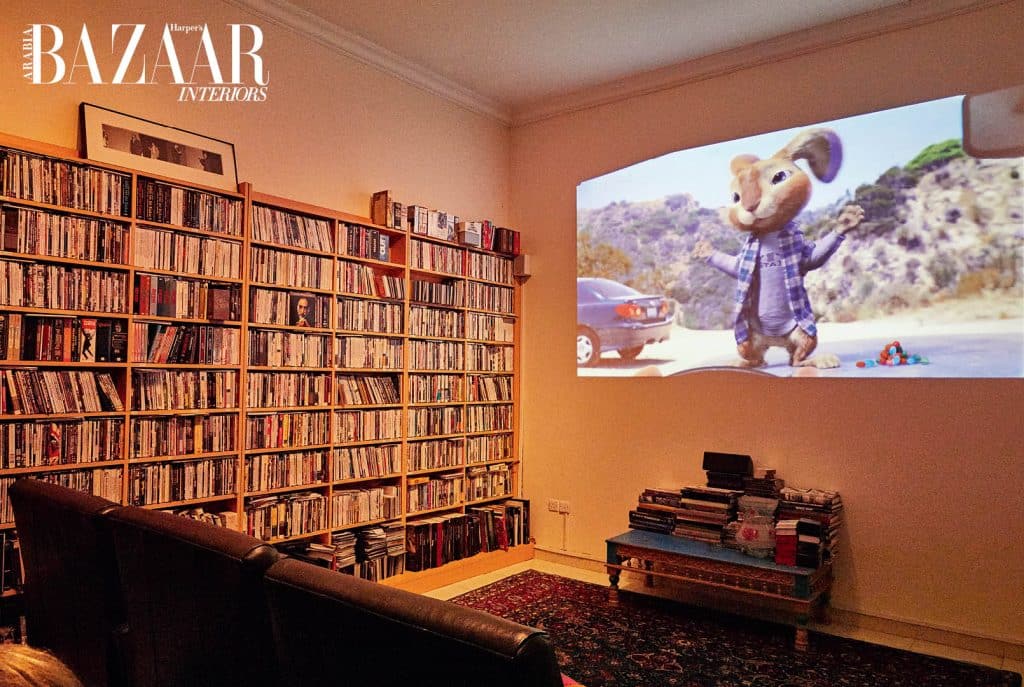
The walls echo a pure passion for art which first flourished in childhood, when a young 14-year-old Nazzy would save her pocket money to buy affordable works. Working as a journalist gave her the chance to meet almost all of the giants of Iranian modern and contemporary art, from Charles Hossein Zenderoudi and Manoucher Yektai to Ardeshir Mohassess, Shirin Neshat and Nicky Nodjoumi. “Since I knew them personally, I bought works directly from them,” she shares.
“My husband Peter Scarlet and I also became interested in Arab artists like the Egyptian Youssef Nabil and Saudi artist Hassan Mathar. I met most of these artists after the 1979 revolution in Iran.” After working on a series of interviews and documentaries about their life and work, about how they had to start from zero to establish themselves as artists in foreign lands, Nazzy found a new appreciation for Iranian modern art.
The late Ardeshir Mohassess, Nazzy’s all-time favourite artist, is one of her biggest inspirations. Ardeshir, who left Iran in the mid-1970s because his drawings were considered ‘too political’, was one of Nazzy’s interviewees. “He was very shy and never spoke much,” she recalls.
“He used to call me and stay silent on the line. He suggested I write the questions and send them to him so that he could write the answers. A week later, I received an envelope in the mail. When I opened it, I immediately started laughing, because he had completely ignored my questions and had interviewed himself instead! I still have those yellowing pages, on which he had written his questions on an old-fashioned typewriter.”
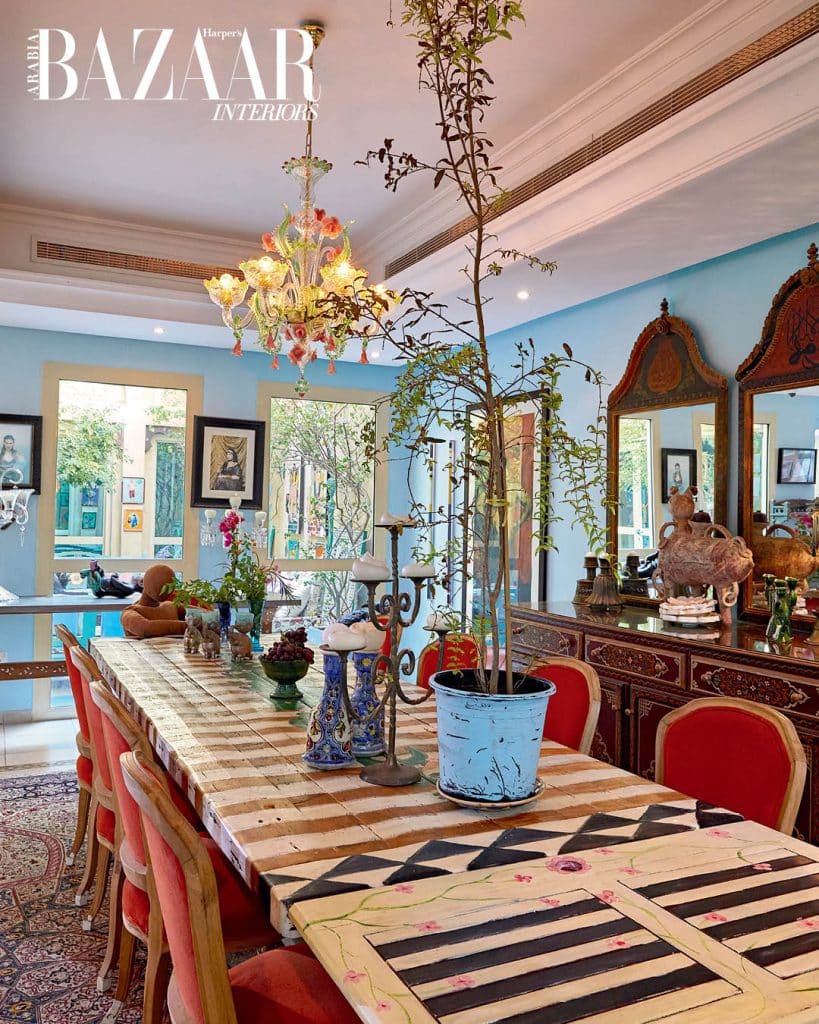
The walls of Nazzy’s home are painted several fun shades that evoke joy and optimism – pink, blue, green, and yellow. A colour lover by nature, she swears by bright hues: “Colour is life and nature is full of colours. In places like Morocco, India and Central Asia, colour is a design staple. Not pastel colours, but bold colours like pink, purple and crimson. Even men wear colour and jewellery; that doesn’t diminish their manhood, but rather adds to their personality.”
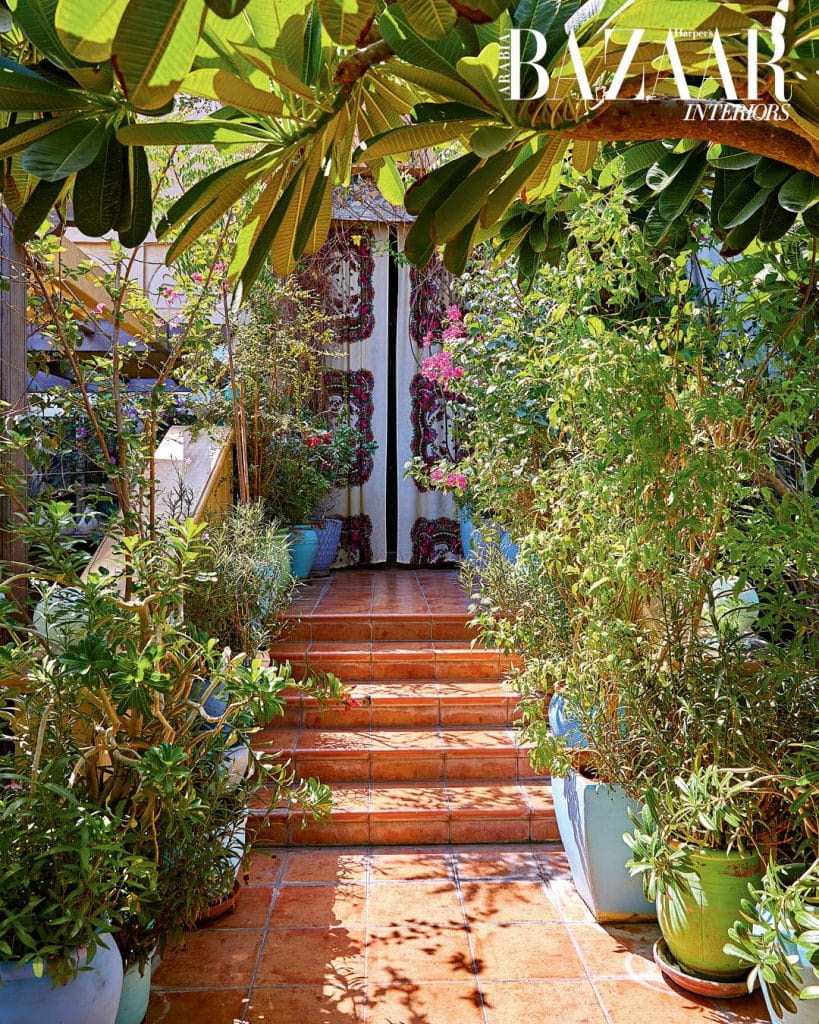
Nazzy swears by self-expression through colour; it’s easy and inexpensive to paint walls, and change textiles and accessories, she suggests. “Repainting the walls – which I do from time to time – is like an instant upgrade. I also follow the feng shui philosophy, whether designing one room or the entire house. The bottom line is, don’t be afraid of colours and don’t block the flow of energy. No white walls and grey furniture for me.”
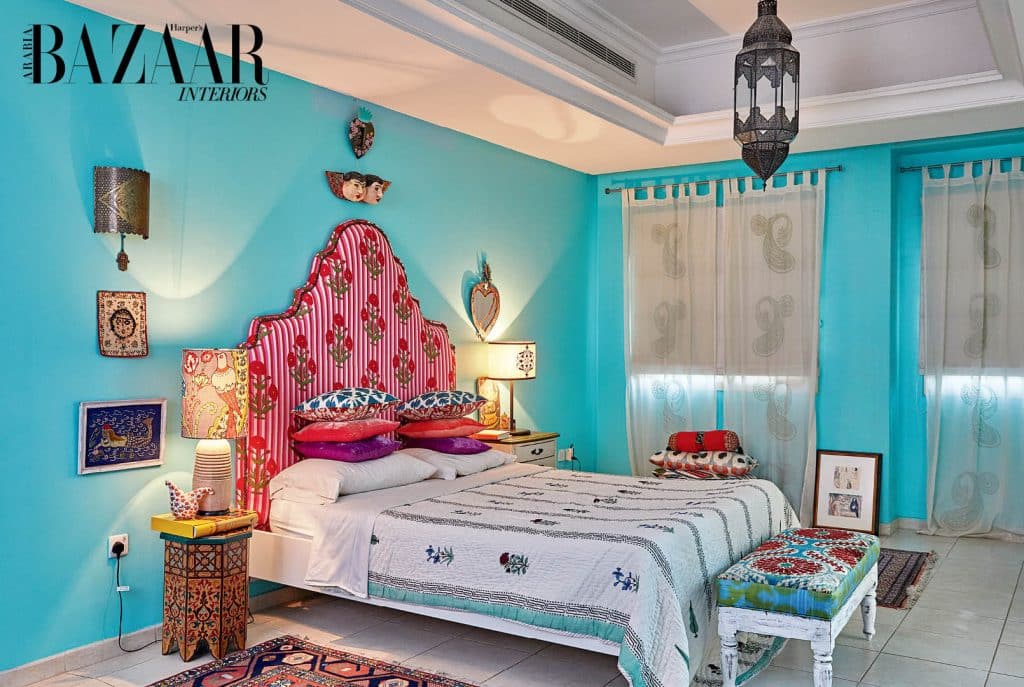
From ikat to hand-blocked cotton and suzani, Nazzy’s love of textiles is evident in her furniture and headboards too, most of which she tailor-made herself. In fact, her latest venture involves hand-blocked, hand-stitched curtains, tablecloths and summer and winter blankets – all of them colourful, of course. A statement coffee table, sofa and side table by Kuwaiti designer Bibi Abdullah Alghanim also adorn the abode.
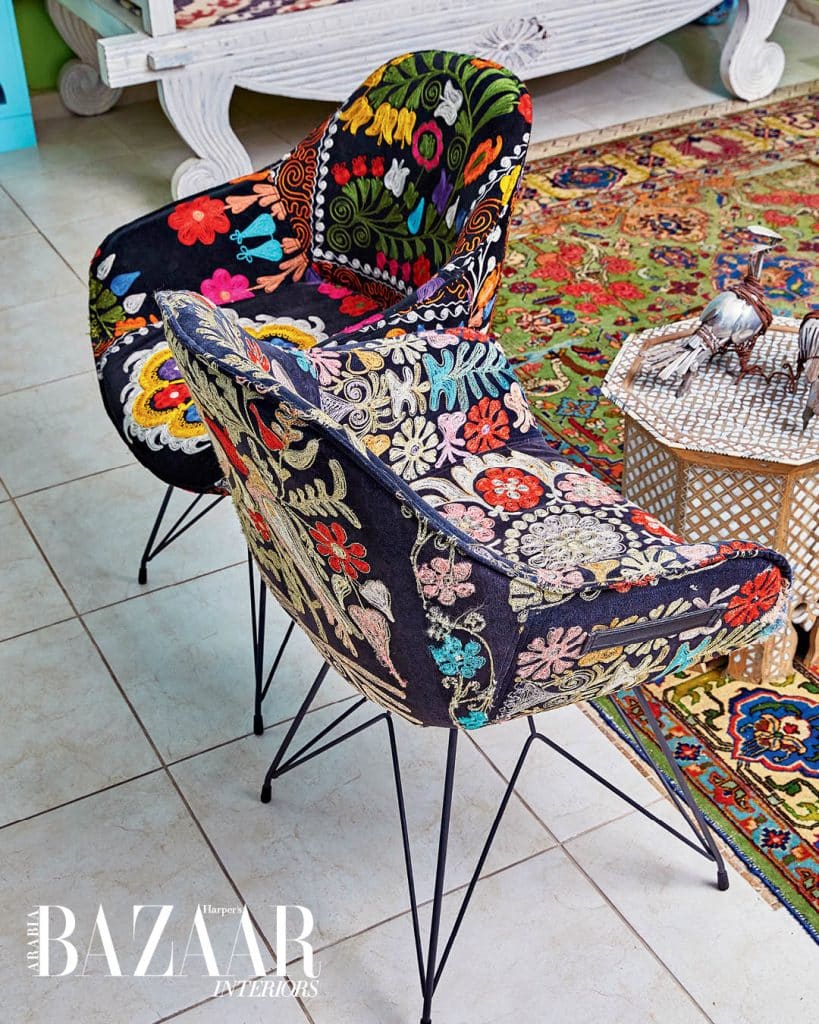
“Bibi blends old-school mother-of-pearl with new designs and materials like metal,” says Nazzy. “When I travel, I hunt for unique and vintage pieces and when I find one, I grab it.”
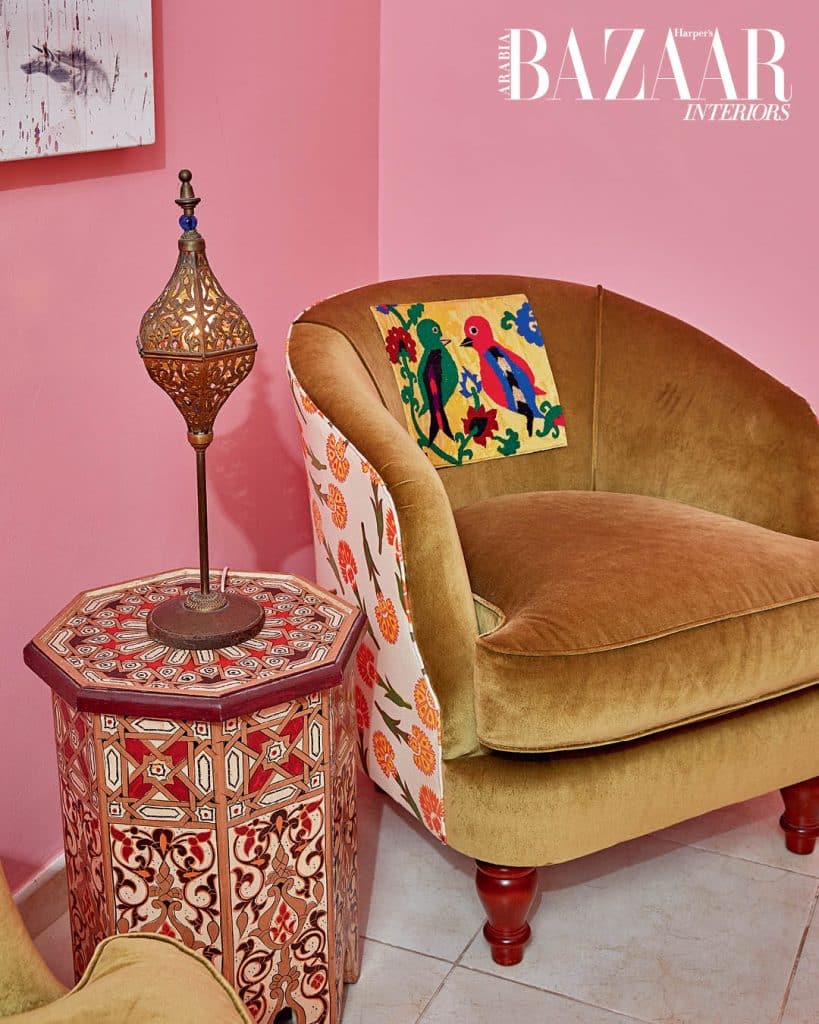
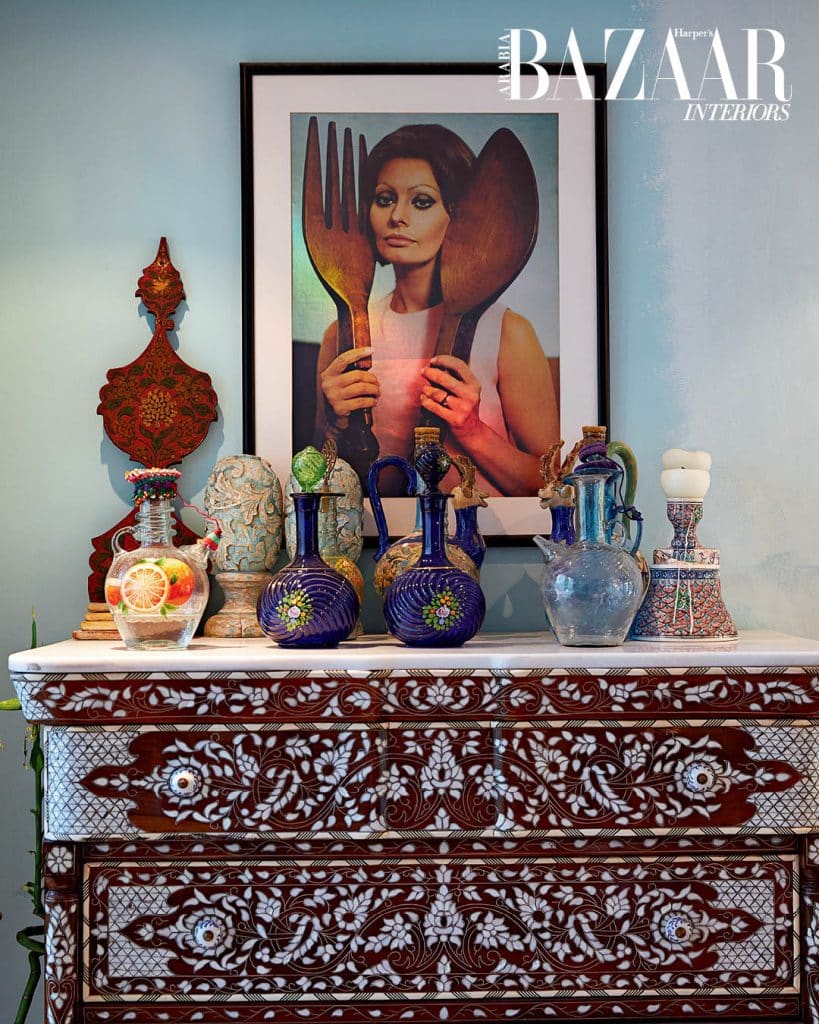
It’s obvious Nazzy is a collector of keepsakes – art, beautiful tomes, vases and, especially, tableware; she confesses she just can’t resist a good dinner plate. “I love creating vibrant and beautiful table settings – whether for a group of guests or just for my husband and I. A colourful table adds so much to the pleasure of eating. I enjoy cooking and sharing food. Cooking is like a cultural activity; I forget everything else in the world when I cook. The best part is the presentation that can be theatrical and can resemble an art installation.”
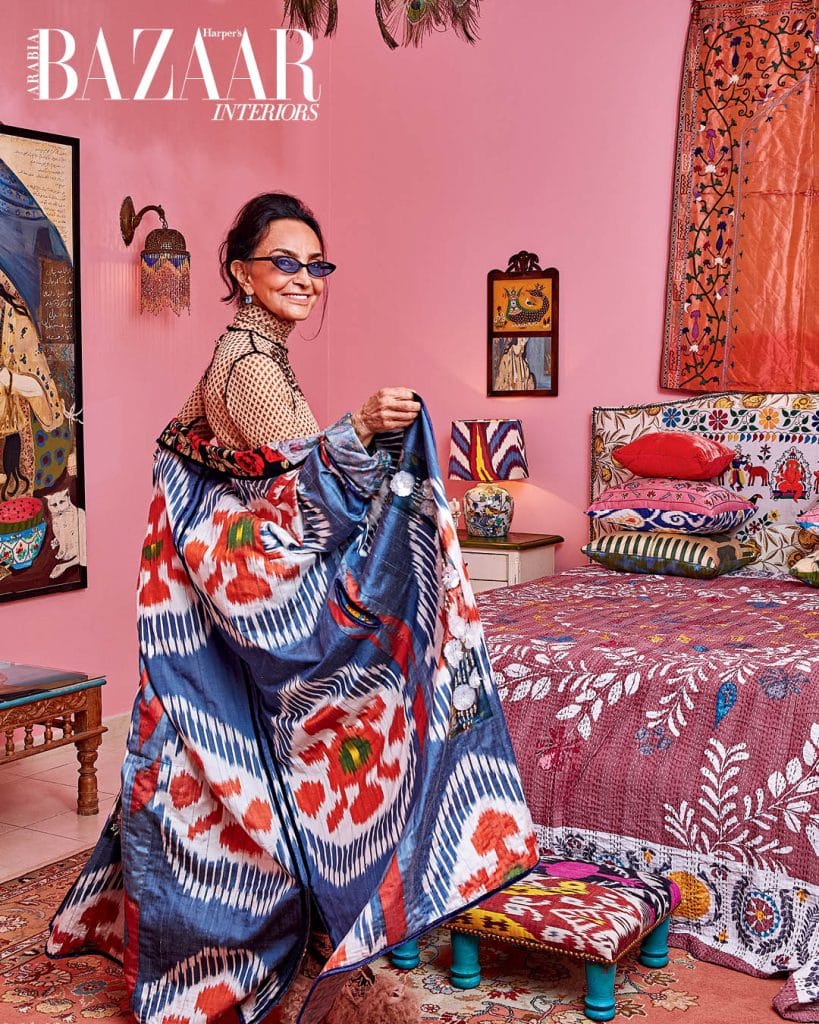
Like art, there’s no rulebook in Nazzy’s home. It’s an ever-changing, culture-inspired place where storytelling comes together with freedom; an eclectic haven where monotony is left at the door, and all forms of creative experimentation are welcome inside.
Photography by Efraim Evidor. Styling by Imogene Legrand
From Harper’s Bazaar Interiors’ Winter 2023 issue.