
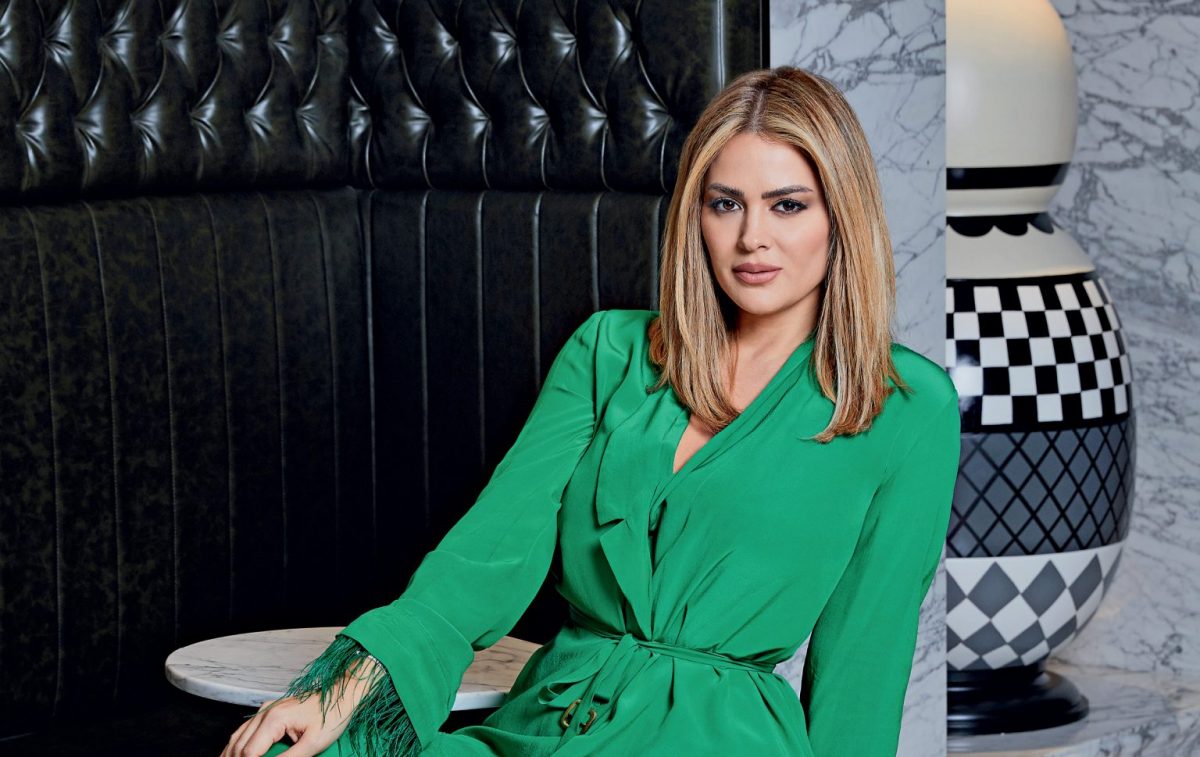
Carla DiBello On Family Models, Future Plans And Forms Of Motherhood
Entrepreneur and celebrity style insider Carla Dibello on the many definitions of ‘mother’, and why she’s still on the fence about becoming one herself
In the last decade or so, the global birth rate has noticeably declined. In the United States, births have declined approximately two per cent every year since 2014 (with the exception of a mini boom during the pandemic).
Within the MENA region, the average number of children born per household has gone down from nearly seven children in 1950 to 2.5 children in 2019. There are multiple reasons for this including technological advances, family planning resources, progression of human rights, and more women entering and remaining longer in the workforce on a global scale. What we once considered to be the traditional family model is proving to no longer be the standard.
I’m an outlier to the ‘traditional model’ myself. As a single career woman in her 30s, I’ve chosen my personal autonomy first, placing emphasis on my career over starting a family thus far. And to be completely upfront, I’m still on the fence about having children. I’ve had my eggs frozen, which certainly helps to extend the window should I choose to have a child. Unlike my own mother and the generations that came before me, I have the option to challenge the conventionally restrictive timeline of motherhood. It gives me time to meditate on whether having a child is something that I truly want or if it’s societal pressure that is driving the decision.
It is true that women feel more social pressure when it comes to having a baby than men. It’s also thought that in this society, women are expected to want a baby more than men. However that’s not actually the case in real life. In fact, studies have shown that childless men are significantly more depressed than childless women with a higher tendency to feel isolation, jealousy, and an overall sadness caused by their lack of children.
While anecdotal, one of the main reasons why I think this might be the case is that women seem to be better at nurturing through community. My own close-knit group of friends feels more like a family than friends. I am close with so many of their kids and have fostered a deeply personal bond with them, along with my own nieces. I care for them in my own way, lending an ear when needed, collaborating in plans for their future, and offering up my home to them whenever possible. I’ve learned that nurturing comes in so many forms, and while I may not be a biological mother right now, I can still serve in many aspects of caretaking that are deeply fulfilling.
Growing up, I had a similar experience as a child. I had my own mother, but I also had mother-type figures who filled certain needs in my life at various times. There was a friend’s mother to whom I could confide all my deepest secrets without fear of judgment. Older female friends who supported me with sage life advice. And there was the mentor, who kept me focused and grounded as I navigated the world of business from my own unique angle.
Mother is a noun, but it is also a verb. Aside from the literal definition of ‘to give birth to,’ mother is also defined as: to bring up (a child) with care and affection. Looking back at all the women who were there for me throughout all my years, there were so many who helped to ‘raise’ me with the care and affection of a mother. It’s inspiring to think that I could potentially do the same for the generation of today. Whether I have children of my own or not, I am content in knowing that I can love deeply. I can offer my knowledge, compassion, and my heart as a contribution to the future of this planet and the generations to come.
Photography: Efraim Evidor. Styling: Seher Khan. Carla Wears: Jacket, Trouser Dhs 3,535, Both Rami Al Ali. Shoes, Carla’s Own Hair and Make-up: La Loge. With Thanks To The Westin Dubai Mina Seyahi Beach Resort & Marina 30
From Harper’s Bazaar Arabia’s July/August 2022 Issue.