
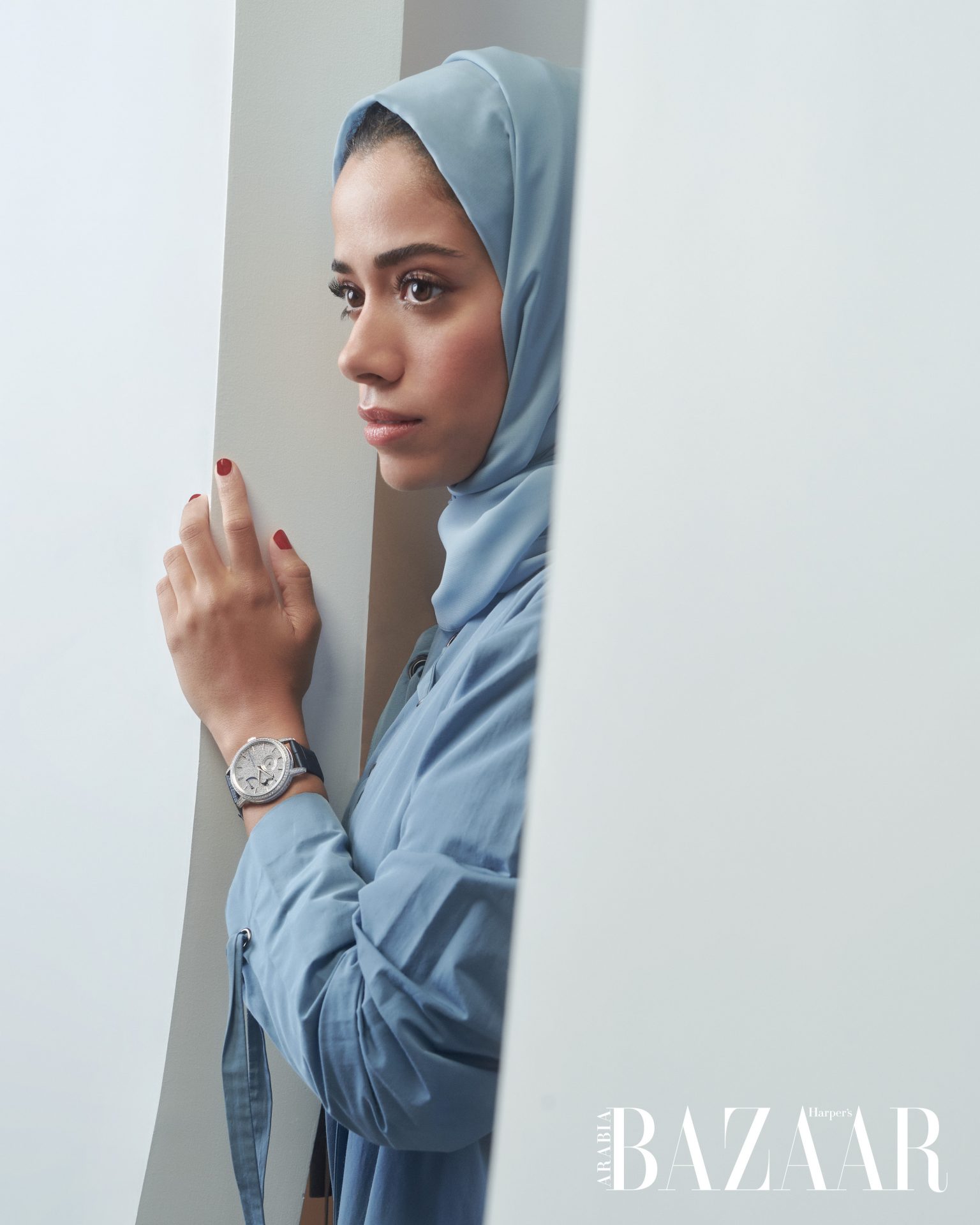
Emirati Artist Afra Al Dhaheri On The Art Ecosystem, And The Importance of Grassroot Initiatives
Abu Dhabi-based mixed-medium artist is committed to supporting the next generation of creatives here in the UAE…
It’s no secret that the United Arab Emirates is home to unparalleled vision, talent and determination, so to celebrate the country’s 51st National Day, we have chosen three inspiring Emirati women — Alia Al Mur, Hamda Al Fahim and Afra Al Dhaheri — from different fields, who represent the nation’s gloriously multifaceted cultural landscape.
Here, Rhode Island School of Design MFA graduate and The Salama bint Hamdan Emerging Artists fellow Afra Al Dhaheri shares with us the importance of grassroots initiatives, what her practice has taught her about herself, and her thoughts on the future of the UAE art scene
Your experience growing up here in the UAE has had a profound effect on your work. How has this shaped you as an artist?
Growing up in Abu Dhabi… well, the one thing that was very much brought to my attention was when I moved to the United States to study for my master’s degree, it made me really step back and look at my city, my culture, my society… from a distance. I came to realise my attachment to construction and architecture. I would go to the Venice Architecture Biennale every other year, and I’d always be interested in seeing Brutalist architecture, or Modernist architecture, and it was just something I liked, I didn’t know why. I realised my attachment to construction and architecture came from me growing up surrounded by it. It became an influence and I started using construction materials in my work.
What’s one thing you’ve had to unlearn as an artist?
In my practice [as an artist], I’m unlearning how I’m told things naturally should exist or how materials should be used. I try to unlearn to come up with new ways of experiencing these materials, exposing their rawness and forms. When I coat foam with cement, I’m turning it into this little kind of architectural object – when in reality, it’s a material that’s usually used to reinforce buildings. When I take rope and untwist it, it becomes wavy, so I’m interested in that because it gives the idea of the life of the rope before it existed in my work. It becomes a way of acknowledging the conditioning that this material went through.
For me, the unlearning process – it’s a process. It’s about taking back objects or materials to their original form, metaphorically like unlearning certain ideologies that don’t make sense to me. For example, growing up with curly hair and having to straighten my hair to be presentable, where does that come from? If you think about it, it sounds like a very western kind of inherited colonialist ideology. But do we question it in that way? I don’t think so.

From cotton to rope to concrete – and even your own hair – you’ve worked with a variety of mediums. What has each one taught you?
Working with rope taught me a lot about patience and pre-planning. We’ve become impatient… being exposed to constant change and having our phones and being exposed to a gazillion [pieces of] content at once and information, all of that… In my studio I tried to learn patience, tried to slow down my practice to be able to slowly process it and digest it. With concrete, I learned that it’s a vulnerable material, unless it’s heavily reinforced… My own hair taught me to appreciate it more. It made me realise how hair is this fragile material, yet it holds such strong, powerful meanings. It has a lot of authority – or it can manipulate authority.
You were one of the co-founders of Bait 15, a grassroots artist-run collective located in Downtown Abu Dhabi. Do you have any plans to revive the concept or, potentially, launch something similar in the future?
One of the things that I remember discussing with my fellow co-founders when we closed [Bait 15] was, maybe it’s time for Chapter Two. We’ve taught people that spaces like this can exist and artists can run spaces like this. When we closed we counted over seven artist-led initiatives and collectives that had been initiated. I think I’m already doing similar work by educating. I love trying to bring opportunities and help to establish the community and the artists’ ecosystem, because it’s something that I didn’t have when I was [starting] my career. I think that grassroots [initiatives] are a very important ingredient to a successful art ecosystem.
You’re an Assistant Professor of Visual Arts at Zayed University. Why is mentoring and teaching important to you?
This might sound cliché but I learn just as much as I teach. I don’t know everything – I have experience, but I don’t know it all – so when my students come to me curious and they’re asking, “How can we join these two materials?” that I’ve never seen join together, I’m like, “Ah, let me figure it out. Let’s go search and find out if this would work or not.” We learn new things together.
Change here in the UAE happens at a rapid pace. How do you forsee the cultural landscape evolving throughout the next 15 years?
That’s a tough question – I can predict, but I’m pretty sure that it’s going to exceed my prediction. The rapid pace [of change] has allowed us to become a very unique art ecosystem. There’s nowhere else in the world that shares this similarity with us, even historically. Usually [the evolution of] art and culture… it takes time. It comes through inheritance, cultural inheritance and people, patrons, believing, and so on. Peggy Guggenheim, for example, who started her collection, she was friends with the artists and she believed in collecting [work from] living artists – Jackson Pollock, Lee Krasner, Kandinsky. Now years later, her collection sits in her own museum in Venice. This took time to happen – and I’m sure we’ll have similar stories [here in the UAE] because people are collecting now, but for the government to come and make such an, almost radical, decision to just bring museums here and start, it’s becoming the incubator for the future arts scene.
Photographer: Greg Adamski. Senior Fashion Editor: Nour Bou Ezz. Editor in Chief: Olivia Phillips. Art Director: Oscar Yáñez. Senior Producer: Steff Hawker. Hair and Make-Up: Jazmin Lois Rodriguez. Photographer’s Assistants: Alireza Yahoozadeh and Mark Offemaria. Hair and Make-Up Assistant: Sabiha Perween. Fashion Assistant: Amelie Louisa Klewe. With special thanks to The Museum of the Future
From Harper’s Bazaar Arabia’s December 2022 issue.