
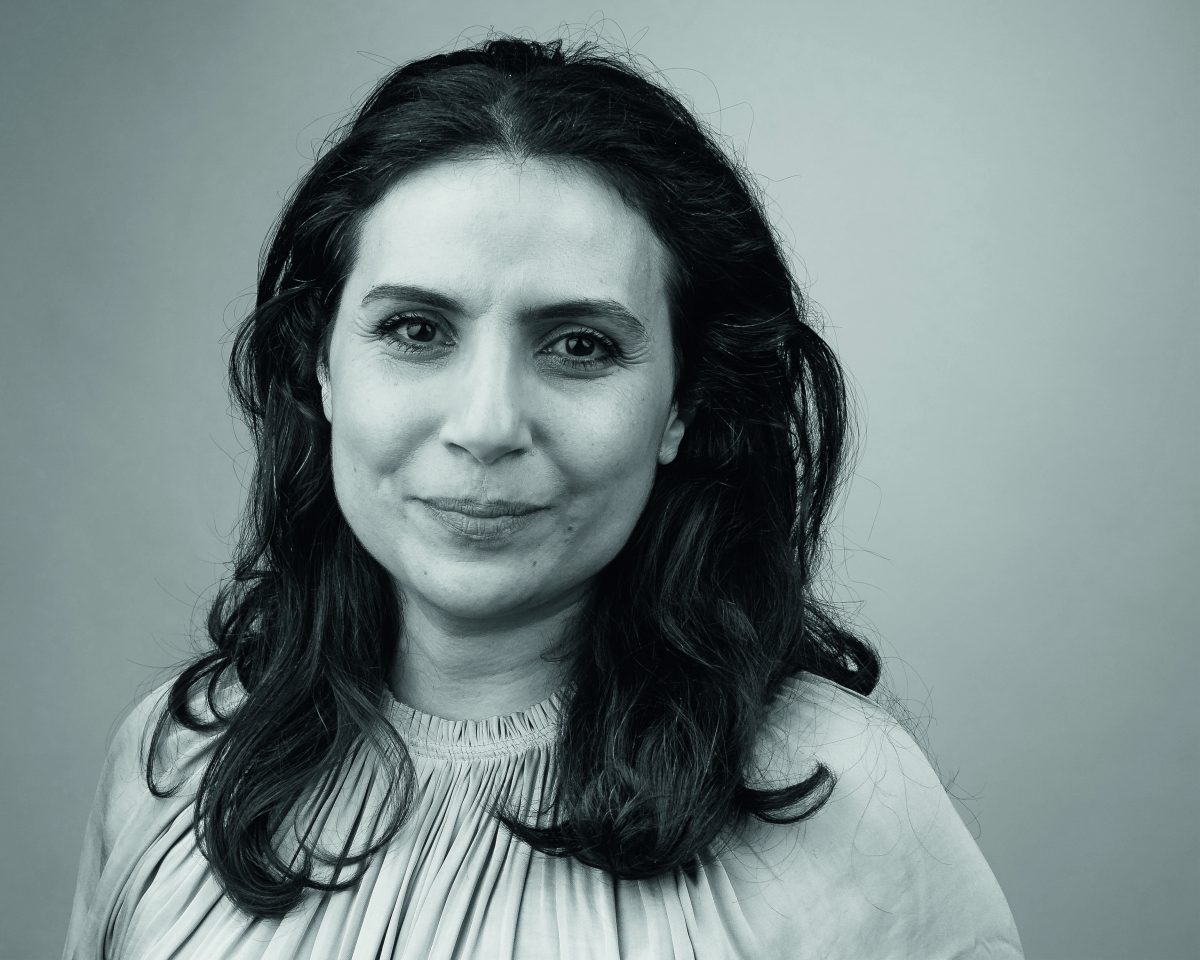
UN Women’s Susanne Mikhail Eldhagen On How To Make The World A Happier Place
The UN Women Regional Director for the Arab States and Bazaar Arabia columnist explores how equitable employment and inclusive economic development can lead to the overarching wellbeing of a nation
In 2011, the Arab region was marked by tsunamis of unrest. Condensed anger, mostly contained by the young, was now pouring into the streets; waves of desperation and fires of hope. While black smoke still pierced the streets of Cairo and Beirut, a group of scholars, safely tucked in another world, produced what would become the first ever ‘World Happiness Report’. The report gained considerable global attention for its innovative lens. Urging policymakers to pay attention to what was at the time perceived as novel perspectives pertaining to human development, it captured the time not only in financial terms, but in human feelings such as well-being and happiness. Thinking back to 2012, when the report was released, I can’t recall anyone in my immediate surrounding as much as glancing at the document.
The mere idea of happiness whilst streets were still fuming seemed absurd; like watching a comedy at a funeral, throwing a party in midst of famine. The report was put aside, for better days. And, it has been published every single year since 2012. March 2022, when the 10th edition was released, was obviously no exception.
As the years have passed, I’ve become increasingly intrigued by the report, not as antidote to the harsh realities surrounding us, but rather as a subtle clue of why they are there. Throughout this time, literature of similar disciplines has acknowledged the importance of both genetics and environment to the levels of happiness in people. When it comes to the environment, the World Happiness Report singles out a handful of countries that have consistently topped lists. Maybe not so surprising, these countries are all characterised by traits of social and economic protection of its citizens and quality social services for all, ranging from health and education (including pre-schools) to justice systems conceived as fair, impartial and non-discriminatory.
Another trait characterising the top countries, is the high scores they all achieved in the World Economic Forum’s Gender Indexes; another fundamental element of equality and non-discrimination. None of this is uniquely surprising, and equally non-surprising is the fact that many governments eyeing a speedy Covid recovery, are now looking at building blocks that “build back better”.
This includes targeted investment in the exact areas seeming to constitute the pillars for wellbeing and happiness. Investing in the care economy, focusing on affordable and quality pre-schools, and expanding health coverage. And of course, targeting fair income opportunities including job creation, tackling youth and women’s unemployment figures.
The latter group suffered vast job losses during the peak of the Covid-19 outbreak, as care responsibilities were disproportionally assigned to them, just as they were either starting a professional career or peaking. And our own region too is looking at innovative ways to address wellbeing, through a number of interesting innovations.
The Dubai Chamber’s announcement to shift to a 4.5-day work week starting January 3, 2022, is an important decision towards dealing with one of the most poisonous enemies of wellbeing – stress. The new work week is poised to bring the UAE’s financial sector into closer alignment with global trading and communications time frames, and at the same time extending the weekend to 2.5 days.
Working less for those over-worked, is a fundamental step towards wellbeing. Equally important is creating employment for those who want a job but simply can’t find one. Here too, exciting steps are being taken in our own neighbourhood. Only one month after the UAE decision, all Arab states came together through the Arab Declaration for the 66th Session of the Commission on the Status of Women. In the declaration’s Article 1, all Arab states have committed to the possibility of developing a joint regional initiative on women’s employment in the green and blue economies.
Being part of that meeting, I was impressed by the level of commitment towards what is ultimately a building block towards equitable employment and sustainable, fair and inclusive economic development. These are two areas that struck a chord with many young women pouring into the streets in 2011. Now backed by evidence, we know that these types of investments are not only crucial to inclusive economic development and national stability, but evidently to our citizens’ very well-being. And ultimately, our happiness. It’s an important link that necessitates a discussion around well-being and happiness of citizens not as something negligible or extracurricular, but rather as a critical pillar for national harmony, stability and peace.
From Harper’s Bazaar Arabia’s April 2022 issue