
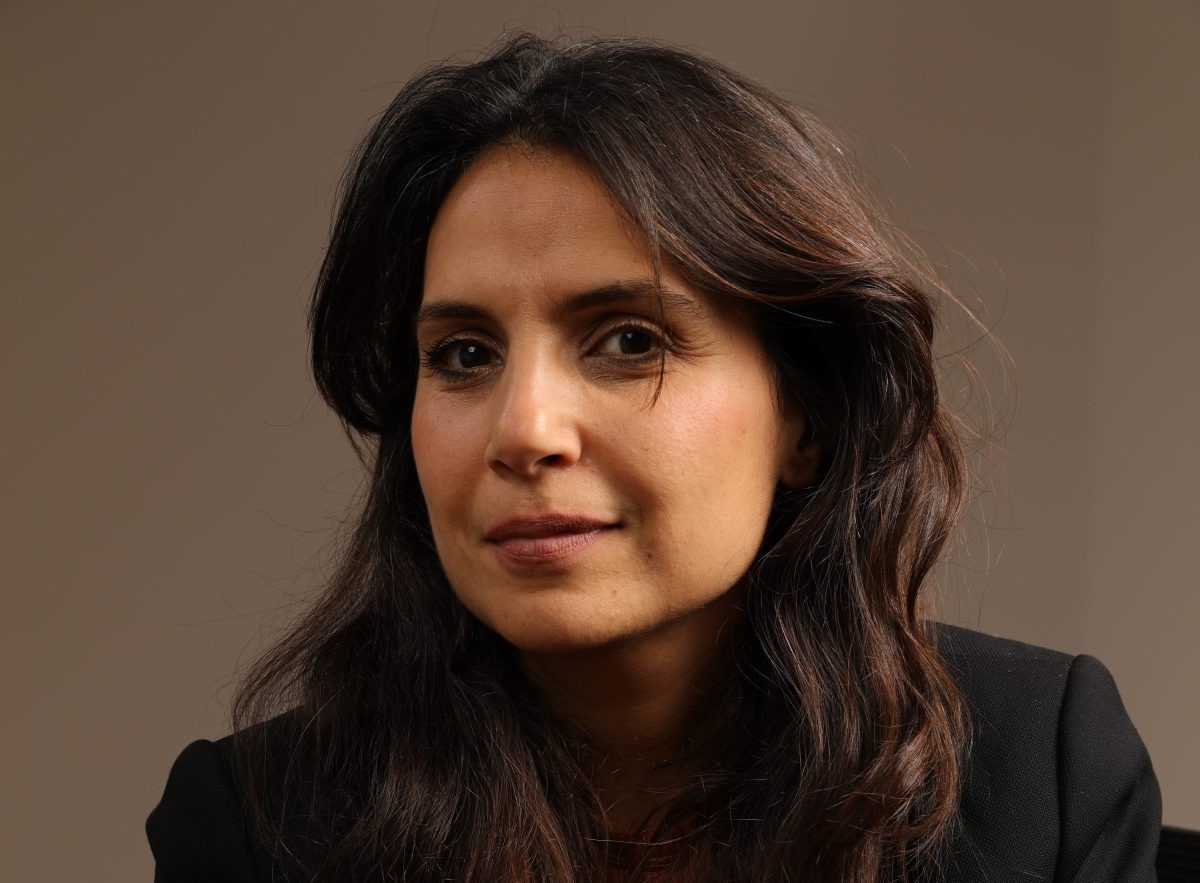
UN Women’s Susanne Mikhail Eldhagen On The Power Of Perspective
Susanne Mikhail Eldhagen, UN Women Regional Director for the Arab States, and Harper’s Bazaar Arabia columnist, discusses how enriching it is to be able to look at a project from vastly different vantage points
A simple gold chain around my neck has unexpectedly played a political role in my life. At the end of that chain, a heavy cylinder dangles, a two-centimetre long and five-millimetre wide kaleidoscope. I’ve noticed repeatedly how unwillingly fixated eyes struggle to make sense of the cylinder – simple in design and form, yet a powerful carrier of a precious message. A message needed perhaps now more than ever in these polarising times, when perspective is often rooted in oversimplification of the other, even caricaturing towards travesty.
When I am pulled by the illusive temptation to simplify what I see, I have found myself looking at this pendant. Most recently it happened when I, together with my Communications team at UN Women, stayed late one day debating my statements following the launch of one of the most significant knowledge tools that UN Women produces together with its sister agencies. Namely, a recurrent publication Gender Justice and the Law, in which we look at laws and regulations affecting women’s rights, together with national counterparts from more than 15 countries in the Arab States region.
“In our complex world, we deserve a more balanced outlook and need to remember there is more than one way to see things.”
Susanne Mikhail Eldhagen
Following a thorough read of each country’s report and dozens of laws, it was at first tempting to distil the body of work, which took two years to create, into one catchy headline. But that one-dimensional phrase, whether “great advancements” or “continuous struggle” wouldn’t fairly portray the Arab States’ regulatory frameworks. For instance, the latter term doesn’t justly reflect the thousands of hours of hard work by lawmakers, late evening shifts amongst policy developers, a determined civil society and political drive at the highest level of government to collectively advance the frontiers in a number of significant areas.
Case in point, 16 out of the 17 countries – Jordan, Saudi Arabia, Morocco, Bahrain, UAE, Palestine, Syria, Yemen, Iraq, and Somalia – reviewed guaranteed equal pay for equal work. Also, there are eight countries – Egypt, Lebanon, Morocco, Iraq, Kuwait, KSA, Bahrain, UAE that have legal frameworks combatting sexual harassment at work. Egypt, Morocco and UAE have laws on cyber violence against women. While a larger list of countries – including Lebanon, Qatar, Palestine, Oman, Syria, Tunisia, Kuwait, Iraq, Sudan, KSA, Bahrain, and Jordan – have Neutral Cyber Violence laws in place.
These are all major successes, in some areas advancing beyond global averages. But stopping here wouldn’t give the true colours of the current reality. Because, like most regions, we too have a way to go. Only three countries – Bahrain, KSA and UAE – have abolished laws that restrict women from certain professions and paid maternity leave and paternity leave are some of the lowest worldwide, similar to laws regulating marriage, divorce or custody. Equal rights in marriage and divorce are, for example, only granted in Tunisia.
But these are areas that a number of countries are now looking into. Much in the same way they, not too long ago, reviewed laws regulating Legal Capacity; which deals with rights regarding identity cards, passports, entering contractual agreements, property ownership, registration of companies, and legal procedures in civil issues. Today, all 17 countries can show significant positive reforms in these very areas.
After long hours of deliberations, my colleagues and I chose not one, but several statements to describe the richness of the Gender Justice and the Law publication. Then, on my way home, I chose to rest for a minute on a park bench not far from where I live. I raised the cylinder kaleidoscope pendant towards the sun. Carefully looking through it, at first I saw all blue inside, but then as I slowly turned it to the left, the colours shifted to red. The same object produced vastly different perspectives, depending on how I looked through it. In our complex world, we deserve a more balanced outlook and need to remember there is more than one way to see things.
From Harper’s Bazaar Arabia’s July/August 2023 issue.