
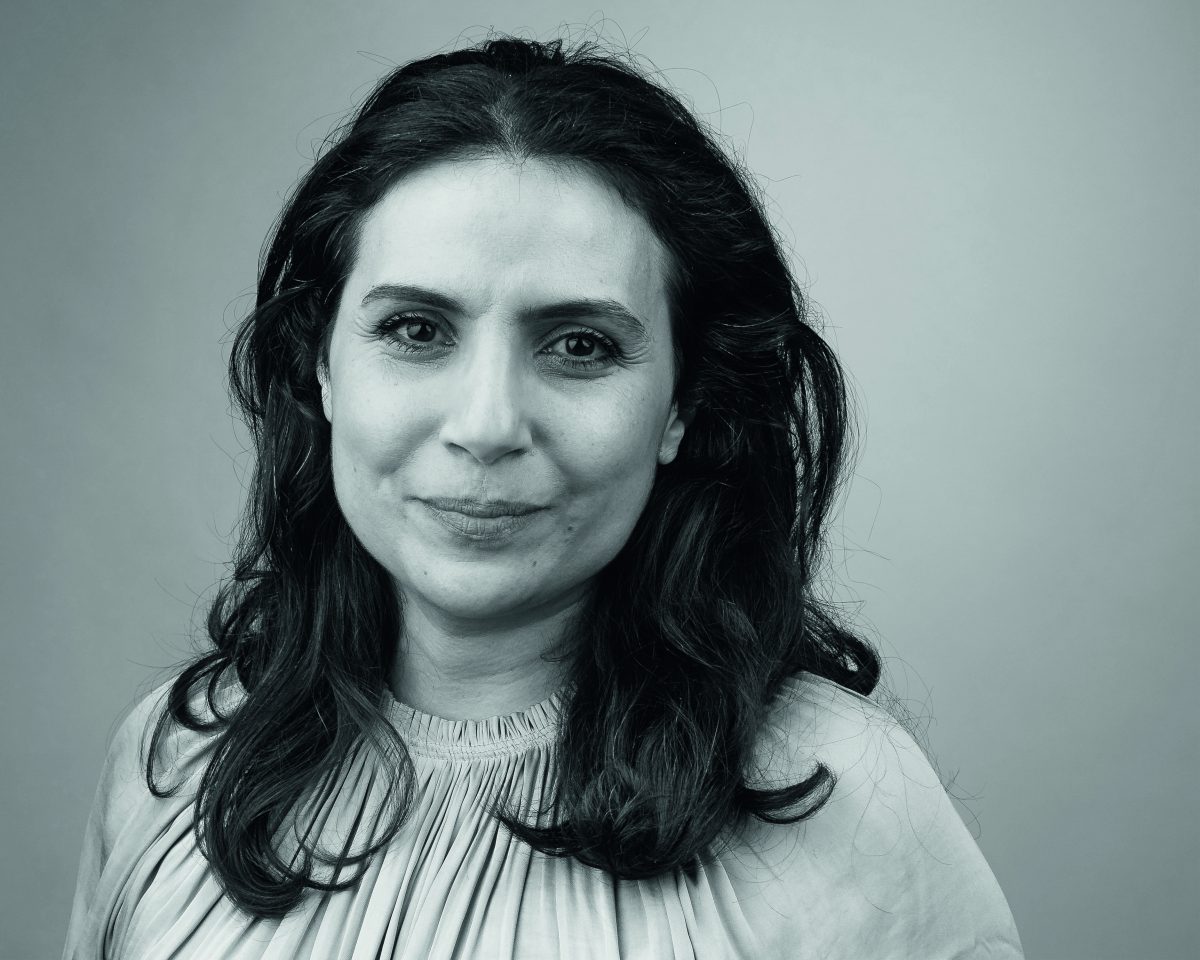
UN Women’s Susanne Mikhail Eldhagen On The Role Of Women In The Green And Blue Economies
The UN Women Regional Director for the Arab States, and Bazaar Arabia columnist, looks towards this month’s CoP27 conference as a platform to help expand female employment in STEM fields
By the first week of this month, dark suits will have been drycleaned, skirts and shirts ironed, luggage neatly packed and folders tucked into suitcases. Delegations from more than 190 countries will be heading towards as many airports across six continents, to catch flights to Sharm el Sheikh, Egypt. Each national delegation is lead by a Head of State and for most hosting countries, this special congregation is by far the largest gathering of world leaders ever hosted on its soil. Technically, each delegation is called a Party, and they all head to the Conference of the Parties, also known as CoP, once a year. CoP 27, as the numeric applies, has been preceded by 26 conferences, all with one distinct objective: addressing climate change. And there is a history to this. Having recently emerged from the Cold War, 1992 saw a world eager to start a new era in global development and cooperation around key issues of global concern.
Environment was a given. And the initial meeting, the Rio Earth Summit, therefore established the United Nations Framework Convention on Climate Change (UNFCC), with a key objective to manage greenhouse gases (GHG) in the atmosphere to prevent risks to the climate system, an alarm raised by scientists back in the 1970s. Since then, there has been progress, hopes and disappointments – all at once in each successive CoP. There was the meeting in Kyoto, in 1997, which set binding targets for GHG for 37 countries, establishing what would come to be known as the Kyoto Protocol. In our own region, in 2012, in Doha (Qatar) after 13 days of arduous negotiations during COP18, parties were able to agree on a series of decisions to move the Kyoto process forward, at least in principle. Other CoPs, such as in Warsaw 2013, saw massive walk outs of disappointed national delegations as well as NGOs, and in 2015’s COP21, the Paris Agreement was signed, an ambitious global convention adopted by 197 countries with the now famous formulation to “limit global warming to well below 2, preferably to 1.5 degrees Celsius, compared to pre-industrial levels”.
For our region, the severity of a possible increase of 4 per cent degrees by 2050, comes with the opportunity poised by the fact that the percentage of women pursuing an education in key fields for addressing climate change (Science, Technology, Engineering and Mathematics) is higher than for other regions. This, as I have mentioned in earlier op-eds, places women in the Arab States in a uniquely good position for employment in these sectors, given that main STEM fields such as ICT, digitalisation and the green economy, are anticipated to account for 70 per cent of all jobs in the future and are anticipated to be key industries in advancing solutions to address climate change.
In February 2022, after months of deliberations, 22 Member States from the League of Arab States made the smart decision to embark on a regional programme to intensify female employment throughout the region, in green and blue economies. Already, less than 9 months later, we are looking at implementation; particularly within the sectors of solar energy and climate smart agriculture. Our initial analysis also shows that to really expand female employment in these fields, three fundamental pillars need to be worked on simultaneously; legal amendments of a few – but key – restrictive laws on women employment, social norms, and mass communication, reaching urban and rural alike. The exact whats and hows of the ways female employment can further address climate change in our region will be discussed in depth at CoP27.
“Stem fields such as ICT, digitalisation and the green economy, are anticipated to account for 70 per cent of all jobs in the future,”
Susanne Mikhail Eldhagen
There, together with members of the League of Arab States and the growing coalition supporting this initiative, we will reconvene. This time to dissect the new analysis of UN Women, which highlights exciting enablers for female employment in the Arab States, and explores how such a novel initiative can be realised at speed. Because in both areas; climate change and gender equality, commitments and declarations are critical for building a common ground. Even more important, is the speed and scale of the actual realisation of these initiatives. Because while one is critical for our very survival, the other is clearly a precondition for our very development.
So, on the 6th of November, my bag will be packed, skirts and shirts ironed, folders tucked in my suitcase and I will be on my way to Sharm el Sheikh to help bring these projects to fruition.
From Harper’s Bazaar Arabia’s November 2022 issue