
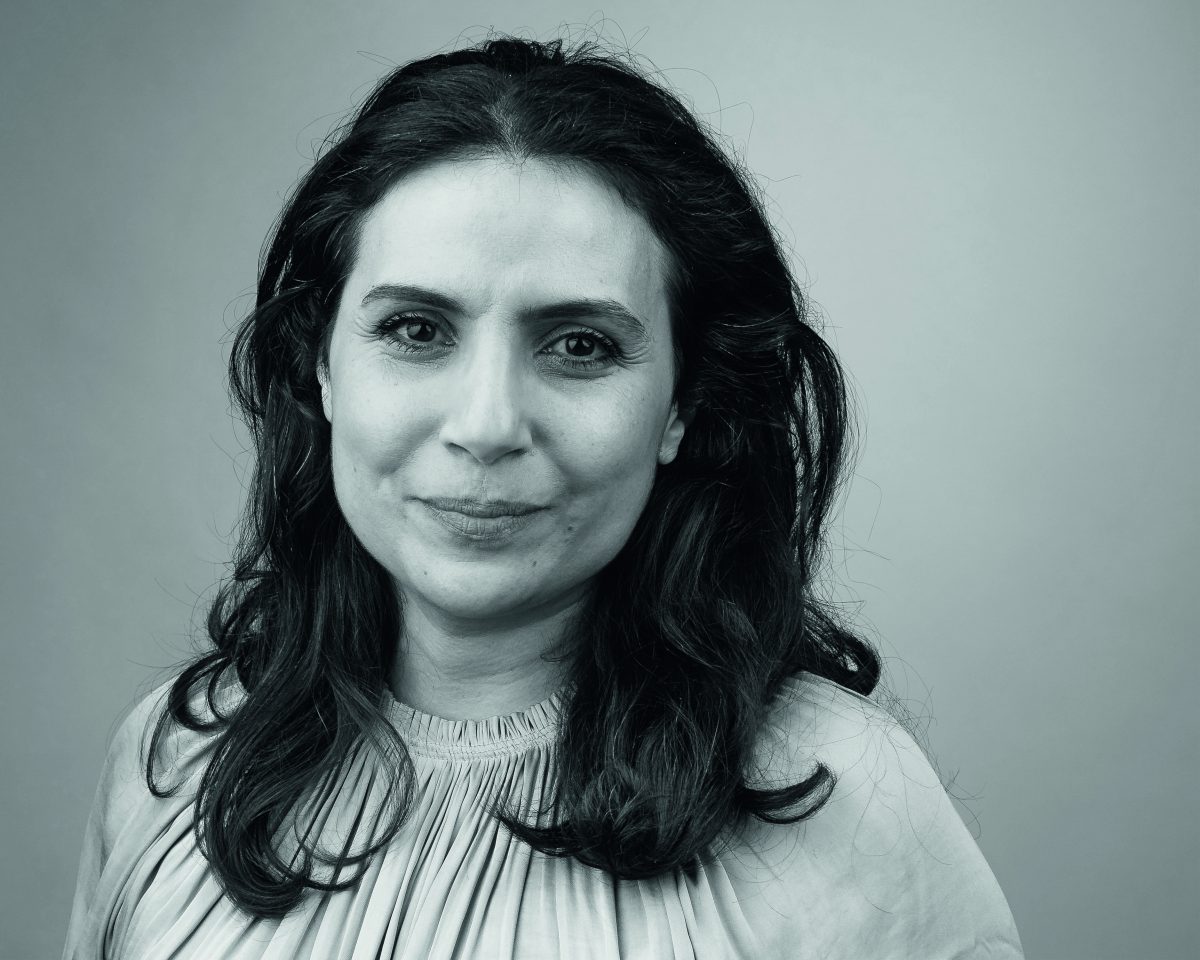
UN Women’s Susanne Mikhail Eldhagen On Why Having It All Is Never A One-Woman Job
The UN Women Regional Director for the Arab States and Bazaar Arabia columnist, reflects on the importance of the care economy in the pursuit of a more equitable work environment
Exactly 10 years ago a red exclamation-marked email landed in my inbox with the subject line “you have to read this”. I glanced out of my office windows overlooking the United Nations. 193 flags drowsily swaying in sweltering heat of mid-summer New York, a last dance for the civil servants pouring out of revolving doors; unbuttoning suits, badges off. But instead of heading home as planned, my eyes landed above the screen; one photo and the United Nations Charter, neatly pinned side-by-side. Alexander 6, Yasmine 4, and the Charter; gray straits and wrinkles too deep for its age at 67. With a somewhat renewed sense of energy, I went back to the text, reading what would become not only one of the most widely shared articles, but one of the most debated, particularly amongst professional women – Why Women Still Can’t Have It All by Anne-Marie Slaughter.
Anne-Marie was the first woman to serve as the Director of Policy Planning for the U.S. State Department, under U.S. Secretary of State Hillary Clinton. In the article, she reflected on her experience of trying to reconcile her dual commitments to a successful career and to a happy family life; the latter had evidently suffered. The piece spread like wildfire and sparked one of the most liberating debates of that decade.
One school of thought feared that such a conclusion coming from a high-profile woman on top of her career, a role model for many – would be a horrible signal to younger generations that aspired to what men seemed to have: family and career. This group was particularly inspired by a new wave of women leaders, mainly from the private sector, that embodied an empowering ‘you can have it all’ attitude. Another school of thought criticised the article as being predominantly geared towards well-educated, white-collar, high-income women. As a friend exclaimed, between day and night shifts while feeding kids who she hardly saw, it’s not “I can’t have it all at the same time”, it’s “I can’t have any of it, at any time!”.
But with a large segment of female professionals, the article did strike a chord. And for my friends and colleagues from Arab States, it resonated on a deeper level. A topic that Anne-Marie raised now seems on everyone’s mind: care services. In other words: reliable, affordable and quality services to support families in the care of children.
A recent study by UN Women shows that mothers play an outsized role in the care economy in the Arab States, performing 4.7 times more unpaid care work than men – the highest female-to-male ratio anywhere in the world.
At the same time, there is a lack of adequate high-quality care services in the region. This gap means that there is tremendous potential for growth and investment, and thus the creation of a vast number of jobs both for women and men. More importantly, growth in the care-services sector would support a more equal playing field professionally and domestically.
It is therefore commendable that governments throughout the region are increasingly attentive to this cause with a view to supporting scale and acceleration of impact. Academia, NGOs and think tanks all over our region are contributing to the effort.
As for me, before turning off my screen, I still have a habit of glancing at those two photos and the Charter. Alexander at 16, Yasmine at 14. And the Charter; grey straits and wrinkles way too deep for its age at 77, but still with stamina and strong bones, as its preamble commands us to “reaffirm faith in fundamental human rights, in the dignity and worth of the human person, in the equal rights of men and women”.
From Harper’s Bazaar Arabia’s May 2022 issue.