

Kuwait’s Sheikha Majda Jaber Hamoud Al Sabah On Mental Health, Breaking Taboos And Launching The Houna Initiative
In an intimate one-to-one discussion with Harper’s Bazaar Arabia, the Kuwaiti royal shares how her personal struggles turned into her passion project
Sharing your personal vulnerability with the world is a daunting prospect. Even more so if you are from one of the highest-profile royal families in the region. That’s what makes Sheikha Majda Jaber Hamoud Al Sabah such a unique role model – she’s taken her own private challenges with mental health and depression to help others.
The Global Burden of Disease estimates that 15 percent of the regional population suffers from mental disorders, yet 75 percent of those never seek help. That’s why the non-profit Houna Initiative, an online support portal that Sheikha Majda has just launched, is so essential. “I tried to be an advocate for destigmatising mental health,” the empathetic philanthropist divulges. “However raising awareness isn’t enough.”
Here, Bazaar Arabia sits down with the Kuwaiti royal to discuss her own respective wellness journey, her new initiative, and what she hopes to achieve in the future.
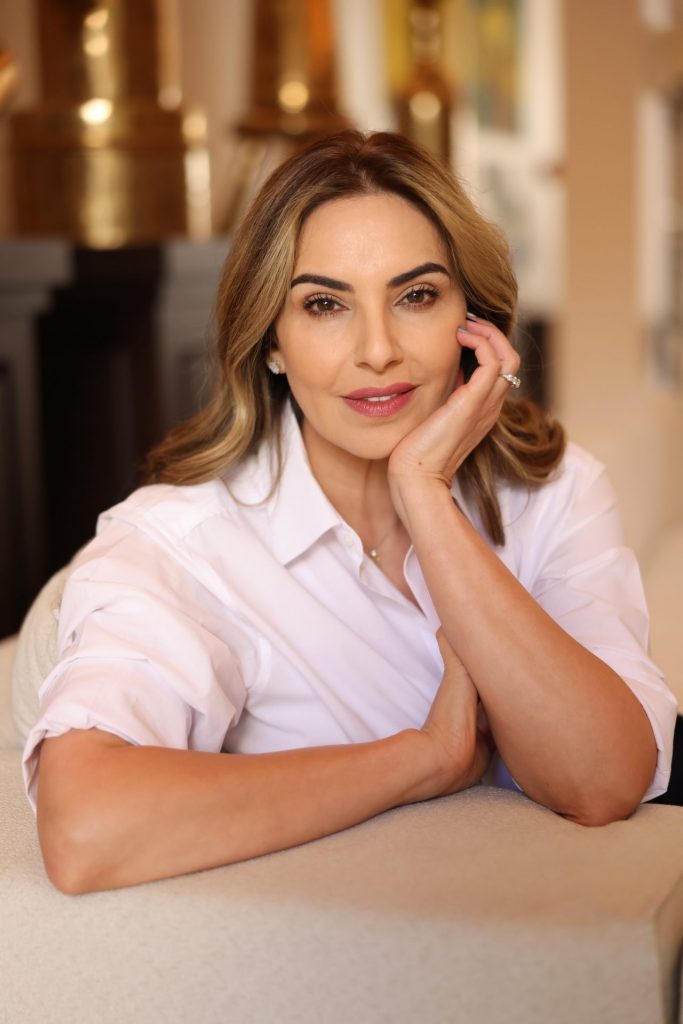
Sheikha Majda Jaber Hamoud Al Sabah: I grew up in Kuwait. I was brought up in a very conservative family. I did all my studies there too. My upbringing was very normal – although we are royal – but my mother insisted in bringing me up in quite a strict manner. It was a bit harsh when you compared it to my cousins, with all their toys and everything. I had to earn anything I wanted. I was really angry back then, but once I grew up I realised it was the best way to bring up children.
HBA: How did you decide to venture into the mental health field?
Sheikha Majda: I wasn’t thinking about the matter, to be frank, until I had an episode of severe depression. This happened four years ago. It went on for a very long time, for about six months. I stopped my life completely. I stopped my business. I stopped interacting with people. I was in isolation mode.
I finally went to the doctor because my family insisted. Throughout the medication, I thought ‘I don’t want anyone else to go through this and have this feeling.’ I knew there were others suffering in silence.
HBA: So this was borne from a purely personal experience?
Sheikha Majda: Yes. I felt that this was my life’s mission. My purpose in life – my calling. So that is what I did. In the middle of my journey, while I was till healing, I decided to launch an initiative to help anyone who has a mental health problem.
HBA: Was that a struggle given it is still quite a taboo subject?
Sheikha Majda: I wanted to break the stigma. The first three years of the ASAP Initiative [a campaign committed to increasing awareness] was all about breaking the stigma. It took me three years to do it.
HBA: What was the initial response?
Sheikha Majda: People were really shocked. Society was shocked that I shared my story. But now everyone is sharing their story! Everyone is saying: ‘I have this, I have that.’ It is very normal nowadays.
HBA: Are you particularly focused on women or is Houna a resource for everyone who might struggle with mental health problems?
Sheikha Majda: To be frank, I focus on human beings. Regardless of their gender, their mindset, their beliefs.
HBA: How can people avail of help on a practical basis?
Sheikha Majda: The platform is huge. We have been working on it for over three years, prior to the Covid outbreak. We were thinking and engaging my followers. Trying to see what is missing in their lives in terms of mental health support. I asked a lot of questions. They gave me answers. I took those answers and Houna was established. It is an aggregator. It links all the people who need guidance with the people who provide it. Psychologists, psychiatrists, wellness centres, yoga instructors, sound healers… you name it.
HBA: You embarked on this prior to the pandemic. Did you quickly realise that suddenly there was even more of an urgent need for it?
Sheikha Majda: Absolutely! You know what, Covid was a very critical time. It made us work even more. We found that people were really struggling and in need of support.
HBA: How do you learn how to cope with daily life?
Sheikha Majda: I am researcher. I love to learn. These four years of research showed me about the things that I should do to change my mood drastically. Firstly – and most importantly – gratitude. Gratitude can change your mood instantly. So I make sure that I meditate every morning and night, with a gratitude session and a quiet session.
HBA: What sets The Houna Initiatve apart from what’s already out there?
Sheikha Majda: Most of the Arab-speaking platforms are with us right now. We are promoting them, not competing with them. We are putting them under one umbrella so that they can expand their audiences.
HBA: When you entered this field, there weren’t many people who were vocal in it. Do you have any role models?
Sheikha Majda: That is tough as I have a few. For example, in our region, my mum is number one. She is a hard-working woman who doesn’t take no for an answer. If she wants something she will have it. Then I have a lot of international influences. For example, Oprah who does a lot of humanitarian work.
HBA: Do you think your royal links have helped or hindered you in what you are trying to achieve?
Sheikha Majda: You know me and my team are always fighting over that. Because I always tell them that I do not want to have this royal position – I want to earn it. I want to earn my success by myself. But they have a valid point of view which is that I need to use this gift. So I need to use this gift that has been given to me to make the world even better. So that’s what I am doing right now.
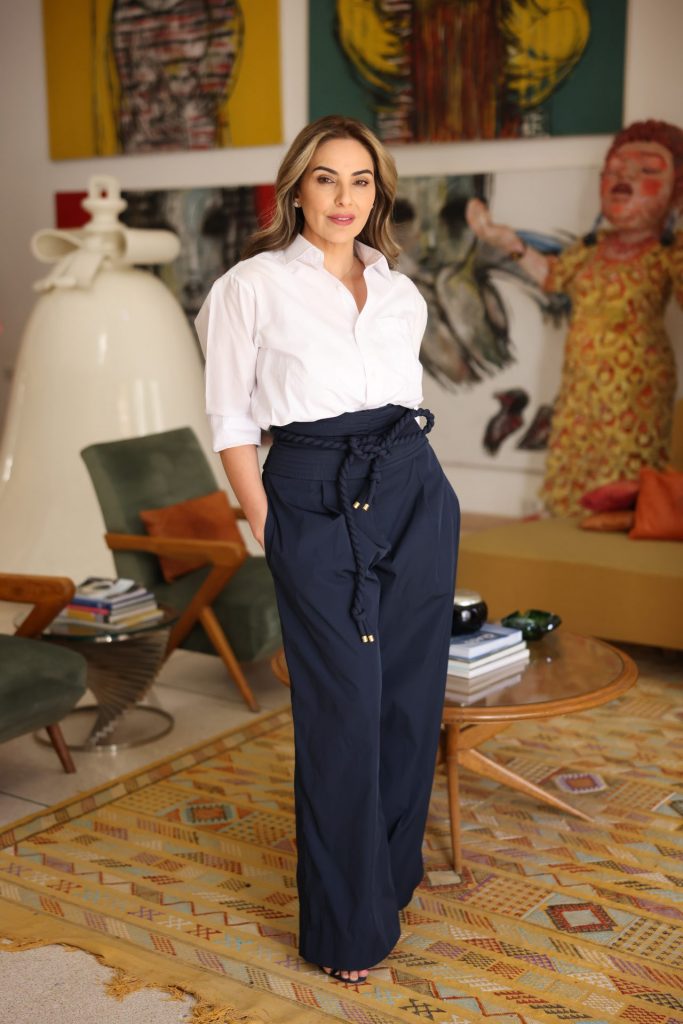
HBA: What do you hope to achieve? What result would you consider a success?
Sheikha Majda: We won’t stop. It is a never-ending project. We are just going to add more and more services, inject more onto the platform according to the needs of the people. The thing is that I wanted people to go to Houna to find their saviour. If you’re tired, or you don’t know where you stand on something, or are skeptical, you can go to Houna for resources to ground you and make you feel better.
HBA: What you are doing is so ground-breaking. Do you see that?
Sheikha Majda: I don’t see that at all. I just live my life and hope to help people day by day. I don’t see the bigger picture. I don’t want the limelight. At the end of the day, when I put my head on the pillow, I ask myself: ‘Did I help someone today?’ That is the jackpot for me.
For more information visit www.houna.org
Images supplied.
