
Altruistic Initiatives, Alternative Dwellings, Photography Hacks —Edition #3 of OOO Is Rooted in Travelling with Purpose
While the marvels of Mother Nature are boundless, there’s something about the dramatic glow of a sunset that can add warmth and dimension to any setting. It’s no wonder, then, that everything from yoga sessions and sightseeing cruises to romantic picnics and hot air balloon rides are scheduled as darkness falls. But not all landscapes are created equal so, here, we reveal our picks of the best sunset spots around the world
Angkor Wat, Cambodia
Sunrise or sunset at Angkor Wat? That’s the million-dollar question asked by just about everyone headed to Cambodia. Dubbed the world’s largest religious structure by Guinness World Records, this Buddhist temple complex in Krong Siem Reap calls for a minimum of three days to fully explore — it does span 162.6 hectares and over 1,000 buildings, after all. Inscribed on the UNESCO World Heritage List back in 1992, it’s also one of the most important archaeological sites in Southeast Asia. Angkor Wat was originally constructed as a Hindu temple in the first half of the 12th century under the reign of King Suryavarman II, gradually transforming into a Buddhist temple towards the end of the century.
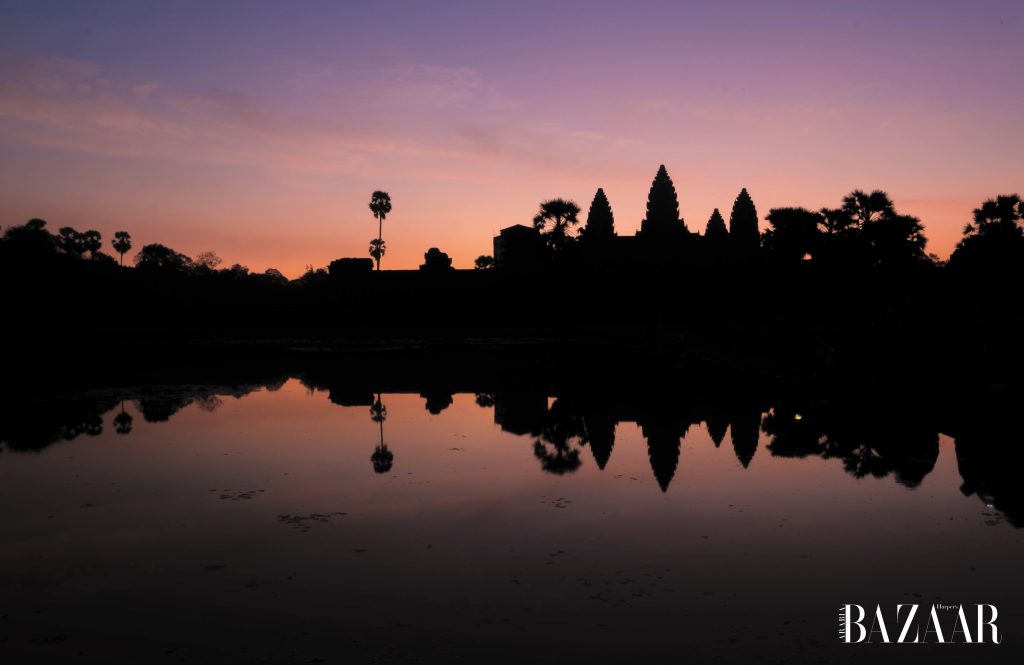
Today, it houses the ancient remains of the immensely powerful Khmer Empire that ruled Cambodia from the 9th to 15th century. The downside of touring this 900-year-old architectural masterpiece? Everyone – backpackers, photographers, families, and group tours – gathers at Angkor Wat in time for sunrise, essentially destroying the sense of zen that should come with this natural spectacle. And with the gates to the temple opening at 5am, a really early wake-up call is in order if you want to observe those first rays fall over its five central towers. Sunset, in contrast, is actually a serene experience (and totally underrated). Not only are most people gone by the end of the day, but you can also show up as late as 5pm and still catch the reddish, warm tones of golden hour.
Now, there are a number of sunset spots in the vicinity, but luckily, the definitive one is not up for debate: Phnom Bakheng. The first mountain temple built in the Angkor complex, it sits on top of a hill at a height of 70 metres, translating to stunning views of the countryside and this mystical setting. And it’s open until 7pm, which means you can watch the sun dip below the horizon from inside the temple — just aim to get there an hour beforehand. There is, however, a viewing platform just outside the temple (another great vantage point for sunset views over Angkor Wat), so you’re set either way. Film buffs may recognise Phnom Bakheng as it’s here that Angelina Jolie stood in action-adventure film Lara Croft: Tomb Raider, surveying the verdant jungle below her.
tourismcambodia.com
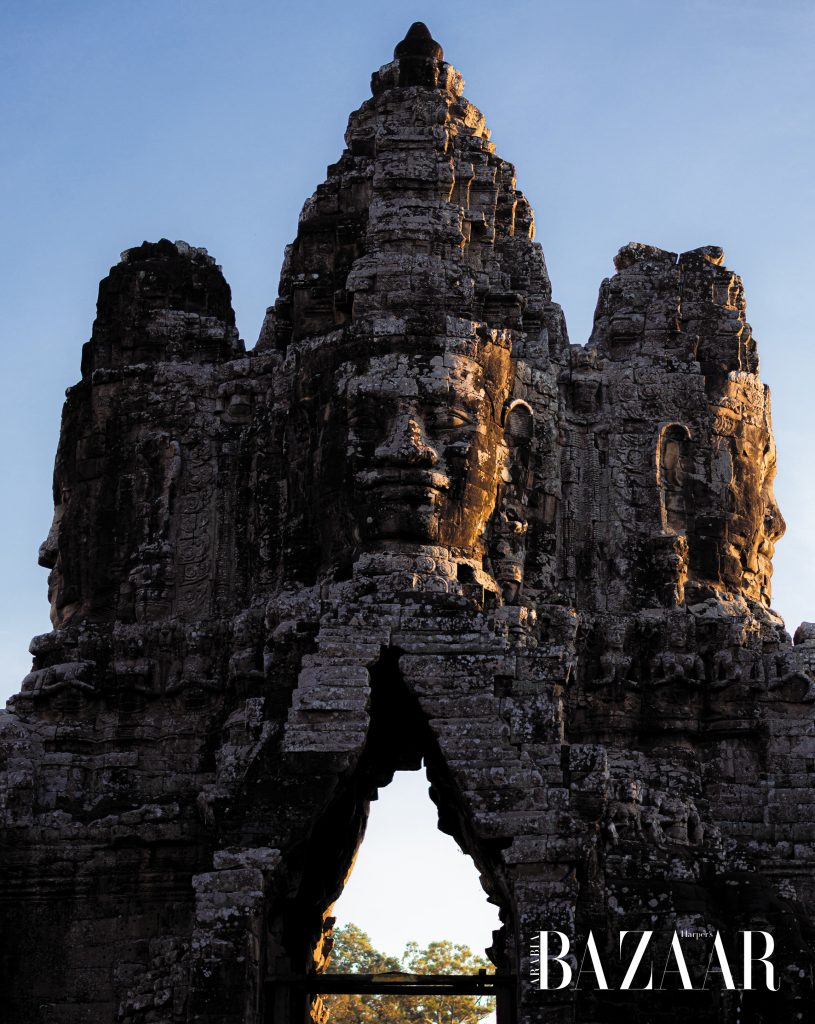
Table Mountain, South Africa
Table Mountain is one of those mountains that doesn’t discriminate — it’s equally accessible to those who love and loathe hiking (but more on that later). Overlooking the legislative capital of Cape Town in South Africa, it’s famous for its sandstone plateau that, you guessed it, resembles a tabletop. With the mountain rising 1,086 metres above sea level, it’s arguably the city’s most recognisable landmark. And like the surreal landscape of Cappadocia that we explored in the last issue, vigorous wind and water erosion has contributed to its flatness.
There are six trails spanning the likes of India Venster, Skeleton Gorge, and Kasteelspoort, with distances ranging from 4.3km to 11.5km. Platteklip Gorge is considered the easiest (it’s also the most direct route to the summit), but you know what they say: “The best view comes after the hardest climb.” Hardcore hikers should therefore opt for the India Venster Trail, which grants magnificent views in exchange for tackling stone steps and scrambling up rock faces over a course of three hours. In contrast, the Table Mountain Aerial Cableway takes you to the top in only five minutes. In fact, each cable car has a rotating floor, allowing for stunning, 360-degree views of Cape Peninsula throughout the ride. No wonder it’s one of Cape Town’s most popular tourist attractions.
But regardless of whether you end up hiking or riding, sunset at Table Mountain is simply unmissable. Locals swear by Kloof Corner as the city’s ultimate vantage point. Spanning 1.5km, this trail is only moderately challenging. As for what you can expect to see? Camps Bay and the towering Twelve Apostles ahead of you, and Lion’s Head mountain and the Atlantic Ocean to your left. This, they say, is where you want to catch Mother Nature’s nightly show. A sunset ride along the cableway, meanwhile, is an unforgettable experience. Unique dusk views aside, the aerial sight of streetlights suddenly illuminating all of Cape Town is downright spectacular.
capetown.travel
Oia Castle, Greece
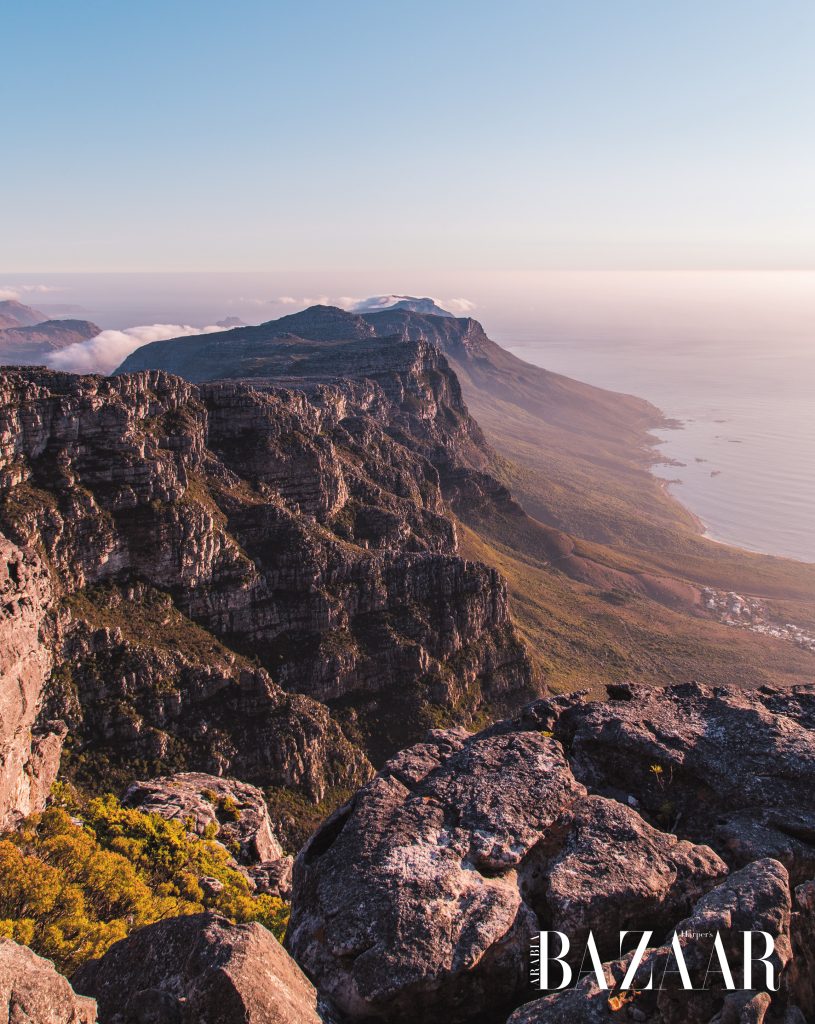
Oia Castle has lived many lives. It once served as an observation post, guarding against the incessant pirate raids that took place under Venetian rule from 1207 to 1580. Today, it’s one of the most famous sunset spots on the planet. For the uninitiated, this defensive fortress – also known as the Castle of Saint Nikolas – resides in the village of Oia on the Greek island of Santorini. And true to those (seemingly countless) posts you’ve seen on social media, Oia is home to labyrinthine alleyways, whitewashed houses, blue-domed churches, and infinite charm. It’s also universally accepted as Santorini’s most picturesque village, overlooking the Mediterranean Sea from a rugged Cliffside.
While art galleries, artisan shops, and traditional restaurants keep visitors content during the day, chasing sunsets in Oia is practically a bucket-list item — they’re nothing short of magical. As a travel destination, Santorini has surged in popularity in recent years, so admittedly, the idea of joining throngs of other tourists during its high season in the summer can be off-putting. Consider taking a trip in September or October. Gone are the crowds that flock to the island’s volcanic beaches, and warm days give way to a crisp chill come dusk. Cooler temperatures aside, you’ll also enjoy more reasonable prices. Generally speaking, Oia (like the capital of Fira) is expensive owing to its breathtaking views of the caldera, the result of a massive volcanic eruption that happened about 3,500 years ago.
You could actually watch Santorini’s most famous show from anywhere in the village and still be amazed, but Oia Castle wins hands down. Between its high location and the sweeping views that it provides, it really is the perfect perch. Not only will you see Oia’s cascading white houses awash in shades of pink, yellow, and orange, but also neighbouring islands and the vast Aegean Sea. Simply search ‘Oia Lookout Panoramic Viewpoint’ on Google Maps once you’re there. Prefer to round off the day with a sundowner in hand? Head to the nearby Kastro Oia Restaurant instead — at this point, it has hosting sunset spotters down to a fine art.
visitgreece.gr

Four Seasons Resort Sharm El Sheikh, Egypt
Desert or beach? Combining the best of both, Four Seasons Resort Sharm El Sheikh might as well be a mirage — the property encapsulates limestone cliffs, crystal-clear waters, a stretch of golden sand, and over 3,000 towering palm trees in a setting that connects the desert to the Red Sea. And while a stay at this coastal enclave is ideal for families, it’s only the lucky few who get to experience it like royalty in a recently unveiled suite (rather aptly) entitled The Palace.
Size matters and, in this case, the standalone suite is located mere steps away from the resort’s private beach and spans 565 square metres, making it the biggest and most luxurious accommodation in this destination. As for its colour palette? Earthy, soothing tones accented with shades of blue evoke the golden sands and azure waters of the Sinai Peninsula, creating a sense of place. Red Sea views are not only a draw, but also guaranteed from all three bedrooms – two kings and a twin – that can collectively accommodate seven guests. Elsewhere, indoor-outdoor living is elevated thanks to luxe touches like a fitness room, a spa treatment room, a spacious dressing room, and a private pool that extends over 160 square metres.
Practical matters are considered, too, translating to an office and a kitchen with a dedicated service entrance as well as a formal dining area that seats ten. To say the exclusivity offered by The Palace makes it the crown jewel of Four Seasons Resort Sharm El Sheikh would be an understatement, but outside, a world of natural wonders awaits. A fully furnished garden, for starters, gives you a place to both sunbathe and gaze at the stars in privacy. Marine life, meanwhile, beckons snorkellers from the vibrant coral reef that extends directly from the property’s beach.
For those chasing sunsets, we’re also declaring the Sunset Safari a must-do. You’ll swap the decadence of your personal oasis for the wilderness of the desert, catching the sun as it sets below the horizon. But whether you opt for an adrenaline-packed quad biking adventure or the leisurely camel tour, the night will end no differently — Four Seasons hospitality at its finest, thanks to the services of a personal chef and dedicated butler.
fourseasons.com/sharmelsheikh

Sunset Photography 101
While sunsets are nature’s way of ending every single day on a beautiful note, no two are exactly alike — and there is a trick (or two) to optimally photograph them. Here, Amin Idris, Lead Instructor at photography hub Gulf Photo Plus, shares his hacks for both smartphone and camera users.
Smartphone
“Sunset is when the horizon becomes warm and calm and, as a photographer, I never want to miss the opportunity to capture what the sky offers! The first thing I’d ensure is to have the gridlines enabled on my iPhone’s camera. This way, I can follow the ‘rule of thirds’ and match the lines on my grid along with the horizon of the sky and the sea.”
“I would also lower the exposure a bit, which gives the sky more focus and makes its colour tones more intense. I wouldn’t allow my phone to dictate my settings, so manually changing the exposure would be the way to go.”
“Enabling the Smart HDR is another must! This allows the camera to capture the darkest and brightest parts of the photo, and combine them together, so we can see the whole photo being well-exposed.”
“Use the Panorama mode to take wider shots. This is probably one of my favourite tips because you can do a vertical panorama to capture from the foreground up to where the sun is. Most importantly, it’s used to get a wide, horizontal landscape with the sunset. ”
“Find subjects to become silhouettes. This is when I got to my knee’s height, so that when people are in my frame, the background behind them is the sunset sky — it’s beautiful to see the contrast you can create this way!”

Camera
“Lower the ISO. The sun is naturally bright, so lowering the sensitivity of your camera can capture sharper images with barely any grains! You won’t see those sandy textures in the darker part of your frame.”
“Increase your aperture value. When you set your F-stop from F11 to F22, it’s as if your camera is sharpening any subjects in a far distance. It ensures no blurriness in the foreground as well, so every subject can be sharp.”
“Change your white balance. Sometimes, photographers have to remember to change how warm or blue their white balance is. Personally, I always make sure the Kelvin scale on my camera is similar to what my eyes see in the sky.”
“Shoot with a variety of lenses. Changing the focal length affects the perspective, based on what your subject is. 10mm to 35mm would give you a wider shot of the sunset and the beach as your foreground. And lenses ranging from 70mm to 200mm allow you to capture the sun as the subject, making it feel like it’s closer to your eyes.”
“Up your game by selecting locations with a variety of foregrounds. At Jumeirah Beach, for example, silhouettes of people and the water become part of the frame. And in the mountainous emirate of Fujairah, the hills and rocks become part of the shot.”