The Female Gaze: Women Call The Shots in Saudi Arabia’s Film Industry
As the industry emerges from a point of almost zero, female filmmakers are now engaged in all aspects of production
It’s almost midnight in a desert ravine 20 kilometres south of Riyadh. A 30-strong film crew is shooting a scene for a short promo about Saudi Arabia’s Founding Day – a romantic sight featuring Bedouins on horseback holding burning torches under the full moon. Assistant director Nedaa Barnawi calls out orders, casting manager Esraa Osama ensures all the actors are ready and on cue, while stylist Lamis Aljarrash makes final adjustments to the various costumes.
This set is nothing out of the ordinary. As the Saudi film industry emerges from a point of almost zero, following decades of conservatism in which images and music were shunned if not banned outright, women are now engaged in all aspects of production.
So what is behind this burgeoning film industry in the Kingdom, and why are women already at the forefront of this new Saudi cinematic vanguard?
First, in a radical departure from its previous stance, the Saudi government now encourages all aspects of creativity and innovation under the Vision 2030 reform programme, which seeks to wean the Kingdom off its dependence on oil in favour of a more diverse and gender-neutral economy.
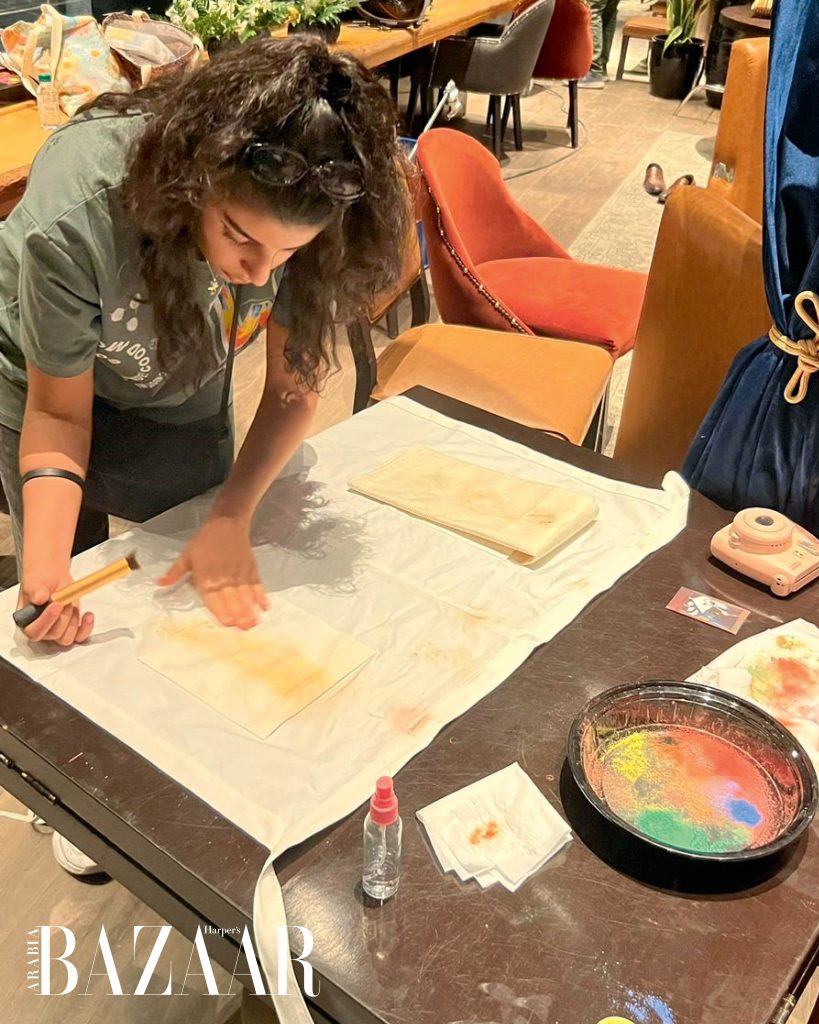
Second is the activity of NGOs such as the MISK Foundation, established by Crown Prince Mohammed bin Salman in 2011 with the aim of empowering young Saudis in education, entrepreneurship, the creative arts and technology. MISK promotes cinematography, and the arts in general, via short courses, workshops, foreign exchange schemes and direct finance.
Third is the impact of Netflix, which funds regional film producers in the Gulf and across the world at large. Netflix and other online streaming channels provide access to a potentially global audience for relatively low-budget features that previously would have been confined to local markets.
One example is Masameer The Movie, which follows the success of the popular YouTube series of the same name. Made by the Riyadh-based animation studio Myrkott, the series and movie follow the exploits of Dana, a Saudi girl who seeks to transform humanity via robotics and artificial intelligence. The feature is now available on Netflix in over 30 languages.
Perhaps the biggest driver of all, though, is the proliferation of cinemas across the Kingdom. While a handful of movie theatres could be found in KSA back in the 1970s, they were banned for decades until the recent slate of reforms. Now Vox, Muvi and other chains operate dozens of branches in all the major cities, responding to a public eager for local as well as Hollywood fare.
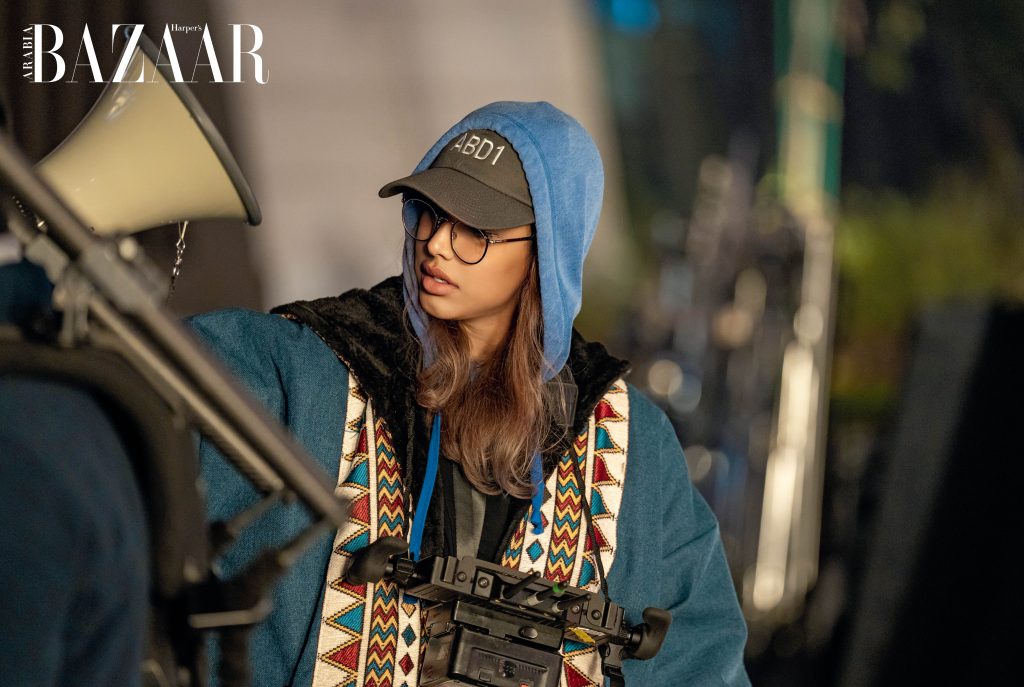
These various elements create an ecosystem that makes film-making a realistic career proposition for young Saudis and women are beginning to take full advantage of this new landscape.
“We are being given all the chances,” says director Sarah Almuneef. “The new film festivals offer a platform for us to screen our films and to enter competitions with millions in prize money, and many companies are involved in financing new film projects.”
Sarah’s career has developed in line with the evolution of Saudi Arabia’s film industry. Following a childhood passion for movies and inspired by the noir maestro Alfred Hitchcock, Sarah studied film production at the American University in Dubai and later at the prestigious La Femis film school in Paris.
She credits her time in France as the catalyst behind her decision to become a director. Sarah worked on four student films there, as an assistant director, sound engineer, cinematographer and finally, writer/director of her own short feature, Acceptance – about the importance of moving on with life instead of remaining trapped by negative memories. “That’s when I realised that I really love directing films,” she says.

Sarah returned to the Kingdom and made her first professional film, 2020 Faces – a study of people’s reactions to the Covid pandemic, the irony being that women had to cover their faces again just as dressing norms were becoming more relaxed in the Kingdom. “But even if we’re covered with a mask our eyes tell the story that we are facing,” Sara says. The film had its debut at the 2022 Red Sea Film Festival in Jeddah, and now Sarah is on her way to making a full-length feature.
While producing a movie is a formidable enterprise requiring millions in finance, it is an ambition that is a far more realistic prospect than it would have been only a few years ago, as revenue sources open up and logistics become easier than ever before.
Previously restrictive red tape has all but disappeared across the Kingdom. Official permission to shoot a film used to take months, involving reams of paperwork and long waits in government offices, but the entire process is now online and can be completed in a matter of days.
While feature movies are the most glamorous aspect of the industry, many aspiring young Saudi filmmakers cut their teeth in the more prosaic world of TV and online commercials – allowing them to develop skills from storyboarding to costume design to cast management, with regular and often well-paid work for freelancers, in contrast to the feast and famine nature of mainstream film production.

A case in point is wardrobe stylist Lamis, whose bread-and-butter work is in ad shoots. “My typical work day involves dividing tasks between the wardrobe team, going shopping for the required clothing, designing and meeting with tailors, and having meetings with clients and producers,” she says.
While Sarah was intent on getting into the film industry from childhood, Lamis discovered movie production via her interest in fashion.
“I got my bachelor’s degree in Fashion Design and I used to help filmmakers in Los Angeles with their wardrobe. That’s how I got familiar with the industry,” recounts Lamis. “When I came back to Saudi I first tried to work in the fashion business, but there weren’t many opportunities for fresh graduates. I was looking for a job when I met the founder of a film production company and he gave me the chance to style my first project. I fell in love with the industry and I have been doing it ever since,” she adds.
As for Lulway (‘Lulu’) bin Abdulwahid, a freelance assistant director, she can be regularly found on advertising shoots.
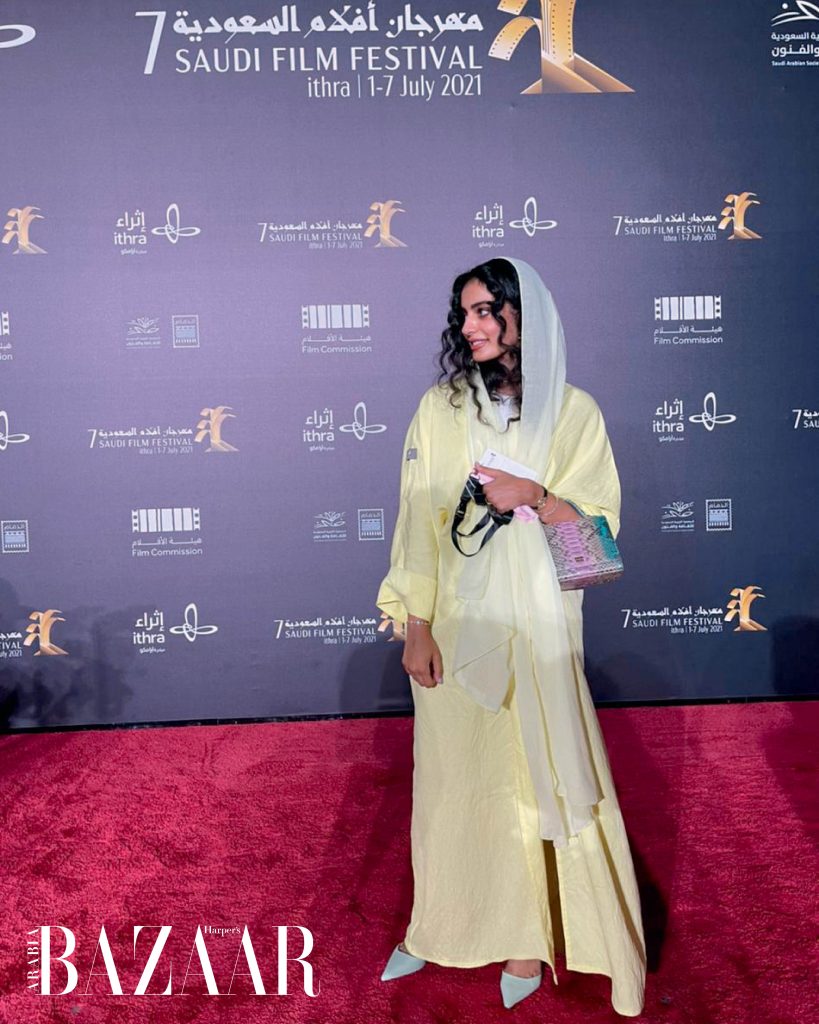
“I’ve always been passionate about film and so I decided to obtain a bachelor’s degree in digital production and cinematic arts,” Lulu says. “One of my responsibilities is to handle the logistics of running the set during production. I am also the link between the director and the crew. My other duties include the creation and management of the shooting schedule and the shot list, which involves a synchronised coordination with all department heads.”
For all this success on the part of Saudi women, there is no escaping the fact that most film productions in the Kingdom are ultimately directed and produced by men. So… do women face any particular challenges in the Saudi film industry on account of their gender?
“I would say I found even more support as a female because of Vision 2030 and the changing culture,” claims Sarah. “Specifically, in filmmaking, they’re pushing us as females, with workshops and other programmes. I think there are more men at the top because they started a little while before us. But it doesn’t mean they are better than us. I believe you will soon see female directors and producers with major feature film credits,” she adds with confidence.
Lamis agrees. “I personally didn’t face any issues in the industry as a woman,” she confirms. “I’m actually very happy with the work environment in all of my projects. People in the industry are open-minded, respectful and very inspirational.”
Lulu acknowledges that the going can be tough for an aspiring filmmaker, especially at the outset, but is adamant that all the hardship pays off in the end.
“The long hours of shooting and the overnight jobs have been very challenging for me, especially on the family front. But my advice to a wannabe female filmmakers is it’s all worth it, fight for what matters to you, break the stereotypes and don’t stop learning. It is crucial to remember that where there is a will, there is a way.”
Images: Supplied. Photography: Denise Jans, Jakob Owens At Unsplash.
From the Harper’s Bazaar Arabia April 2023 issue