

Dior’s Cruise Collection Takes On Seville
Designer Maria Grazia Chiuri taps into the iconic sartorial style of Andalusia for an offering that was forcefully feminine.
Seville’s famed Plaza de Espana was the expansive backdrop to designer Maria Grazia Chiuri’s latest cruise show. Guests, who arrived by horse-drawn carriages, sat on colourful hand-painted chairs and sipped cool drinks to fend off the Spanish heat, watched in wonder as flamenco performers showed off their passionate footwork. And a bevvy of backup dancers in matching red dresses moved in sync to the live music, framing the flamenco troupe’s unique artistry.

All of this was an impressive precursor to a cruise show that tapped into the sartorial codes that have become the cornerstone of Maria Grazia’s tenure at Dior. Fashion that is grounded in feminine strength and is unapologetic in its pursuit of both style and comfort. An approach to clothing that dovetails seamlessly with many of the traditional Spanish styles of dress. It’s clear that the designer was creatively drawn to Spain’s matriarchal history, its respect for artisanal craftsmanship and its ancestral love of embellishments. All of those elements were reverently referenced in the show’s lineup and yet presented in a way that felt modern and fresh.
Look to the fitted high-wasted matador pants in this show, some with effective chaps embellishments, turning the current low-rise trouser trend on its ear. And the fitted hybrid cape jackets, with their split open sleeves, were an interesting extrapolation of the famed Dior bar jacket. Jewel-hued off-the-shoulder ruffled taffeta gowns gave a nod to flamenco dresses, but the designer smartly steered clear of polka dots for the most part. Thus deftly skirting the risk of looking too referential.
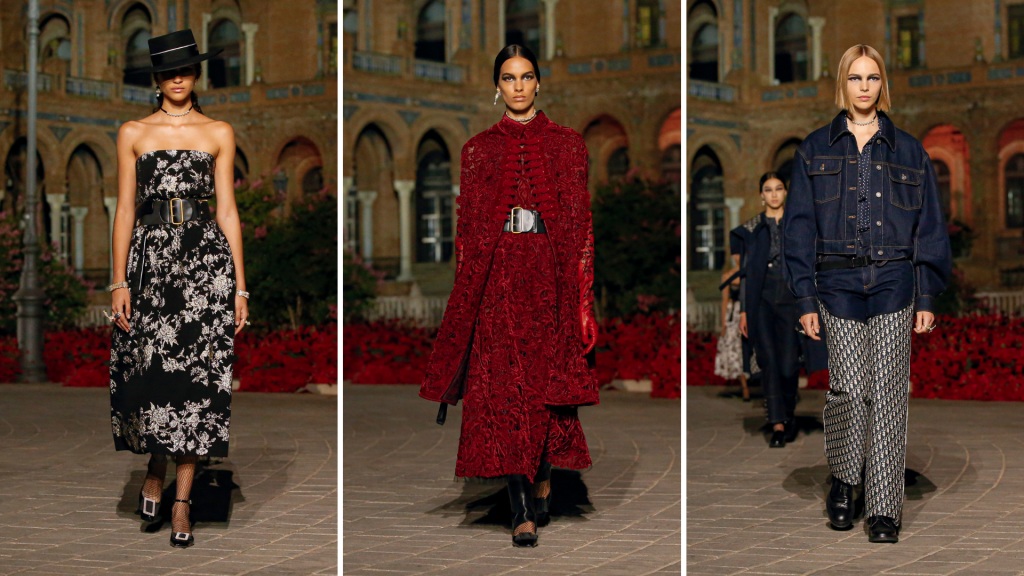
In fact, there was a central section to the show that stood out for its use of denim and the Dior logo (instead of those pesky polka dots) motif. It was the most subtle in its allusion to Spain and proved that Maria Grazie could pair back the references when she wanted to. And by doing so she made sure more women would find their happy place in a collection designed to empower them.
Women that could relate to the genre-breaking flamenco dancer Carmen Amaya, who was referred to as La Capitana and was the first female dancer to wear men’s clothing when she performed in the 1950s and was also Maria Grazie’s muse for this collection. Or more recently, the rebellious Duchess of Alba who bucked traditions and codes set out by men her entire life. Instead, she lived it to its fullest on her own terms, from donning Spanish menswear staples while riding alongside Jackie Kennedy and wearing two-piece bathing suits in her 80s to marring for the third time a man 25 years her junior in defiance of objections from her children and King Jan Carlos of Spain. By highlighting these women in her work, Maria Grazia is also helping to telegraph their accomplishments to new generations of women around the globe who are forever in need of female role models who walk their own paths in the world.
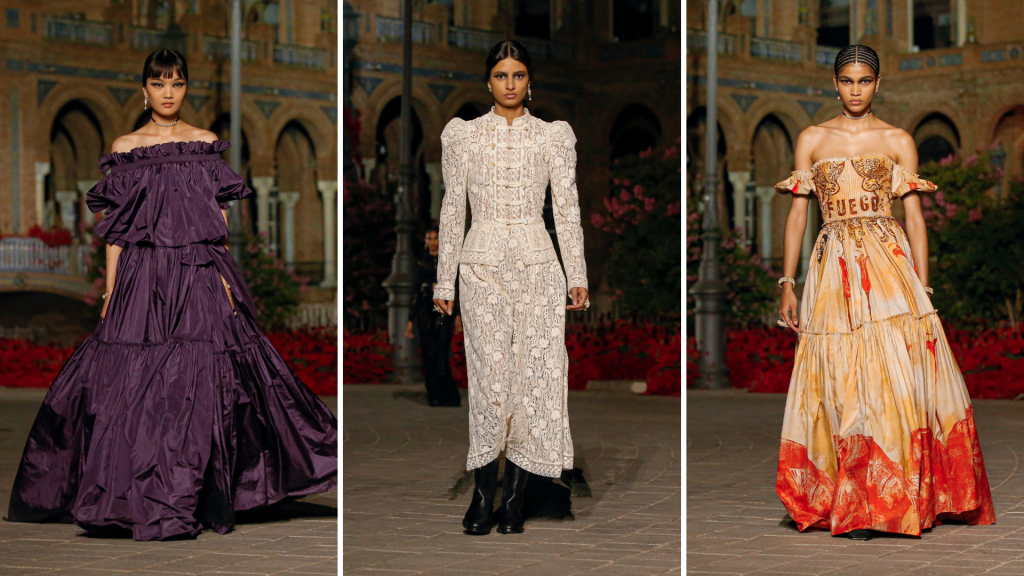
Smart too was the way the designer and Dior turned to local artisans to help bring to life the collection. There was a showstopping open work tooled leather take on the now-iconic Dior tote that looked to be part of the handiwork of the leather craftsman Javier Menacho Guisado that the designer partnered with for some pieces in the show. The beautiful filigree jewellery was made in collaboration with local metal workers and the hats, as always, came courtesy of master milliner Stephen Jones, but this time the cordobes were made in the Seville workshop of Fernandez Y Roche, which has been in business since 1885.
This was a collection where history, style and substance danced a passionate Paso Doble with modernity. The result was fuego.
Images supplied.