
Don’t Look Back In Anger: Why We’re Finding Comfort In Nostalgia Now More Than Ever Before
As we learn to live in a time where moving forward is slow and unpredictable, could looking to the past be the key to finding comfort and creativity?
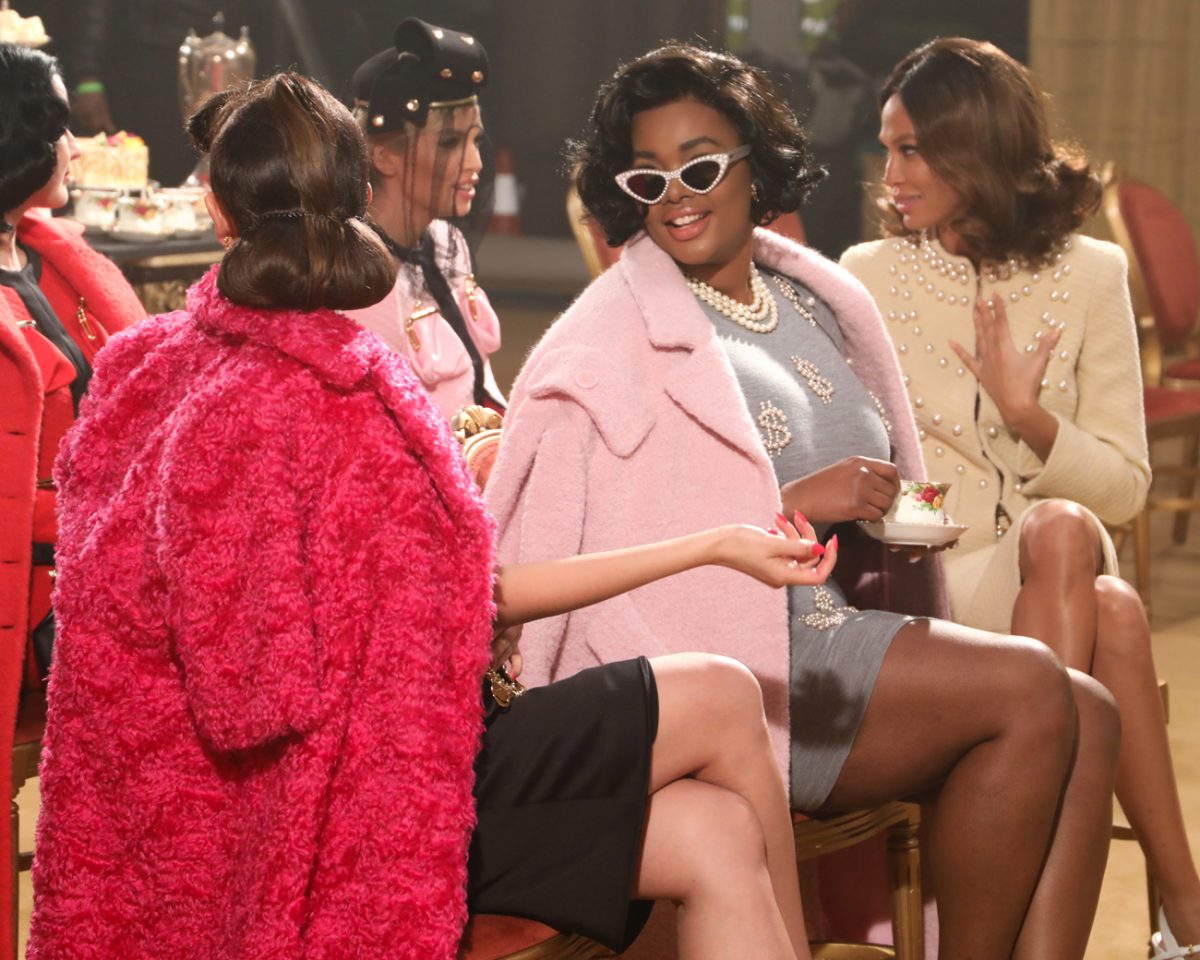
It’s nothing new for fashion labels to throwback and incorporate bygone eras into new collections, but designers in 2021 are looking back to look forward en masse for their autumn/winter presentations: from ’70s-inspired silver knee-length boots and turtlenecks at Victoria Beckham, oversized ’80s silhouettes and removable shoulder pads at The Row, and Jeremy Scott going full-on old Hollywood glamour at Moschino.
What’s different this time around is that those at the heart of the designs are referencing their own personal stories to gain that creative edge – embracing a form of pandemic-induced nostalgia, if you will.
Prabal Gurung showed a melange of gowns with ruffles, bows and off-shoulder sleeves – inspired by the ’80s prom dresses he saw worn by street performers on his numerous lockdown bike rides around New York last summer, wistfully commenting that the sights he saw had given him “joy and hope” and reminded him of why he’d moved to the city from Nepal 20 years ago.

Jeremy Scott goes for old-Hollywood glam
Fellow New Yorker Ulla Johnson looked back even further, with her biggest show to date, albeit an audience-free zone, being held at the city’s Lincoln Centre. “I’ve been coming here to see ballet since I was a child,” she revealed, the clothes themselves a mixture of ’70s and ’80s-inspired prints and shapes, while Rami Al Ali cited “old childhood memory” and “nostalgic” Damascus evenings as the inspiration for his spring/summer 21 couture collection.
Could it be that nostalgia has become an unlikely influence for creativity? “With the cancellation of many plans and special occasions in 2020 and the uncertainty as to whether they will even go ahead in 2021, it is no surprise that nostalgia has become even more prevalent as a result of the Covid pandemic,” explains life coach Tracy Lee Thomas of the UAE’s Archetype Coaching. “Throwbacks in fashion trends, music, arts and culture epitomise nostalgia. When the present feels overwhelming or underwhelming even, escaping into a different world can be therapeutic and give our minds a break from trying to process the present. It also gives our imaginations a tangible way to explore a different reality.”
 Prabul Gurung takes inspiration from ’80s prom dresses
And it isn’t just the global fashion powerhouses that are turning to nostalgia for feelgood inspiration. Dubai-based luxury boutique brand ACOLÉ is also looking back. “Our most recent capsule collection, Cocktails and Dreams is a throwback to the ’80s,” explains co-founder Linda Bruun Lacin. “We referenced sweatpants, shoulder-pad tees and also infused ruffle details throughout. Our spring/summer 21 collection again has reference to the ’80s with the sweats and ruffles, while slip dresses reference ’90s minimalism.” So where does the inspiration come from? Her partner Maria Gold admits to spending time reminiscing: “The past year has definitely been a good time to get nostalgic and dig deep into old shows and films. Pulp Fiction is always a classic and we love Uma Thurman’s character and style in the film,” she explains. “Melrose Place has been binge-watched during lockdown for a bit of ’90s LA-glam fashion inspiration, and Bruce Springsteen’s ’80s classics have been on repeat lately.”
And she’s not the only one turning to old-school tunes. A research paper by scholar Timothy Yu-Cheong Yeung from the University of Leuven, Belgium studied data from 17 trillion plays of songs on Spotify during the first European lockdown and saw a spike in people listening to music from the ’60s, ’70s, ’80s and ’90s, with top artists including The Beatles, Fleetwood Mac, Queen, Elton John, Toto and Oasis. A reissue of the Rolling Stones’ 1973 album Goat’s Head Soup even entered at No 1 in the UK album charts. “This work provides evidence that the lockdown imposed in the midst of the COVID 19 pandemic significantly changed the music consumption in terms of nostalgia,” reported Timothy. “Music of the past can bring in nostalgia or reminiscence that contributes to certain healing effects. Music therapy aiming at evoking nostalgia has been shown effective towards patients of dementia,” he continued.

lla Johnson’s retro-filled collection
Tracy agrees that nostalgia can offer more than creative inspiration. “Part of what makes nostalgia feel so good is the level of comfort and familiarity it evokes,” she explains. “We definitely find comfort in experiencing glimpses of the past through entertainment like television and especially music as it transports us to a different time; I suppose in some ways it is a form of healthy escapism.”
And it’s this feeling of comfort that could be behind the popularity of shows from bygone eras sitting in the Netflix Top Ten, including Regency-era Bridgerton, The Queen’s Gambit based in the ’60s, The Crown moving throughout history and Firefly Lane – a series based around nostalgia itself as two friends navigate life while looking back at their time together – making for some great fashion moments.
 Big shoulders make a regular appearance in nostalgic Netflix series Firefly Lane
This need for comfort could also explain the change in the way we’re seeking out design and decor for our homes. “During lockdown, and in fact ever since, we’ve seen a surge in sales of posters and artworks with a ’70s, ’80s, ’90s or more classic theme,” says David Hammond from Drawdeck.com, the UAE’s leading artwork specialists. “We had an increase in sales of classic film posters such as Gone with Wind, Breakfast at Tiffany’s, old Batman movies and even for an Arabic interpretation of a Charlie Chaplin poster. It’s very clear that people in the UAE want a bit of nostalgia in their homes.”
Tracy believes embracing the past could do everyone a world of good. “When the present feels too challenging, engaging with an activity that encourages nostalgic thought might just be the remedy you need” she says. “Nostalgic thought reminds us to channel discomfort into positive action as we can draw lessons from our past experiences to overcome future discomfort in our life.”
And it’s a learning she thinks we should take with us when we finally leave this pandemic behind. “Studies show that, naturally, nostalgic people have high self-esteem and are less prone to depression,” she explains. “There is something about being nostalgic and remembering fond memories that reinforces self-identity. Sometimes we all just need a little break from reality with a dose of healthy nostalgia.”
Just the excuse we need to dig out those flares.
From Harper’s Bazaar Arabia’s March 2021 issue
