
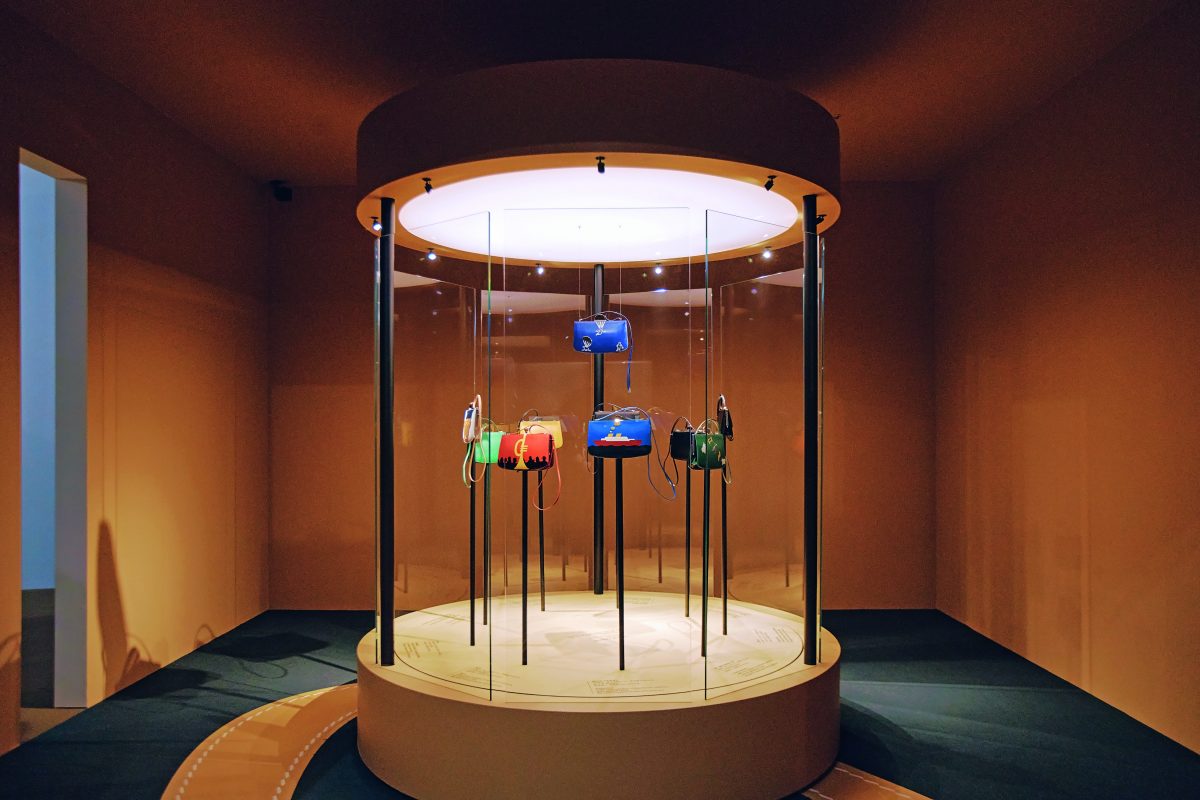
Once Upon A Bag: Hermès’ Heritage Exhibition Opens in Doha
The fourth chapter of the touring exhibition will be on from May 28 through to June 11 at the National Museum of Qatar
The relationship between past and present, tradition and modernity, is embedded in the Hermès DNA. A bag from the Maison is not just an aesthetic vessel; it is an objet d’art, a philosophy, a narrative, and a social commentator that occupies a unique position in popular cultural imagination. Sat in the Conservatoire des Créations in France, a heritage entity that bears witness to the history of the house of Hermès through an important collection of conserved items dating from the 19th century to the present day, in an office flanked with vintage advertisements and overlooking a green courtyard backing onto the modern metropolis of Paris, that meeting of history and contemporaneity is palpable.

With the arrival of the Once upon a bag exhibition – the fourth chapter of the Hermès Heritage cycle of touring exhibitions exploring the story of Hermès from its origins to the present day – at the National Museum of Qatar in late May, Bazaar’s visit to the Conservatoire des Créations Hermès sheds illustrative light on what visitors in Doha can expect. Following on from Harnessing the roots, Rouges Hermès and In Motion, the Once upon a bag exhibition retraces the history of the Maison’s iconic bags, interweaving savoir-faire, design, and contextual narratives and providing audiences with a thread of continuity to guide them through an exceptional canon of archival and modern pieces.

A selection of bags, awaiting shipment to Doha, are displayed in the office of Conservatoire des Créations Director Marie-Amélie Tharaud. Each one is meticulously preserved in a facility boasting adaptive temperature, dedicated spaces for the most fragile, organic pieces, and light control. “It’s not a collection which is sleeping,” says Marie-Amélie. “It’s always in movement for our creative teams. Heritage for Hermès is not something old or dusty, but rather something that can bring new inspiration.”
We begin with a model from 1931, neatly housed in a calf leather box. The clutch, complete with Ermeto watch, is a perfect example of the ingenuity and pioneering spirit at the heart of the Maison and speaks of the changing needs of women in the period of its creation. “Travel became more significant in this era,” Marie-Amélie tells Bazaar. “Women began to travel and work more freely than previously. That sense of movement is an important part of women’s emancipation at this time.” It was also key to the evolution of the Maison, with Émile Hermès opening the house up to new métiers in the 1920s, including a focus on sporting garments as well leather goods and jewellery. As travel developed further, handbag models became ever lighter and more innovative with new emblematic models that blended creativity and artisanal know-how with an acute understanding of the changing demands of an evolving world. “That’s why pieces such as this were created,” Marie-Amélie continues of the clutch. “It’s the idea that you can carry it anywhere.”

That sense of motion, and the philosophical notion of freedom underwriting it, plays out in another archival piece on display. “This is an early ‘Constance’,” says Marie-Amélie of an iconic bag created by designer Catherine Chaillet in 1967 and named after her daughter. With an H-shaped fastener and an inventive adjustable strap, the bag can be worn over the shoulder or held by the side. “The strap allows women to walk more freely, you don’t have to wear it on your arm. It was innovative and really very modern.” Elsewhere, a refined evening clutch from the end of the 1950s contains a space dedicated to hold a lipstick – ideal for women on the go. That idea of novelty manifests itself in the now ubiquitous ‘zipper’; a mechanism encountered by Émile Hermès on a trip to the US, during which he chanced upon the American ‘close-all’ opening and closing system on the hood of a car. In 1922, he obtained the exclusive rights to this system and began to use it in many of the house’s bags including the ‘Sac pour l’auto’, its first model to incorporate a zip – combining ease of movement with privacy and Hermès’ characteristic inventive flair.
The idea of bag as social commentator is a fascinating one and speaks of its particular moment of creation in terms of social, cultural and political changes. “Every part of a silhouette tells us about the society in which we live,” says Marie-Amélie of the archival importance of fashion, “but with bags it is perhaps even truer because these pieces also have a functional aspect. What would a woman have put in her bag? That depends of course on where she was going, whether she was attending a daytime or an evening event, and to where she was travelling. In the nineteenth century, women had very small purses because they travelled less and never alone.
From the 1920s, this really began to change and Hermès’ creations accompanied that shift. This advertisement here,” she says gesturing to a vintage poster displayed on the wall, “shows a lady on the train with a ‘Sac Mallette’; a new type of bag which allowed women to carry everything they would need, be it fine jewellery or cosmetics or many other things, so it was a very practical, functional bag. It demonstrates how society had evolved at that point in time.”

That mapping of eras and generations is central to the Once upon a bag exhibition. Described as an “artisanal and creative adventure, part memory and part modernity,” the show is realised with the assistance of Bruno Gaudichon, curator of La Piscine museum of art and industry in Roubaix, and scenographer Laurence Fontaine. Eschewing chronology in favour of a more narrative approach, the scenography draws parallels between fifty or so contemporary models and objects from the house’s Conservatoire of Creations and the Émile Hermès collection, a remarkable cabinet of curiosities.
“It was important for us to bring a new curatorial eye to this project so we worked with Bruno Gaudichon and built the rhetoric of the exhibition together,” says Marie-Amélie. “We discussed the subjects, what to emphasise, the families of bags, the clasps. And from there, we picked the pieces to exhibit. There are some inclusions which are obvious – you won’t talk about bags without incorporating the ‘Kelly’, for example, or the ‘Constance’. Sometimes you start from a piece, from an object, and build the speech around it and sometimes we approach it from the other way by asking what is important to Hermès? Functionality, ingenuity, creativity. So we think about these subjects and see which objects best reflect each part.”

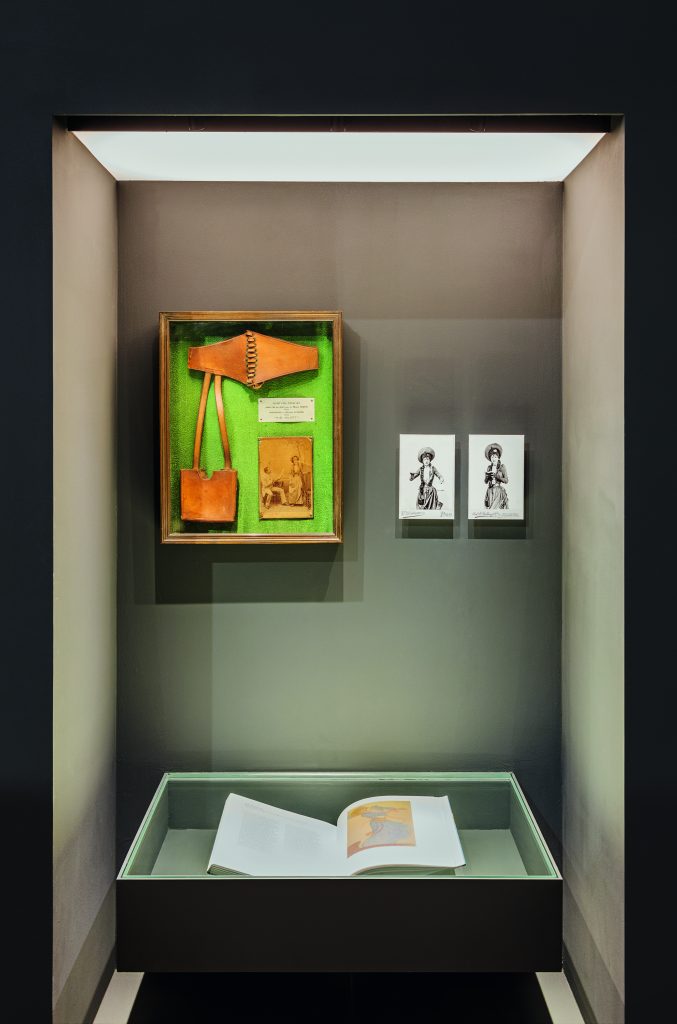
Beginning with an exploration of the ‘Haut à courroies’ bag, a model which appeared at the beginning of the 20th century and was designed by Hermès to protect and transport saddles and riding boots, the bag’s history takes us from the Maison’s equestrian roots to its expansion into leather goods. Structured into themes, the exhibition continues with an area devoted to the different families of bags – the clutch; the ladies’ bag, including the ‘Kelly’, ‘Constance’, and ‘Simone’ Hermès; the men’s bag featuring the ‘Sac à dépêches’ and ‘Cityback’ basketball backpack; the travel bag encompassing the ‘Plume 24h’ and ‘Herbag’; and the sports bag, presenting audiences with the defining stages of their respective stories.
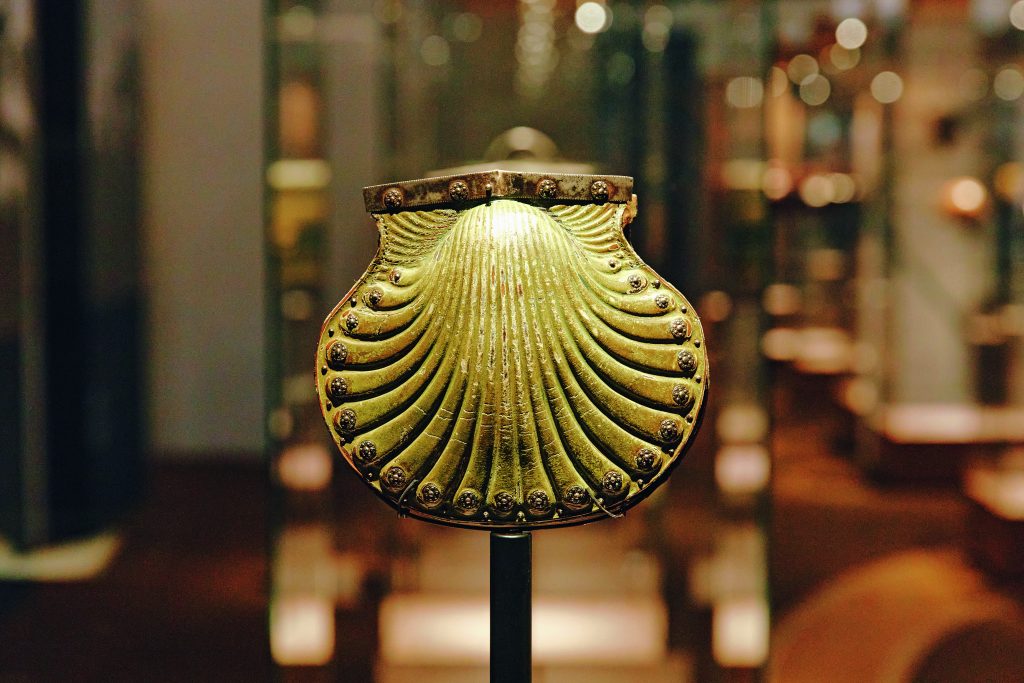
From here, visitors encounter a room dedicated to exquisite clasps cleverly engineered with a watchmaker’s precision, before entering a space replete with more playful models from the 1980s, designed by Jean-Louis Dumas, chairman of Hermès from 1978 to 2006, exhibited collectively as the ‘Bags of Mischief’ – fun and quirky designs translated into leather marquetry. The exhibition concludes with a focus on models that evoke distant horizons, with fairy-tale pieces that illustrate exceptional know-how including the ‘Birkin Sellier Faubourg’ and ‘Kelly plumes’.
“Once upon a bag is an overview of creation,” explains Marie-Amélie. “Audiences will feel the links between the past creations and the newer ones. What’s interesting is that each space will have a different atmosphere – from an uplifting feeling in the area dedicated to the families of bags, in which the models appear to fly in air and are surrounded by iconography and contextual imagery; to an all-black setting in the space dedicated to clasps set against a soundscape of the various mechanisms opening. The ‘Bags of Mischief’ is really about dreams and creativity. Here, it’s as if the bags are dancing.”

It’s an exhibition that reminds us of the unique position that Hermès bags occupy in popular cultural imagination. Why is this? “The quality of the material is key,” Marie-Amélie says, “and the background of Hermès in harness and saddle-making in the 19th century, has given us a real appreciation of leather.” That equestrian pedigree and the creation of pieces that embodied simplicity, lightness, discreet finesse as well as endurance in all conditions, is now a specificity of an Hermès bag. “We create bags that you can pass onto your daughter and then your granddaughter. Sustainability is a very fashionable word today, but Hermès has always been sustainable because the quality of the leather ensures that the bag will last.”

The historical pieces on display as part of Bazaar’s conversation are testament to their longevity; pristine artefacts that speak of bygone ages. “For me, cultural heritage is a way to understand how people once lived,” says Marie-Amélie. “People often have an idea of a dusty museum with pieces that are hidden away, but the Conservatoire des Créations is a place of imagination and dreams. It’s something we want to share with other people and that’s the ethos of the exhibition.” It’s also the ethos of Hermès itself – poised between past and present, preserving and sharing narratives and artefacts that continue to define, excite, and pioneer; not sleeping but very much awake.
The Hermès’ Heritage Exhibition will be on from May 28 through to June 11 at The National Museum of Qatar (NMoQ).
Lead image: Kyung Sub Shin (supplied).
From Harper’s Bazaar Qatar’s Summer 2022 issue.