
Harnessing Heritage: Etching Saudi Arabia’s Tie-Dye Tradition Into Fashion’s Modern Tapestry
Harper’s Bazaar Saudi’s contributing editor Rae Joseph implores KSA designers to turn to the Kingdom’s artistic past to craft its sartorial future
If you know me, you know that I have always been fascinated with fashion history and how seemingly simple garments can convey complex narratives of societies and cultures. They can offer us a peek into their lives and their use of creative tools (fashion being one) to share their stories on a personal and collective level. I often speak about the relevance of referencing in fashion and how understanding the right references and mastering the art of employing them has been the tool that set apart iconic designers, stylists and photographers in global fashion history.
While the art of referencing does not always point to the past; an understanding of one’s past is a critical tool in forging an original and unique identity in a market as saturated as fashion. In a world where fashion often speaks of the future, it’s easy to forget that every design, every pattern, and every stitch carries with it the echoes of the past. It is my unwavering belief that true fashion brilliance emerges when we acknowledge roots, understand references and employ them masterfully to paint a vision of the future.
My fascination with vintage fashion, local culture, and the transformative power of fashion has constantly driven my curiosity. It is this interest that guided me to a captivating online conversation a few years ago led by Dr Laila Al Bassam, an institution within the Saudi fashion landscape. Her profound knowledge of Saudi fashion transcends geographical boundaries and spans eras and tribes. On that day she wove a narrative that whisked me away to a time when the sands of Arabia bore witness to a different kind of fashion statement – one that was not made in the bustling streets of New York, Paris or Milan, but in the heart of Arabian tribes centuries ago.
As Dr Laila peeled back the layers of history, meticulously describing the nuances of various tribal garments, one word captured my attention: tie-dye. I had, like many, pigeonholed tie dye as a technique originating in Asia but thrust into global popularity by the 1960s hippie movement. Mention tie-dye and the immediate mental picture springs to mind of the peace-loving flower children of that era. Yet Dr Laila revealed that this captivating art form possessed far deeper roots, extending not only to Asia but to the very heart of Arabia.
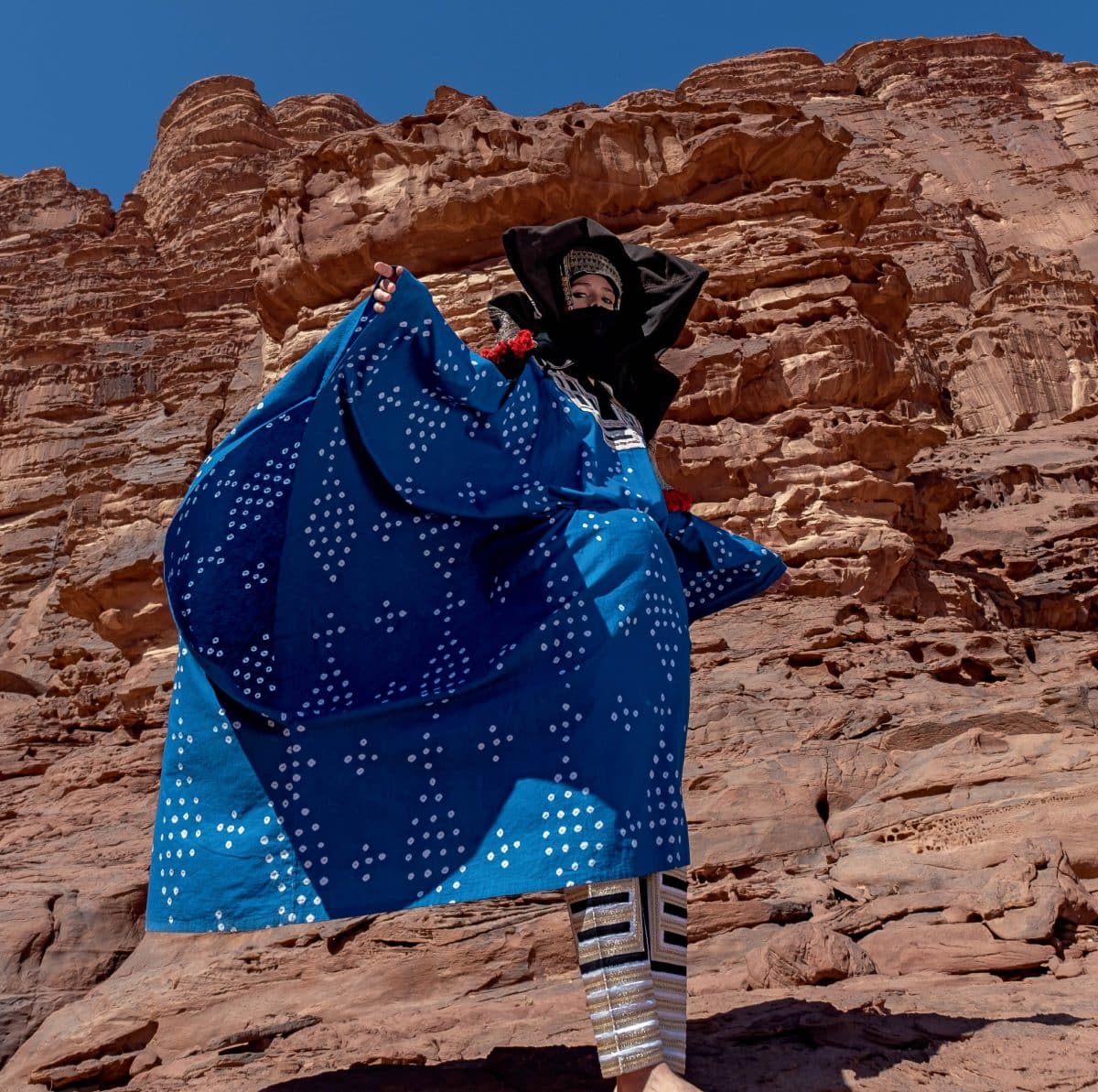
Intrigued and inspired, I embarked on a journey to explore this hidden facet of the Kingdom’s fashion heritage. Here, tie-dye wasn’t a fleeting fashion trend but an integral part of tradition, lovingly honed by the skilled hands of the women of the Huthail Tribe, a tribe that primarily resided in the area between Taif and Makkah. Those women embodied creativity and innovation in design for their time. Their tools of artistry were inspired by their environment as they wrapped stones, dried lentils and chickpeas with ropes, crafting circular patterns and geometric shapes that bore the hallmark of individuality.
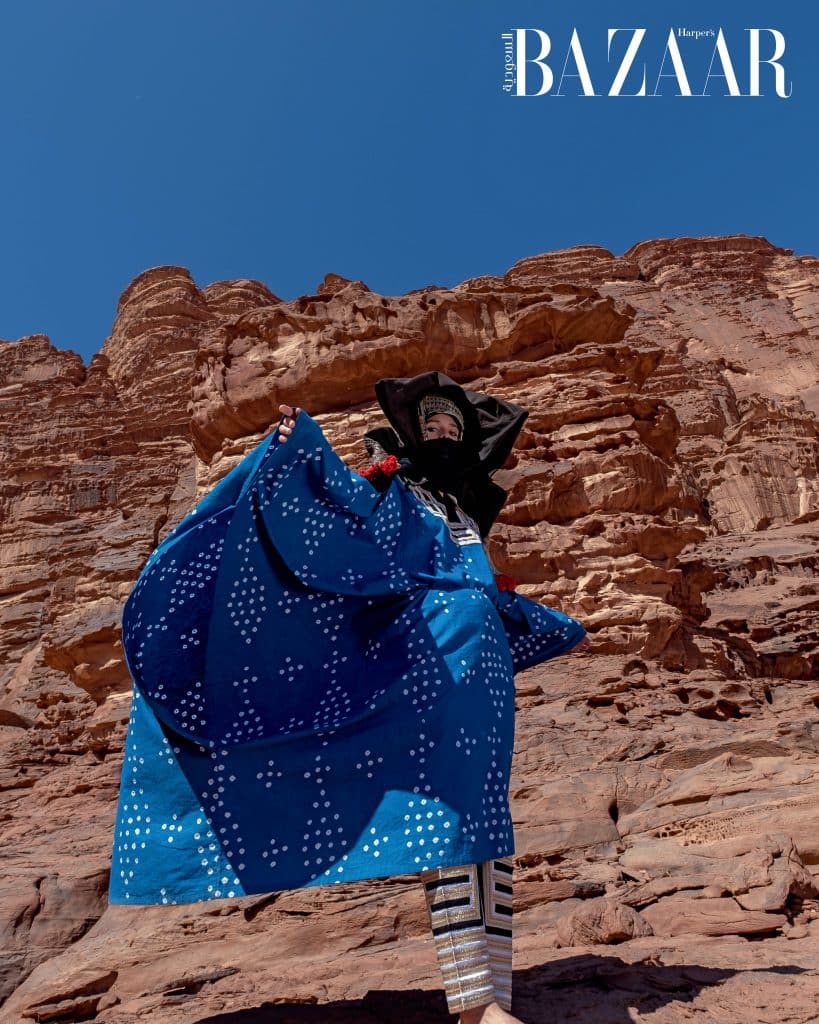
Their garments were typically made of white cotton or linen, and once the tie-dye style was locked in, the garments were dyed using a deep blue dye derived from plants imported from India and grown locally, a dye method that dates back to 1500 B.C. As I researched further, I discovered that this tie-dye style (locally termed tasreer) was prevalent across multiple tribes in the region, with each tribe distinguishing itself with the placement, style, size and colours of their chosen tie-dyed design. These tribal garments served as vivid canvases, splashed with vibrant hues and intricate designs, each whispering stories of heritage, identity, and the ancient trade routes that had brought this remarkable art form to Arabia’s doorstep.
As I delved deeper into this captivating subject, I couldn’t help but wonder why I hadn’t encountered these intricate details before in the manner offered by Dr Laila. I, like many, attended numerous industry talks, visited costume exhibitions, and perused countless articles on the topic. I realised that a substantial divide exists between the academic realm of fashion and the practical fashion industry in our region. At the moment, the majority of cultural references expressed locally are often kept at surface level and interpreted in very literal terms, often seen as heritage elements limited to certain cultural occasions such as Ramadan or Foundation Day.
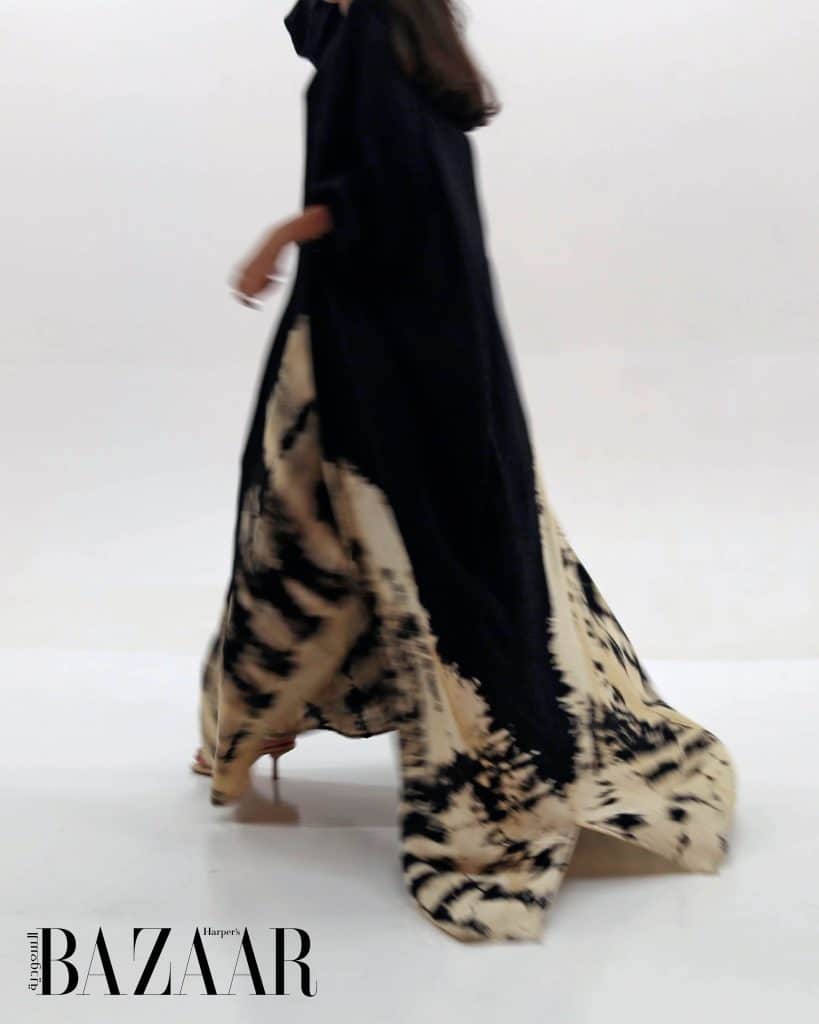
In a sense, they are perceived as mere ‘costumes’, overlooking the intrinsic value and uniqueness they could bring to today’s market if employed properly. They are a piece of history that remains cloaked, tucked away from fashion editorials, rarely getting referenced by contemporary designers, stylists or other industry players. At the same time, we see many local creatives actively seeking inspiration from global sources, and while I am an advocate of cultural exchanges and a believer in the universal nature of fashion, it should not come at the expense of neglecting the treasures in our own backyard. Treasures that will set us apart.
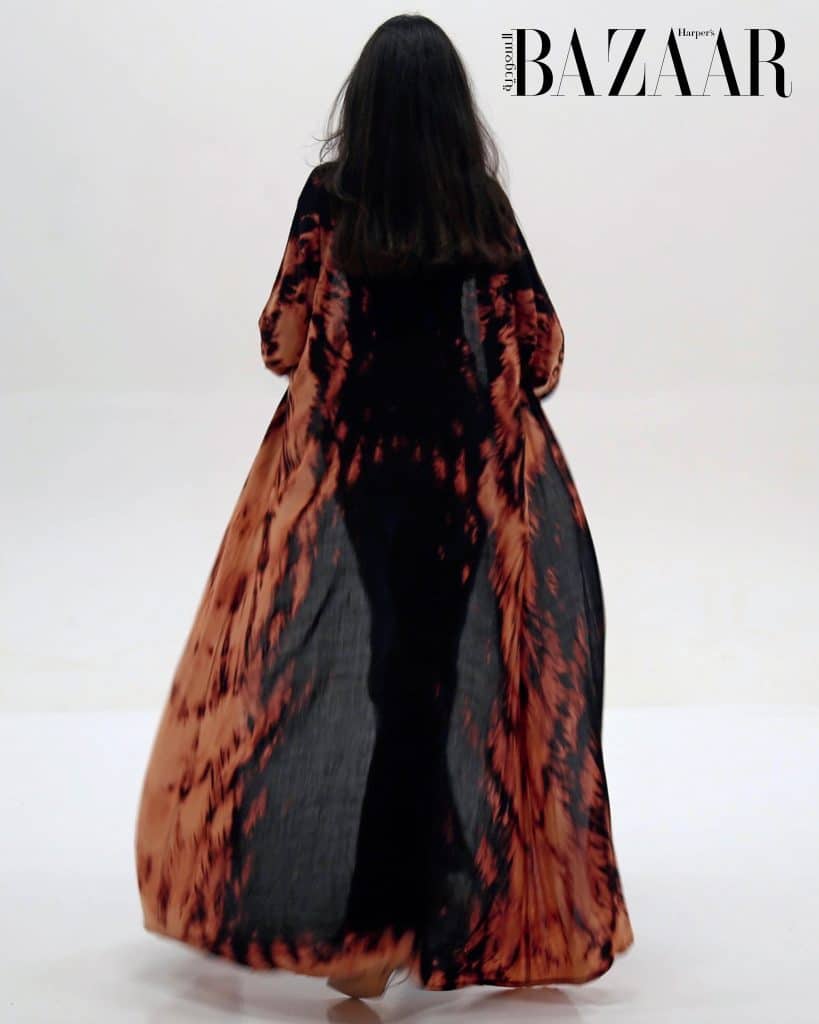
As the Kingdom is building its fashion legacy on the global stage, we owe it to ourselves, our ancestors, and the world to embark on a journey to uncover hidden gems in the annals of Saudi fashion, as within this journey lies a world of revelations. While there is a magnitude of effort on an institutional level to elevate the local fashion narrative, it falls upon us, the local creatives, to delve deeper, to understand, and to incorporate these references into contemporary designs and narratives, moulding ancient references into present-day creativity using the contemporary tools we have access to today. These references are the palette from which we paint our fashion story, setting us apart in a world where fashion often strives for uniformity.
Today, our fashion heritage remains a largely untapped source, brimming with stories yearning to be told through textiles, shapes, colours, and patterns. These are stories that we should tell and not wait for global curiosity to beat us to them, as it has in other cultures. My journey into the world of Saudi tie-dye was merely a prelude, a tantalising glimpse of the treasures awaiting discovery in our rich heritage. In this intricate fusion of past and present, we unearth not just fashion but a profound connection to our roots and our origins, a connection worthy of celebration, a connection that lays the path to our future. It serves to inspire not only our generation but also the generations yet to come.
It is time to unlock the treasure chest of Saudi fashion heritage. To embark on a journey that will guide us into exciting places. We are laying the foundation for the Kingdom’s future, a privilege, and a responsibility we take to heart as our fashion legacy is waiting to be written.
Photography: Neom/Saudi Style Council
From Harper’s Bazaar Saudi’s Winter 2023 issue.