
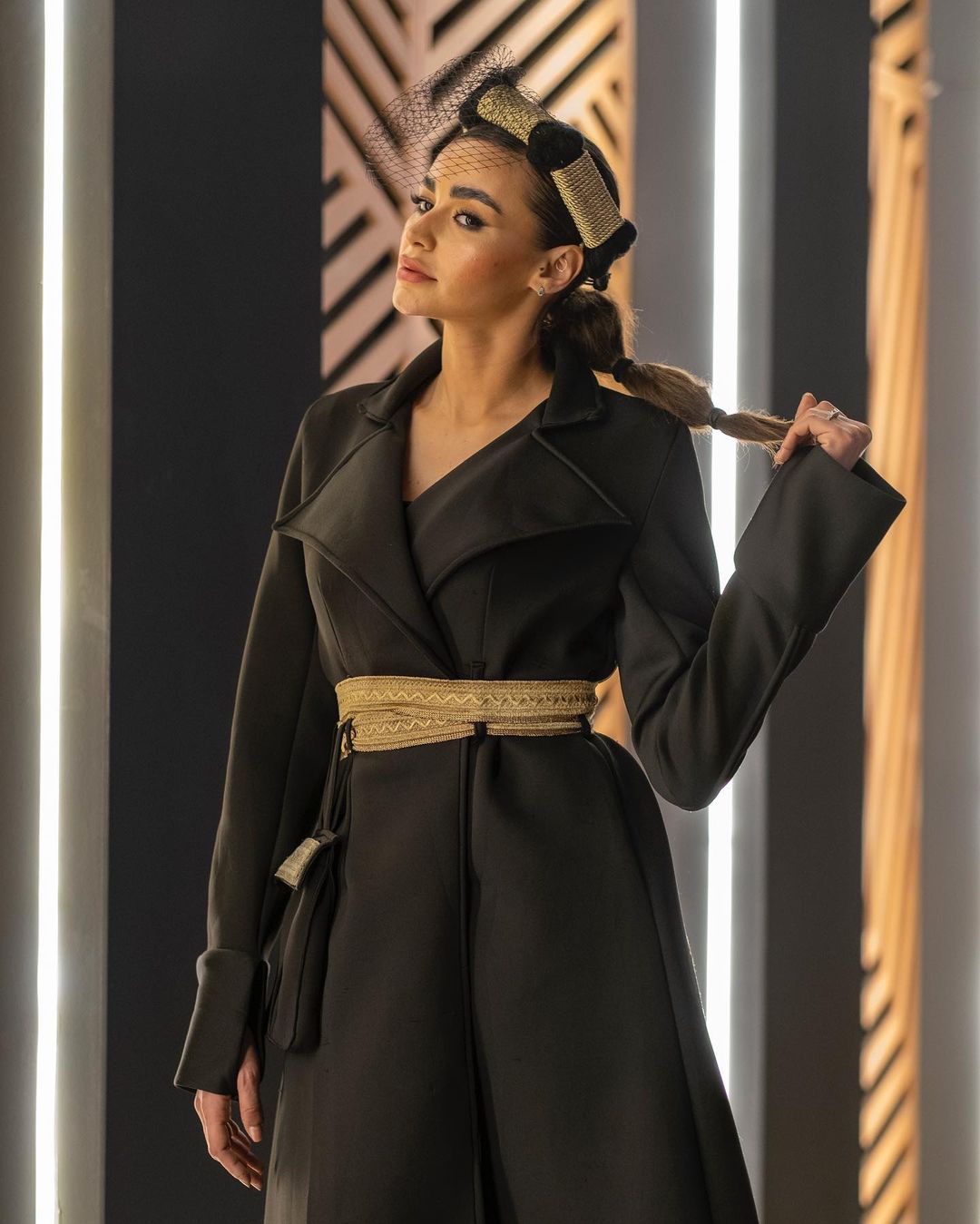
How One Saudi Brand is Putting a Streetwear Spin on Traditional Dressing

Ready-to-wear sustainable brand Rebirth embraces the ongoing transformation of The Kingdom within its line of everyday Bishts
Homegrown creatives have put their own person twist on traditional garments for years now — like the Bisht, a flowing outer cloak worn over a thobe, kanzu or tunic, a symbol of status and prestige in the Arab world. Rebirth is a luxury ready-to-wear Saudi-based sustainable brand, founded in 2021 by KSA designer Tala AbuKhaled, with a concept that resonates with many Saudis; one which embraces the ever present transformation of The Kingdom, incorporating it into its designs.
The brand aims to revive national wear and patterns, ushering them into a modern area as statement pieces but never forgetting the roots connected to the garment – and with more than 95% of its clothing being made in Saudi Arabia, the brand is truly committed to working with local artisans in order to produce its range.
Bazaar Arabia sits down with Tala as she shares the story behind her brand and insights into being a woman-owned sustainable brand – and all the challenges and milestone that come along with being an entrepreneur.
Harper’s Bazaar Arabia (HBA): What inspired you to start your own brand?
Tala AbuKhaled (TA): After starting my slow-fashion brand, Rebirth, I noticed how unethical and destructive fast fashion really is. A casual mall store visit would give me a panic attack, seeing stacks and stacks of clothes that will most probably end up in a landfill; I started noticing the impact this really had on all of us, and how disgusting fast fashion could really be.
Experiences like these have a different feel when you enter a store that values sustainability and quality over quantity; You see products that are crafted with care and responsibility rather than mass-produced items that are merely fueling a never-ending trend cycle.
HBA: Can you tell us about the eco-friendly materials and practices you use in your products?
TA: Rebirth uses various ethical practices to decrease any negative impacts on the environment. We don’t produce in mass, as well as, using Zero waste pattern cutting techniques, along with dead-stock fabrics in many of our designs to eliminate any fabric waste.
HBA: Which piece(s) do you best believe represent your message of keeping Saudi roots alive?
TA: A few pieces really emphasize our Saudi roots. like our “Bisht Please” piece – it is the first female Bisht of its kind.
And our “Bisht Bomb”- a unisex bomber jacket with Bisht finishing’s – and our “Bisht palazzo,” palazzo pants with Bisht embroidery as a belt, are both really special.
Our “Bisht Choke” an asymmetrical woman’s top with a Bisht choker – the list could go on and on.
HBA: What future goals do you have for your brand in terms of sustainability and social impact?
TA: In terms of sustainability and social impact we have several goals that we aim to achieve in the future like zero-waste production and engaging with our community on a greater level, to support local artisans and suppliers, as well as implementing initiatives that benefit the communities we source from.
We’re striving to significantly reduce, if not completely eliminate, the waste created during our production process. We’re investing in technologies and practices that can help us achieve a circular production model where every resource is used to its fullest extent.
We’re also looking to partner with various non-profits and charities to give back to the community and contribute to social causes that align with our brand’s values. Our Fair Trade Practices go above just paying a fair wage, but also ensure safe and healthy working conditions for our workers.
HBA: Have you faced any resistance or misconceptions from customers or partners?
TA: Definitely! A misconception we had with customers regarding our slow fashion business is the higher price point that comes with that, we address this by explaining why these prices are necessary: fair wages for workers, investment in sustainable materials and processes, and often, more locally sourced goods. We emphasize the real cost of fast fashion—both the human cost and the environmental cost—and remind customers that by paying a fair price, they are participating in a more equitable and sustainable fashion industry.
HBA: What would you say sets you apart from other brands?
TA: In each of our clothing collection, we strive to breathe new life into time-honored art practices that might otherwise be forgotten. Our designs tell stories, celebrating cultural heritage and craftsmanship; reviving culture, art practices, and various artistic concepts, while doing it sustainably will forever be the true aesthetic and purpose of the brand.
HBA: What advice would you give to aspiring female entrepreneurs who want to start a sustainable business?
TA: Lead with confidence. As a woman in business, you may face unique challenges. Believe in yourself, your ideas, and your ability to make a positive change. Your confidence will inspire others and help you navigate obstacles.
Start small – don’t feel pressured to be perfect right from the start. Doing fashion sustainably is a journey, and every little step counts. As your business grows, you can expand your sustainability efforts. And find your passion. It’s essential to deeply care about what you’re doing. Passion is what will keep you going through the challenging times. If sustainability is your passion, let it be the guiding principle of your business.
For more information, visit rebirth.sa
Lead image courtesy of Instagram (@rebirth.sa)