
Hermès’ Haute Horlogerie Looks To The Equestrian World With A Touch of Whimsy
Two new métier d’art timepieces pay tribute to Hermès’ rich legacy of equestrian-inspired style and exceptional haute horlogerie
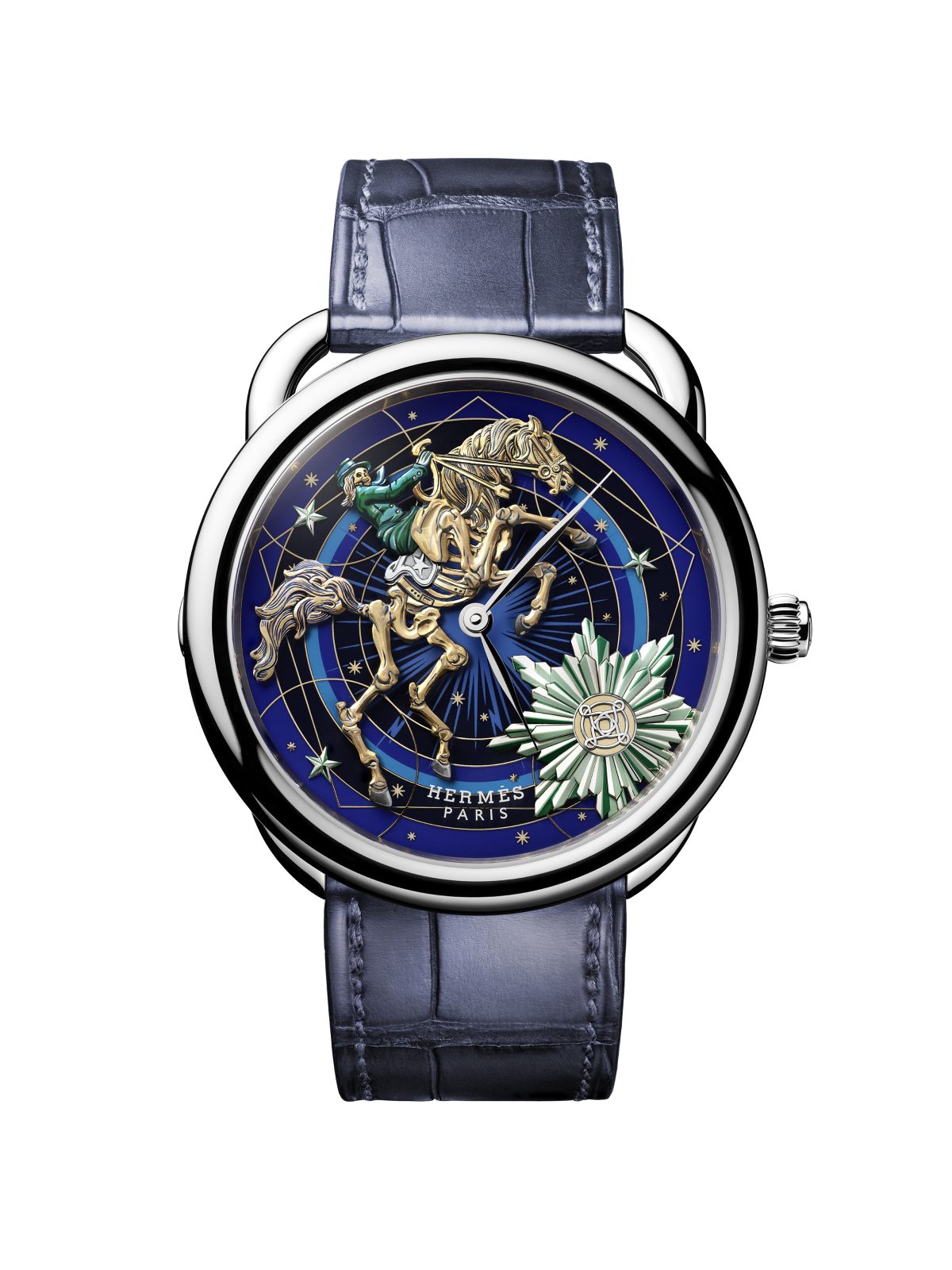
The world of métiers d’art watches is one of extremes – from the artisans to the materials required for each piece, every component must be of crème de la crème calibre in order to achieve its exalted level of master craftsmanship. Hermès is a maison that delivers this savoir faire in spades, and never more so than with this year’s métiers d’art novelties, the Arceau Chorus Stellarum timepieces. These two watches – each limited to just six pieces-riff on the original Hermès Arceau, an equestrian-themed timepiece that was designed in 1978 by Henri d’Origny.

The Arceau’s classic round case can be identified by its stirrup-shape lugs, but for 2024 the equestrian theme is even more prominent, with each dial showcasing a miniature horse rider atop a striking skeletonised stallion. Brought to life by intricate hand-engraved and hand-painted appliqué, its precious figures can be animated on-demand, surrounded by gilded constellations. The mind behind its ambitious artistry and ingenious animation? Philippe Delhotal, creative director of Hermès Horloger, a rainmaker within the industry who is renowned for his deft blend of technical expertise and unbridled creativity.
Crafted in gleaming white gold, the Arceau Chorus Stellarum features either a matte-blue or pearl-grey leather strap, with the latter colourway showcasing a stream of diamonds upon its bezel. While the aesthetics are certainly captivating, one must go beneath the sapphire glass crystal to see the real marvel – the H1837 movement that keeps its heart beating and brings its whimsical rider to life. “When we look at the watch it appears effortless, but it is actually very complex because it was necessary to cut out the character, engrave it, paint it, and it took a long time to invent the system for the mechanical animation,” Philippe explains. “There was a whole process and collaboration between the craftsmen, the watchmakers, the designers – all those who worked on it.”
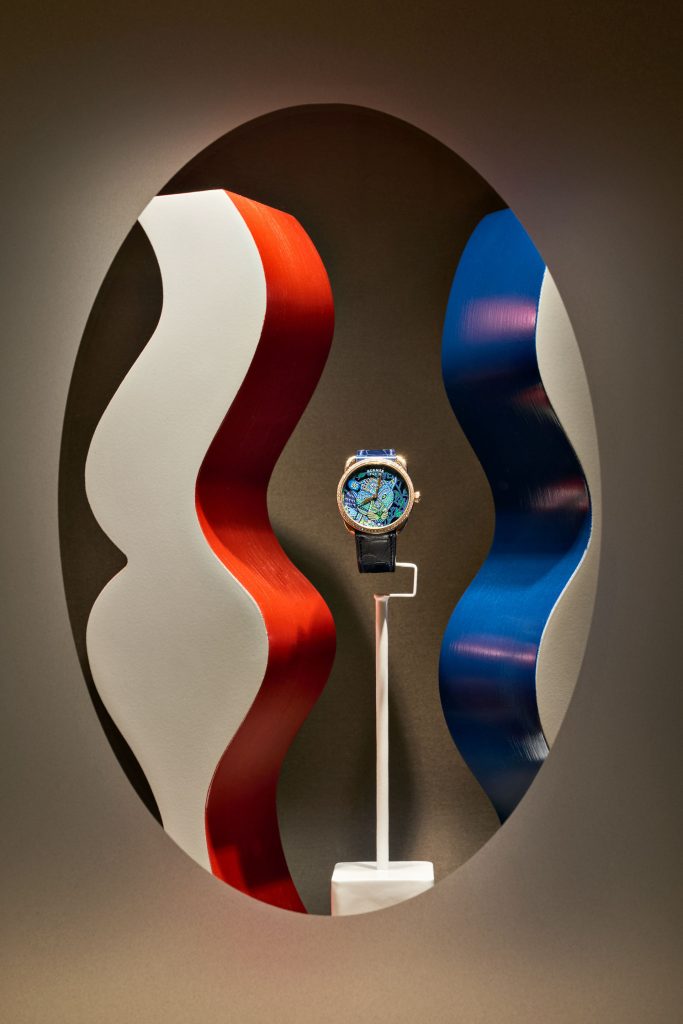
The dial design was inspired by the Chorus Stellarum silk scarf, dreamed up for the maison by Japanese illustrator Daiske Nomura. “Daisuke has a very particular style, it is very contemporary, surprising and fanciful, it is almost amusing at the same time, and when I first saw the drawing I loved it because it’s a little bit like Vanitas art – we see this character, this skeleton, but it’s treated slightly humorously so that we forget its slightly macabre side,” explains Philippe. The mission presented to his crack team of artisans was to translate this illustration upon a silk square into a miniature piece of art upon the wrist, a process Philippe describes as ‘framing’. “When we do close ups, we obviously can’t translate the whole square, we work upon a surface of just a few centimetres, so that’s not possible, we have to choose enough elements in the square that reference the original – that is the challenge.”
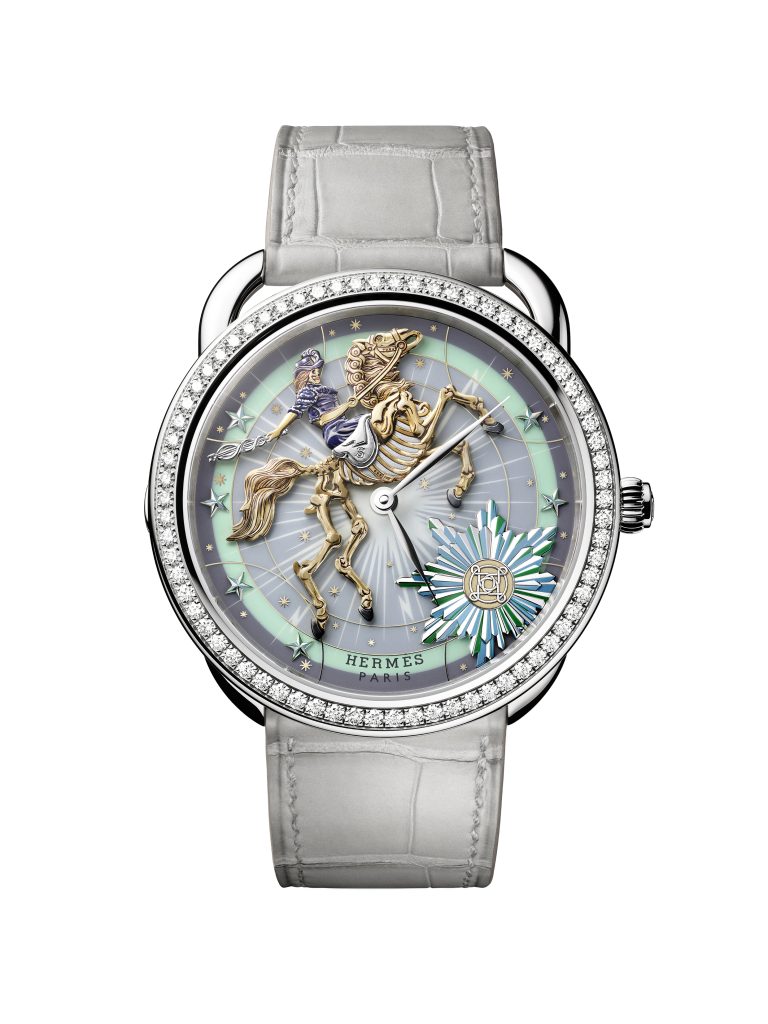
The watch’s ethereal feel is conjured through rhodium-plated stars, with its celestial details intended to celebrate the conceptual passage of time. Hermès is famous for its interpretation of time itself, with many of its watches doing the exact opposite of what you might expect them to – in place of measuring and ordering time in a linear fashion, the maison often explores complications that play with time, allowing it to be spontaneous, and frankly, far more fun. With each métiers d’art watch crafted by the maison, it becomes harder to anticipate what will emerge from its atelier next. “From year to year, the drawings become more complex, more precise, there are more details,” says Philippe. One thing is sure – blending the practical and the functional, with a little lightness of the unexpected, Hermès strives to make everyday life a playground, and every moment count.
From Harper’s Bazaar Qatar Winter 2024 Issue