
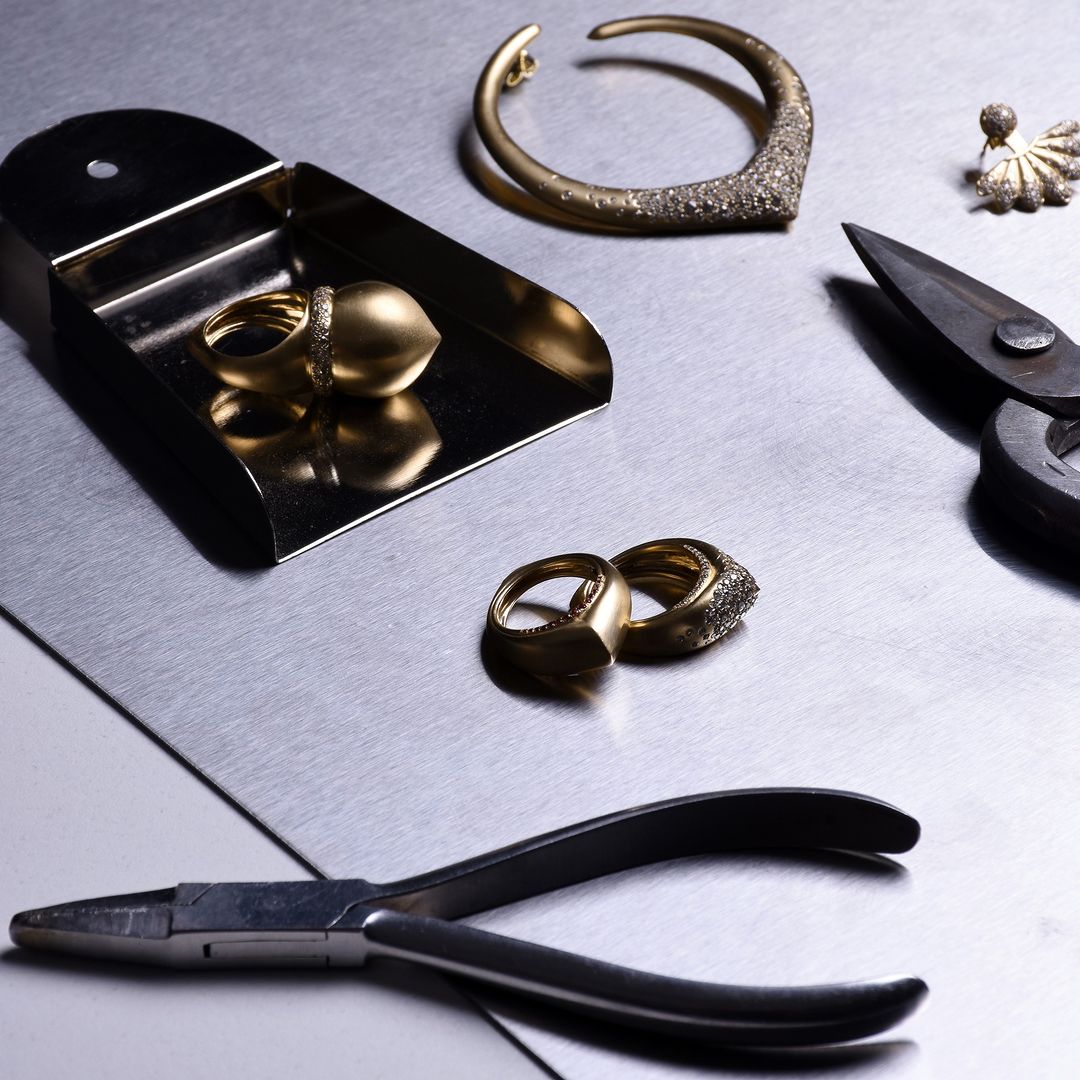
5 Experts Share Their Tips On How To Clean Fine Jewellery
Precious metals and gemstones will remain brilliant and beautiful if given the right care—Bazaar Arabia speaks to the expert designers who can ensure your jewellery will last a lifetime or longer
Precious metals and gemstones are natural materials that are thousands, millions and even billions of years old; most diamonds are, in fact, older than the dinosaurs and many stars in the sky. These materials also come through great stresses and strains to end up on our fingers — they are dug from the ground, cleaved, cut and polished before appearing pristine in store windows. Most of these materials are, however, still vulnerable to wear and tear once they are set into jewellery, and how well we take care of them will greatly affect the lifespan of a jewel and whether it can be passed down the generations.
Here, Bazaar Arabia speaks to a clutch of precious metals, diamond and coloured gemstone experts, for their advice on how to clean and care for your most prized pieces.
How To Clean And Take Care of Fine Jewellery
Precious Metals
If you aren’t familiar with their different properties, precious metals can be confusing to know how to clean. “Yellow gold loses shine with usage, but white gold has a rhodium plating that gives it its white hue, and this experiences wear and tear over time that will affect both the colour and shine,” says Hisham Mahomed, co-founder of Dubai-based brand Maison H. “To clean precious metals, we advise a mild dish soap and warm water, which is suitable for 14-, 18- and 24-karat gold and platinum, but if the piece contains any precious stones or enamel, you may need to change how you clean it,” he advises.
It’s also important to consider how much you expose precious metals to other liquids, too. “With white gold, we advise our clients that consistent wear in the pool, in the sea, or use of hand sanitisers should be avoided—the rhodium plating will probably need to be redone every two years to keep it looking fresh,” he explains. “In my opinion, rose gold is a little more complicated over time than white gold—it can lose its lustre and shine, so it’s important to take extra care of rose gold pieces.”

Diamonds
“The safest way to store diamond jewellery involves a few key practices to ensure its longevity and brilliance,” says Anastasia Mouawad, a 5th generation co-guardian of family-owned maison Mouawad. Anastasia says storing pieces separately—using individual boxes, trays, or compartments—to prevent scratches or tangling is a must. “To maintain the shine and brilliance of your gold and platinum diamond jewellery, it’s important to clean it properly and regularly. “When cleaning, it’s best to work over a sink, but ensure the drain is securely blocked to prevent any accidental loss. Gently scrub the jewellery with a clean, soft-bristled toothbrush, making sure to reach the back of the diamond and any crevices, where oil and grime tend to accumulate. Once cleaned, rinse thoroughly with warm water to remove any soap residue.”

What about popular ultrasonic cleaners? “Ultrasonic cleaners are generally safe for cleaning diamond jewellery, but there are important factors to consider,” she explains. “High-quality diamonds typically withstand ultrasonic cleaning well. However, diamonds with significant inclusions or fractures may be at risk, as the vibrations from the cleaner can exacerbate existing weaknesses. Delicate or loose settings might be compromised by the ultrasonic cleaner’s vibrations, potentially dislodging or damaging the diamond.”
If you’re unsure, it is advisable to have your jewellery serviced by a trusted jeweller every six months to a year, where the jeweller can thoroughly clean and inspect the settings for any loose prongs or weaknesses.
Coloured Gems
If you find precious metals confusing, then we’re about to get technical – coloured gems require a specialised approach depending upon the family of minerals they belong to. “Rubies and sapphires are actually the same stone with the only difference being colour,” explains Sameer Liliani, director of Amrapali Jewels. “They are from the corundum family and have a grading of 9 upon the Mohs hardness scale (10 is the maximum, with diamond being the hardest stone.) This indicates they are quite durable and so are suitable for daily wear and use, including in engagement rings.” Sameer recommends a trusty soft damp cloth, or taking rubies and sapphires for a professional clean, as ultrasonic cleaners can damage corundum stones if they hold natural inclusions and flaws, as this can risk the entire stone.

“As for emeralds which are a variety of beryl, they have a Mohs hardness rating of 7.5, and they are a much softer stone. In geology they are known as a type three stone which denotes they are usually quite included,” he explains. The downside is that emeralds are less suited to daily wear on rings, and so generally not what I would recommend for an engagement ring.”
It’s worth keeping these qualities in mind when choosing jewels you will wear every day—due to the activity of our hands, rings are the most likely to get damaged, followed by bracelets; whereas necklaces and earrings are less likely to get in harms way. Sameer suggests treading carefully with emeralds, ensuring that they are protected by halos or diamonds or bezel settings, and only ever cleaned with a soft, damp cloth, or by the professionals.
Enamel And Hardstones
“Storing your enamel jewellery properly is just as important as cleaning it,” says Tania Nawbar, co-founder of Lebanese brand L’Atelier Nawbar. “Make sure each piece has its own place in a soft-lined jewellery box or cloth pouch, and keep your jewellery out of direct sunlight to avoid fading the colours over time, it’s important to choose a cool, dry place for storage to maintain its beauty.” If you’re storing your enamel jewellery long-term, Tania advises regularly checking it and cleaning to keep dust at bay too.

For hardstones—carved minerals such as lapis lazuli, tiger’s eye and turquoise—it’s a simple recipe of gentle cleaning. “Soak your jewellery in warm, mild soapy water for a few minutes and then gently scrub the stones and settings with a soft-bristled toothbrush. Be careful not to press too hard to avoid scratches,” she warns. “To finish, rinse the jewellery under lukewarm water and pat dry with a soft cloth. For an extra shine, use a jewellery polishing cloth on the metal parts, but be gentle around the stones.”
Pearls
“Caring for peals is essential to maintaining their elegance,” says Beirut-based designer Nada Ghazal. “To keep your pearls radiant, store them in a soft cloth or velvet pouch, and for earrings, use a dedicated pouch with separators to avoid scratches,” she suggests. After wearing your pearls, it’s important to gently wipe them with a lint-free soft cloth to remove any residue and keep them dry. “Always remember, pearls should be the last thing you put on and the first thing you take off when dressing, allowing makeup and perfume to settle for 20 minutes before wearing,” she advises.

“Show your pearls some love by wearing them often—their lustre thrives on the natural oils from clean skin. And for that extra touch of luxury, treat your pearls to a professional steam bath every few years to restore their natural shine.”
Lead Image Courtesy of Instagram / @nadaghazaljewelry
