
If Jewels Could Talk: Inside Van Cleef & Arpels’ Heritage Collection
Each piece from the Van Cleef & Arpels Heritage Collection serves as an invaluable keepsake of the past… and might even come with some amazing stories to tell
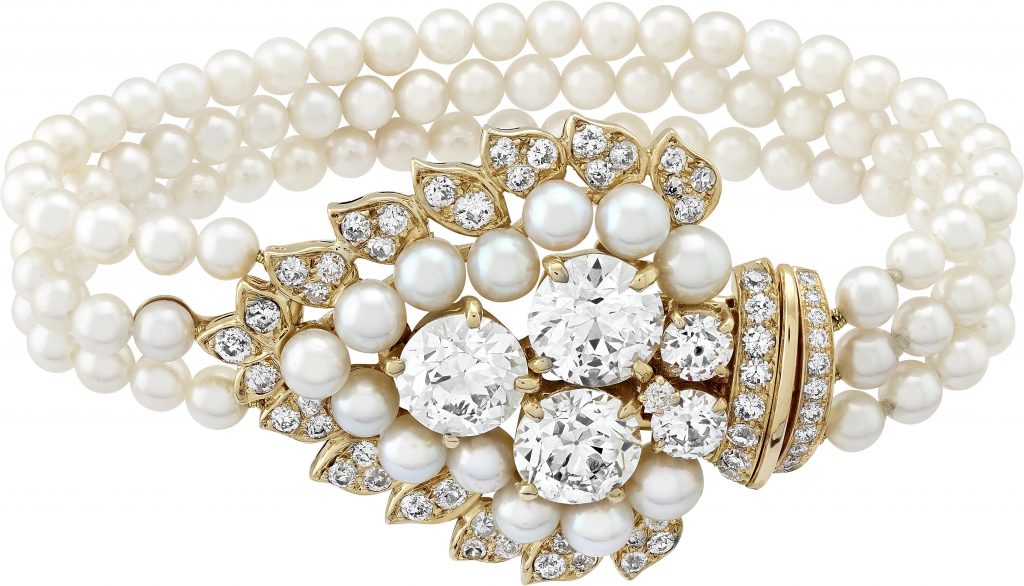
When a lavish cultured pearl bracelet with a detachable heart-shaped diamond centrepiece made its way back to Van Cleef & Arpels, its Heritage team was delighted to find it was purchased in 1951 by a woman famously known as the ‘Million Dollar Baby.’ A woman who was also one of the maison’s most cherished clients, Woolworth heiress Barbara Hutton. She particularly loved to drape herself in pearls worn by ill-fated French monarch Marie Antoinette and she was just as renowned in the 20th century for her regal jewellery collection as she was for her numerous husbands. Today the iconic socialite’s bracelet, encrusted with 12.73 carats of diamonds, is just one of the marquis pieces that make up this year’s Heritage Collection – which Van Cleef & Arpels makes available for purchase to its top customers.
Storytelling is at the heart of the Heritage Collection, which is now in its 12th year. The special unit is fuelled by a small team of about 10 individuals who are privy to the private collections of affluent clientele from the past and their descendants, who, as fabled family fortunes fade with the decades, are more and more incentivised to let go of these museum worthy pieces rather than keep them under lock and key. Although, some lost vestiges of the past, explains Natacha Vassiltchikov, Deputy Director of the Heritage Collection, have a surprising way of finding their way back to the house on their own.
“We often find the provenance derives from someone quite famous. We look out for the signature VCA serial number and research the archives, which luckily, since the beginning of the house have survived fire, floods and war,” says the jewellery expert, who joined Van Cleef & Arpels in 2014 after more than 10 years as International Business Development Director for Jewellery at Christie’s in Geneva, Hong Kong and Los Angeles.
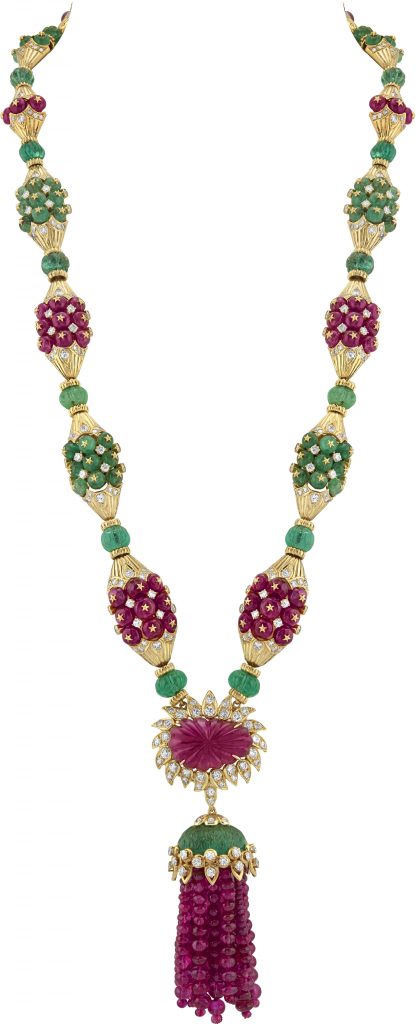
We explored with Natacha some of the collection’s awe-inspiring pieces. One highlight (among many) is a tasselled symphony of rubies and carved emeralds that form a necklace and earring set from the 1970s. It calls to mind the hippie, bohemian culture that infiltrated popular music of the decade à la the Beatles’ Indian music phase. A transformable piece – the hallmark of Van Cleef & Arpels designs – the tasselled necklace can be worn in three ways and was likely constructed with gems procured from the collections of the Maharajas; India’s royalty whose power faded when the nation gained independence in 1947. But no matter the size, provenance or monetary value, the finding of each Heritage Collection piece is a celebration – whether its price is set at 10,000 euros (Dhs37,654) or one million (Dhs3,765,478).
“You can see through each decade how innovative they are and how they capture the sort of the spirit that never falls out of style,” Natacha says, noting it is extremely difficult to find sets that have not been separated or jewels whose stones have not been extracted and replaced, adding: “It’s heartbreaking when that happens.”
Another emblematic piece is the Ludo bracelet, named after the nickname given to Louis Arpels and was composed of a mesh-like flexible band of polished gold, at first in a brick pattern and then in a hexagonal or honeycomb pattern. Fastened with an ornate clasp with diamonds and turquoise, the Ludo maintains the architectural Art Deco feel synonymous with the house’s zenith after it was awarded, in 1925, the Grand Prize at the Exposition Internationale des Arts Décoratifs et Industriels Modernes in Paris for its Roses bracelet, set with rubies, emeralds and diamonds.
Van Cleef & Arpels’ fame would rise through the decades, culminating perhaps with the coronation and the creation of the jewels and crown to be worn by Farah Pahlavi, Empress of Iran, at her coronation in 1967.
“These pieces are for those who have an interest in the history of jewellery, because each piece has so much to say,”
Natacha Vassiltchikov
Over a span of six months, Pierre Arpels made 24 trips to Tehran, where he meticulously selected the stones, finally establishing a temporary workshop in the Treasure Chamber, together with a Van Cleef & Arpels supervisor and designer, embracing new stones, motif and techniques that continue to echo throughout the Parisian maison’s heritage.
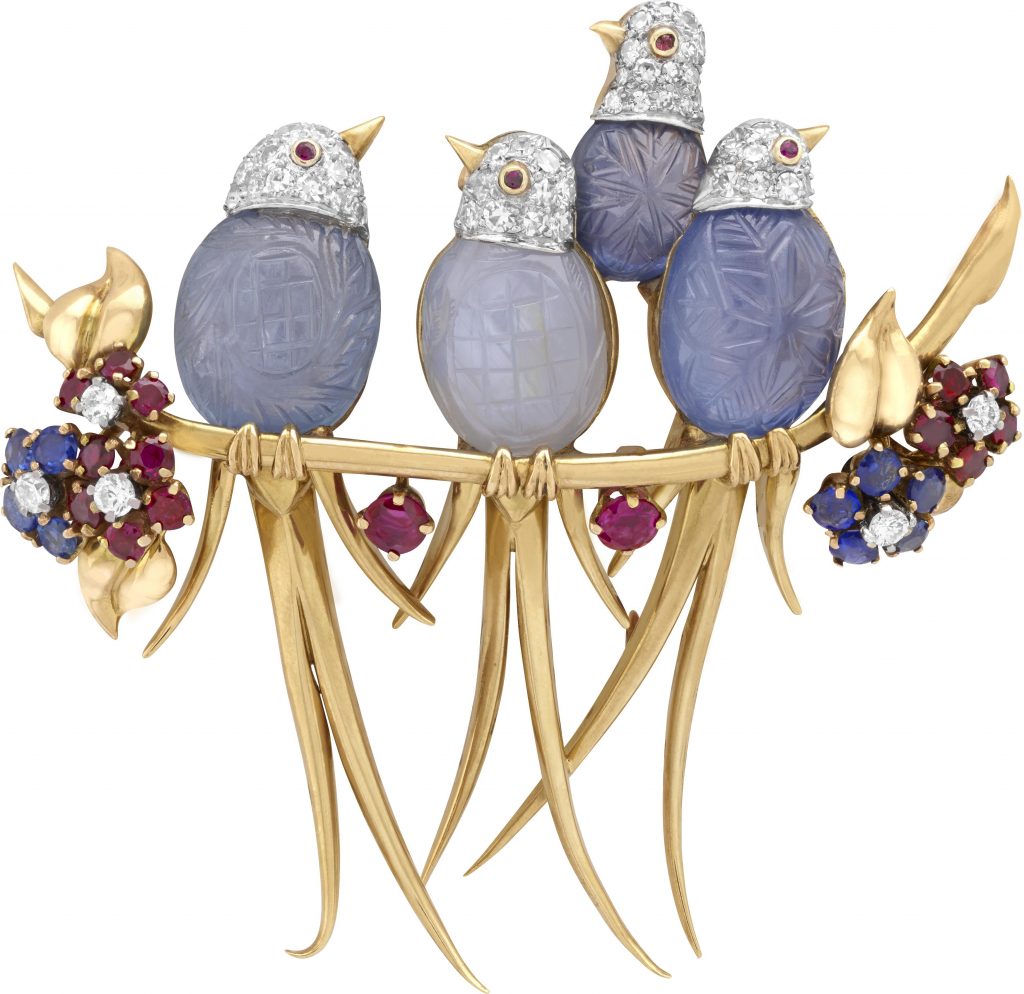
Another historical moment represented within the collection is a delicate bird pin made in the Second World War, when production came to a near halt in Europe and the house opened its first New York City atelier. Tracing the pin’s ultra-rare, micro-engraved cabochon pale purple Sri Lankan sapphires and ruby flower formations, Natacha explains that women wore these pins as a sign of solidarity and peace, often with two birds perched on a branch to represent the re-uniting of a war-torn couple or other versions representing the coming together of an entire family.

Drawing on her experience in the antique jewellery market, Natacha helps grow and promote the history of pieces like these as she travels the globe supporting and advising sales teams. Through participation in various events, including art fairs and conferences, she also works to highlight the beauty of these rare pieces among high jewellery collectors around the world.
In selling heritage items to the Middle East and other Eastern cultures, it’s often hard for big-ticket clients to overcome superstitious beliefs about wearing pre-worn jewels. However, spurred by the rise of local sustainable brands, powerful female spenders who now buy jewels for themselves and the pursuit of rich storytelling, attitudes are changing in the UAE, a key market for the house.
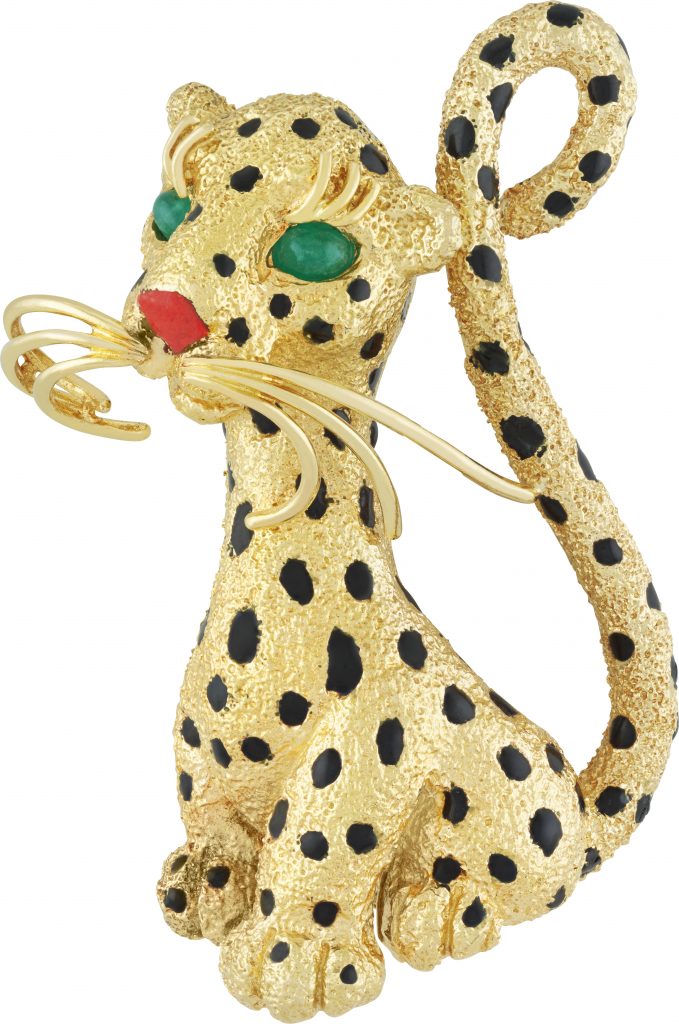
“These pieces are for those who have an interest in the history of jewellery, because each piece has so much to say,” muses Natacha, pointing out a 1960s-era panther pin is part of a collection born from the opening of ‘La Boutique’ addressing the era’s younger clientele. “It’s not a unique piece but it’s whimsical and fun for a collection.”
At the same time, cultivated shoppers recognise that heritage pieces carry with them extinct practices and intricate designs that can’t be reproduced or gems that have been over-plundered.
Creations mimicking lace which were found in Van Cleef & Arpels’ collections from an early date and continued to be popular in the 1940s, possess one of these obsolete handmade techniques that died with its artisan class and is in-line with the house’s innovation in hand craftsmanship its still known for today.
In 1933, Van Cleef & Arpels, for example, patented its Serti Mysterieux, or ‘Mystery Setting’, a technique employing a setting that can take up to 300 hours of work per piece or more, and of which only a few are produced each year.

As our interview draws to a close and whilst reflecting on the ongoing era marked by war and pandemic, the image of the birds perched on the branch of the World War II pin and the hope they represent, continues to linger. With their diamond-encrusted faces, ruby eyes and golden beaks sculpted so carefully – one could almost detect their personality and the mood of the era, Natacha points out.
It’s that sort of emotion that emanates from the type of jewellery making that is synonymous with art. In this context, perhaps rendered even more powerful, as heritage pieces have been passed down and carried on the hearts of individuals who lived through the sort of challenges of an era of which today’s society is certainly no exception.
Photography: Erik Madigan Heck