
World Hijab Day: The Story Behind The Headscarf
From ancient status symbol to religious insignia to modern cultural accessory, Bazaar celebrates the journey of the hijab by looking back in time…
The dictionary defines the hijab as ‘a head covering worn in public by some Muslim women’ but the headscarf itself existed long before the advent of Islam, and dates back to 2500 BC. In ancient Mesopotamia, women wore the covering as an elite status symbol, meanwhile in the Byzantine, Greek, and Persian empires, veils differentiated ‘respectable’ woman from the lower classes and slaves. Early religions including Catholicism also utilised the veil.
But the headscarf has become synonymous with Muslim women through their wearing of the hijab to cover their hair and to preserve modesty, although many non-Muslim across the Middle East have also adopted the hijab, as a form of modest dressing.
And while many find wearing the hijab a form of empowerment, it has also become a marker for discrimination. The founders of World Hijab Day, which is celebrated every year on February 1st since 2013, are working to tackle some of these prejudices; this year, the movement is championing #EndHijabophobia social-media campaign, and asking hijabi women to post images of themselves holding up a sign sharing the hashtag.
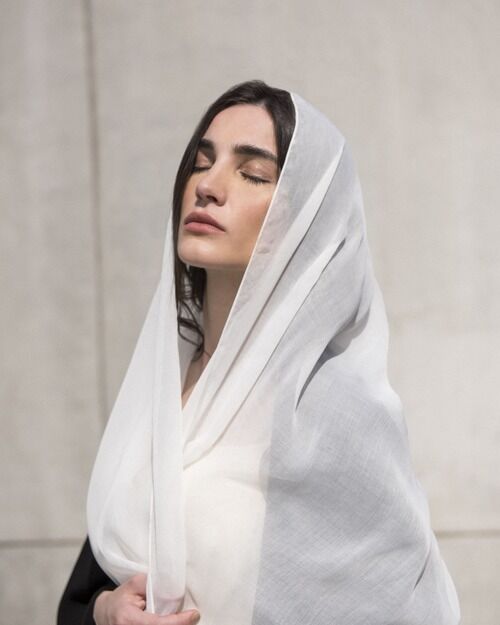
Hoda Katebi, an Iranian-American activist and blogger told Bazaar, “Growing up in the South [of the United States], I thought it was normal to be called a terrorist when I was shopping, to get punched in the face by a classmate, or for my hijab to get ripped off,” she recalls. “I live in Chicago now, moving here was helpful for me to realise that this wasn’t normal.”
Marwa Biltagi, a fashion blogger and stylist who has worked in the modest fashion arena for over ten years, has seen attitudes towards wearing the hijab change. “Because of how difficult things have gotten, and how it’s always been politically, the conversation between [hijab-wearing] girls is turning to if they will be keeping the hijab, or if they don’t want to wear the hijab anymore,” she reveals. “Because they feel targeted, it’s more common to take it off than to put it on.”
Could mainstream fashion’s embracing of the headscarf bring some respite from this discrimination? Dolce & Gabbana released their first abaya line in 2016 and the campaign was photographed with covered models. Michael Kors added a modest line in Spring 2019, complete with floral-print hijabs, and Nike changed the way Muslim women exercise after releasing its Nike Pro Hijab in 2018, followed by the modest Victory Swim collection in February 2020. More international brands are following the trend, and the modest fashion industry is expected to be worth $361 billion by 2023.
In 2017, past Harper’s Bazaar Arabia cover star, Halima Aden became the first hijabi model to appear in an international fashion show when she walked for Yeezy in New York, then Max Mara and Alberta Ferretti in Milan. And Halima’s appearance paved the way for more hijabwearing models.
But, after what looked on the surface like four celebratory years, Halima dropped a bombshell last November by quitting fashion shows after being forced to compromise her religious beliefs. “I can only blame myself for caring more about the opportunity than what was actually at stake,” she told fans, calling out the fashion industry for a lack of Muslim stylists, who best understood how to work with the hijab.
Maybe international labels aren’t the answer, though. Luckily, the last ten years has seen a growth in regional hijab brands, which has played a significant part in preserving traditional wear and identity, even when it doesn’t cover the hair – known as the Tarha in Saudi Arabia or Shayla in the UAE. The classic headscarf has had to evolve from the traditional black veil that comes with every abaya to keep up with the transformation of the abaya itself as a fashion item. This takes the headscarf into a sphere that’s as much about preserving and celebrating the culture of the Middle East as it is about religion and modesty.
The regional designers transforming the headscarf…
Kaaf Meem
Saudi entrepreneur Karima Saleh and her brother Mayyar founded the brand together in 2015 to fill a gap in the market for coloured and more practical hijabs. “We aim to offer essential hijabs in every colour. We have different customers: the hijab-wearing ladies that love to mix and match the hijab with the abaya, those who complete their outfits with a matching hijab, and then there’s the medical female workers, who are looking for practical choices to wear daily.”
Ta Marbota
Saudi designer Rawan Azhar started her abaya and travel wear brand 10 years ago, but soon discovered the need for chic headscarves, launching her collections in 2015. “We launched the Tarha collection alongside our travel wear, and the idea was to allow women to match their headscarves with their daily wear. Then we took it a bit further and launched embroidered headscarves, which were met with great success. Women used to request the classic Tarha in the past, but now, they mostly ask for one that matches their outfits or abayas in [complementary] colours and designs.”

Mauzan
This Emirati abaya brand was founded in 1990 by Rafia Helal Bin Drai, offering luxury abayas, kaftans and headscarves. “The brand launched headscarves in 2013 to meet a growing demand. Our customers like to wear luxury scarves for both gatherings at home and visits out as well, and the most frequently requested colours are nude, pastel green, light blue and baby pink.”
Haal Inc
This sister brand of ready-to-wear label Sotra, founded by Saudi designer Mariam bin Mahfouz, was launched in 2010. “I launched the hijab turbans that cover the hair with my brand Sotra back in 2008. Back then, it was the best selling item, and we became known for that item only – that’s why I decided to stop selling it through that brand. Instead, I created the snood collection through Haal Inc. In Saudi you don’t have to be hijabi to put the scarf on your head; my products can be worn whether you want to cover your hair or not.”

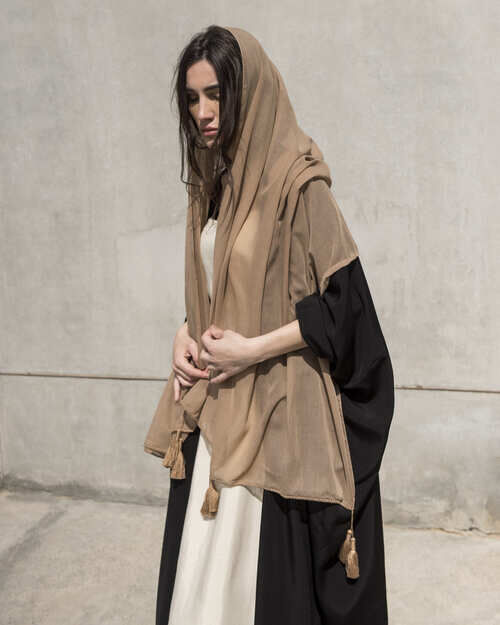
A chic matching abaya and headscarf combination by Ta Marbota
Foulard
This label by Sara Rayess was one of the first Saudi hijab brands, launching in 2011. Back then, Facebook was the only way for small businesses to market their products. “There were no choices for hijabis when we started, and it was stereotyped as boring and unfashionable, so I wanted to change that idea. Plus, it was important for us to come up with new colours that suited every skintone. We mostly use two kinds of fabrics in our hijabs; voile and laser – the first one is a practical choice that doesn’t slip and is embellished with our own embroidery designs, and the other is similar to chiffon.”
From the January 2021 issue of Harper’s Bazaar Arabia