

---Copy-scaled.jpg)

.jpg)


The Ethical Safari: How &Beyond’s Sabi Sand Game Reserve Fuses Sustainability With Luxury Lodging
On the banks of the Sand River, a refined low-slung lodge blends naturally into the riverine South African bush unveiling a blueprint for the ultimate way to safari in eco-friendly style
In the local Tsonga language, “Tengile” means tranquil, and conservation-minded &Beyond’s latest South African endeavour offers guests precisely that, along with plenty of space and a playful articulation of contemporary design amidst the 26,000 acres of a private estate within the Sabi Sand Game Reserve.
The luscious lands of this prime concession on the bend of the wide, sandy riverbed where elephants are often seen feeding, serve as a picture-perfect backdrop for the next level of safari experiences. “Tengile River Lodge boasts a fresh design that gives our guests what they crave most – space,” says &Beyond CEO Joss Kent.
Challenging the status quo, the property takes a bold step back from romanticized renditions of African safaris in a clear-cut shift from the classic tent. Featuring a contemporary twist on conventional safari design incarnations, nine eminently private suites hover harmoniously above the Sand River, while the main lodge houses dining, reception and sitting areas along with a library and a showpiece green-stone bar with plush leather stools that would be slick enough for New York or Dubai. Architect Nicholas Plewman aimed at breaking the mould and created structures that pull the safari experience into the 21st century, combining astute design with sustainability: “It can still be romantic, but the premise must be about nature and the environment rather than a colonial experience.”
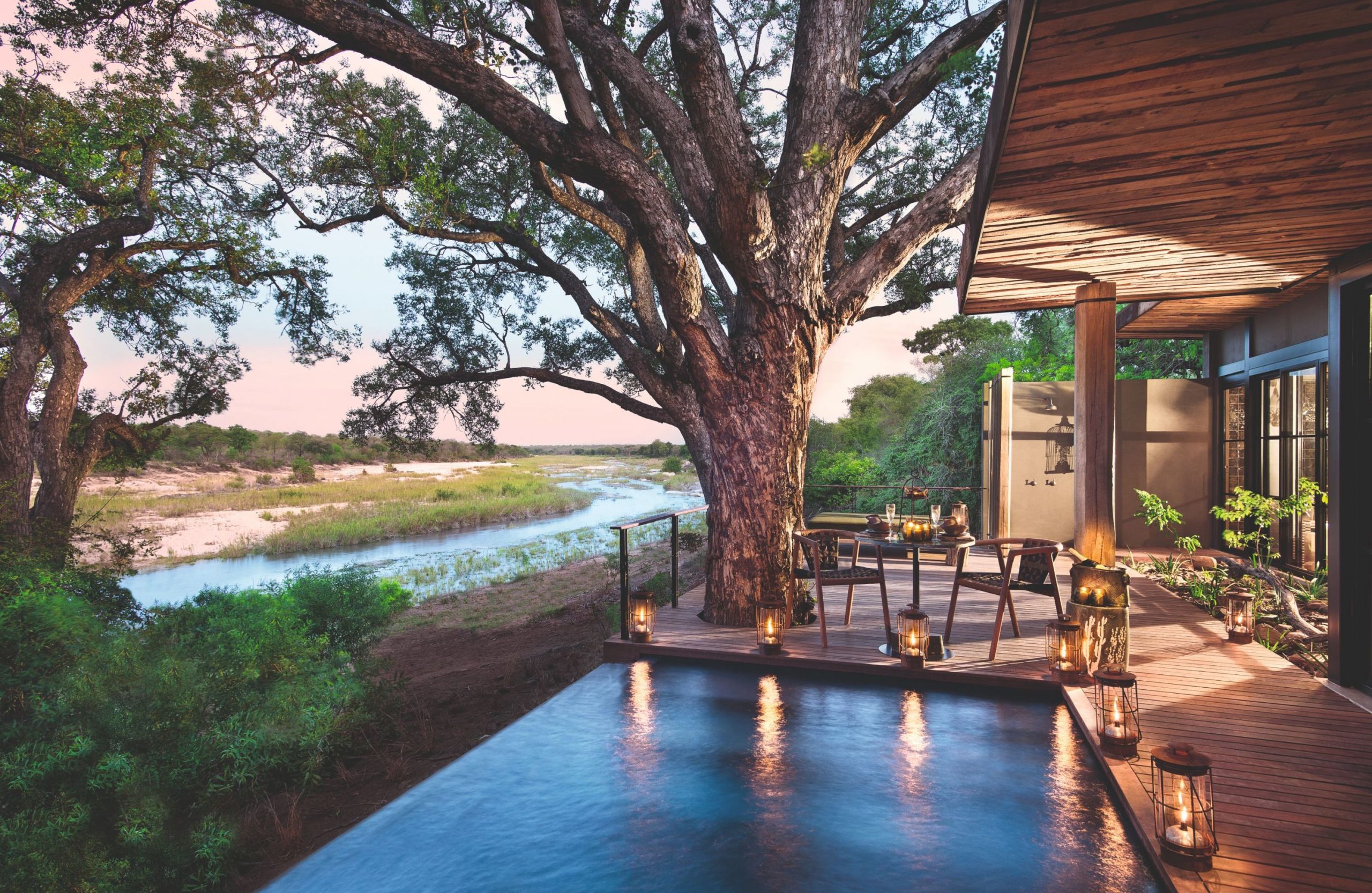
The secluded L-shaped villas stand aligned on the bend of the Sand River covering more than 200 square meters each. They include expansive outdoor spaces with shaded dining areas, a private infinity pool, loungers and an outdoor shower, while the interior features every creature comfort imaginable along with jaw-dropping views of the river and surrounding landscape through oversized floor-to-ceiling windows. A real-life cinema of sorts that guests can revel in – a cold drink in hand – while herds of elephants or the odd zebra cool off in the river below.
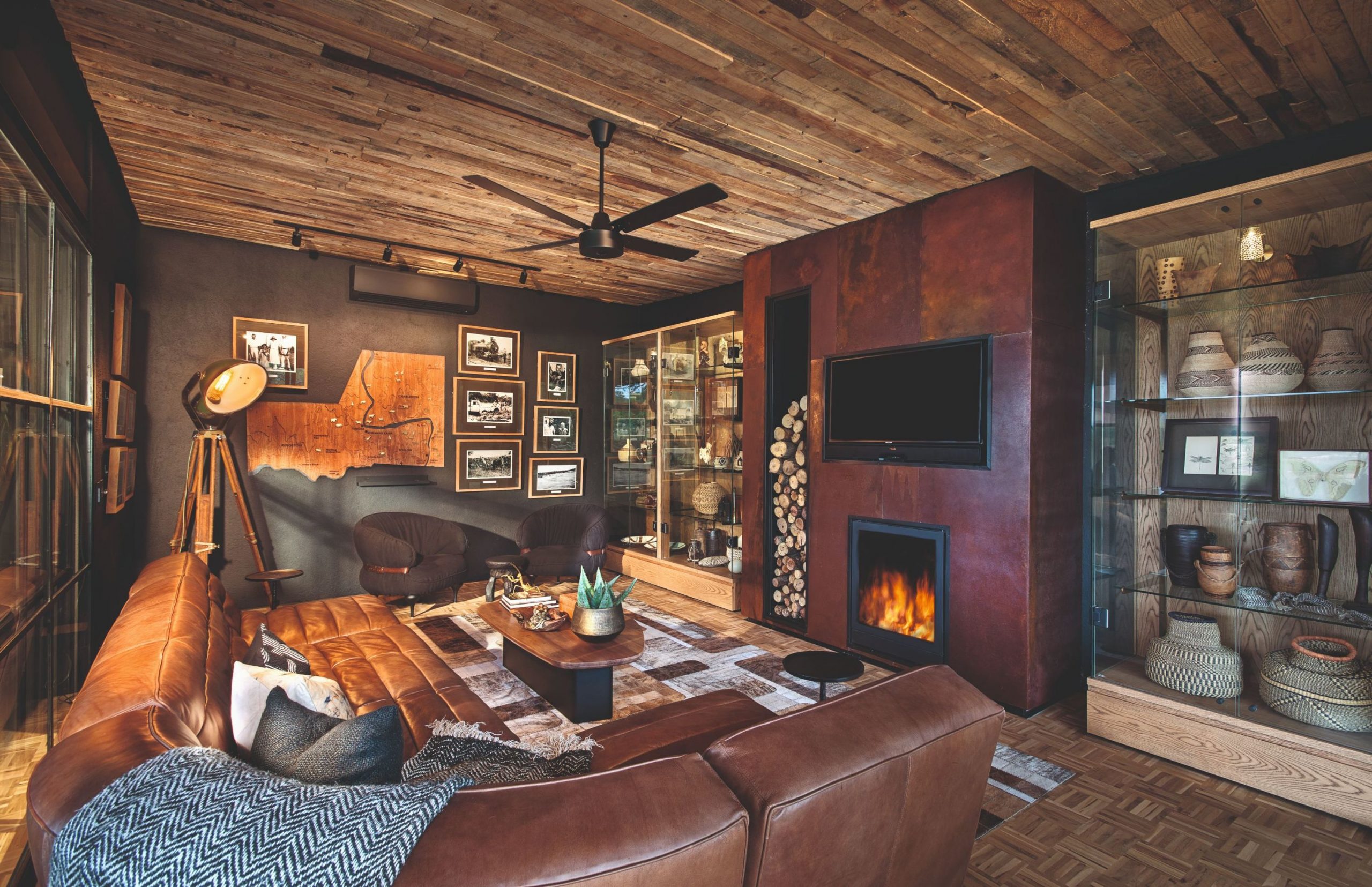
Michele Throssell and her Durban-based team of interior designers were inspired by safari pioneer Harry Kirkman, featuring cleverly combined decor touches that effortlessly blend the classical with the contemporary, such as unpolished steels, reclaimed woods and stones from the defunct Selati Railway, which in its heyday connected the port city of Maputo with the gold mines of Johannesburg. Bespoke fittings and fixtures such as lamps, sofas, beds and chairs were designed by local artists using indigenous materials, while an art collective from Cape Town hand-painted curtains, upholstery and other fabrics with wild animal motifs around a colour scheme evocative of the surrounding fauna and flora.
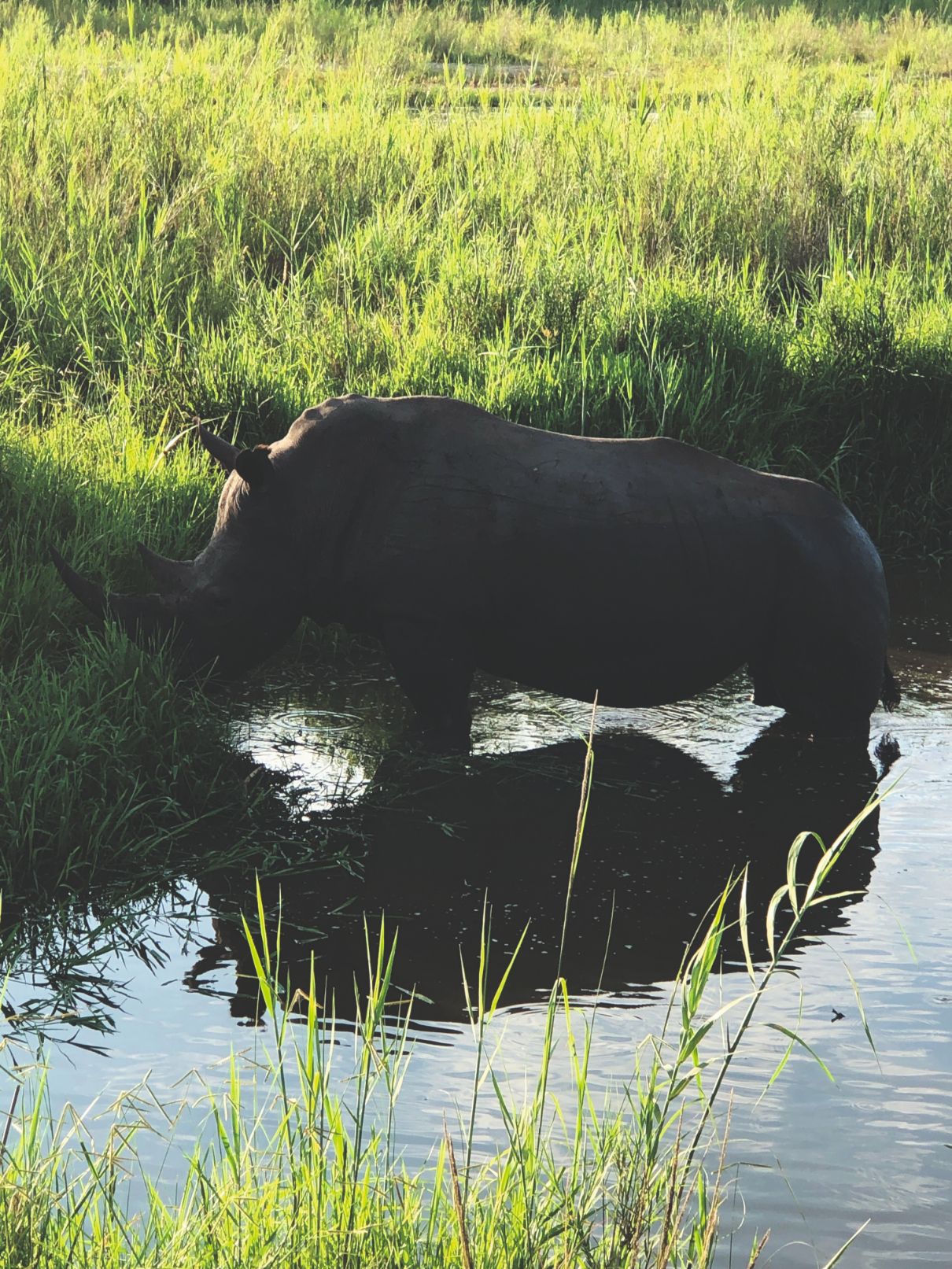
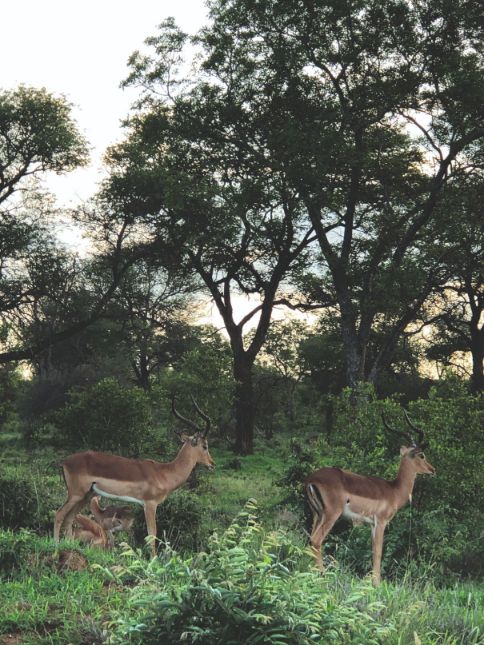
Game viewing at Sabi Sands is as spectacular as the property itself. In the company of conversant and engaging rangers and trackers, guests set off to spot the Big Five (lions, buffalos, elephants, rhinos and leopards) and other inhabitants of the private reserve that shares fence-free borders with the Kruger National Park. It’s an exhilarating experience that reminds us of the importance of conservation of both the animals and their natural habitat.
As the lodge borders the reserve, the immediate space around it is shared with its animal neighbours. Walking on the pathways to and from the villas at dusk is not allowed, and golf carts escort guests to the main building to avoid any daunting encounters with elephants, monkeys or fortuitous leopards. By the pool, a sign warns of elephants coming to drink from it and suggests gentle moves when moving about.
Between the early morning and afternoon game drives, guests retreat to the lodge’s swish communal spaces to unwind and watch nature take its course on the banks of the river and the African bush beyond. The dining area doubles as a dapper bistro and informal patio and on selected evenings, a traditional African boma enclosure stages bonfire-lit communal dinners al fresco.
The lodge’s sustainability endorsements come in the form of zealous energy efficiency, cross ventilation and maximized insulation throughout the property, while state-of-the-art sewer and wastewater management systems are in place, used to irrigate the gardens. To minimize the impact on the area viewed from above, the roofs have been covered with sand excavated from the site during its construction and every effort has been made to keep the environmental impact to a minimum using close to 90% of local building materials.
A palpable love letter to the region’s natural treasures, Tengile’s neoteric understanding of the safari experience through its contempo architecture and à la mode design is not entirely at odds with idealized perceptions of what a safari lodge should look like. Quite the contrary actually, as here and there the decor features striking mementoes as a nod to Harry Kirkman, the key character who inspired it all. The former game hunter turned conservationist used to live next door and identified the priority of safeguarding wildlife in the private game reserve very early on. It is not least thanks to this spirited sentinel that the wildlife here is so thriving, for the animals are the topliners here, though the lodge and its quirky design follow very closely behind.
Click here for more information on the &Beyond.
Gallery Embed: You can also catch up on the latest issue of Harper’s Bazaar Arabia for free by downloading the app on the Apple or Google Play store.