
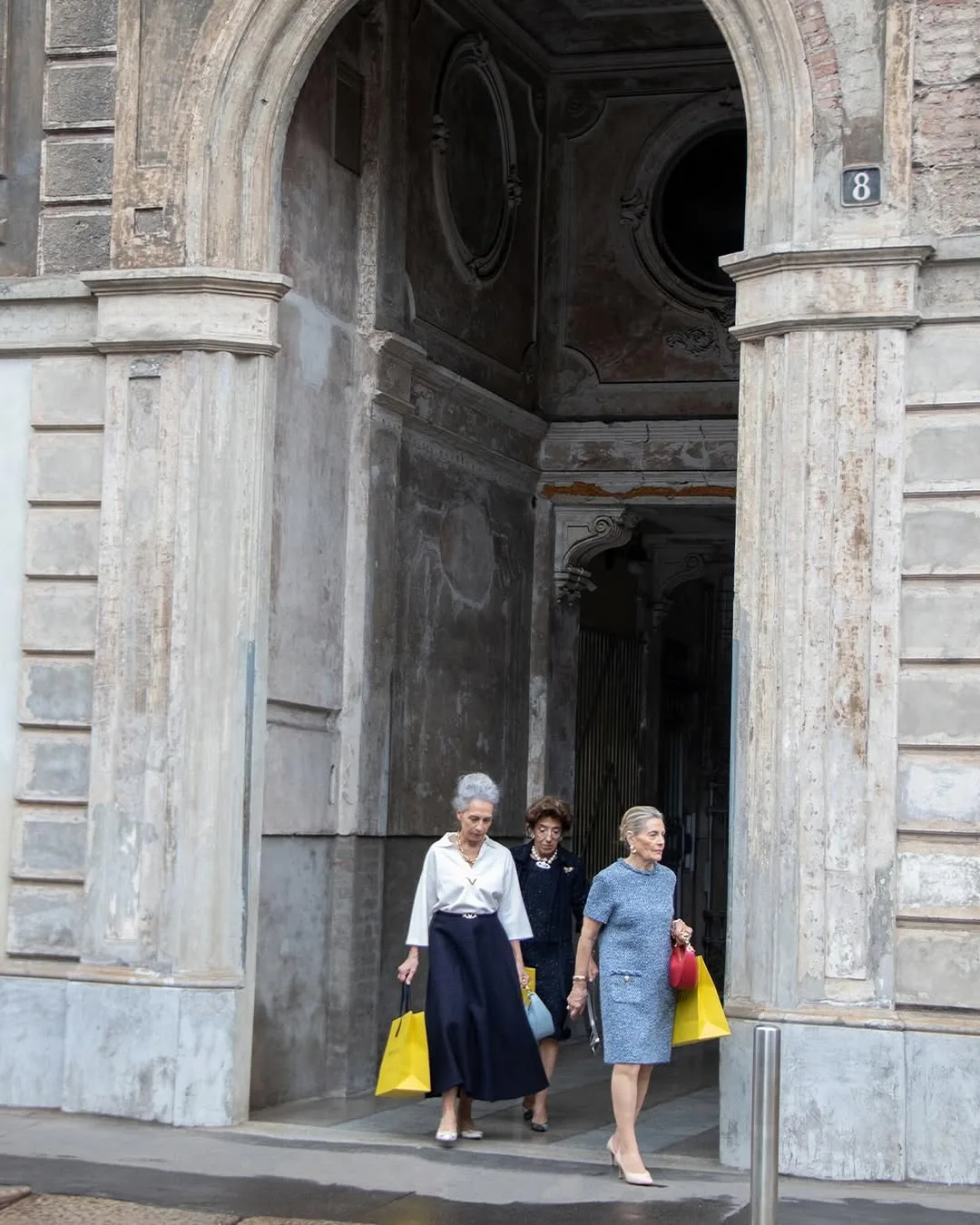
A Life Well Dressed: Why Fashion Maisons Are Looking To Grand Dames For Style Inspiration
While trends come and go, style evolves over time. Perhaps that is why luxury fashion is increasingly looking beyond youth. From Maggie Smith’s Loewe campaign at 88 to Sissy Spacek’s appearance in the house’s 180th anniversary celebrations, older women are being cast not as nostalgic references but for their continued relevance
Loewe has done it twice now. First came Dame Maggie Smith — at 88, she appeared in the house’s Spring/Summer 2024 pre-collection campaign, photographed by Juergen Teller with a Puzzle bag in hand. There was no attempt to disguise or reinterpret her age. Maggie Smith looked entirely, unmistakably like Maggie Smith.

Now comes Sissy Spacek. For Loewe’s 180th anniversary campaign, photographed by Talia Chetrit, the actress appears alongside a multigenerational cast that includes Julia Garner, Salma Abu Deif, Kara Walker and Kara Wai.
What matters is not only who appears in these campaigns, but when they launched. They mark two different eras of Loewe, led by different creative teams, and the conclusion remains the same. Older women are not a gesture towards inclusivity or a nostalgic nod to the past. Fashion’s attention belongs to them as much as anyone.
For much of modern fashion history, youth was the ideal. The industry’s imagery was concentrated around something new: new faces, new trends, new ideas. Older women (when they appeared at all) were typically portrayed as exceptions; impressive because they had defied time, as that time were the enemy and they won a victory against it. The language around it supported it; “She still has it”.
The shift did not begin with Loewe. Many point to Joan Didion’s 2015 campaign for Céline as a linchpin, an image that challenged conventional ideas about who could represent luxury. Photographed by Juergen Teller, Didion appeared in oversize sunglasses and a black turtleneck.
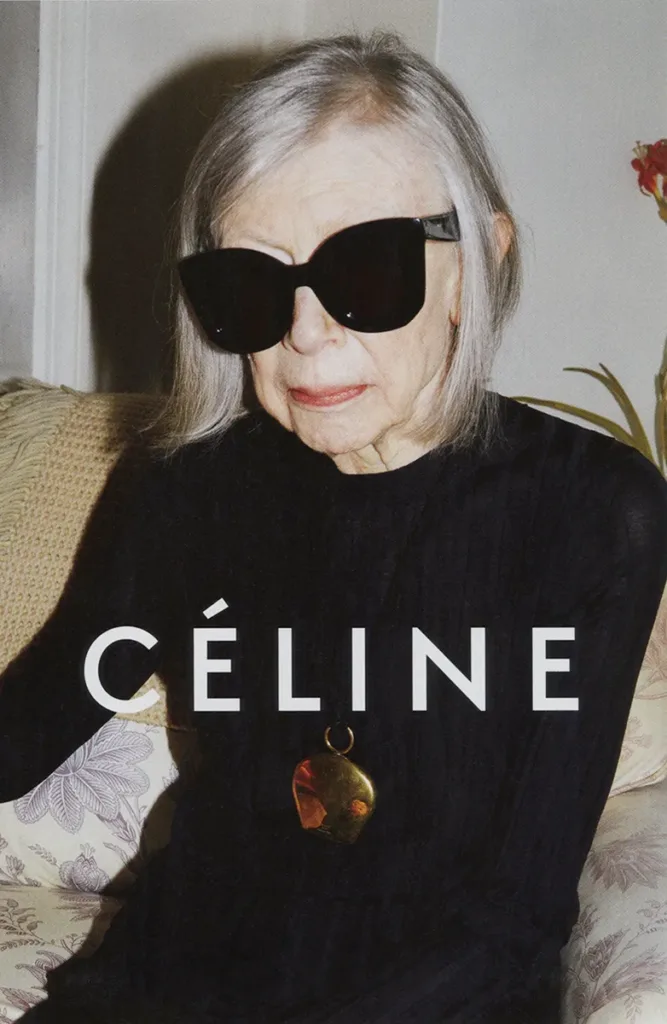
Since then, older women have occupied more space within fashion imagery. Iris Apfel became a recurring presence and Charlotte Rampling, a long presence in fashion, continued to appear in campaigns.
There is a practical aspect to this shift as well, one the industry has been slow to acknowledge but cannot ignore forever. Women over fifty control a significant and growing share of luxury spending. For decades, fashion sold them a version of themselves they didn’t recognise.
But reducing this topic to economics misses the point. These campaigns are not suggesting that age itself is stylish. Rather, they recognise something that can only develop over time. A life spent dressing, experimenting and refining your taste brings a sense of confidence and individuality that cannot be manufactured. Fashion thrives on change, but style is shaped gradually, becoming more personal with every passing year.
Perhaps that is why older women feel so compelling in fashion imagery. They bring more than recognisable faces or celebrated careers. Fashion spends every season searching for what is new, yet the people best able to represent style may also be those who have spent decades developing it. Not because age itself is stylish, but because time allows individuality to become more defined. If style evolves over time, who better to embody it than someone who has spent a lifetime developing it?
Lead Image Courtesy of Instagram/@sciuraglam