
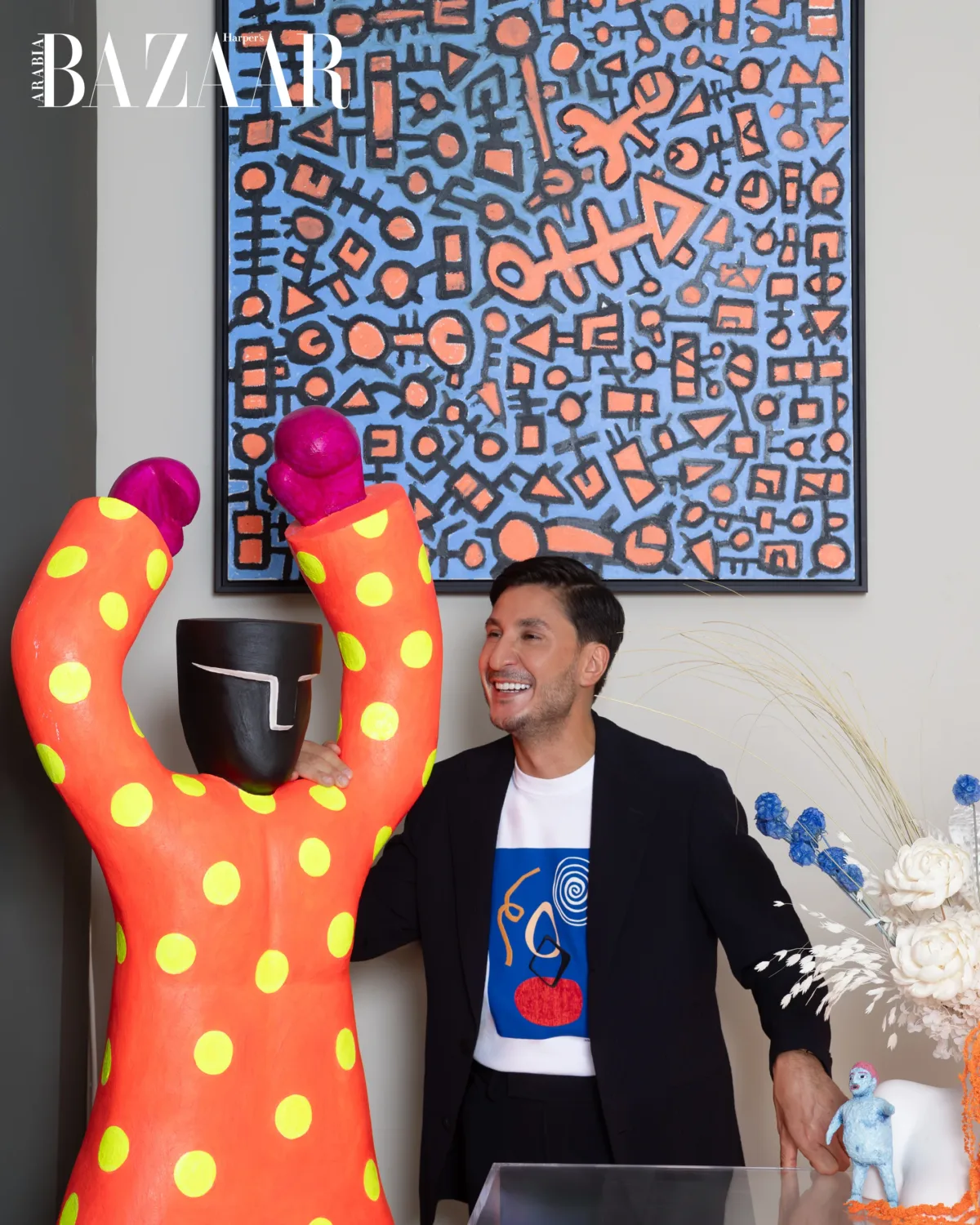
Step Inside Ali Mohammadioun’s Ultra-Extra Home
A meticulous eye for art and design determine Ali Mohammadioun’s colourful home; a feast for the eyes that reverberates with positivity
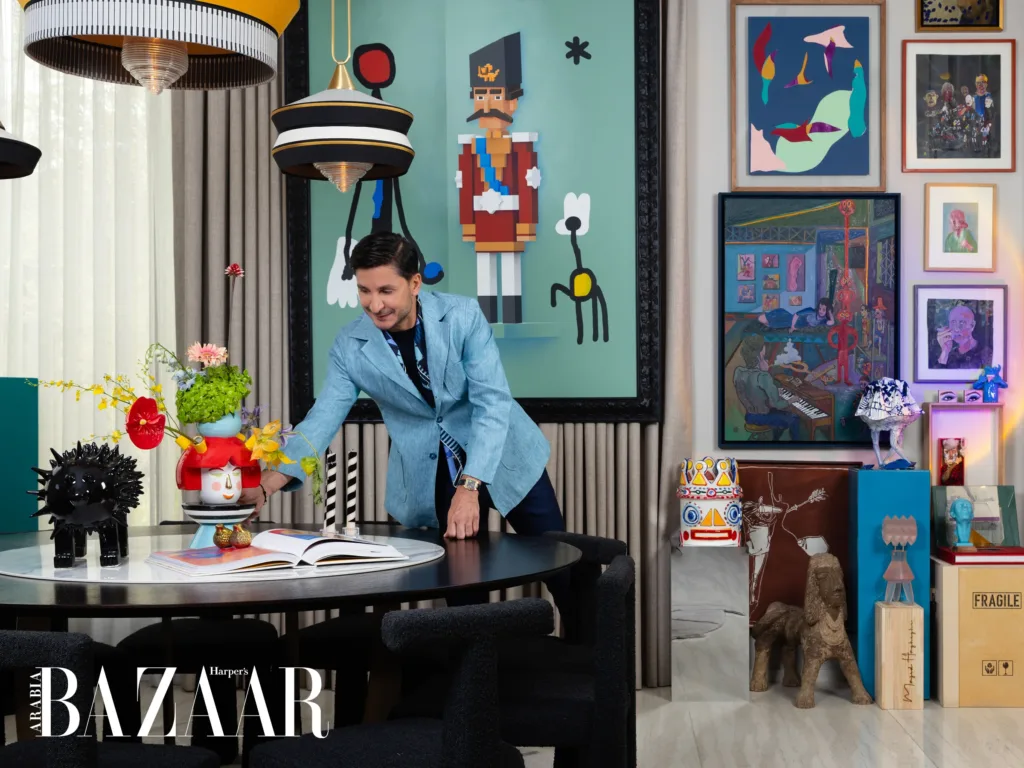
Ali Mohammadioun’s Al Barsha villa is one of Dubai’s rare gems – a space devoid of identikit exterior or interior aesthetics, instead superseded by independent design influences that speak of Ali’s exacting approach to curating. Set back from the road in a quiet Emirati neighbourhood, the calming linear lines and earthy materials of the entrance belie the depth of colour, character and ‘chaos’ that await beyond the glass front door.
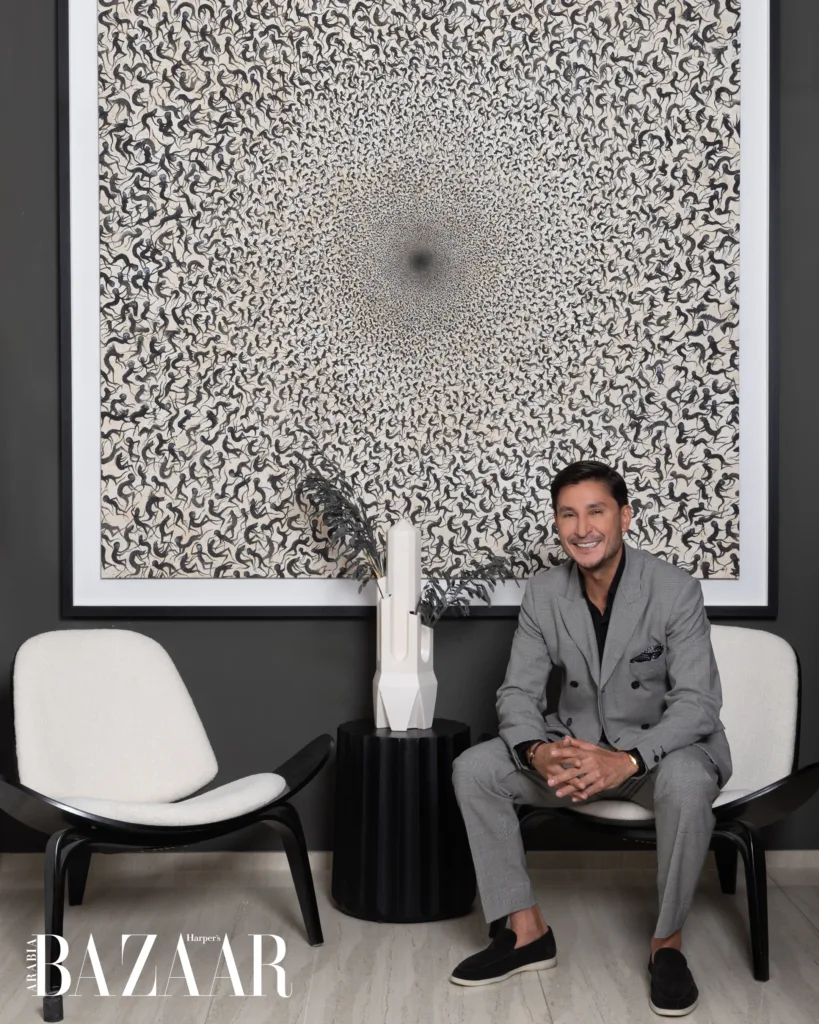
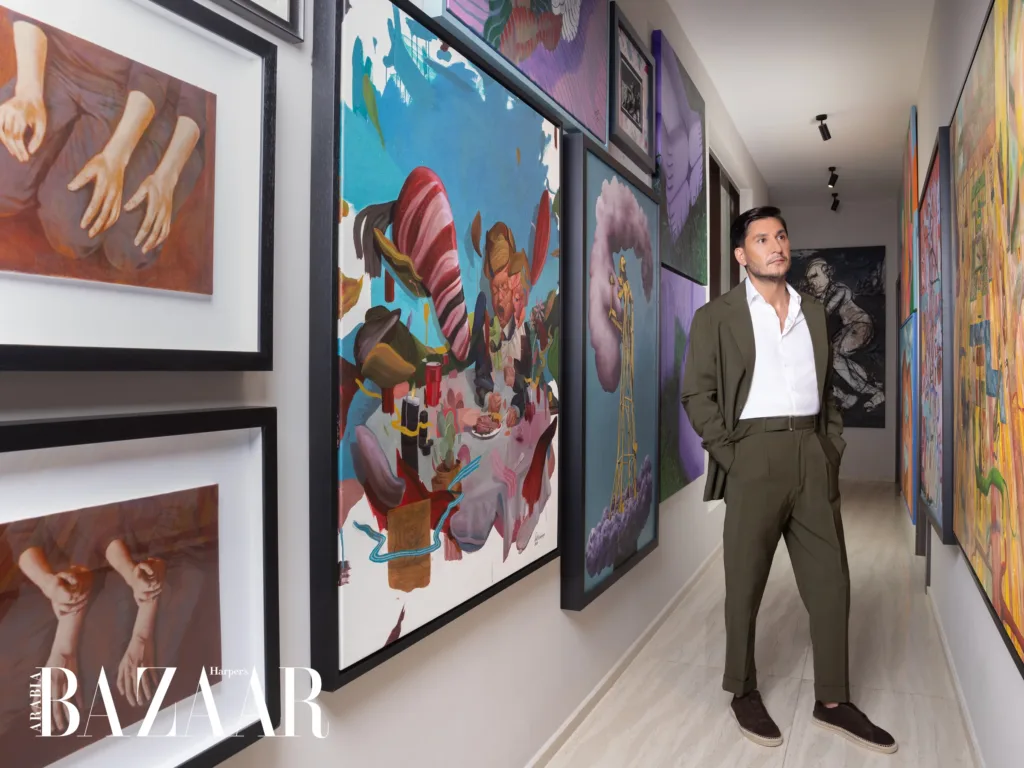
To the untrained eye, one could argue the interiors seem cluttered, but to Ali, the 37-year-old Iranian architect, designer and founder of E Plus A Atelier, everything has a place. “I call it ‘organised chaos’”, he laughs.
The villa, which he stumbled upon in 2020, has been the perfect blank canvas for Ali to play with – a new build on a 40,000 square foot plot of land is the larger space he needed to house his ever-evolving art and design collection. “I had my vision, and I immediately saw how it was going to look,” he recalls. “I saw the water feature in the front, the pond in the garden, the extension I could do and where I could place my plants… It was love at first sight.”
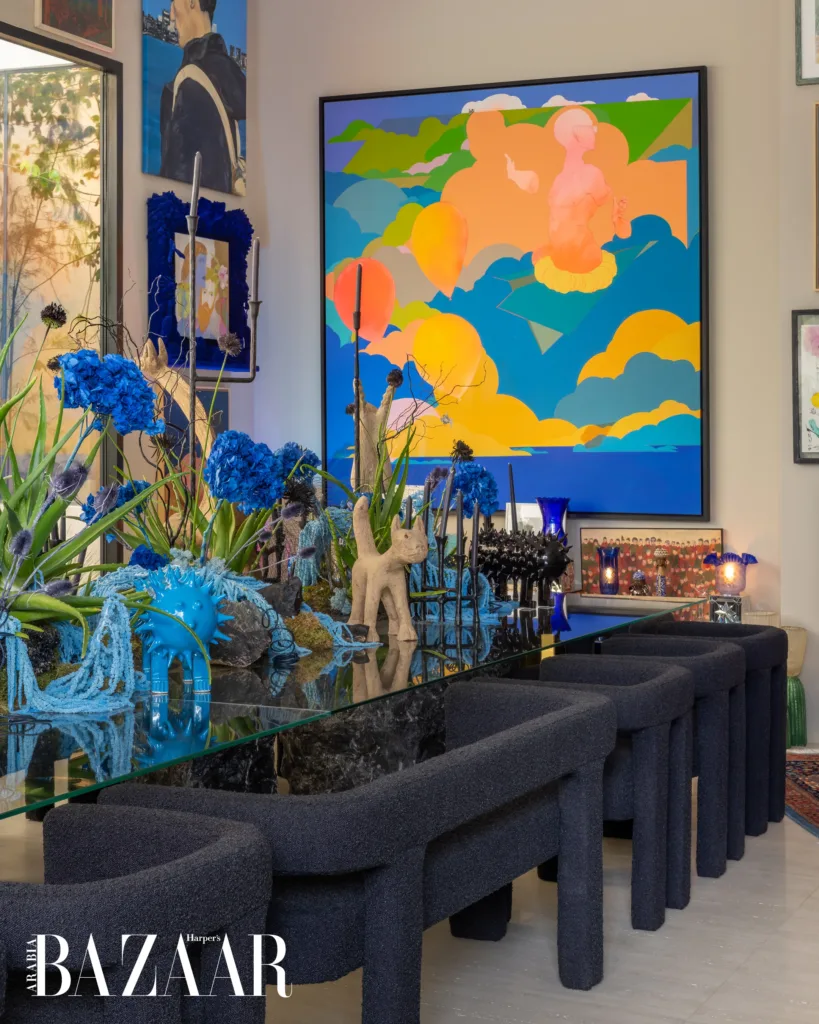
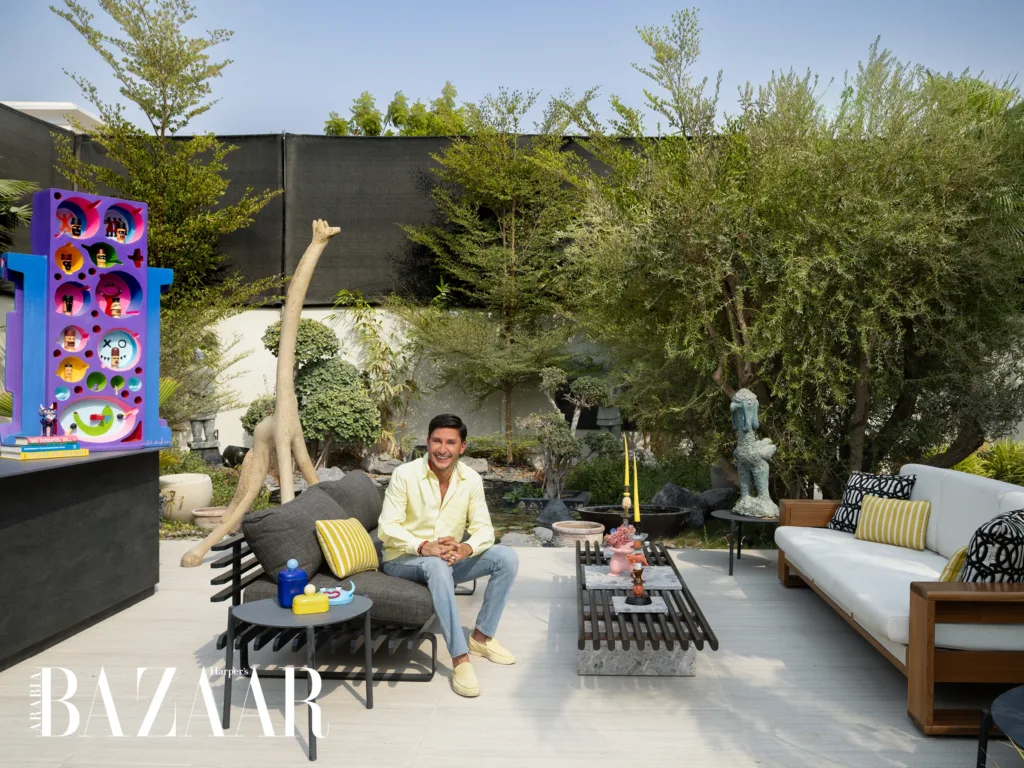
Ali’s love of plants and nature urged the villa’s biggest renovation, building out into the garden to create an extensive living area with full-height glass windows and doors that draw the outside in with tranquil views of the pool, olive trees and cactus garden. “This space gave me an opportunity to create that indoor and outdoor connection, which was most important to me; nature is my passion.”
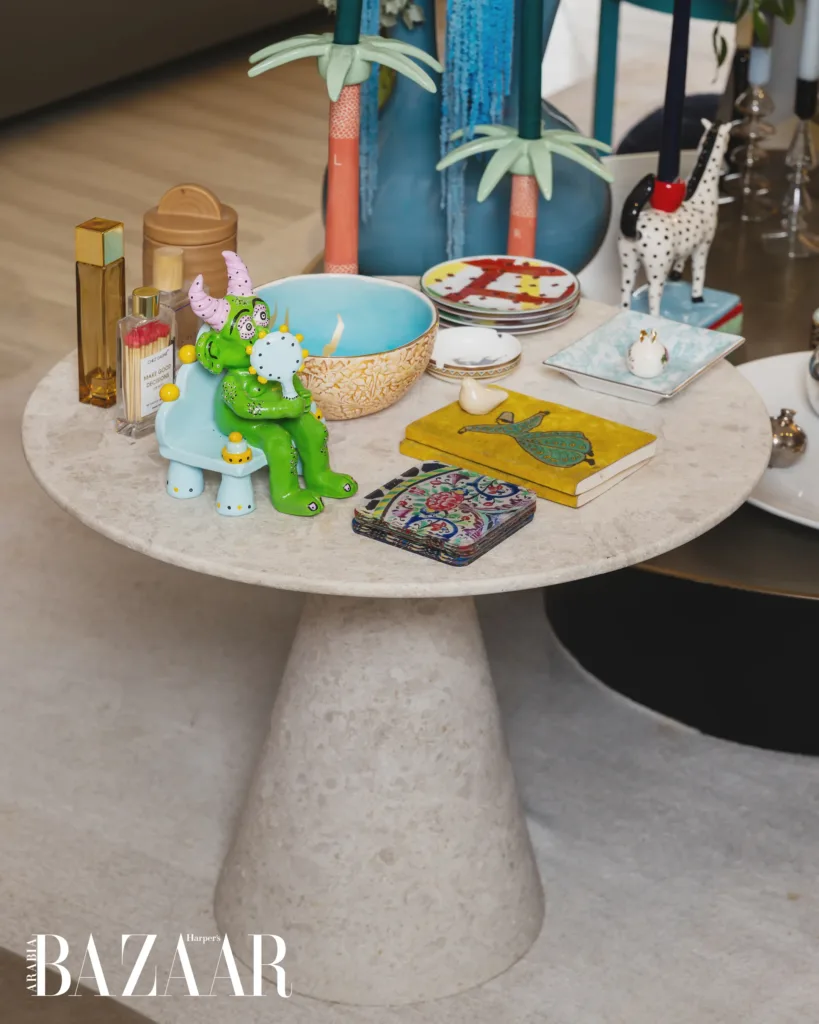
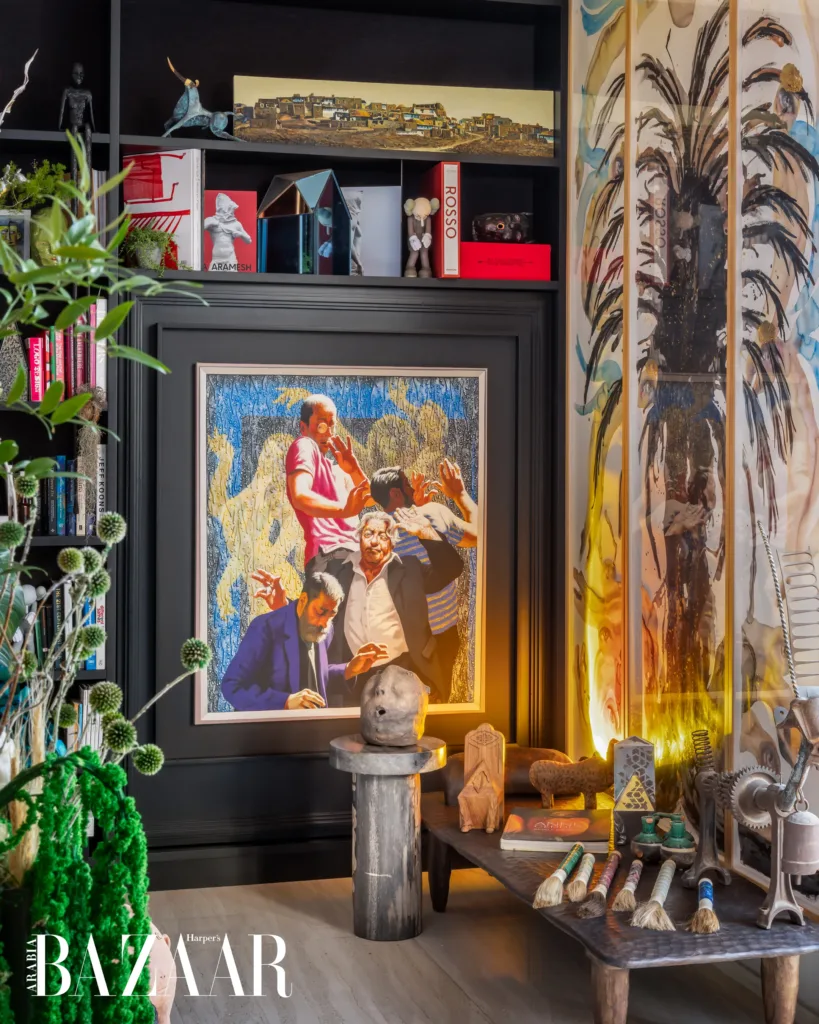
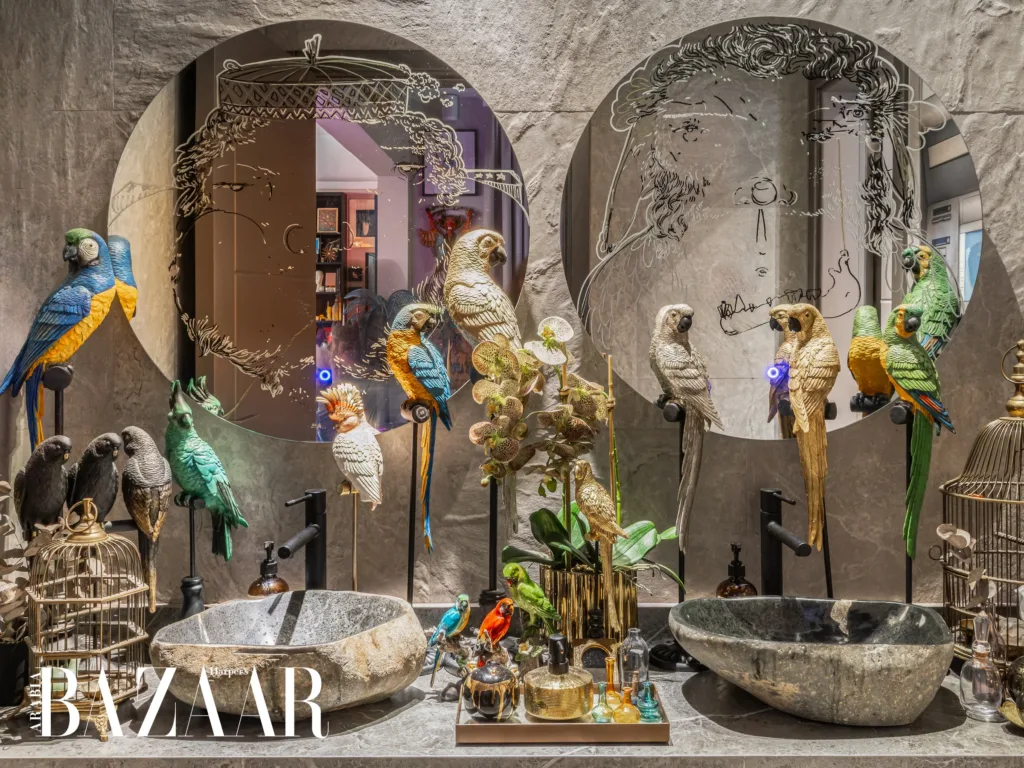
Inside, the villa is a chromatic cornucopia of treasures filled with a colour-me-happy energy. Every wall, every surface is conscientiously curated to tell a story through Ali’s collections – pieces from regional and international creatives to those he has painted and designed himself.
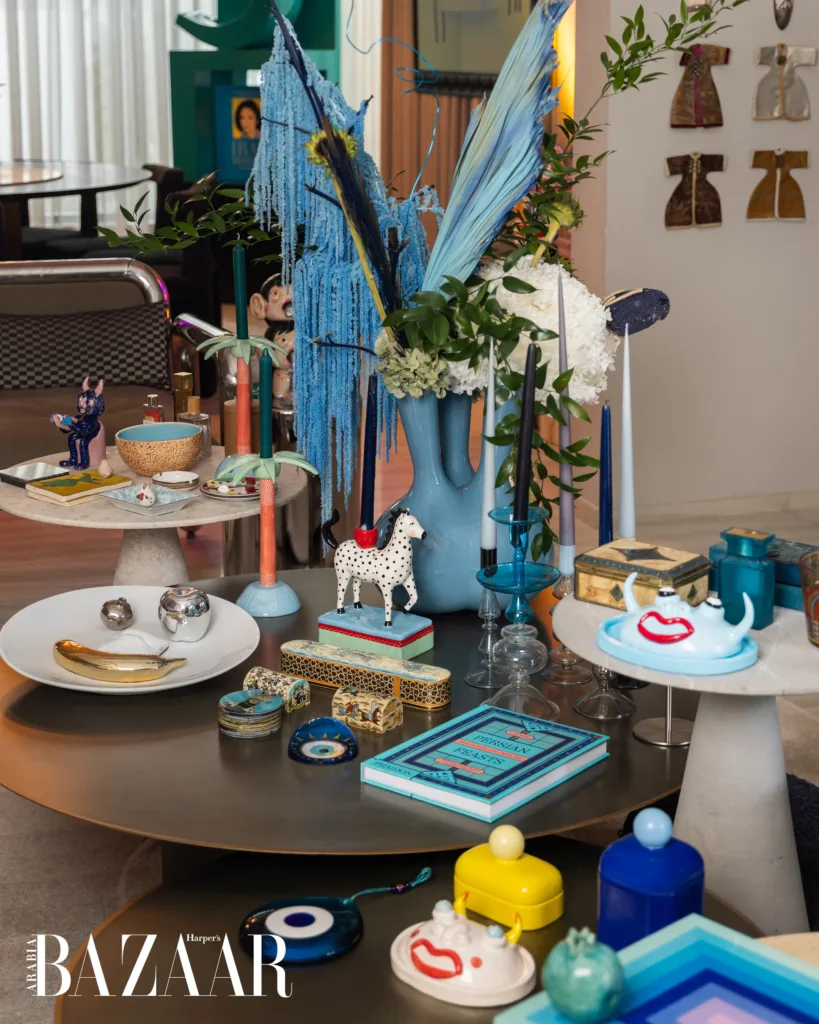
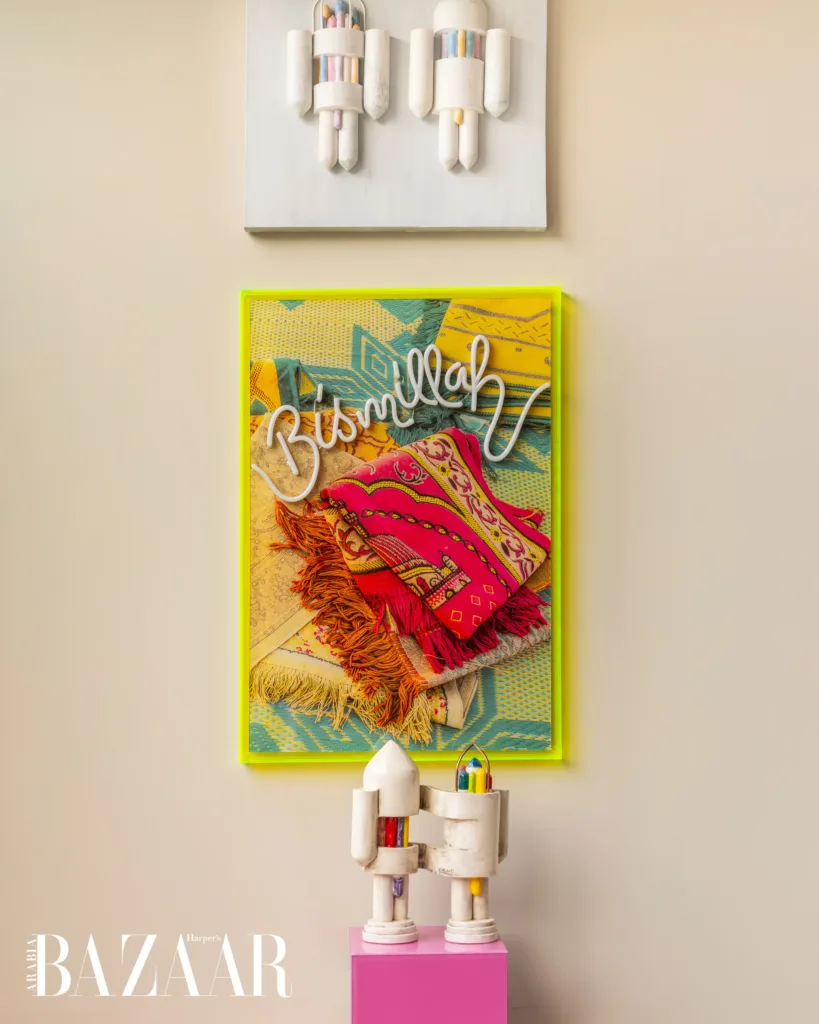
“For me, the villa is about storytelling. My vision with the art and design is the same as with the furniture; the pieces are all talking to one another,” he explains. “And I like that it’s cheerful and colourful, as it shows my personality. If used in the right way, colour affects your everyday mood. So, I went kind of brave.”
Ali jokes that “for some people it might be a nightmare living here”, referring to the fervent contrast of colour, textures, patterns and prints, but a clever use of partitions creates intimate sections allowing for different aesthetics. A black and white palette in the living room ushers in peaceful repose, while the dining room, with its 6.5-metre, 28-seat dining table designed by Ali and framed by both garden and art is more “loud”. “I play around with the elements a lot. Everything is always rotating – not only the art, but also the design elements.”
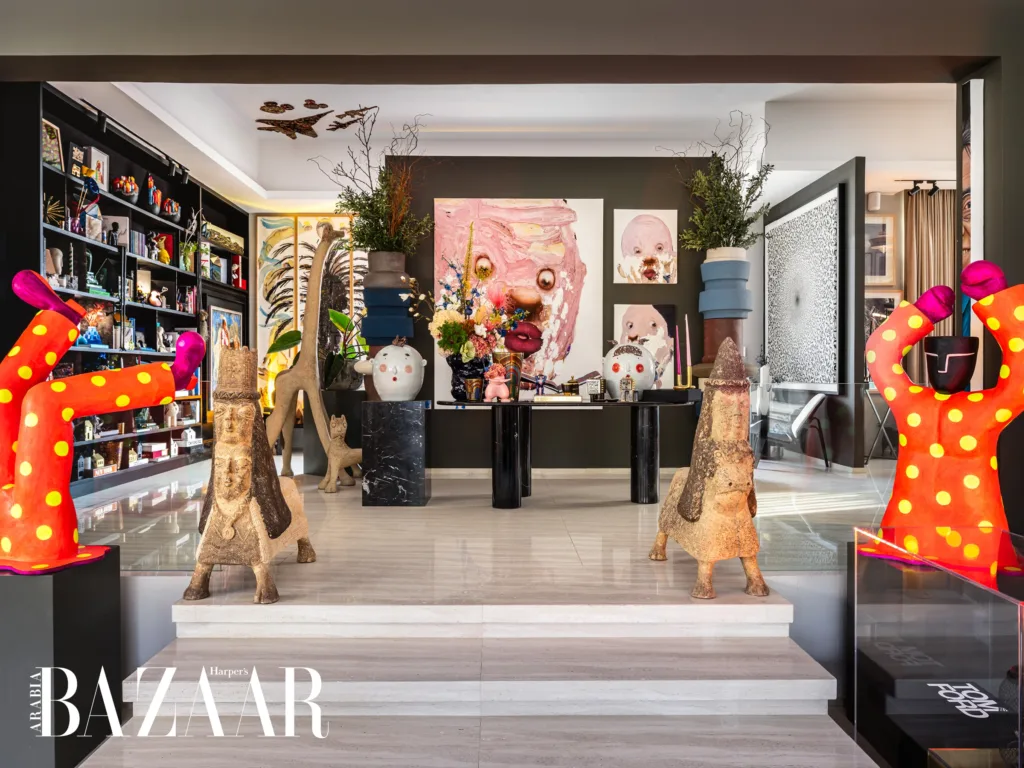
The villa, Ali says, tells the story of his life. A boy who spent his younger years in Iran, discovering a love of art through watching his aunt and sister paint, falling in love with arts and crafts at antique fairs, and learning about architecture by helping the family build their vacation home in the forests of northern Iran. “My childhood was shaped by nature, architecture and art,” he says. “That’s the story I wanted to tell with my house. It’s what I always say – your home should represent you.”
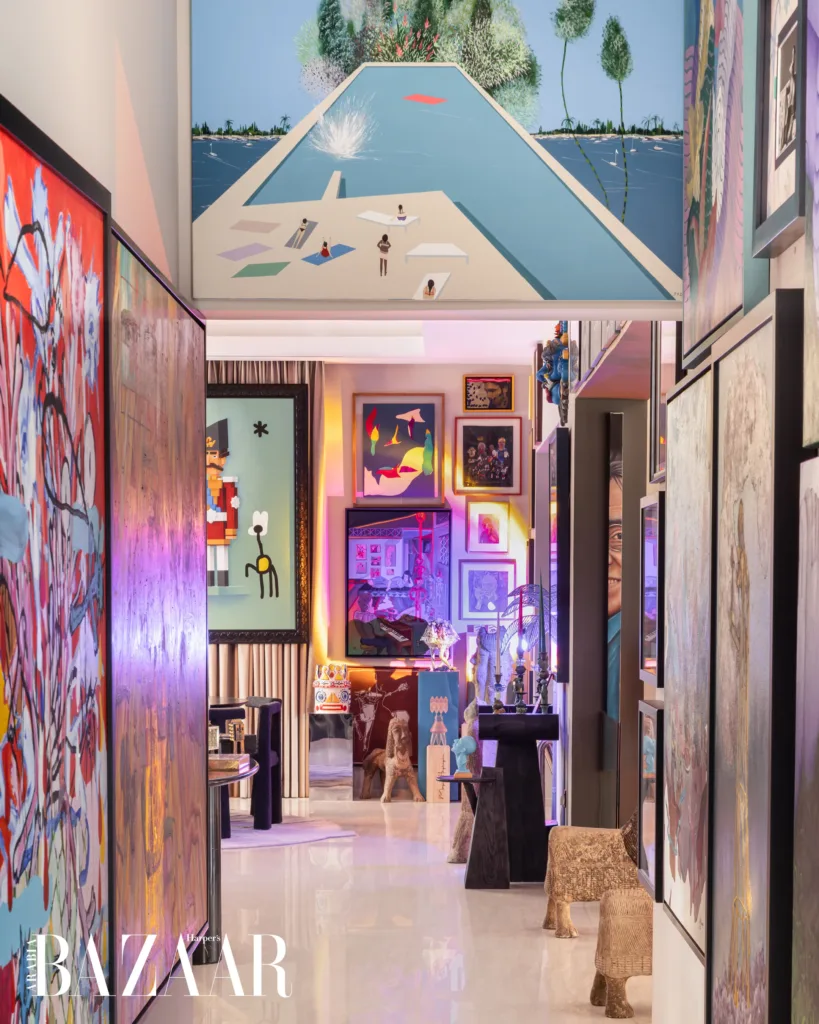
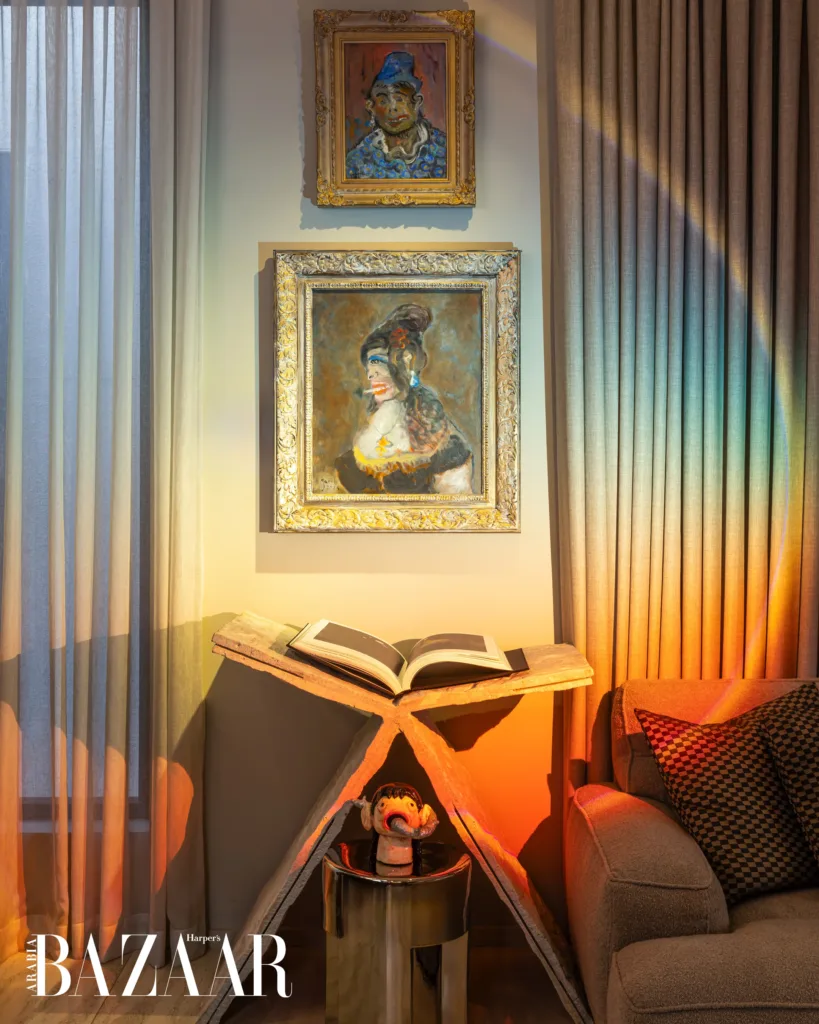
Ali’s story is perhaps most palpable in his art collection – “countless pieces” that are bold, eclectic and exceedingly well compiled. Forever curious, his collection is curated from art fairs, social media research, and conversations with his art community. His passion lies in championing emerging regional creatives. “I especially love Emirati and Iranian artists,” he states, citing Mohammed Ehsai, Noor Al Suwaidi and Maitha Abdalla as a few of his favourites. “When I obtain new pieces, I really like to showcase them and build everything else around that,” he says of how new art determines the jigsaw puzzle of his home gallery. “Between the art, the flowers, the design elements… somehow my brain imagines how they work together. There’s a lot of shifting, moving until I get what I want. For me, art is not only that the colours or the shapes are matching, but it’s also about the conversation that the two artists can have with each other.”

As with most art and accoutrements in his home, there is no specific formula as to how he collects his pieces: rather it’s about a feeling, how a piece touches him, living in a space to understand its needs, then building it up accordingly. And it’s this gift of seeing something that others perhaps can’t when it comes to curatorial art direction that has inspired Ali’s newest venture: The Gift Room. Describing it as an “online platform, design lab and cultural stage”, and launching ahead of Downtown Design Dubai in November, he will curate usable, affordable art from the Global South, collaborating with and connecting artists and buyers in a way that it will be “bold, playful and meaningful, bringing a lot of joy to both sides.” Three words that articulate both Ali and his home so completely.
Photography by Aasiya Jagadeesh. Styling by Marguerita Christoforidis.
From Harper’s Bazaar Arabia September 2025 Issue