
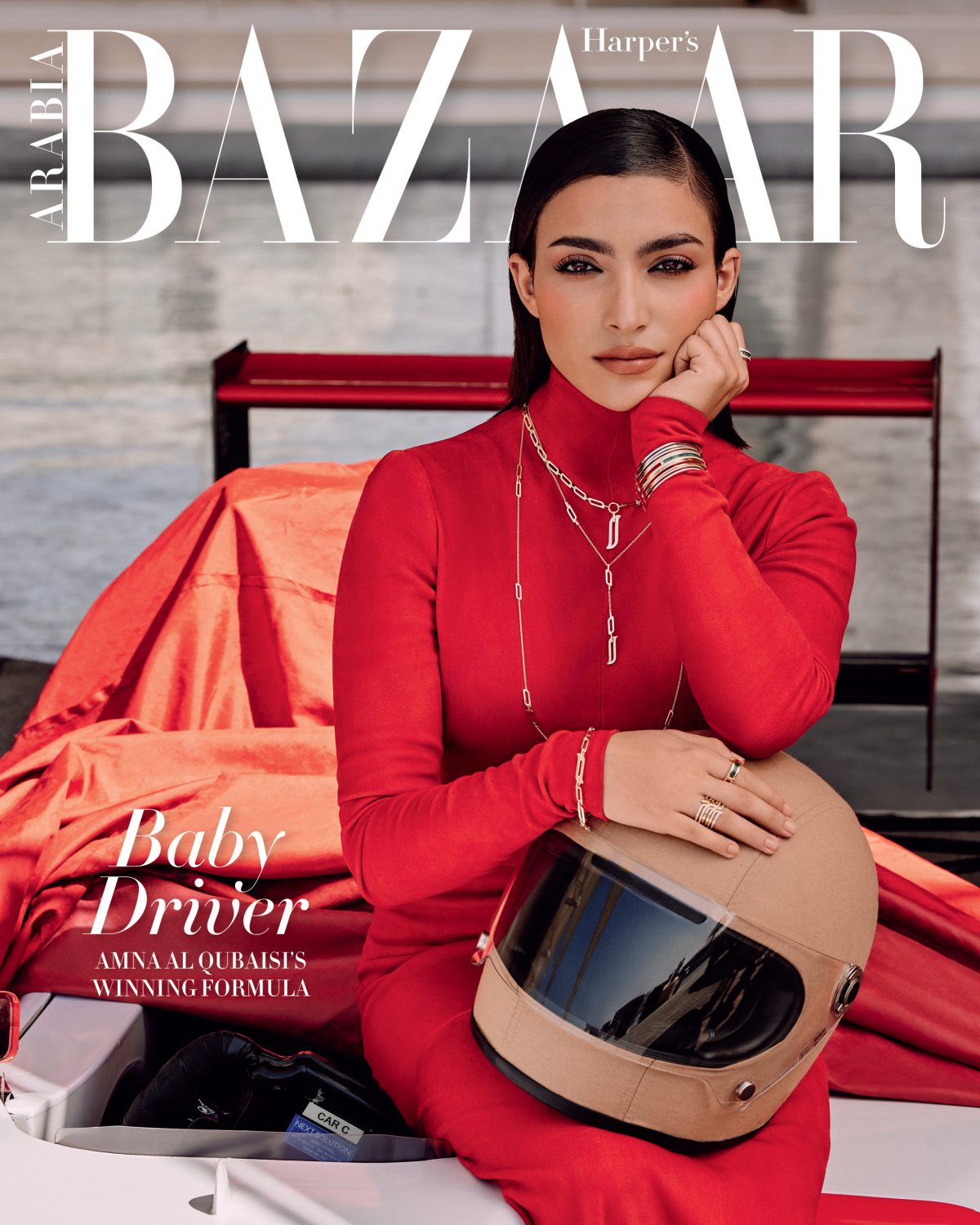
Amna Al Qubaisi On Fear, Fortitude and Being The Fastest
At 22 years old, Amna Al Qubaisi is the Gen-Z Emirati female race-car driver doing laps around her competition
Amna Al Qubaisi roars onto set in a Cadillac Escalade. A hulk of a thing, evidently called a muscle car for a reason, this intimidating powerhouse on wheels belies Amna’s slight, jockey-like frame as she jumps out of the car like a fairy. Tiny though she is, Amna – the first-ever Emirati female race-car driver – is the definition of small but mighty. And what she lacks in stature she more than makes up for in attitude and skill. Put plainly: she’s a bit of a badass.
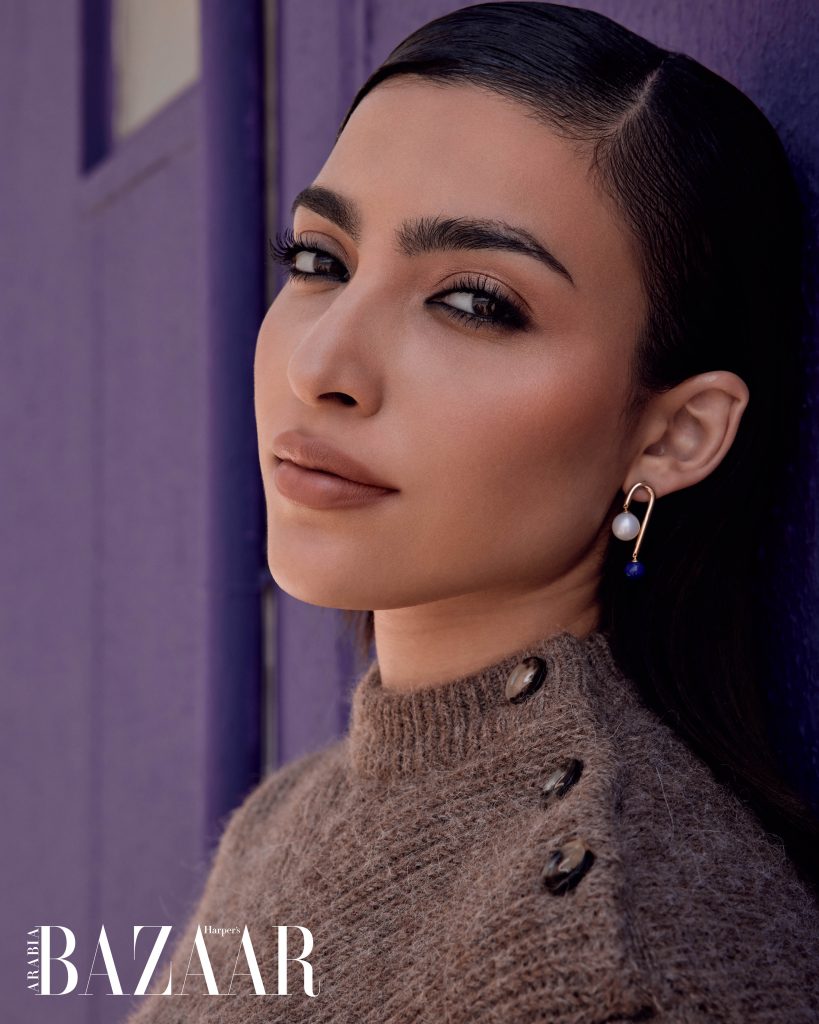
“I didn’t have time to remove my nails,” Amna apologises, having flown in straight from training with her team in Italy. She’s referring to two longer acrylics that seem to have, against all odds, survived wrestling with a race-car steering wheel for the past few weeks. It’s a colourful touch – and one that instantly endears us to the 22-year-old motorsport champ. Those two nails speak volumes. They say that other things (winning races, breaking stereotypes, rewriting rules) are more important than sitting in a salon chair. And that imperfections should not only be encouraged, but are a necessary ingredient that define self-improvement. “My scar represents me,” Amna shares later about a mark on her eyebrow as we’re looking at the photos, underlining this exact point.
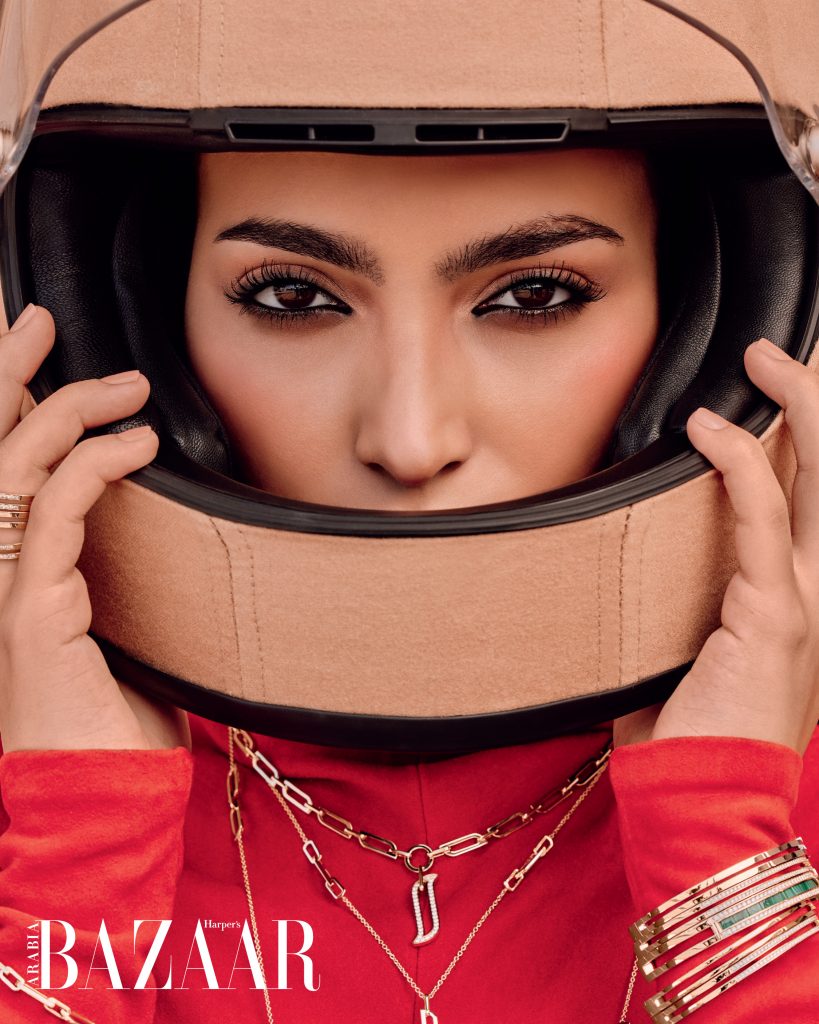
For such a young age, Amna certainly has plenty of accolades under her belt. First Emirati female race driver. First Arab female driver to compete internationally. First Arab female to win in F4. Pinned to the top of her Instagram account is a picture of her and F1 driver Lewis Hamilton, Amna presenting him with the Fastest Lap Award last December. Under all her posts are reams of supportive messages from fans who understand just how iconic she is – in the true sense of the word. Not just someone who has achieved fame or status in a certain arena; someone who has changed that arena entirely.
But that’s not to say Amna’s achievements have been without their difficulties. Asking her about them, though, is a masterclass in zen. From crashing her race car to proving herself among exclusively men on the circuit, Amna’s outlook could – and should – be copy-pasted into many aspects of life. Here, we speak to her about fear, feminism and being the fastest…
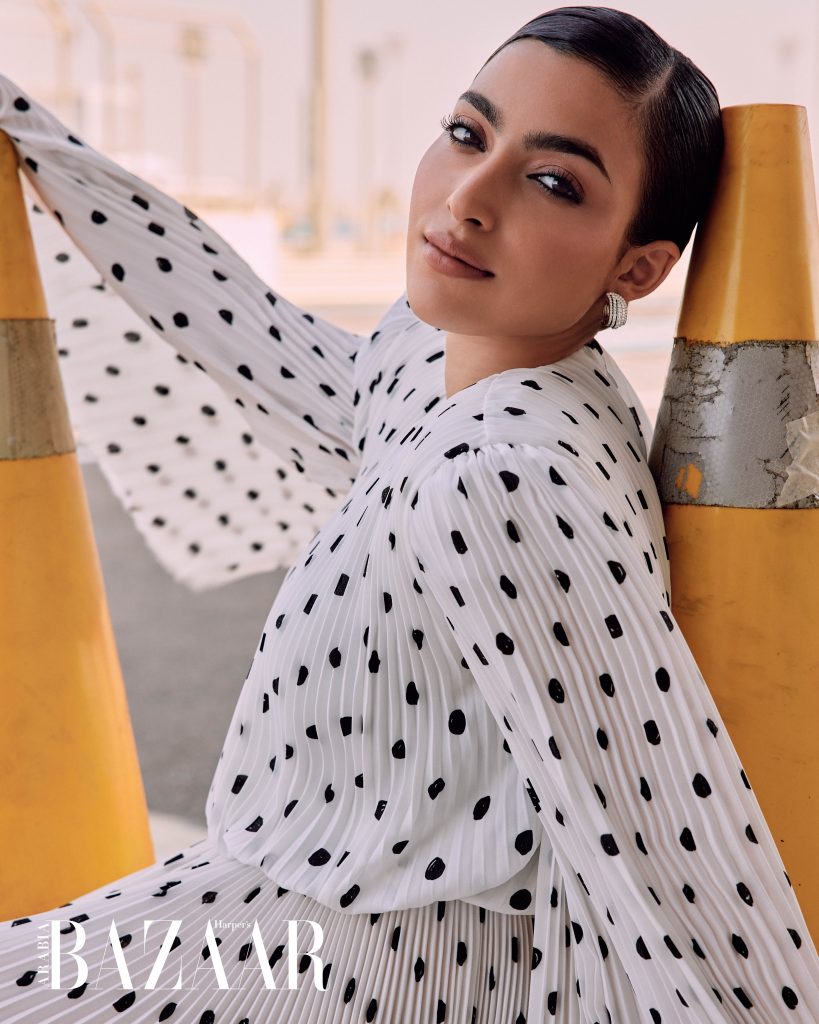
You were 14 when you started. Male-dominated sport chat aside, talk us through how you ended up in such a rare career in general?
I think it was always in my blood because ever since I was three years old, I would go to the desert with my dad [driver, Khaled Al Qubaisi], and would always ask to take a ride on the buggies. He would always tell me to stay in a specific area, but I didn’t listen. I wanted to be like the big guys going up the sand dunes – so I did. I was also seeing my father participating in motorsports and he would bring the drivers and the teams to stay over at our place. They were so passionate and they’d talk about the tracks and the people they’d competed against… and I was like, I don’t find this passion in gymnastics, which I’d been doing for 10 years. So I told my dad I wanted to do some karting. He was actually shocked, but with joy. Like people say, motorsport is a man’s world, so he didn’t expect me to be interested in it.
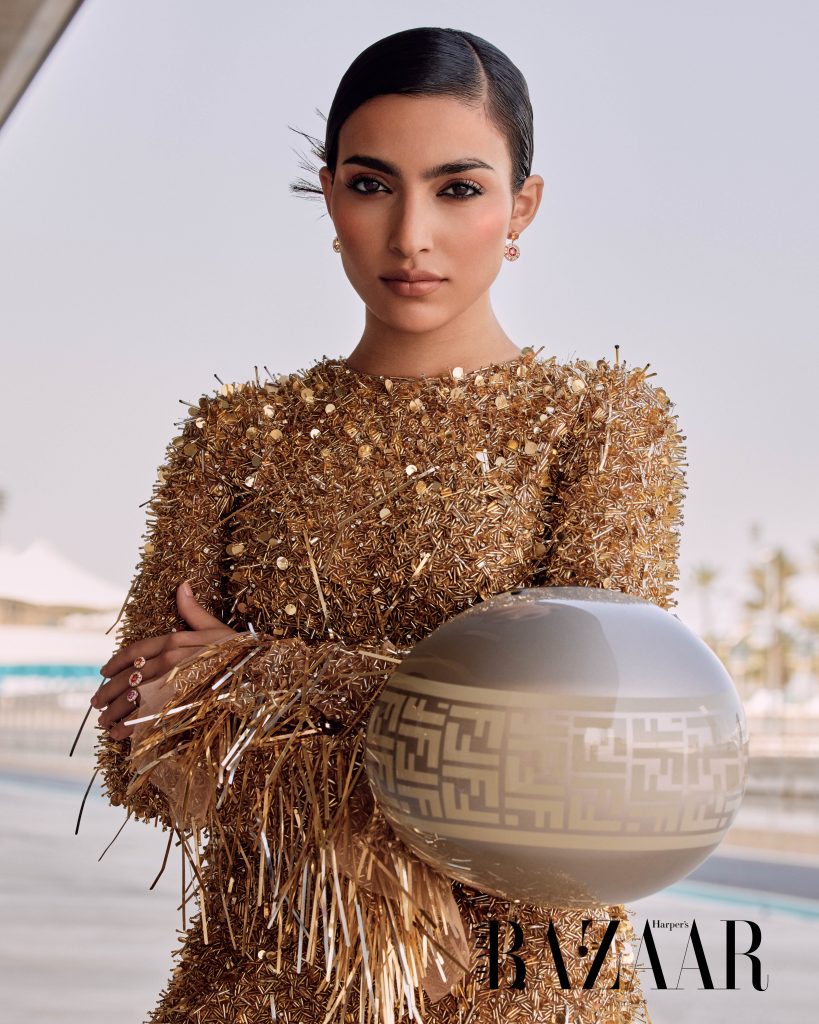
You sound like a bit of a rebel. Is that how you would describe yourself?
I’d say I don’t like being told what to do. I like to explore and I’m very adventurous. I don’t want to take advice and would prefer to go through that experience on my own, in a way.
How do you marry that renegade spirit with a sport that has so many rules and parameters, then?
When I was younger, I would always push against them. Because, you know, my personality is very bold and wild.
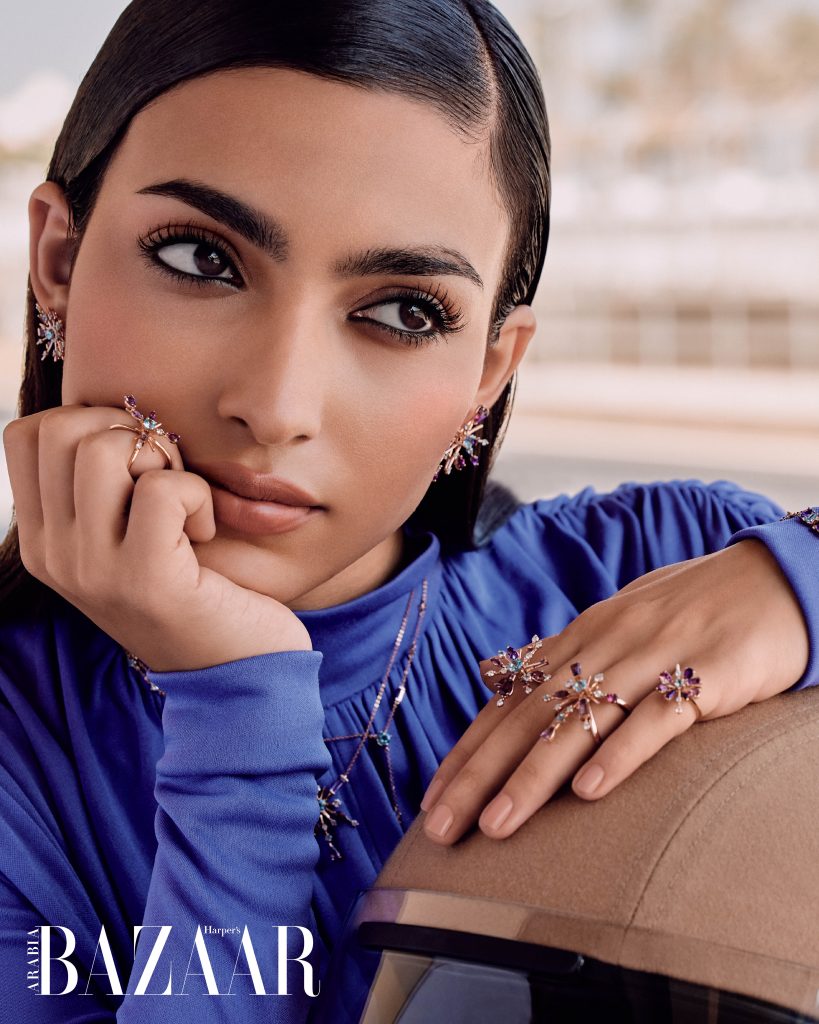
It sounds like you have quite progressive parents who encouraged this kind of attitude…
Yeah, they were very supportive. My mum would take me to training and my dad was my coach and would provide me with good teams, mechanics and lots of days to train. My mum actually used to be a Moroccan clothing designer when I was young, but she stopped because she wanted to spend time raising my two brothers, my sister and I. They’re all younger than me. Now she’s, like, a momager. So she has a new job!
Your sister, Hamda, is also a race driver. Are you competitive against each other? And if so, is that a good or a bad thing?
We’re very competitive with each other, from the days we did gymnastics together. But in a good way; we help each other, we don’t put each other down, we don’t try to make the other one upset – we try to make it a healthy competitive environment. But I’ve always wanted to be the best in whatever I do – even in school.
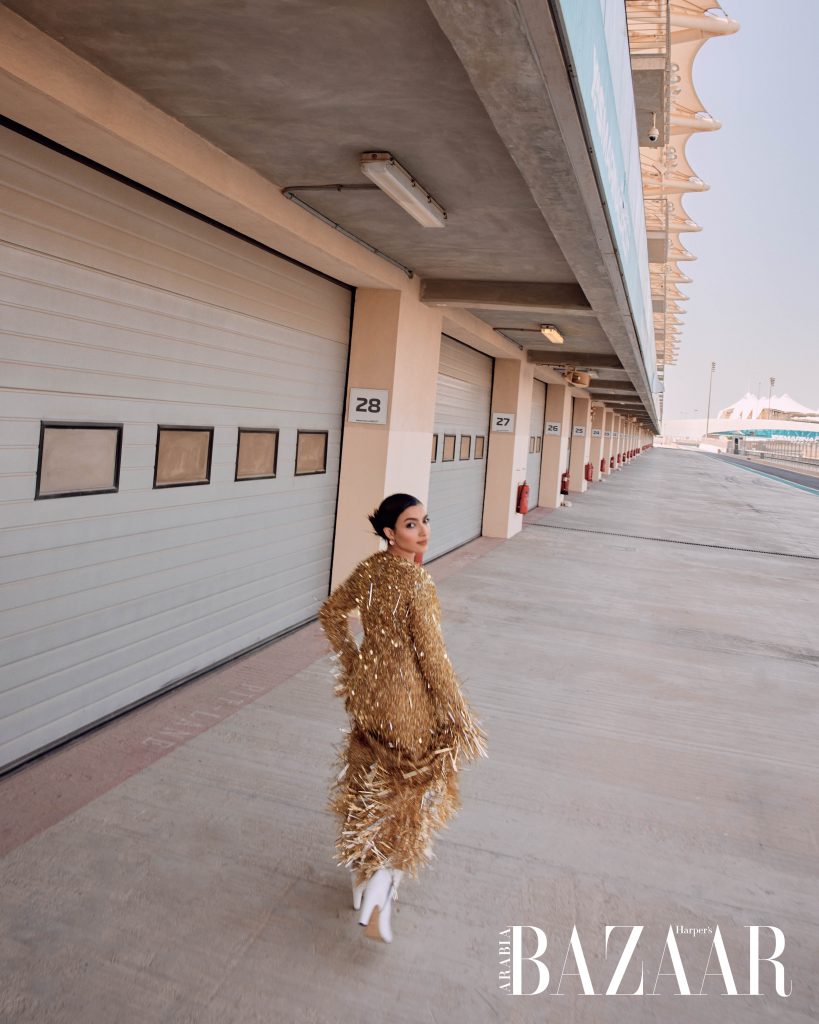
So how do you feel about your relationship with competition in general?
Sometimes it stresses me out because I start to push beyond my limit. And then I start making a lot of mistakes which cost me a lot of effort and time and sometimes even damage the car. So I sometimes have to take it a notch down because it usually affects me in a negative way.
On that note then, what makes a good racer?
You need to be very calm. You need to take things step by step, take things easy. And you need a lot of time in the car. Mileage is very important in motorsports. So that was an issue; that I lacked enough track time as my competitors, so every time I would come into a championship, my competitors were already familiar with the tracks. They’re already familiar with the car. And for me, it was very new. So every championship I go into I feel like a rookie, actually.
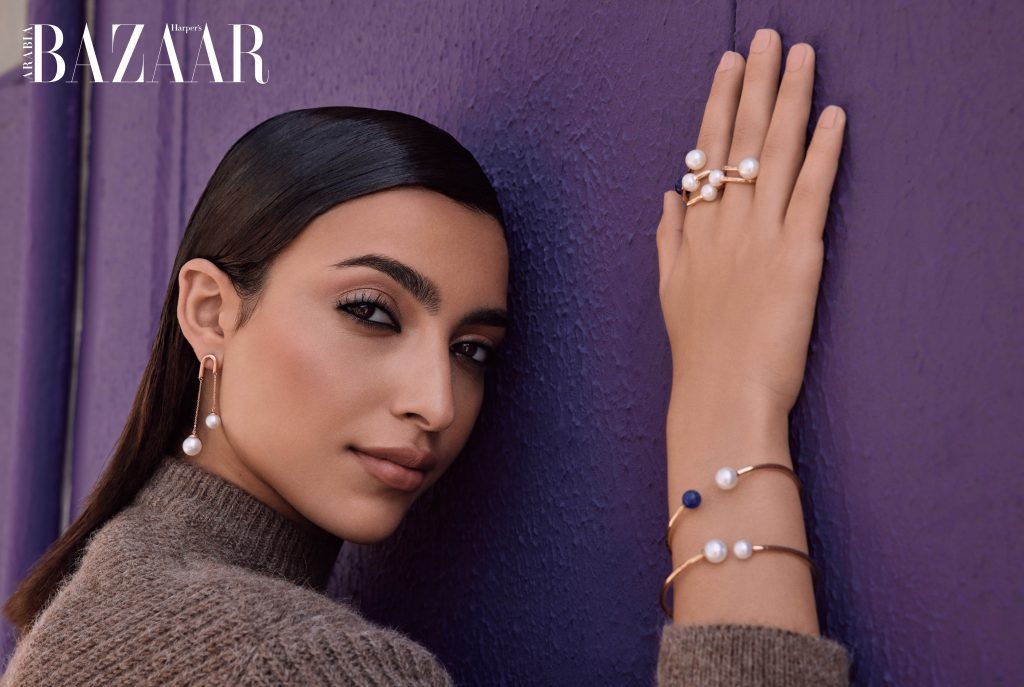
Do you think there’s an element of imposter syndrome? It tends to be an almost-exclusively female issue…
Sometimes I do feel that way in a race weekend at the very beginning. But then with time I feel like, okay, no, I’ve got the rhythm. I deserve to be here as much as everybody else.
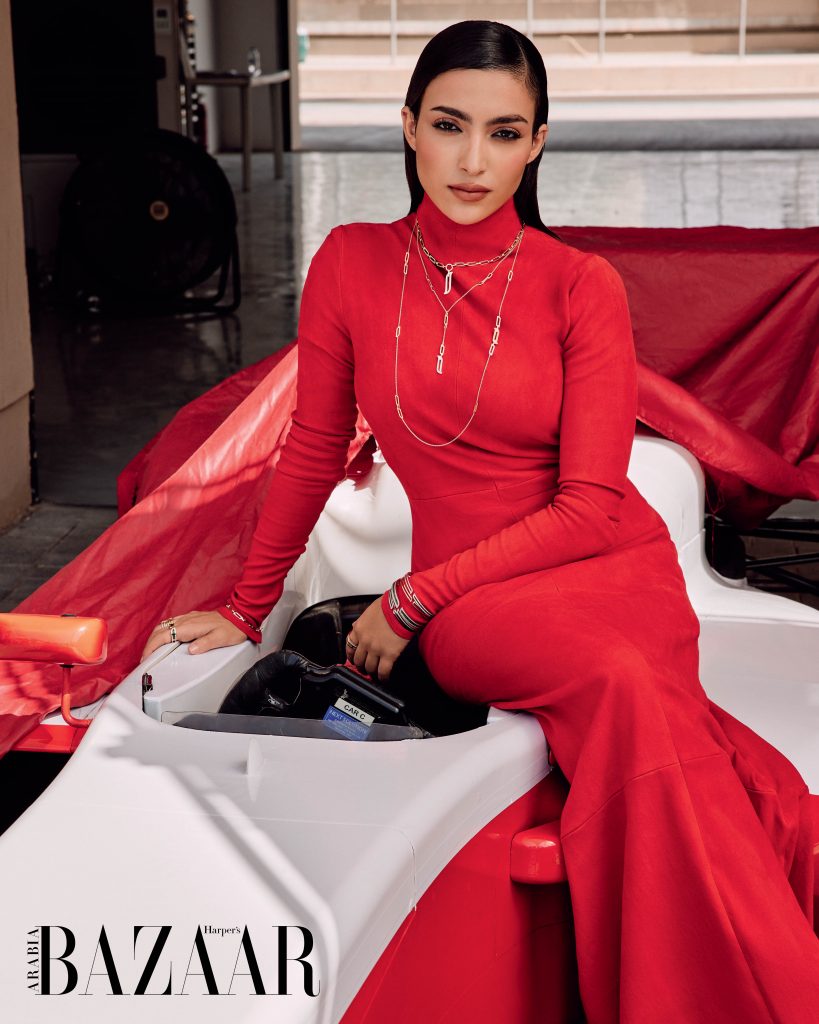
You’re so often the only girl competing, let alone the only Arab girl. Is that something you still think about?
Yeah I was the only girl in Europe on the grid. I never really thought about it at the start. I just thought I was doing something I enjoyed. But then I realised that it was a serious thing. It’s such an accomplishment to be considered the first female Emirati race driver, and it puts a stamp in the history books. It gives me a purpose and it makes me feel that I’m on a mission, basically. The success that has meant the most to me was my Formula 4 win in 2019. It was during the F1 Grand Prix and I had the opportunity to step up on the F1 podium. I was the first Arab female to win a single-seater race. There were a lot of happy tears!
Being one of only a handful of girls on the grid, what have you learned about the differences in psychology between male and female racers?
As women, we think twice before we do something, but men, they just do it. I’m very aware of trying to bring the car back in one piece to the team. But my competitors will push it to the limit even if it means destroying the car. I’m super-cautious and I don’t want to risk pushing someone off, but they don’t mind that. They’re very aggressive, and in the end with men, when two competitors push each other off, they later shake on it and it’s fine, but if a girl does it, we go through a lot of problems and a lot of arguments.
Obviously motorsport is quite a high-risk sport. Do you ever feel fear?
Sometimes, yeah. I had a really bad incident in January this year where I went into the back [of another car] and destroyed my car completely. I had to get a new one, and for a very long time I wasn’t able to drive too close behind another car because I was getting flashbacks. I had really bad back pain for a few months, up until recently actually. But I eventually started to overcome that fear.
I’m sure they give you physical support after that, but what about emotional support?
Not really. Every driver is on their own.
With all the recent discussions about mental health in professional sport, that’s quite interesting. Tell us what you do to safeguard yours?
I always take time for myself. I use music as therapy, in a way. I listen to a lot of rock – I really like the band Loveless.
What has racing taught you about life?
It taught me discipline, commitment, and that you need to put 100 per cent into what you do. You cannot give it 50-50. It’s also taught me to take every moment as if it was your last. When I had my last race in Europe, three years ago, I didn’t expect it to be my last one there. So take every race weekend as if it was your last and every lap more seriously than the last.
And what has your dad taught you about racing? Would you say he was your mentor?
My mum is more like my mentor most of the time. And my dad taught me to be calm, to always be cautious. Be careful what you say, who you hang out with, who you consider as friends. And what he learned from me was that everything has to be organised. He was very last minute before!
What about the rest of your family?
My sister is my hero. Even though she started [racing] after me, she’s progressed a lot and proved to a lot of people that we can do it. My brothers used to race too but they didn’t like the sport. So one brother moved into kickboxing, and the younger one is now a gaming streamer. We’re all competitive, though. When we go out for a run, each person is fighting to finish first.
It’s interesting that the two sons in your family have moved away from motorsport, and the two daughters have stayed in it…
Yeah, my father was confused as well. He was wondering what happened with the genes! But now he’s realised that motorsport is meant to be for everyone. However, the cars are not made for women, they’re made for men. The physical parts. Let’s say a female wants to drive the car. She has to work twice as hard to be able to do it. We need to build a lot of muscle to be able to drive the car because it’s extremely heavy. To have the endurance to do 30 minutes in the car – that’s almost 20 laps on a track – is extremely excruciating. It’s the physical part that is the main thing in motorsport. So we’re trying to change that aspect to make it equal, that the car can be driven by both parties and that hopefully, in the future, that it’s more considerate.
What do you drive in your personal life?
A Cadillac Escalade. I love collecting cars. I’ve also got a Skyline R33 which is a classic car from the 1980’s. And I love this car to death. So yeah, I’m a huge car fanatic. I named one of my previous cars in Formula 4 in Europe after my dad, Khaled. My Skyline is nameless at the moment, though – I haven’t found a name for her yet.
You’ve set an amazing, pioneering path for so many girls around the world – not just Emirati girls. What would you tell your younger self if you could, or perhaps some of those girls out there?
To never doubt yourself. To do it for you and not for others’ approval, and to always remember you have nothing to prove to anyone.
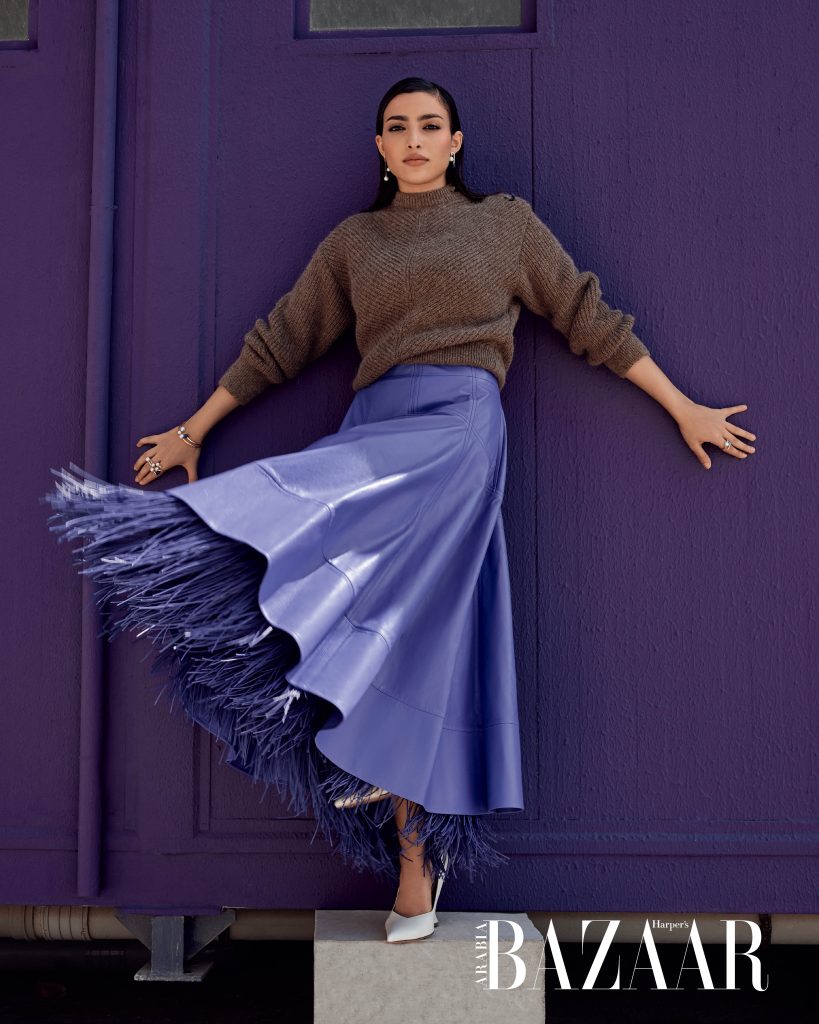
Photography: Amer Mohamad. Styling: Laura Jane Brown. Editor in Chief: Olivia Phillips. Art Director: Oscar Yáñez. Producer: Steff Hawker. Hair: Ivan Kuz. Make-Up: Sharon Drugan. Photographer’s Assistant: Yasir Ali. Production Assistant: Mariam Suboh. Fashion Assistant: Imogene Legrand.
From Harper’s Bazaar Arabia’s November 2022 issue.
