
Crowning Glory: The Arab World’s Most Exquisite Royal Jewels
For Arab royals, jewellery is more than decoration—it is a profound expression of heritage, identity, and enduring legacy
Throughout history, royal jewellery has served as an important link between generations and territories, reflecting not only personal taste but also cultural values and diplomatic symbolism. Arab royal women, in particular, curate collections that traverse time and geography, skilfully blending historic stones with timeless design. From intricately detailed century-old tiaras to modern haute joaillerie crafted by the world’s most prestigious maisons, these pieces are cherished heirlooms that are passed down the generations.
Bazaar Arabia explores some of the most remarkable treasures within the collections of Arab queens and princesses, unveiling the stories, artistry, and significance behind these captivating jewels.
Her Highness Sheikha Moza bint Nasser Al-Missned of Qatar
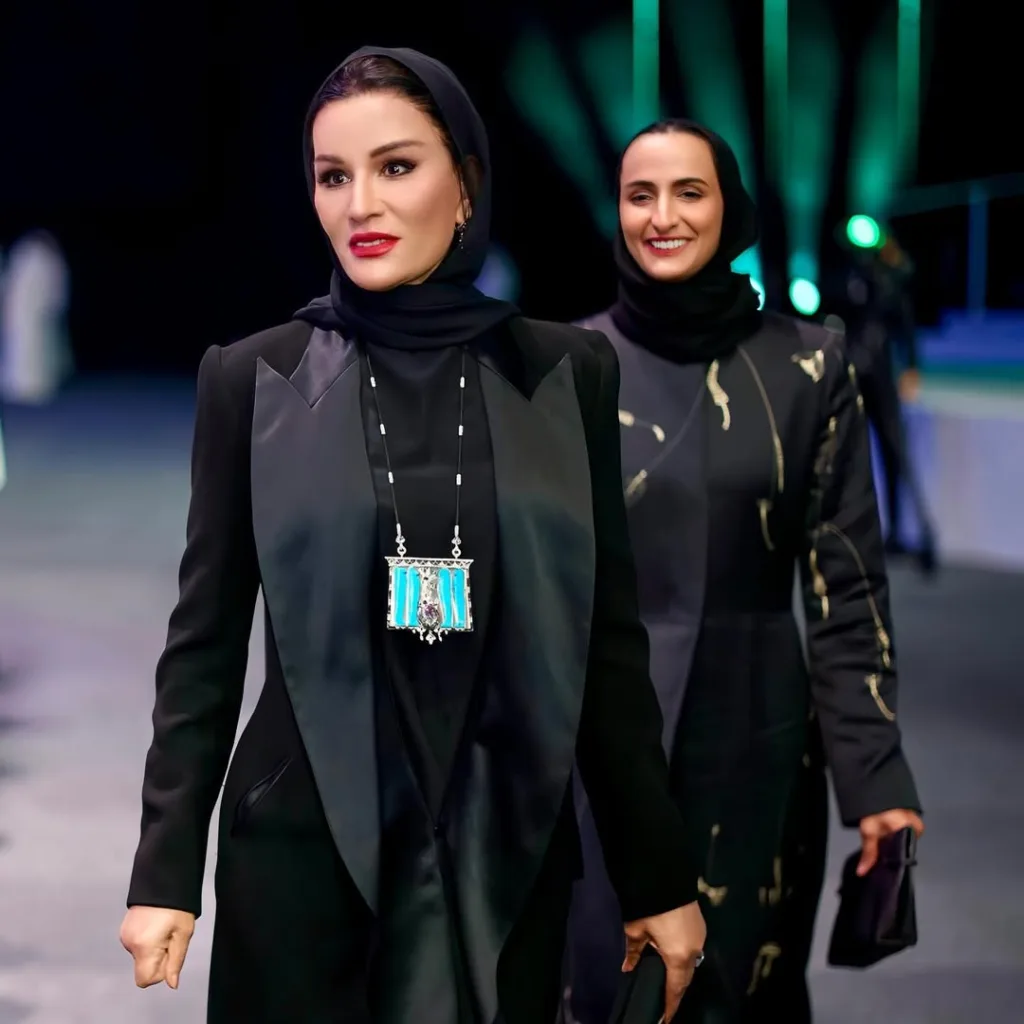
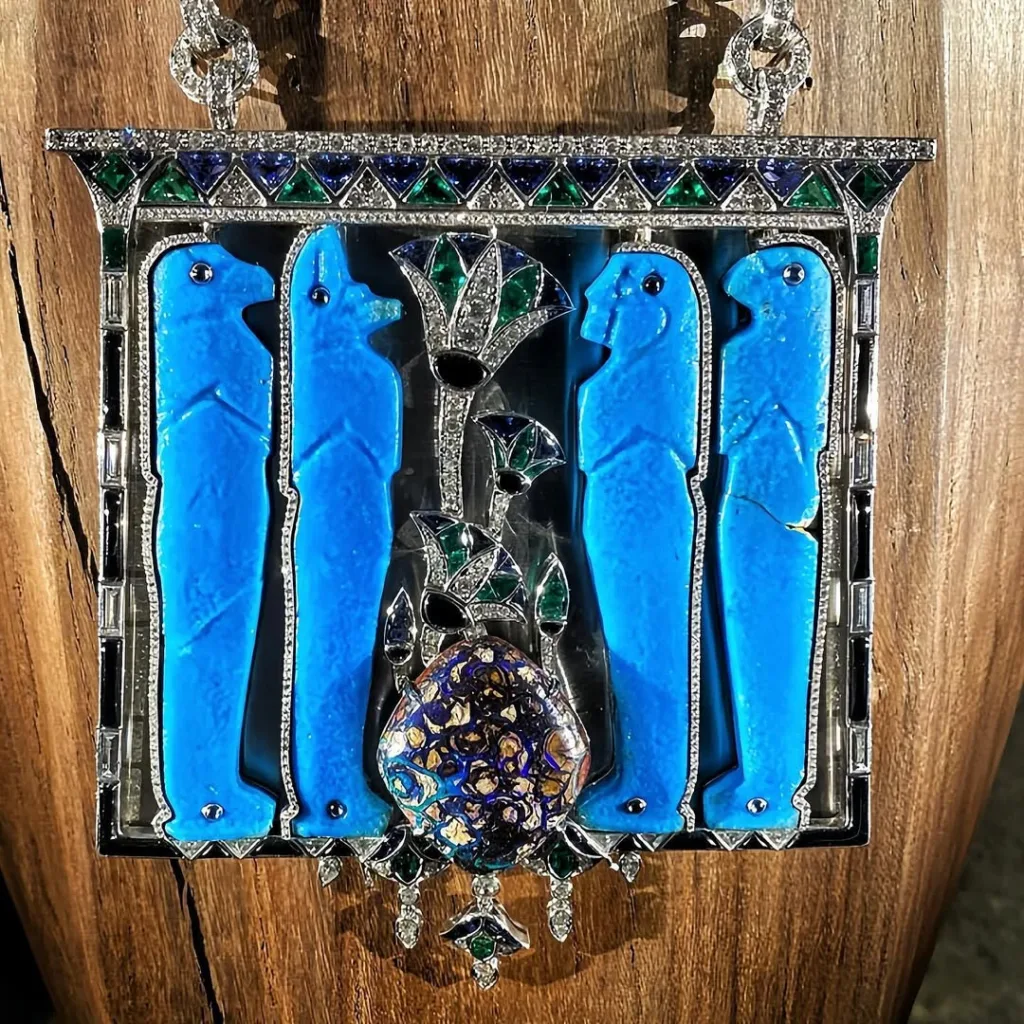
Cartier Egyptian Scarab Necklace
At the Qatar Foundation Convocation 2024, Sheikha Moza wore a stunning vintage Cartier necklace crafted from gold and featuring vibrant turquoise stones, adorned with Egyptian scarab motifs. Believed to be crafted in the 2000s, this exquisite piece was showcased at Cartier’s 2019 Crystallization of Time exhibition in Tokyo, reflecting the maison’s longstanding fascination with ancient Egypt. Cartier’s fascination with Egyptian motifs began in the 1920s after Jacques Cartier’s visit to Egypt, which led to collections featuring scarabs and other symbolic designs, including a notable Egyptian Revival collection in the 1950s. In ancient Egyptian culture, the scarab beetle symbolised rebirth, transformation, and the rising sun, serving as a powerful emblem in amulets for protection and spiritual renewal.
Cartier Eternity Snake Diamond Necklace
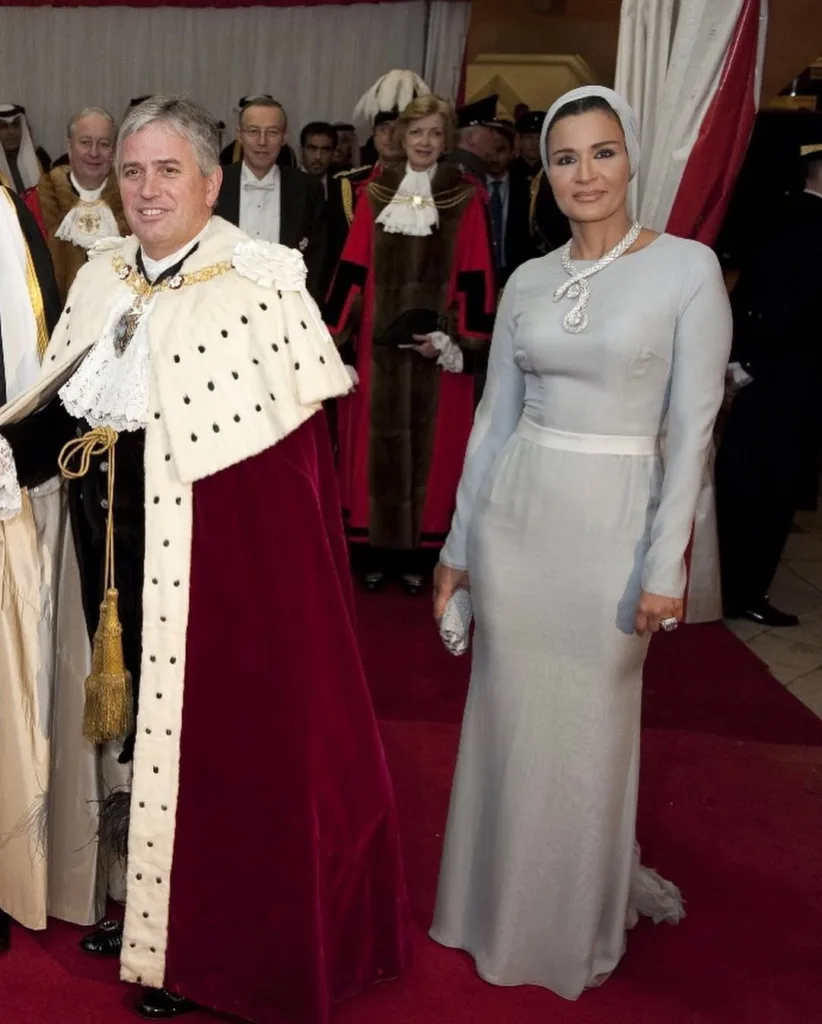
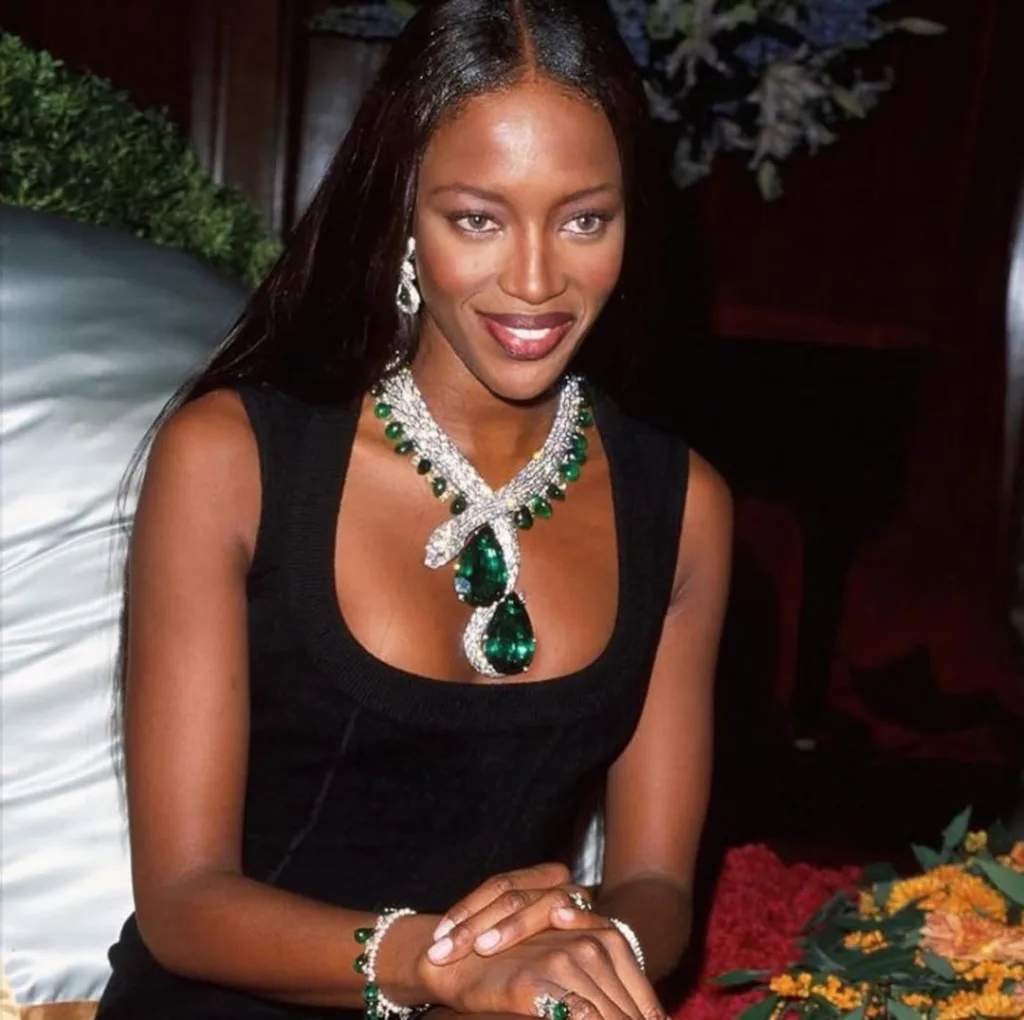
One of the most exquisite and intriguing jewels in Sheikha Moza’s renowned collection is her uniquely modified Cartier Eternity snake necklace. Originally crafted in 1968 for the Mexican actress María Félix, this masterpiece showcases a lifelike platinum serpent encrusted with thousands of diamonds and crowned by two enormous emeralds, each weighing over 200 carats. The original design also included smaller emeralds and pearls, making it an extraordinary symbol of luxury and artistic vision.
For Sheikha Moza, Cartier reimagined the necklace by replacing the emeralds with two striking white diamonds and removing the smaller emeralds and pearls, resulting in a more streamlined and contemporary silhouette. This thoughtful modification preserved the necklace’s legendary look while perfectly reflecting Sheikha Moza’s personal approach to jewellery—balancing historical significance with understated glamour.
Her Majesty Queen Rania Al Abdullah of Jordan
Arabic Script Tiara by Fred Paris
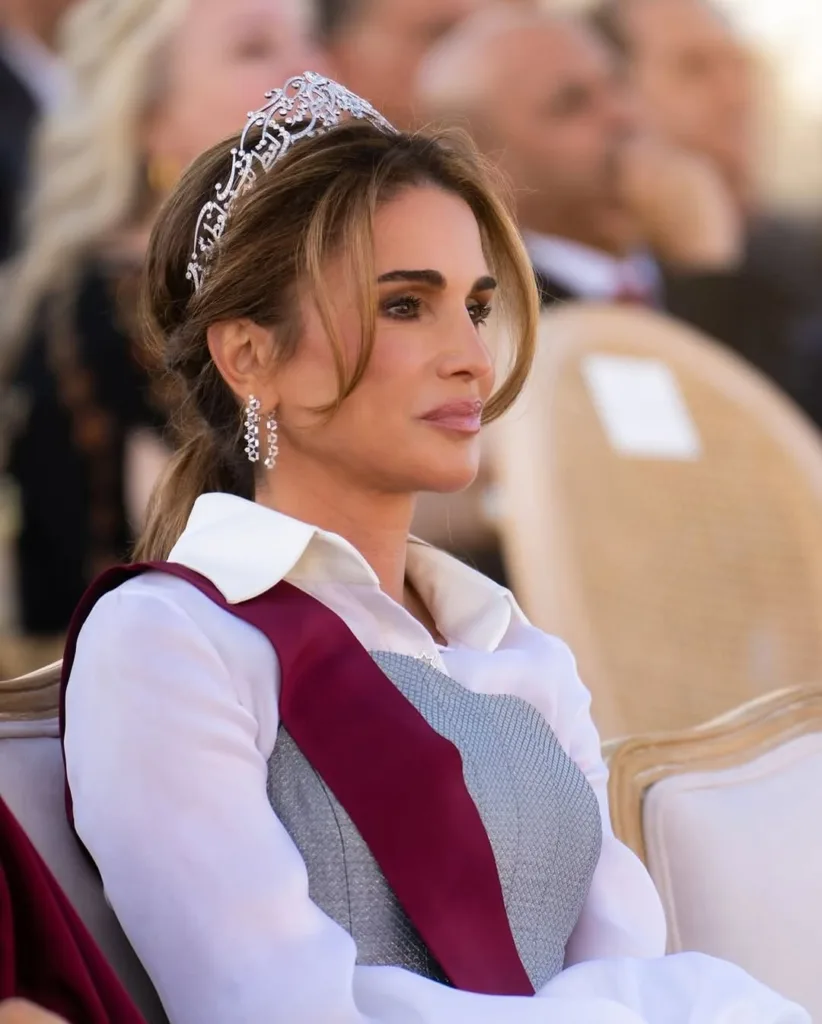
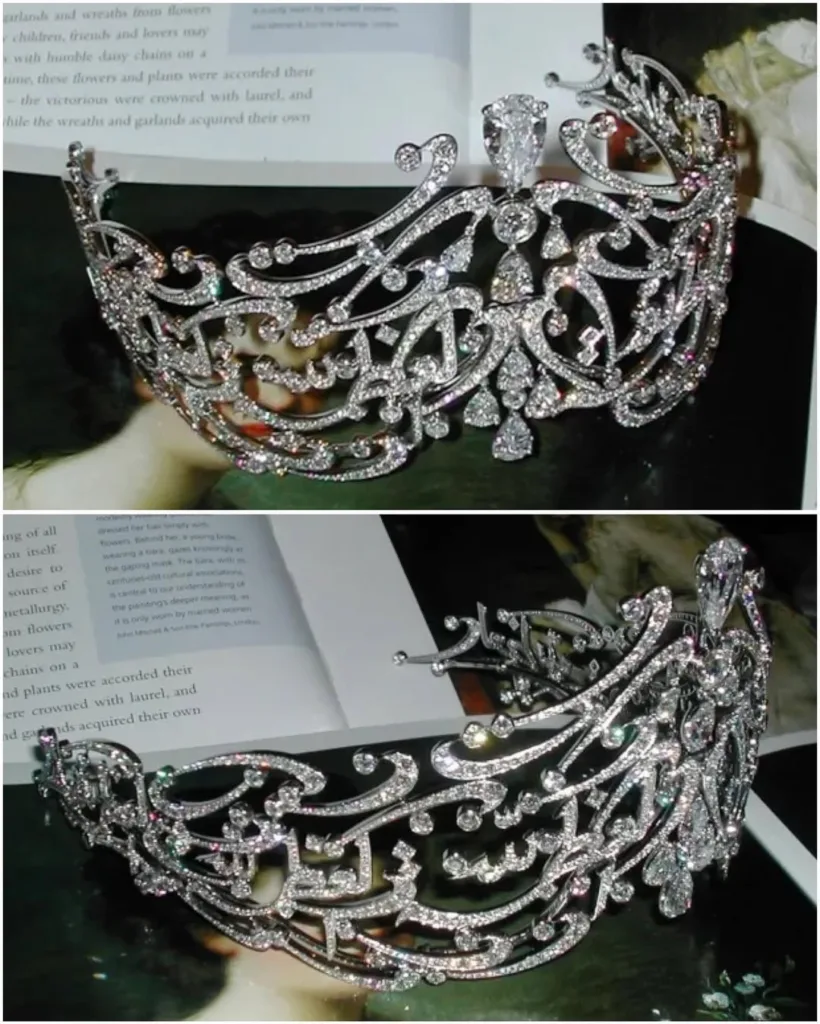
One of the most remarkable pieces in Queen Rania’s jewellery collection is her Arabic Scroll Tiara, a gift from King Abdullah in 2006. Designed by French jeweller Yan Sicard, the tiara features intricate diamond scroll motifs interwoven with the Arabic phrase that means “Allah is Great” — a powerful expression of faith and reverence. Set with approximately 1,300 diamonds, including seven drop stones, and crowned by a large pear-shaped diamond weighing 20 carats, the tiara is a stunning example of modern craftsmanship rooted in cultural and religious heritage.
Queen Rania first wore the piece at a State Banquet hosted by the Dutch Royal Family at Noordeinde Palace during the Jordanian State Visit to the Netherlands in 2006. Elegant, symbolic, and deeply personal, the Arabic Scroll Tiara reflects Queen Rania’s distinctive approach to royal jewellery — where tradition, devotion, and contemporary design come together in a singular statement of identity.
Queen Alia’s Cartier Tiara
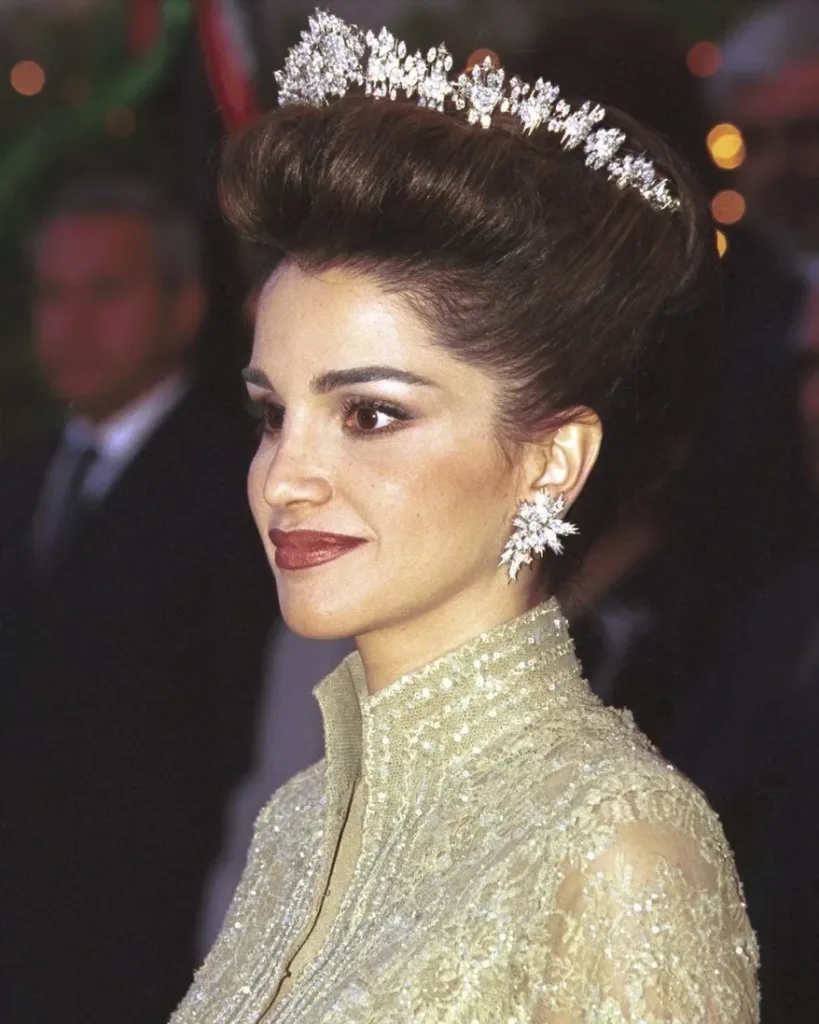
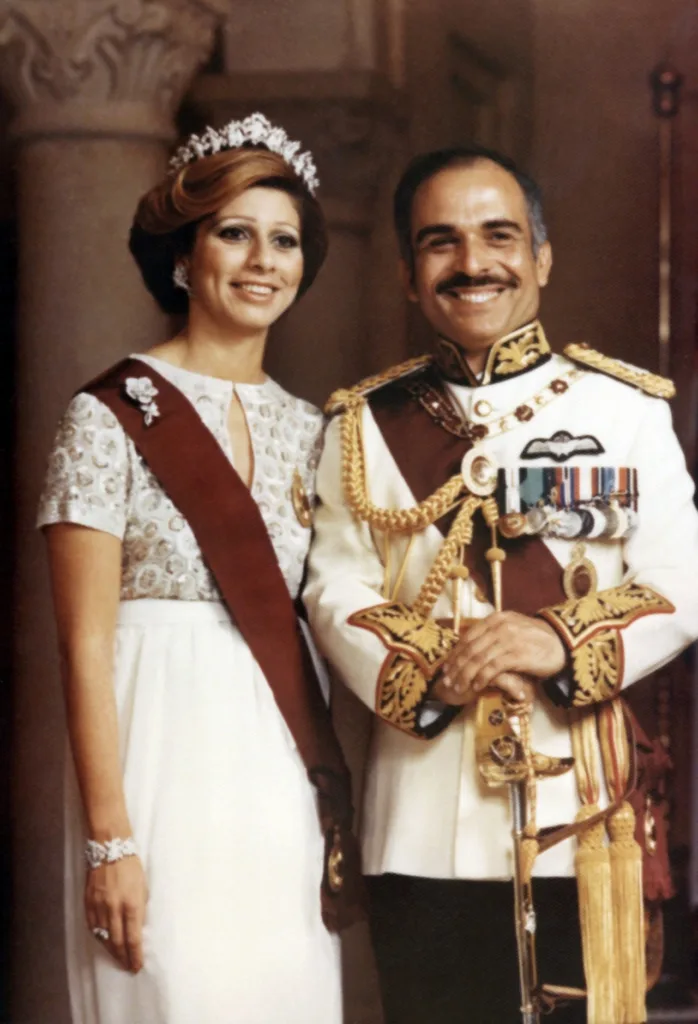
One of the most historically significant and visually striking pieces in the Jordanian royal collection is the abstract diamond tiara originally gifted to Queen Alia by King Hussein in the 1970s. Created by Cartier and accompanied by matching earrings and a bracelet, the tiara was most famously worn by Queen Alia in a series of official portraits taken with King Hussein during the mid-1970s. Following her tragic death in a plane crash in 1977, the tiara was inherited by her daughter, Princess Haya, who later wore it for a portrait session with photographer Maher Attar in 1998.
The tiara has since become a cherished family heirloom, symbolising both legacy and continuity. In a gesture that underscores its sentimental value and regal elegance, Princess Haya loaned the tiara to Queen Rania for the Enthronement of King Abdullah II in 1999, and again for several major royal events, including a state banquet in Madrid later that year. With its graceful, abstract design and enduring presence, Queen Alia’s Cartier Tiara remains a powerful emblem of royal heritage and generational connection within the Hashemite family.
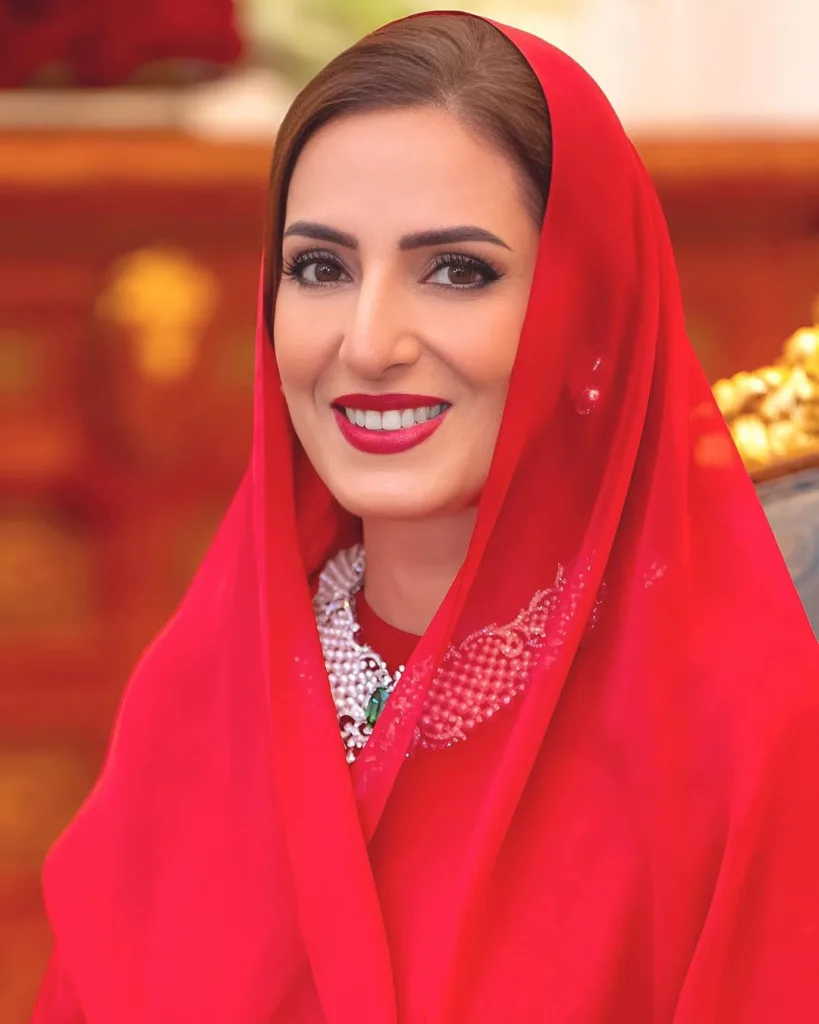
Her Highness Sayyida Ahad Al Busaidiyah of Oman
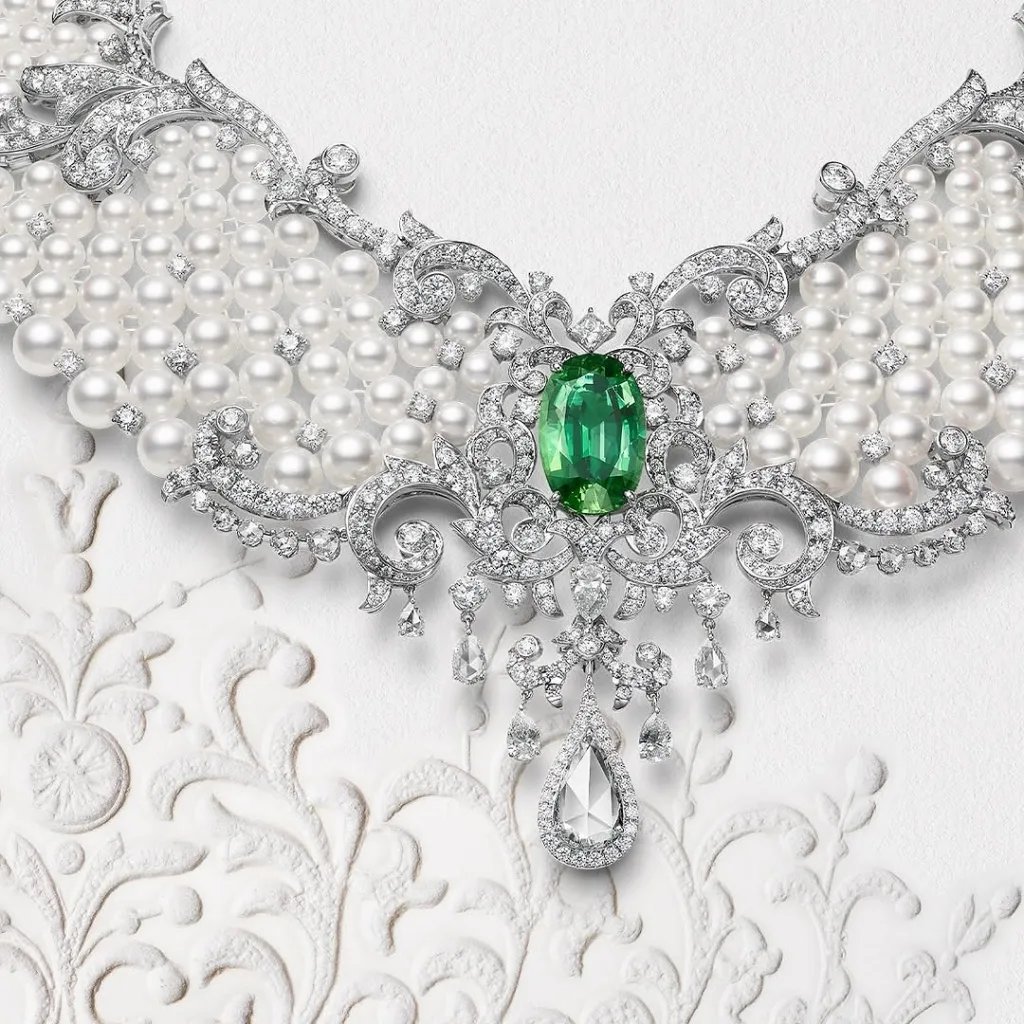
Mikimoto Necklace
The Honorable Lady of Oman, Sayyida Ahed Al Busaid, continues to captivate with her refined taste in high jewellery. At a state dinner held in honour of the Angolan President, she wore an exquisite necklace by the prestigious Japanese maison Mikimoto. The piece features a vivid green tourmaline at its centre, elegantly framed by lustrous Akoya pearls and anchored by a shimmering pear-cut diamond suspended just below. The exclusive design—balancing bold colour with delicate craftsmanship—was perfectly complemented by Her Highness Sayyida Ahed’s elegant red gown.
Rene Boivin Starfish Brooch
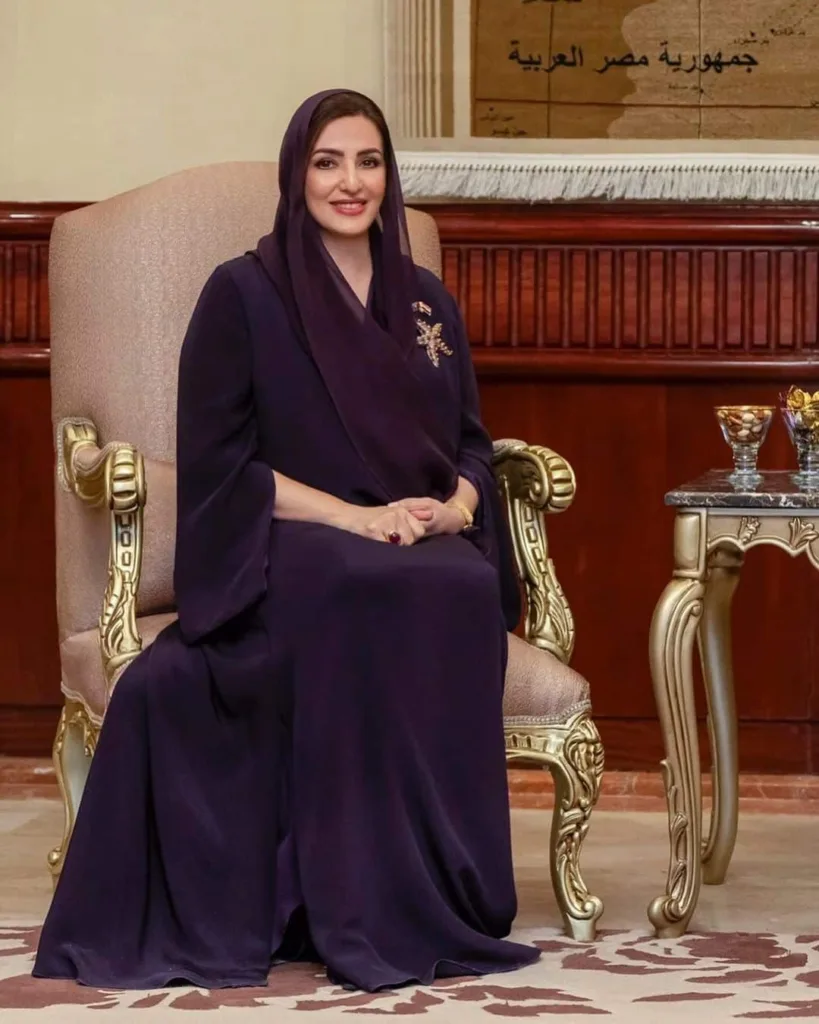
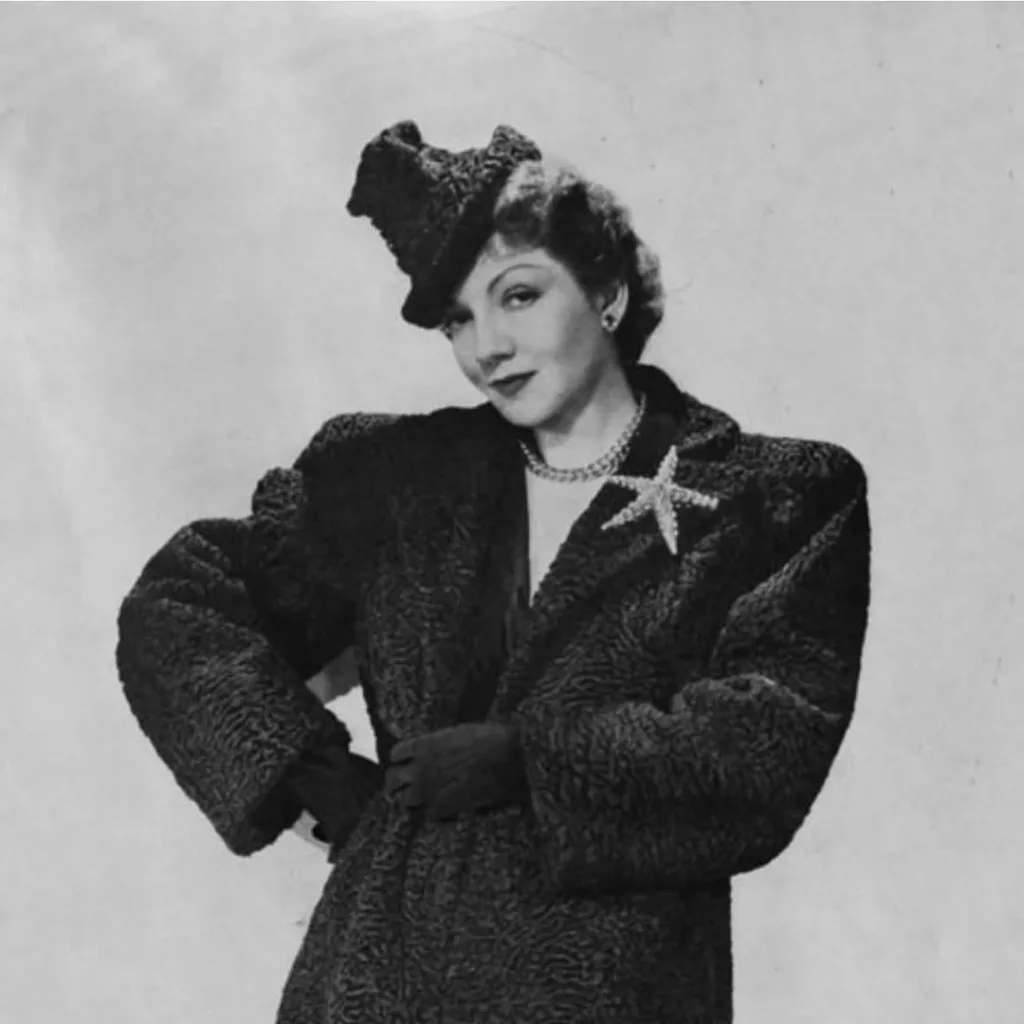
Equally striking is Sayyida Ahed Al Busaid’s rare René Boivin starfish brooch, an extraordinary example of mid-century French jewellery design. Created in 1935 by Juliette Moutard for the famed Parisian maison, the piece was originally made for American actress Claudette Colbert, who acquired it in 1938.
Crafted in 18-carat gold and shaped to replicate a North Atlantic starfish, the brooch features five lifelike arms, each linked by 28 intricate hinges that allow movement in three directions—up and down, side to side, and rotational—mimicking the natural motion of a real sea creature. At four inches wide, it commands attention with 71 collet-set rubies and 665 pavé-set amethysts. Two of its arms are artfully flipped to reveal the gold underside, enhancing its sculptural dimension. When worn on the shoulder or chest, the tentacles subtly respond to the wearer’s movements, blending mechanical ingenuity with poetic realism. With only five known examples in existence, this jewel is not only a masterpiece of craftsmanship, but also a powerful reflection of Sayyida Ahed’s affinity for rare, historically rich design.

Princess Lalla Hasna of Morocco
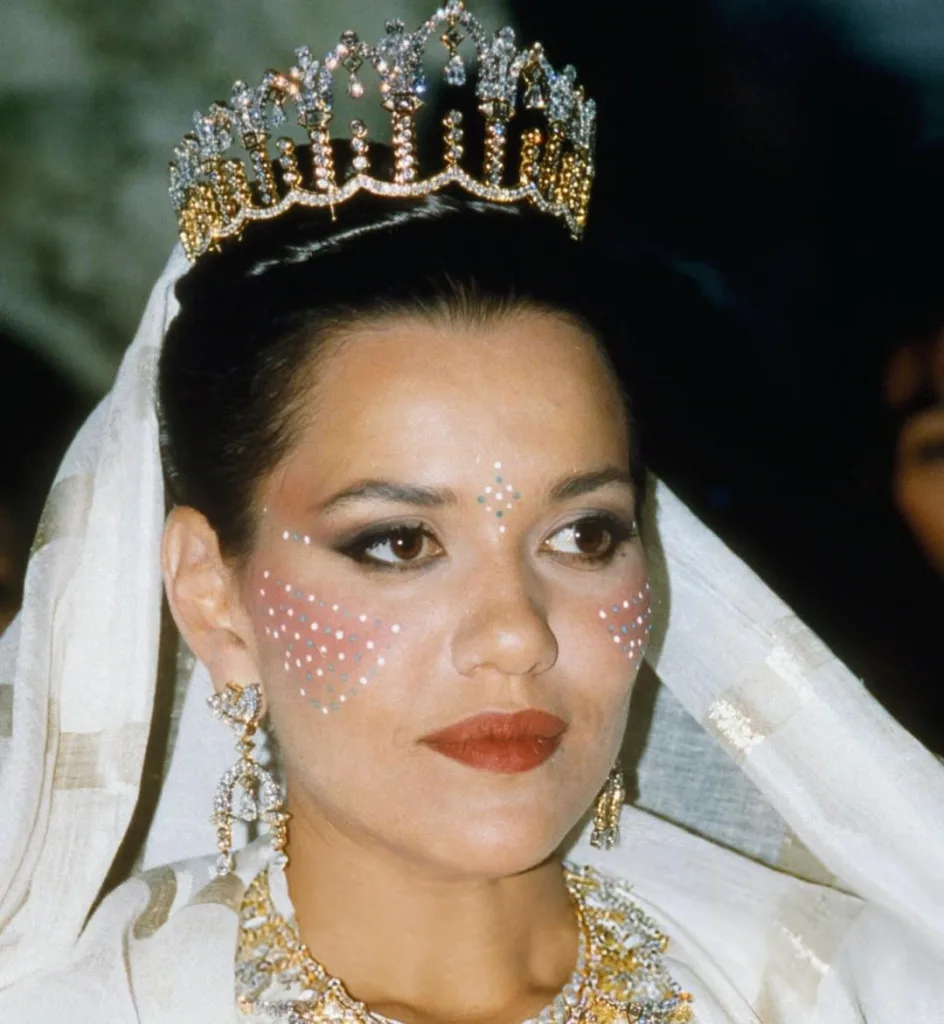
The Diamond Arch Tiara
The Diamond Arch Tiara, a distinguished creation by the renowned jeweller Chaumet, was gifted to Princess Lalla Hasna by her father, King Hassan II, to mark her marriage to Dr. Khalid Benharbit in 1991. This remarkable piece exemplifies a refined blend of contemporary design and regal tradition, characterised by its elegant geometric composition of elongated hexagonal elements alternating with slender diamond spikes.
The tiara’s modern aesthetic is thoughtfully balanced by timeless craftsmanship, reflecting both Princess Lalla Hasna’s sophisticated taste and the enduring heritage of the Moroccan monarchy. Complemented by coordinating diamond earrings, the ensemble stands as a subtle yet powerful expression of grace, dignity, and royal identity.
Aga Khan Emerald
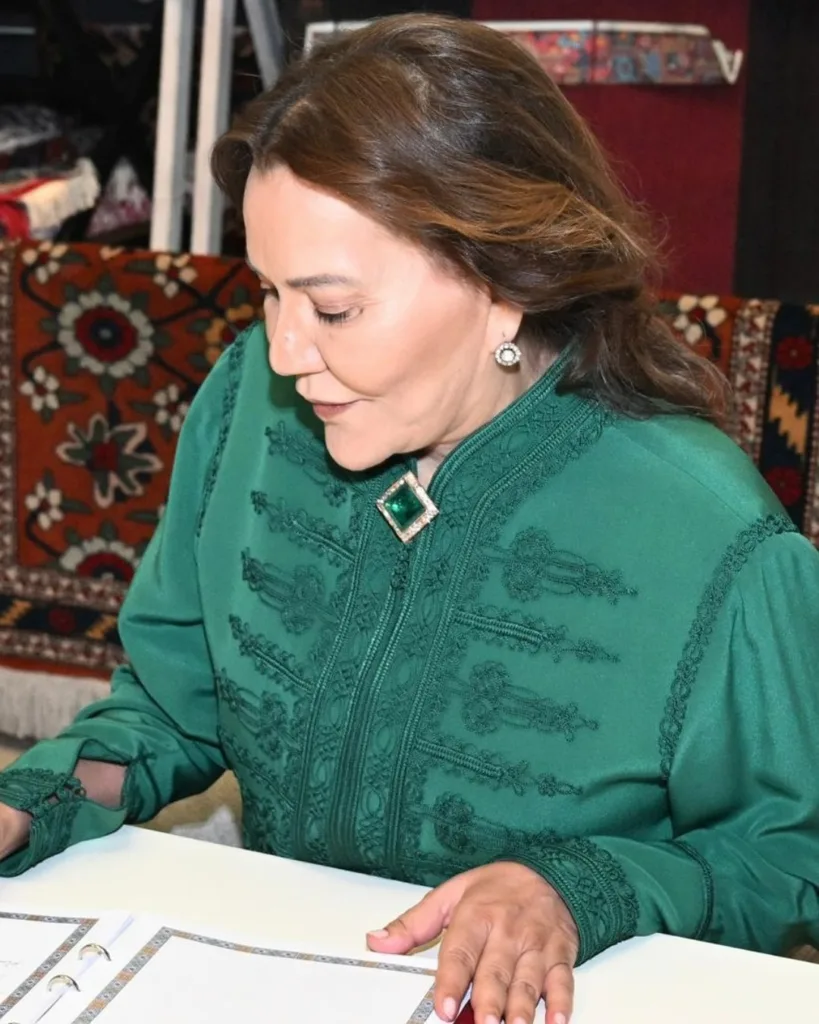
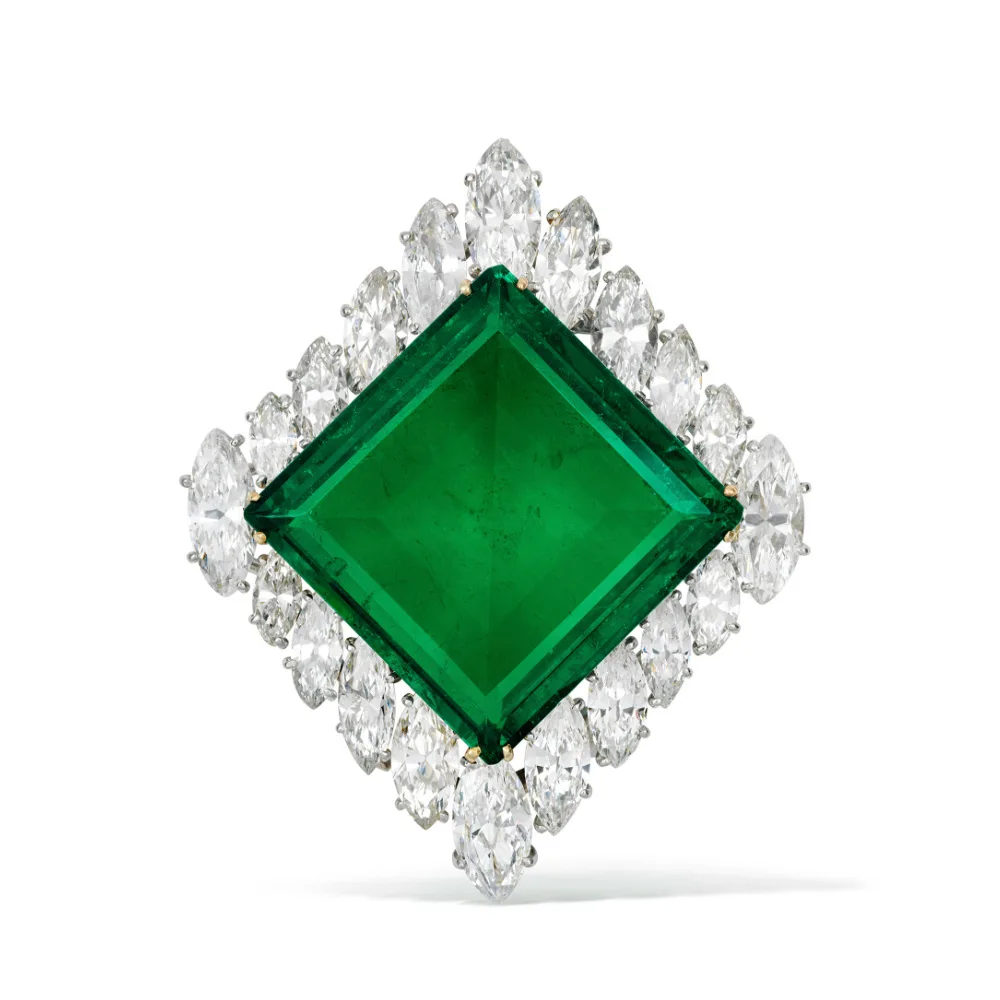
During her visit to Azerbaijan, Her Royal Highness Princess Lalla Hasna — President of the Foundation for the Safeguarding of the Cultural Heritage of Rabat — made a quietly powerful impression by wearing the historic Aga Khan Emerald, one of the rarest and most storied jewels of the 20th century.
The brooch, designed by Cartier in 1960, was originally commissioned by Prince Sadruddin Aga Khan as a wedding gift for his wife, Nina Dyer. At its centre lies a remarkable 37-carat square-cut Colombian emerald, prized for its vivid colour and extraordinary clarity, framed by twenty marquise-cut diamonds totalling over 12 carats. Following its sale at Christie’s in 1969, the piece passed through the hands of famed houses including Van Cleef & Arpels and Harry Winston, before reappearing at auction in 2024, where it fetched a record-setting $8.8 million.
The emerald’s recent appearance — after more than half a century out of public view — marks not only the revival of a mid-century masterpiece, but also a reflection of Princess Lalla Hasna’s deep appreciation for cultural heritage and her commitment to preserving beauty with historical significance.
Her Majesty Queen Noor of Jordan
Sapphire and diamond brooch
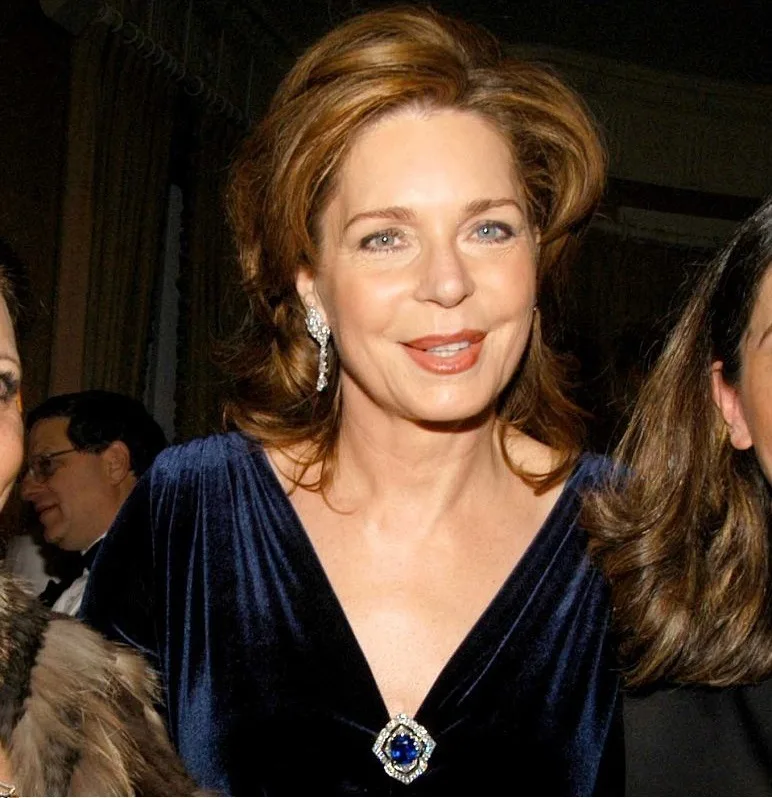
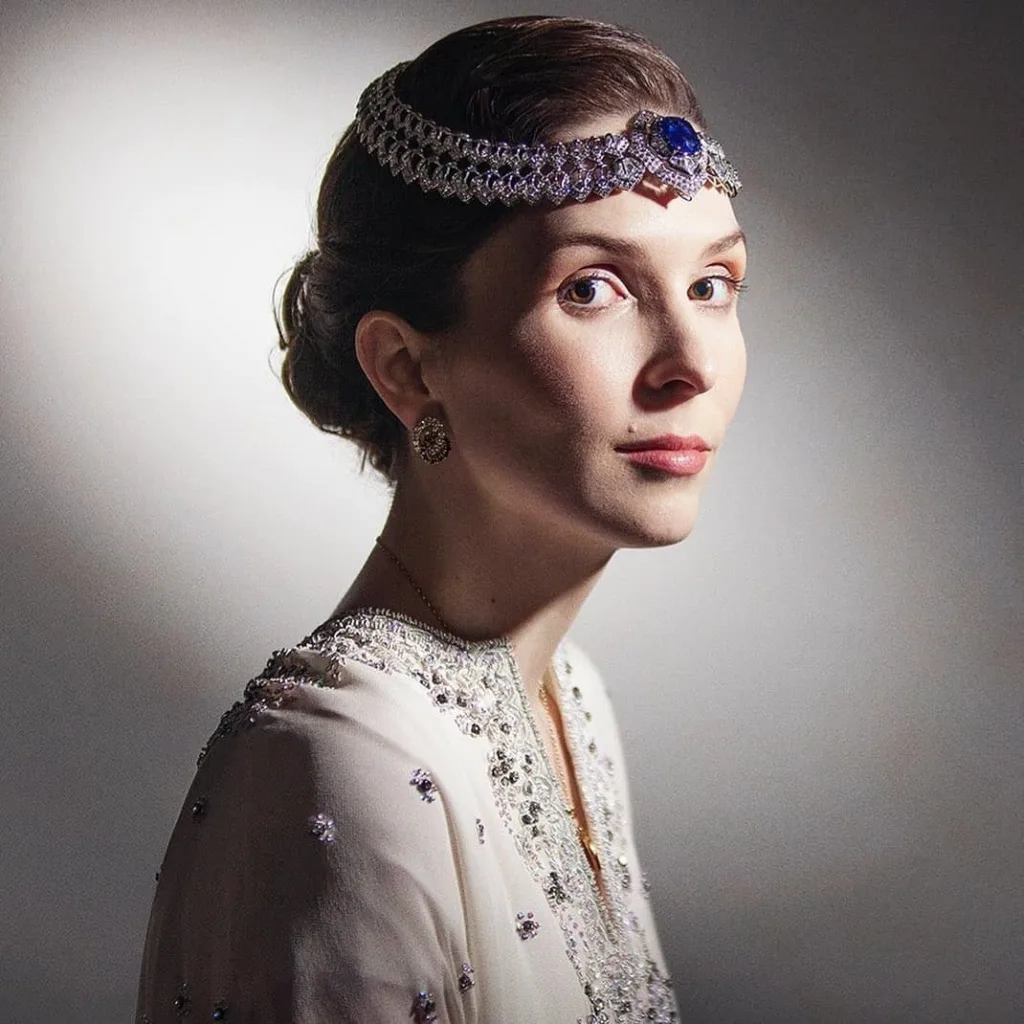
The sapphire and diamond brooch, first seen on Queen Noor at the inaugural Peace Builder’s Dinner at the Harold Pratt House in 2005, is a striking piece featuring a large cushion-cut sapphire surrounded by diamonds. Worn with a deep blue gown, the brooch stood out as a symbol of timeless elegance. In 2020, the brooch reappeared in a new form when Queen Noor’s youngest daughter, Princess Raiyah bint Hussein, incorporated it into a diamond headpiece for her wedding to Faris Ned Donovan—blending royal tradition with personal significance.
Diamond Sunburst Tiara
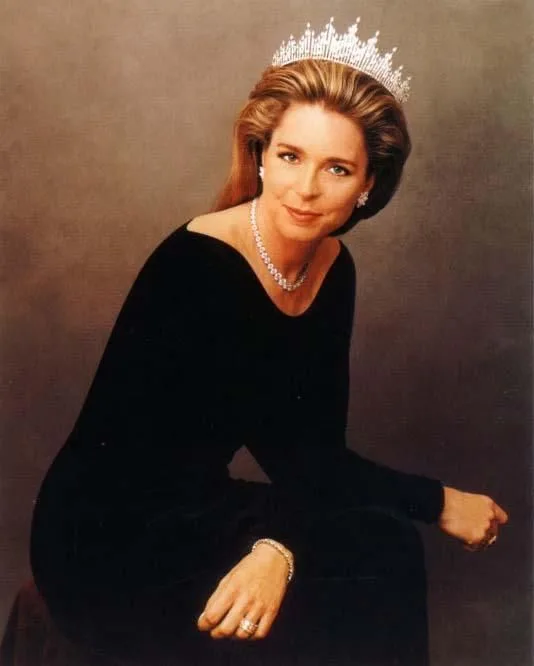
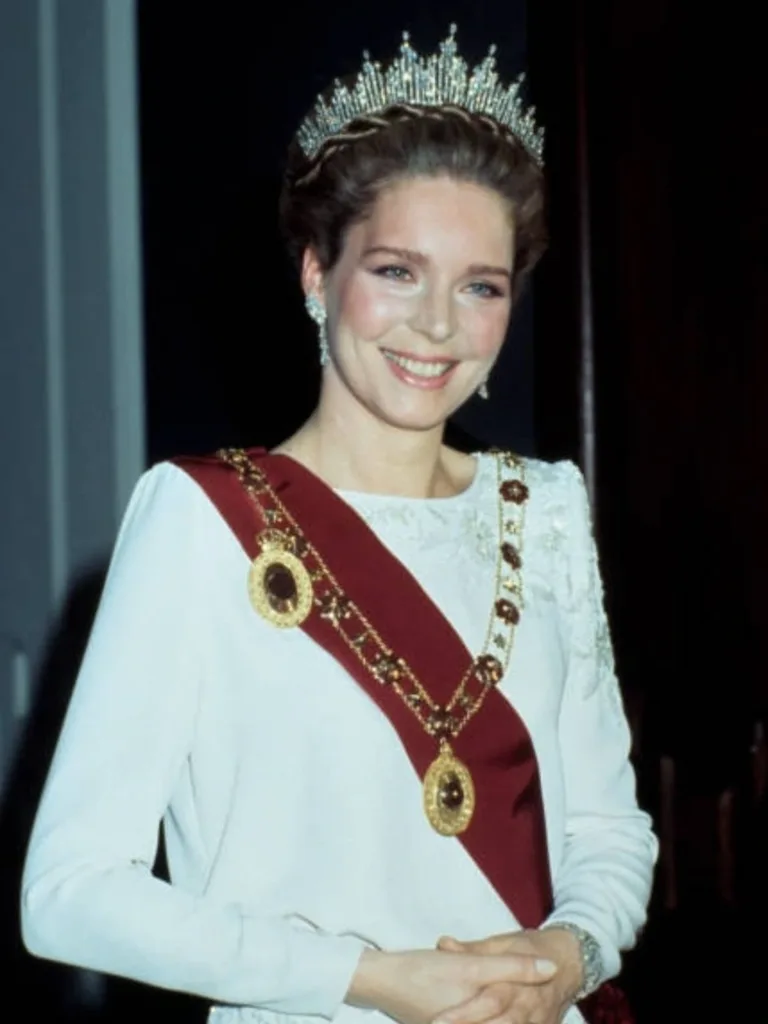
Shortly after her marriage to King Hussein of Jordan in 1978, Queen Noor was gifted a striking diamond tiara featuring abstract sunburst motifs—an elegant tribute to her new name, “Light of Hussein.” Originally designed with rays that graduated toward the centre, the tiara was later modified with additional graduated points to enhance its celestial form.
Queen Noor wore the piece prominently throughout the 1980s, including official portraits and during the 1984 State Visit of Queen Elizabeth II to Jordan, as well as a State Visit to Spain the following year. Following King Hussein’s death, public appearances of the tiara ceased, except for a single portrait taken after the founding of the King Hussein Foundation—where the tiara served as a symbolic tribute to his enduring legacy.
Lead image courtesy of Instagram / @sheikhamozafashion