

Breast Cancer Awareness Month: How AI Mammography Is Transforming Early Detection
Here’s how AI-powered Hologic mammography detects 65% more invasive breast cancers
While Breast cancer awareness extends far beyond the month of October, we dedicate this month to, honour those affected, reflect on progress, and highlight innovations shaping the future of women’s health. Pink ribbons have become an empowering symbol of rememberance and resiliance; a reminder of the women who have battled through this journey. Early detection remains one of the most powerful tools we have, in order to save lives, and in 2025, advanced technology is making that possible.
“Every woman who walks through our door is either someone’s mother, sister, daughter, or friend. Knowing that we can offer them the best chance at early detection, is what drives me. It’s about raising the standard of women’s healthcare in the region. Ultimately, the legacy we’re building is measured in lives saved, cancers caught early, and a generation of women who approach breast health proactively, rather than fearfully. If we can shift the narrative from ‘breast cancer being frightening’ to ‘early detection saving lives’; that’s a legacy worth creating.” Says Dr Amrita Kumar, Consultant Breast Interventional Radiologist at HealthBay Vitalia.
Here, Bazaar Arabia speaks to an expert in Dubai about Hologic 3D Mammography and the pivotal role it plays in advancing early breast cancer diagnosis.
What is Hologic 3D Mammography?
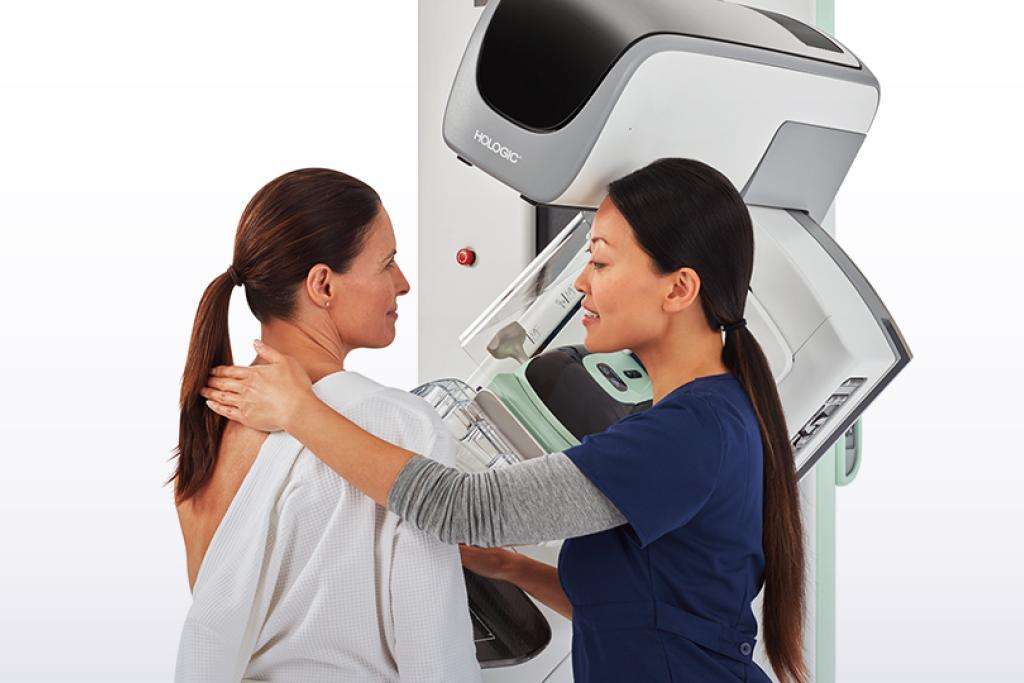
Hologic 3D Mammography is an advanced imaging technology, designed to enhance the detection and visualisation of breast cancer by producing detailed three-dimensional holographic images of breast tissue. It incorporates an X-ray arm to capture multiple images of the breast from different angles, providing in depth information that goes beyond the what the 2D mammograms can offer.
“Most importantly, we’re finding breast cancers that would have been missed through traditional 2D mammography, particularly in women with dense breast tissue, which is common among younger women,” says Dr Amrita.

How Does AI Support It?
Dr Amrita explains, “AI excels at detecting subtle abnormalities that may be missed upon initial review, particularly in dense breast tissue. The Hologic 3D Mammography system uses AI algorithms to highlight suspicious areas, significantly improving early detection rates. We’re detecting breast cancers at significantly earlier stages – often stage 0 or 1 – when treatment is less invasive and survival rates exceed 95%. The technology reduces false positives by 15-20%, which means fewer women are called back for additional testing and biopsies.”
“AI provides standardised analysis at any given time, eliminating fatigue-related errors. Our Hologic system at HealthBay Vitalia offers consistent quality checks across all mammograms, ensuring no subtle finding goes unnoticed. It’s particularly valuable in high-volume settings, maintaining diagnostic excellence, even during busy periods. This consistency means that every patient receives an equally high standard of care.”
“AI is like having a second pair of eyes that never never blinks, working alongside me to ensure we don’t miss anything. But I’m the one making the final decisions about your care, combining AI’s findings with my clinical experience and your medical history.” Dr Amrita reassures, as most patients feel comfort in knowing that there’s an extra safety net supporting their care.
What To Remember When Using AI
Dr Amrita advises, “critical appraisal of AI outputs – knowing when to trust and when to question – is imperative. Data bias is paramount; with Dubai’s multicultural environment we must, ensure transparency in how AI makes decisions, maintain patients’ data privacy, and guarantee that technology doesn’t widen healthcare disparities. Doctors who can leverage technology while maintaining their clinical reasoning and human touch is the outcome every centre should strive for.”
“Essentially, AI amplifies our capabilities as clinicians, identifying what we might miss, and freeing us to spend more time on what matters most – caring for patients through expertise, empathy, and the human connection – which no algorithm can replicate. Although, AI built without clinical input often fails in practice. Hence, HealthBay Vitalia ensures that our systems integrate seamlessly into our clinical pathways.”
“Most importantly, remember that technology should enhance human expertise, not replace it.”

Challenges And Advice
Dr Amrita shares, “the biggest challenge was ensuring the technology would work seamlessly in our clinical environment, and serve our diverse patient population. We worked closely with our technology partners to ensure the systems – the Hologic 3D Dimensions, Lunit AI, and Genius AI – would perform equally well across different ethnicities and breast densities.”
“I’ve learned that successful innovation requires three things: evidence that it works, clinicians who are trained and engaged, and clear communication with patients so they understand and trust the technology. You cannot innovate alone; it takes a team, committed to the same vision of excellence. The most rewarding lesson? When you get it right, you quite literally see innovation unfold, transforming lives.”
Beneficial Outcomes
“Our Hologic 3D Mammography systems have demonstrated up to 8% improvement in breast cancer detection rates compared to traditional 2D mammography. The clarity of 3D imaging, combined with immediate ultrasound correlation means we can often provide answers on the same day. Our AI systems have helped bring a level of confidence to our assessments, which translates to clearer communication with patients. Women leave understanding their results; not confused or frightened.”
“We’re seeing women who previously travelled abroad for screening now staying in Dubai. Younger women, particularly those with family history, are being more proactive about screening, given the access to this technology. The conversation around breast health has shifted from fear to empowerment; women are aware that early detection with advanced technology gives them control over their health outcomes.” Says Dr Amrita.
The Future
Dr Amrita truly believes that, “AI will shift from detection to prediction; distinguishing women at a high-risk, years before cancer develops. We’ll see personalised screening schedules based on individual risk profiles rather than a one-size-fits-all approach. This means identifying cancers earlier, when they’re most treatable, ultimately saving lives and reducing the need for aggressive treatments.
“After years of working in an AI leadership role for the NHS, I’ve witnessed firsthand how advanced technology can transform health outcomes. Since joining Healthbay Vitalia, our decision to adopt Holographic 3D Mammography wasn’t about simply having the latest equipment; it was about reimagining a centre where cutting-edge technology meets compassionate, clinician-led care.”
“Dubai is home to women from over 200 nationalities, and the region deserves access not only to world-class personalised screening, but the best chance at early detection.”
Lead Image Courtesy Of Shutterstock