
The New Icons: Bazaar Qatar Meets Mary Katrantzou To Talk Bags, Branding And Belief
Bazaar Qatar meets with Mary Katrantzou in Doha and discovers the new line of Bvlgari Icon bags
Between trips to Athens, motherhood and her role shaping Bvlgari leather goods, on-the-go Mary Katrantzou’s visit to Doha was a highlight in her busy schedule. “I’ve had the best time! What distinguishes the city is not only Qatari hospitality, but the way Fashion Trust Arabia (FTA) creates space for thought. Unlike the relentless circuit of Fashion Week, where presence rarely allows connection, the FTA gathers the industry around a shared purpose,” explains Mary. That sense of gathering resonates deeply in the region. Fashion, in the Arab world, has always been tied to community, storytelling and lineage. At FTA, Mary saw those values translated into contemporary design, not diluted for global approval, but sharpened by it. “I was moved by how unapologetic they are. They are not borrowing culture. They are speaking from it,” says Mary.
Collaboration for her demands the same integrity. It cannot be decorative or opportunistic: “It should only happen when it is meaningful, when there is something real to say.”
At Bvlgari, that philosophy reshaped Serpenti from a single icon into an open dialogue. The symbol remains constant, but its interpretations evolve through conversation with artists, designers, and cultures. “My role is to conduct that dialogue,” says Mary. “Always with respect for the person you invite, and for the codes of the house.”
That approach came to life in Mary’s work with Géraldine Guillot, whose reinterpretation of Serpenti drew on French savoir faire and historic Bvlgari techniques. Pasmenterie, once central to the house’s heritage, became the foundation for innovation. New electroforming processes followed, creating sculptural handles that were unexpectedly light. The results quietly drew attention across the high jewellery world. For Mary, innovation is only valuable when it builds permanence: “What we create today must become heritage tomorrow.”
This thinking defines her view of accessories. A Bvlgari bag is not defined by branding. “Our symbols are our logos. Serpenti, Diva’s Dream, Tubogas are instantly recognisable, carrying the same emotional weight as jewellery – you do not need the name when the symbol speaks for itself,” Mary tells us.
That belief led her to rethink evening bags entirely. For a house rooted in high jewellery, the category had to offer more than decoration. It had to offer meaning. The result was a renewed focus on minaudières, objects of precision and emotion, designed without compromise. Some are intentionally too small for a phone. “If you remove the distraction, you make space for something else,” says the designer.
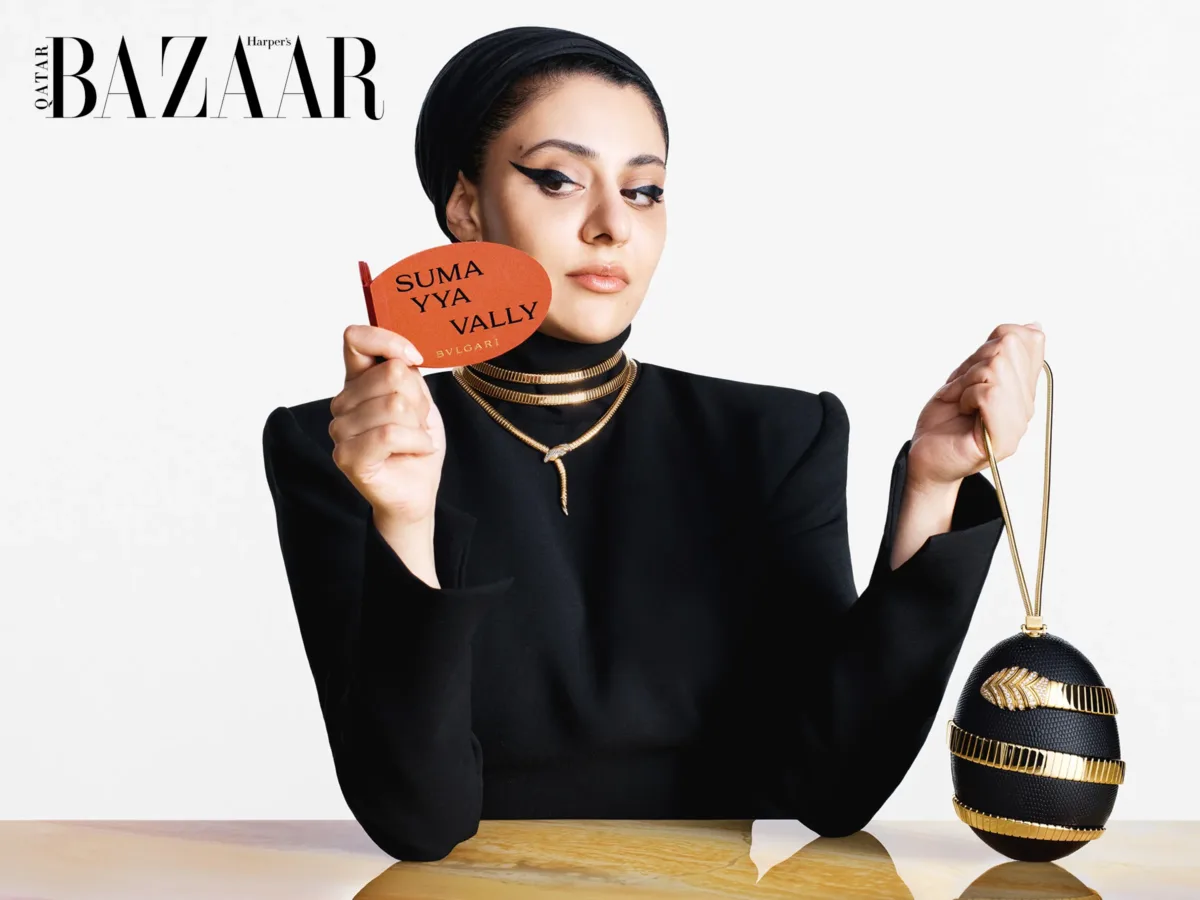
That idea echoed powerfully at Fashion Trust Arabia. Rooted in regional craft and symbolism, it embodied exactly what Mary believes the future of luxury should be: intimate, intentional and culturally grounded. Ultra-limited minaudières were created to house miniature books written by extraordinary women, each distilling knowledge, memory, and lived experience into a physical form. Some of the worlds most iconic taste makers where invited to collaborate with the house on this project including Isabella Rossellini, Linda Evangelista and Sumayya Vally (pictured).
In the Arab world, where storytelling has always been oral, tactile and symbolic, the idea feels especially resonant. Culture is not consumed quickly. It is carried, protected, and passed on. Emotion, she believes, is the true luxury. Jewellery holds memory. Bags express identity. The most powerful objects do both with Mary explaining: “A bag is an extension of who you are, it speaks before you do.”
This philosophy explains her connection to the new generation of Arab designers. She was struck by their confidence, their refusal to soften references and their willingness to be direct. “They are not asking for permission,” Mary says, “they are claiming space.”
It is a clarity she recognises in herself now, too. Less noise. Fewer explanations. Stronger symbols. Purposeful design. “A truly powerful piece,” Mary explains, “is not something you wear, it is something you carry with you, long after you leave the room.”
Imagery Supplied
Lead Image Credits: Indian South African architect Sumayya Vally was one of the famous faces chosen to collaborate with Mary on this project
From the Harper’s Bazaar Qatar Spring 2026 issue