
Wild At Heart: Cartier’s ‘Into The Wild’ Collection Furthers Its Legacy For Crafting Beautiful Beasts
Since the dawn of the 20th century, Cartier has been synonymous with a magical menagerie of wild and wonderful animal mascots, unrivalled in their glittering realism
You know a jewellery maison takes crafting its menagerie seriously when it has its own unique ‘fur setting’ technique. Such is the case for Cartier, which has been capturing the character, charisma and natural charm of wild and wonderful animals since the early 20th century.
The pack is led by its iconic protagonist, the Panther, who first appeared in fur-only form in 1914, when black onyx spots were placed among dazzling diamonds upon a timepiece to evoke her plush pelt. The maison had already begun to play with exotic animal motifs following Jacques Cartier’s explorations of the East, with tigers, snakes, elephants and insects steadily slithering, creeping and stomping into its design vernacular.
As the Roaring Twenties played out across Europe, birds of paradise, monkeys and exotic flora began to adorn elegant objets d’art and jewellery creations, but it was once Jeanne Toussaint took to the helm as Creative Director in 1933 that the Panther became the lead character in Cartier’s sparkling cast of furred friends.

Nicknamed “La Panthère” herself, Toussaint evolved the Panther pattern into a three- dimensional hero in 1948, notably with two important brooches commissioned by the Duke of Windsor for his wife, style icon Wallis Simpson. The first was a yellow gold panther perched on an extraordinary emerald cabochon, followed by a similar design the year after, where the Panther was placed upon a bold blue sapphire cabochon weighing over 150 carats. The piece caused a storm – colloquially referred to as ‘the atomic bomb of jewellery’ for its revolutionary aesthetic that centred on transforming jewellery into a piece of precious sculpture.
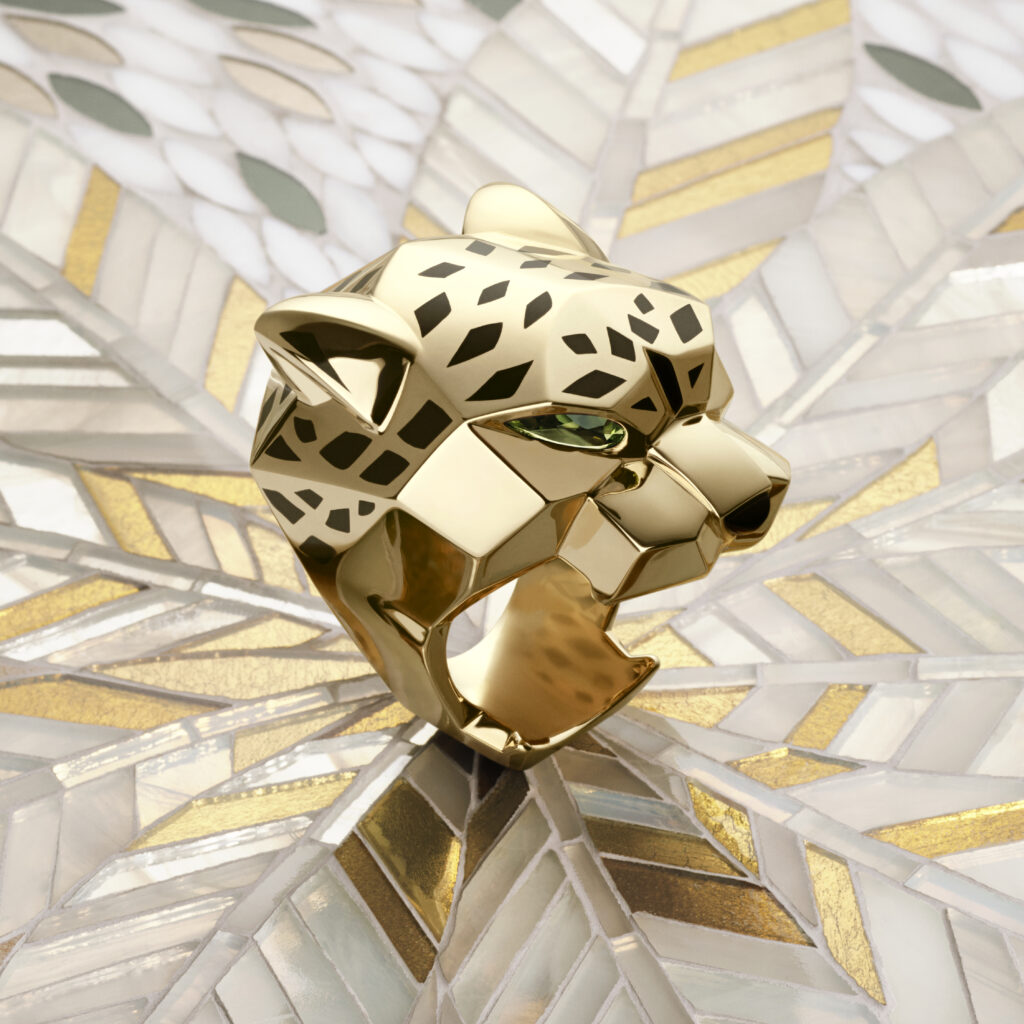
This is where the maison’s savoir faire came to the fore, and continues to do so today thanks to the synergy between its jewellers, lapidaries, gem-setters and watchmakers, who meticulously articulate, sculpt and polish with precision to bring each piece to life with vivid realism. In the maison’s new ‘Into the Wild’ collection, skins and scales are ultra tactile thanks to myriad jewellery techniques that enhance its precious metals – polished, brushed and etched – while seamlessly paved diamonds, coloured gems and intricate rail settings allow for minute patterns and textures to be intricately captured through stones.
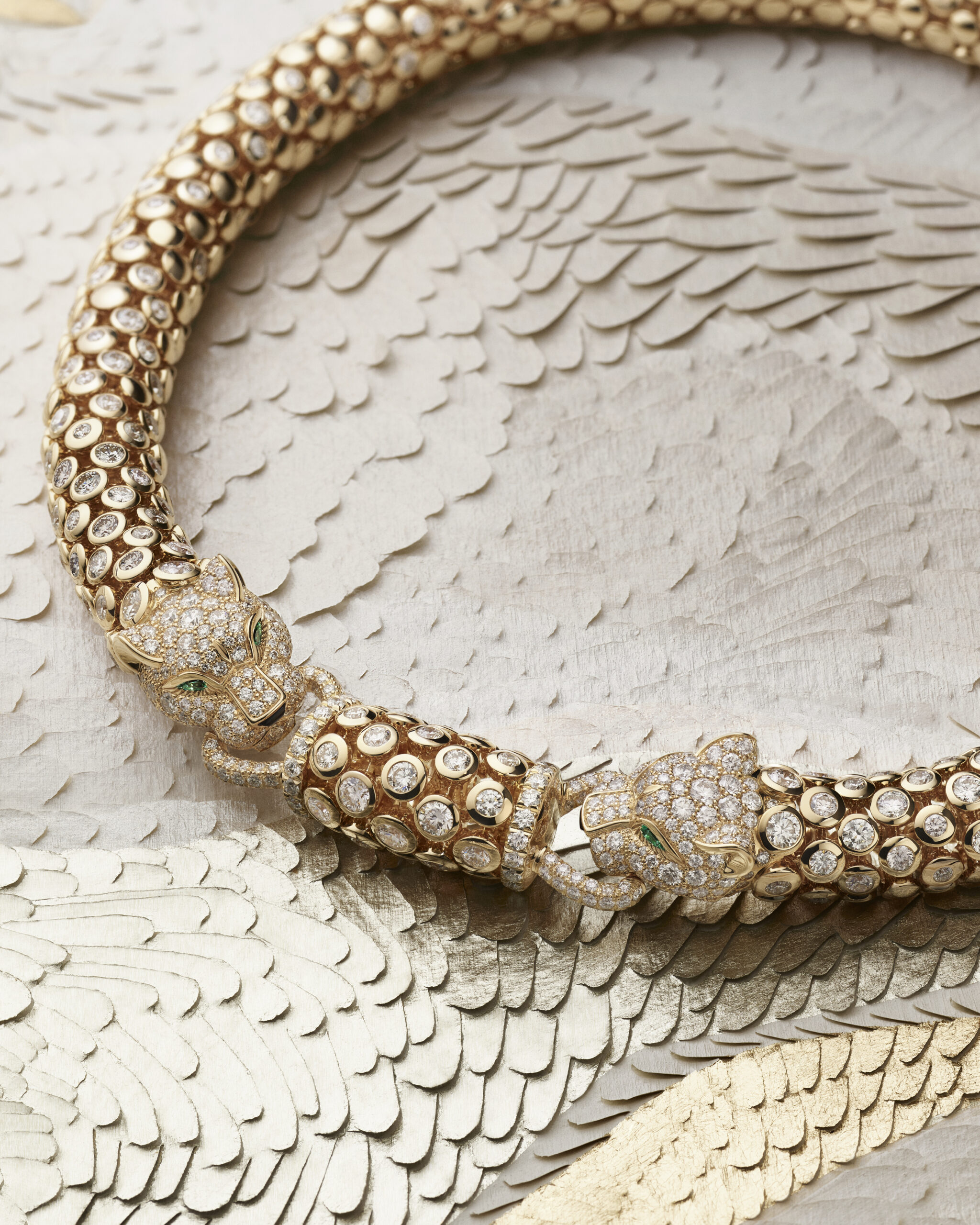
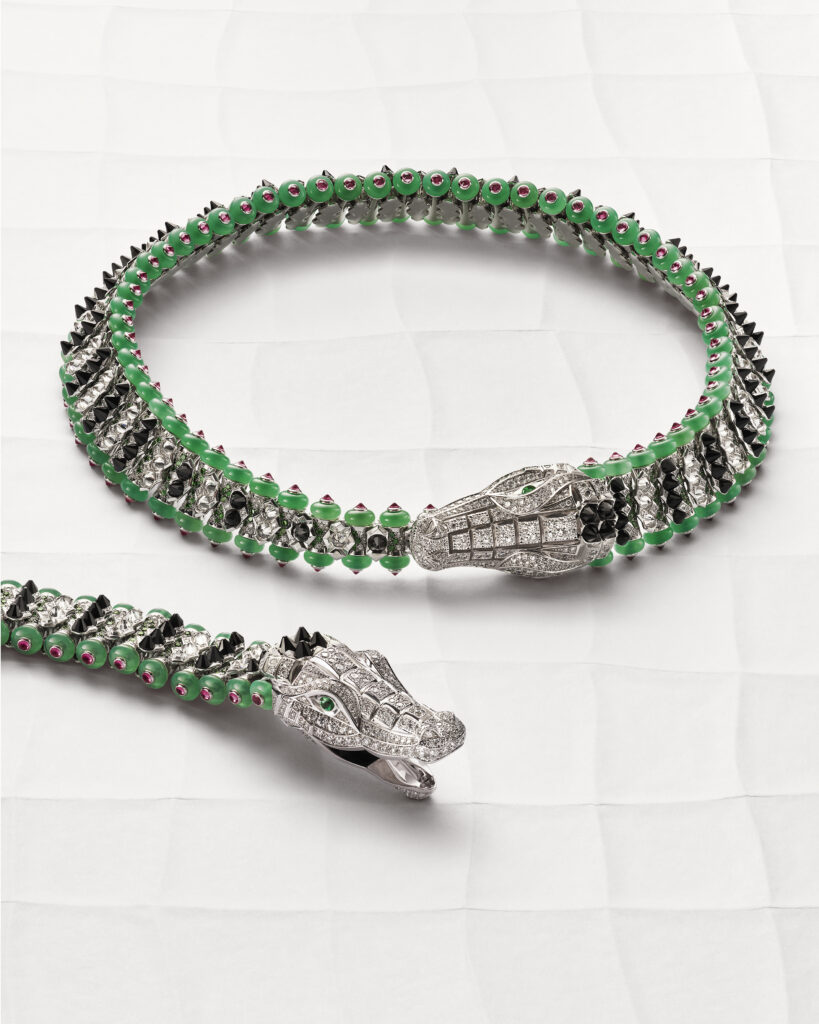
Ingenious engineering enables the anatomy of each animal to feel accurate and imaginative in equal measure, with clever articulations allowing the bestiary to become one with the body; observe how the Panther languidly crosses her paws, while the crocodile’s jaw flicks open and shut with uncanny control.
“The Cartier fauna is distinguished by its character,” explains Pierre Rainero, Cartier’s Director of Image, Style and Heritage. “First of all, in the choice of species – big cats, reptiles, savannah animals… and also in the creative treatment, between naturalism and extreme stylisation. Through the interplay of design, materials and execution, Cartier questions the very perception of the animal and opens up extraordinary possibilities for exploring forms.”
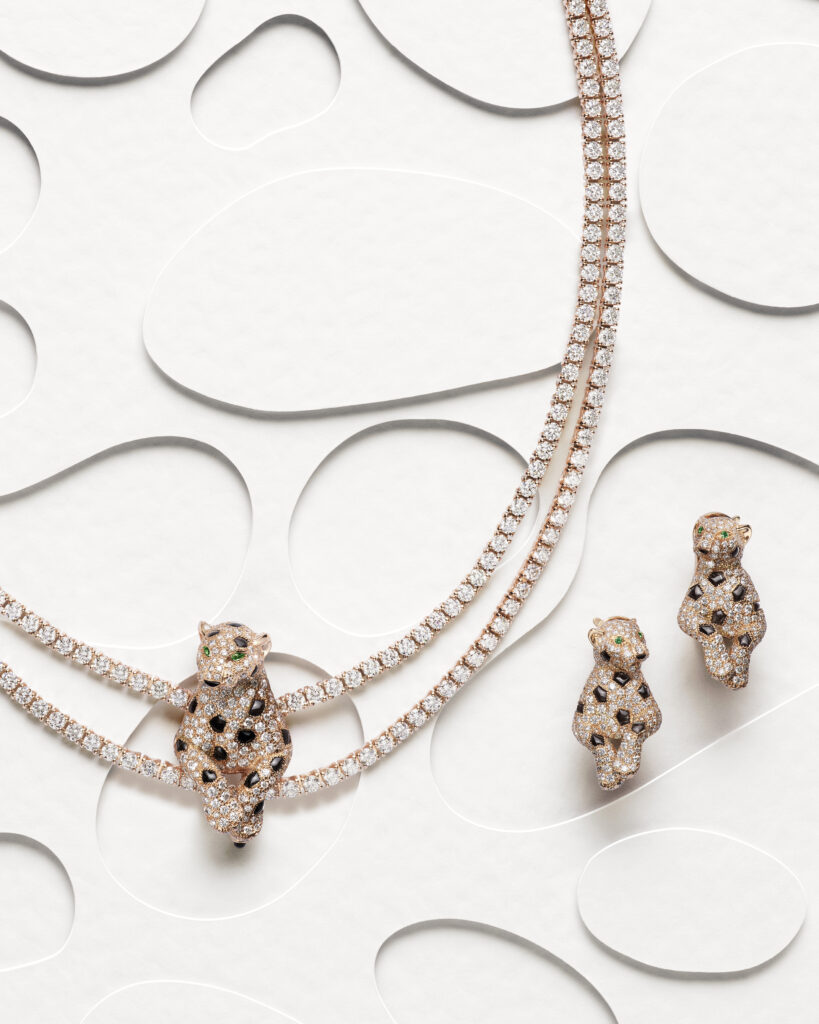
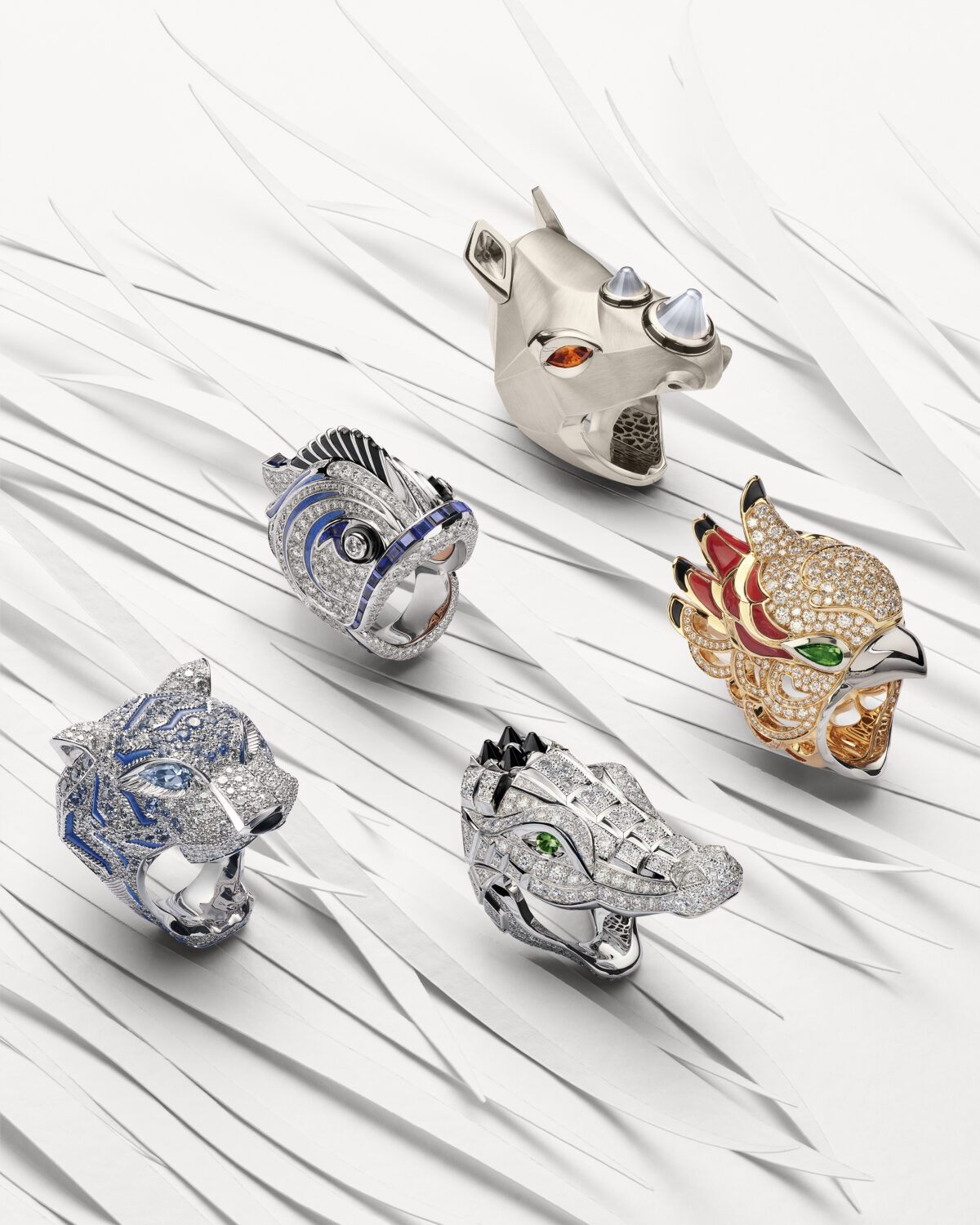
Cartier’s rich repertoire of beautiful breeds over the last century have never felt static, and the new pieces continue the theme – a capsule of rings showcasing the tiger, parrot, carp, crocodile and rhinoceros rest proud upon the finger with indisputable presence, riffing on the cult Panther’s head ring of the 2000s. They are irrefutably confident, and perhaps this is why so many women of note have been drawn to Cartier’s zoological creations – in the late 1960s Mexican actress María Felix commissioned an extraordinary 57 centimetre long snake necklace featuring almost 2,500 diamonds, followed by a Fancy Intense Yellow diamond and emerald necklace that placed two commanding crocodiles upon her collar bone. Famous French socialite Daisy Fellowes famously owned two Panther brooches and a ram’s head ring, and she was emblematic of the confident, ultra glamorous and almost audacious woman that became synonymous with its critter creations. “Each creature, each creation reveals its own symbolic force, reflects an attitude, a personality trait or a state of mind,” says Pierre. “It becomes an opportunity to deliver a message about yourself.”
Imagery supplied