
Cartier’s Women’s Initiative Celebrates 20 Years: We Speak To Three Trailblazing Nominees
Marking two decades of impact, the cartier women’s initiative enters its 20th year under the symbolic theme women lighting the path – a deserving nod to the women who, with equal parts courage, creativity and conviction, continue to illuminate new ways forward
Celebrating its 20th anniversary, the Cartier Women’s Initiative continues to champion women entrepreneurs driving meaningful change across the globe. Established in 2006 and fully funded by Cartier, the programme supports women-led and women-owned businesses with a strong social or environmental mission, offering not only financial backing but also access to human capital, mentorship and leadership development.
Open to applicants worldwide, the initiative follows a rigorous, multi-stage selection process. Entries are evaluated against a set of criteria, with the top five candidates shortlisted in each category. From there, an international jury selects three laureates per category, who are then named fellows.
Each year, a total of 30 fellows are chosen across 10 awards: nine regional categories – spanning the Middle East and North Africa, Latin America and the Caribbean, North America, Europe, Francophone Sub-Saharan Africa, Anglophone and Lusophone Africa, East Asia, South Asia and Central Asia, and Oceania – alongside a thematic award which is the Science and Technology Pioneer Award, recognising ground-breaking and disruptive solutions.
The fellows are ranked at the annual awards ceremony, where first place recipients are awarded $100,000 in grant funding, followed by $60,000 and $30,000 for second and third place, respectively. This year’s ceremony will take place on 10 June in Bangkok.
Over the past two decades, the initiative has expanded significantly, supporting 330 entrepreneurs from 67 countries and distributing more than $14 million in funding. A key milestone came in 2020 with the introduction of a partnership with INSEAD, which established the Women’s Impact Entrepreneurship Programme. This collaboration ensures that fellows come together ahead of the ceremony for an immersive week of workshops, mentorship, and global networking opportunities.
As the initiative marks this milestone year, Harper’s Bazaar Arabia turns its focus to the region, meeting the three fellows representing the Middle East and North Africa – women whose ventures are not only reshaping industries, but redefining impact closer to home.
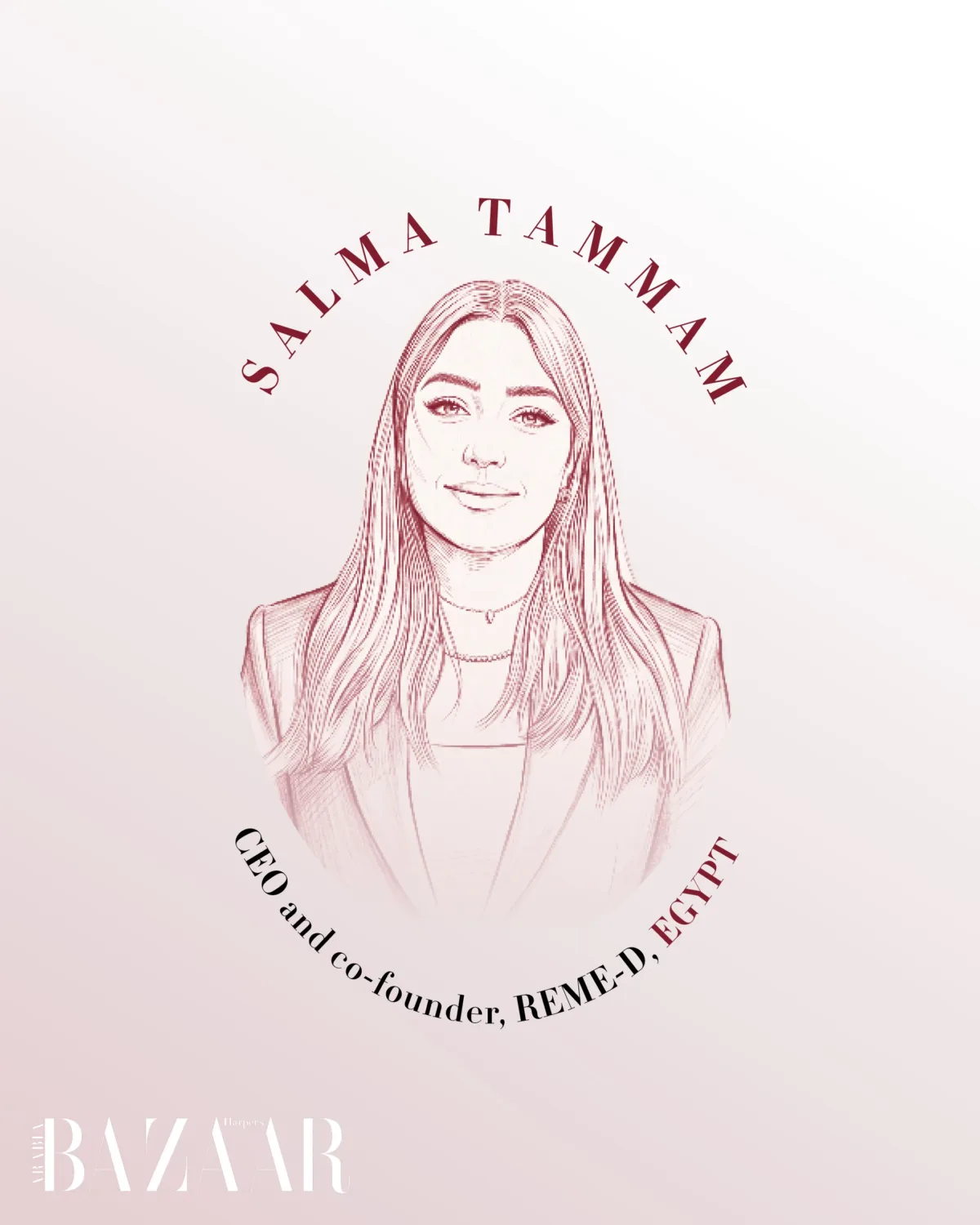
Salma Tammam
How did it feel to be nominated for the Cartier Women’s Initiative Awards?
It felt both surreal and deeply grounding at the same time. Being nominated as a Cartier Women’s Initiative fellow is an enormous honour. But for me it was also a moment of quiet validation of the hard, unglamorous work our team has been doing in our research labs, our factory and with our partners in labs and hospitals.
What did this recognition mean to you?
Professionally, it puts a powerful spotlight on Reme-D’s mission: that high-quality molecular diagnostics should not be a luxury reserved for wealthy health systems. For me personally, being nominated felt like standing on stage not just as Salma, but as a female Arab scientist from the Middle East and Africa carrying many unseen stories with me. It was a powerful moment to say to the world: we are not only patients and markets, we are scientists, innovators and problem solvers in our own right. There is deep pride in showing that our labs, our universities and our teams can produce world-class science that directly answers the challenges our own communities face. For me, this nomination is proof that a woman from Cairo, with a team built in Africa and the Middle East, can shape the global conversation on diagnostics – not as a token voice, but as an equal.
What advice would you give to women who want to build something meaningful?
Start from a real problem you cannot un-see. Let frustration with an injustice or a gap – whether in healthcare, education, or your own community – be your compass. You do not need a perfect business plan on day one; you need a problem worth dedicating years of your life to.
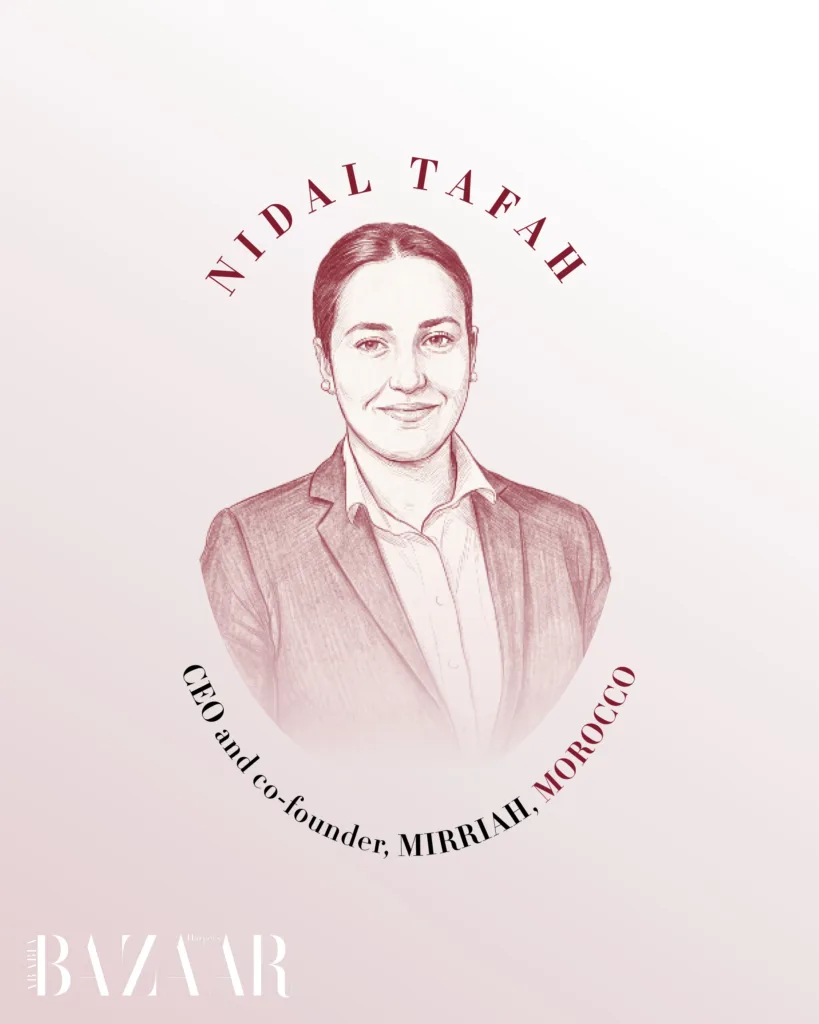
Nidal Tafah
How did it feel to be nominated for the Cartier Women’s Initiative Awards?
Honestly, it felt like vindication, but not for me. For every rural woman who was told her work didn’t count. For every young girl in a remote village who believes her potential is limited because of where she was born. When the nomination came, it meant the world to me because an entity as prestigious as the Cartier Women’s Initiative was finally looking where I’ve been looking for years: at the small farmer, at the forgotten rural women, at the rural youth with limited opportunities. At the people living at the edge of the map.
What did this recognition mean to you?
Personally, it meant my choices made sense. I left the desk, the city, the ‘safe’ career my parents dreamed of. I went back to the land. For years, the only validation I had was a farmer’s handshake at the end of an installation day. Cartier changed that; suddenly, work from forgotten villages was being celebrated on a global stage. Professionally, it gave MIRRIAH something money can’t buy: pan-African credibility. When a female founder from rural Morocco, working with small communities, walks into a boardroom with Cartier behind her; the room listens differently. And that changes everything.
How will you spend the grant funds?
Expansion beyond Morocco. We’ve proven the model here. The grant will primarily fund some of our pilots in nearby countries. It also funds the training of a new generation of rural youth, so the model is locally-rooted from day one. We don’t come to Africa with solutions from the outside. Africa solves Africa’s problems, with African talent.
Vriko Yu

How did it feel to be nominated for the Cartier Women’s Initiative Awards?
It felt really meaningful. We’d been focused on proving our solutions work in the oceans, so to have that recognised at this level was validation that the work resonates beyond what we could see from where we stood. But what stood out most was the community: being in a room with other female founders solving complex, high-stakes problems with real-world impact. That shift – from isolation to connection – mattered more than I expected.
As a female entrepreneur working on environmental solutions, what challenges have you faced and how have you overcome them?
The biggest one isn’t gender-specific, but it shows up differently: being underestimated. When you’re a young woman pitching science-based solutions to marine degradation, people assume you’re running a passion project rather than a scalable business. I’ve learned to lead with data, deliver faster than promised and let the work speak. We also operate in male-dominated, high-stakes sectors – construction, maritime, energy, utilities – where credibility is earned through execution, not credentials. That’s shaped how we show up: results first, always.
What keeps you motivated in the face of environmental challenges?
Focusing on what we can actually see and measure helps a lot. I’ve seen the degradation first hand – reefs I used to dive that are now rubble. And now I’m seeing the reverse: ecosystems rebuilding on structures we designed, biodiversity returning to sites that were barren. That shift, backed with data, is what keeps me going.
Lead Image Credit: Salma Tammam
Images Produced Using AI
From the Harper’s Bazaar Arabia May 2026 issue