
Built Memory: The Chedi Al Bait’s Living Heritage Retreat Reminds Us Of Sharjah’s Historic Charms
In the emirate’s historic heart, The Chedi Al Bait, Sharjah and its exclusive extension The Serai Wing, Bait Khalid Bin Ibrahim, give heritage a distinctly contemporary expression
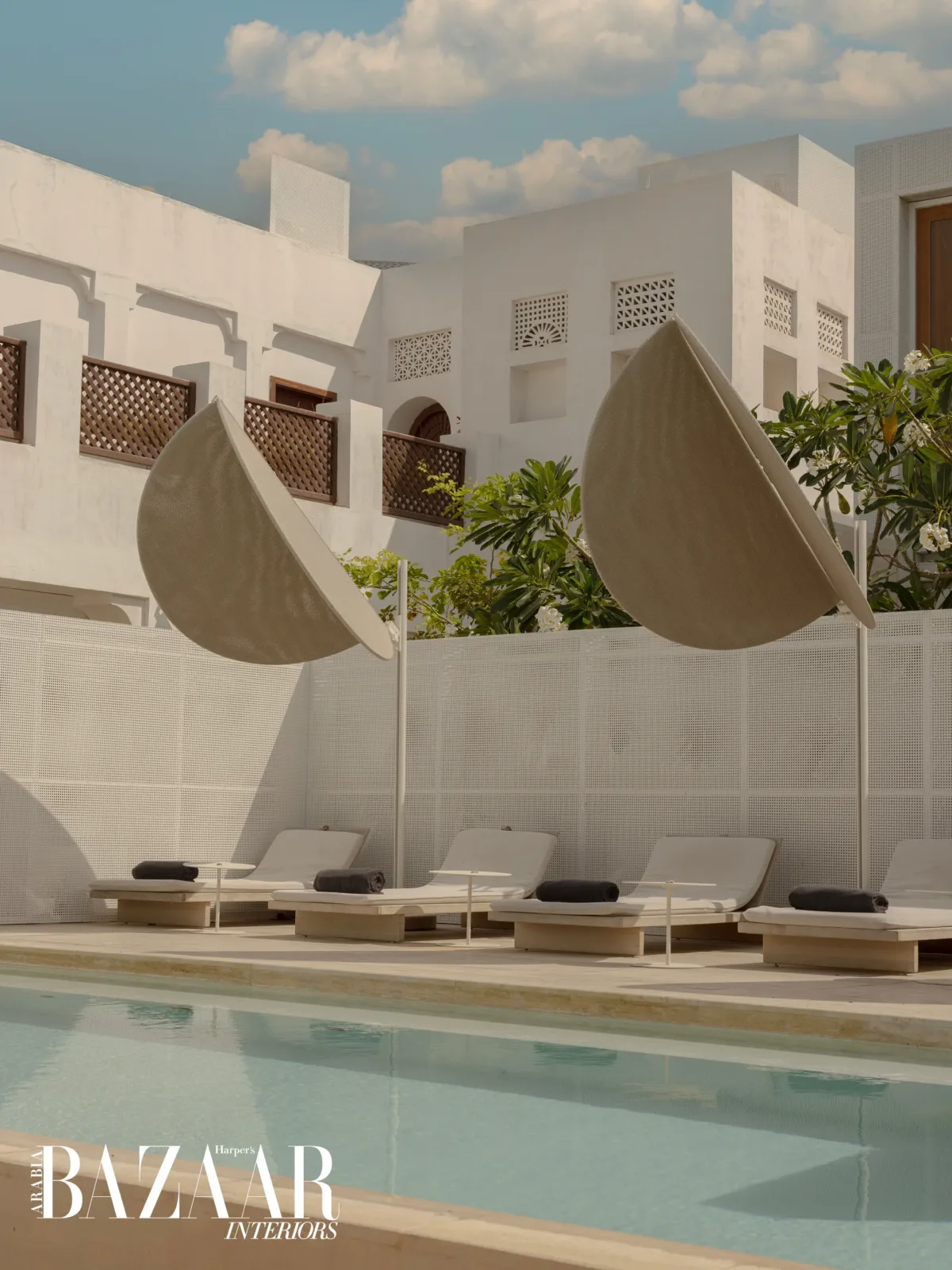
There are hotels that occupy a historic setting, and then there are those that feel as though they have emerged organically from it. In the heart of Sharjah, The Chedi Al Bait, Sharjah belongs firmly to the latter category. Set among narrow lanes, shaded courtyards and restored residences, the 65-key heritage hotel, alongside its expansion, The Serai Wing, Bait Khalid Bin Ibrahim, offers a considered interpretation of old Sharjah – one in which architectural memory is treated as the foundation for contemporary hospitality.
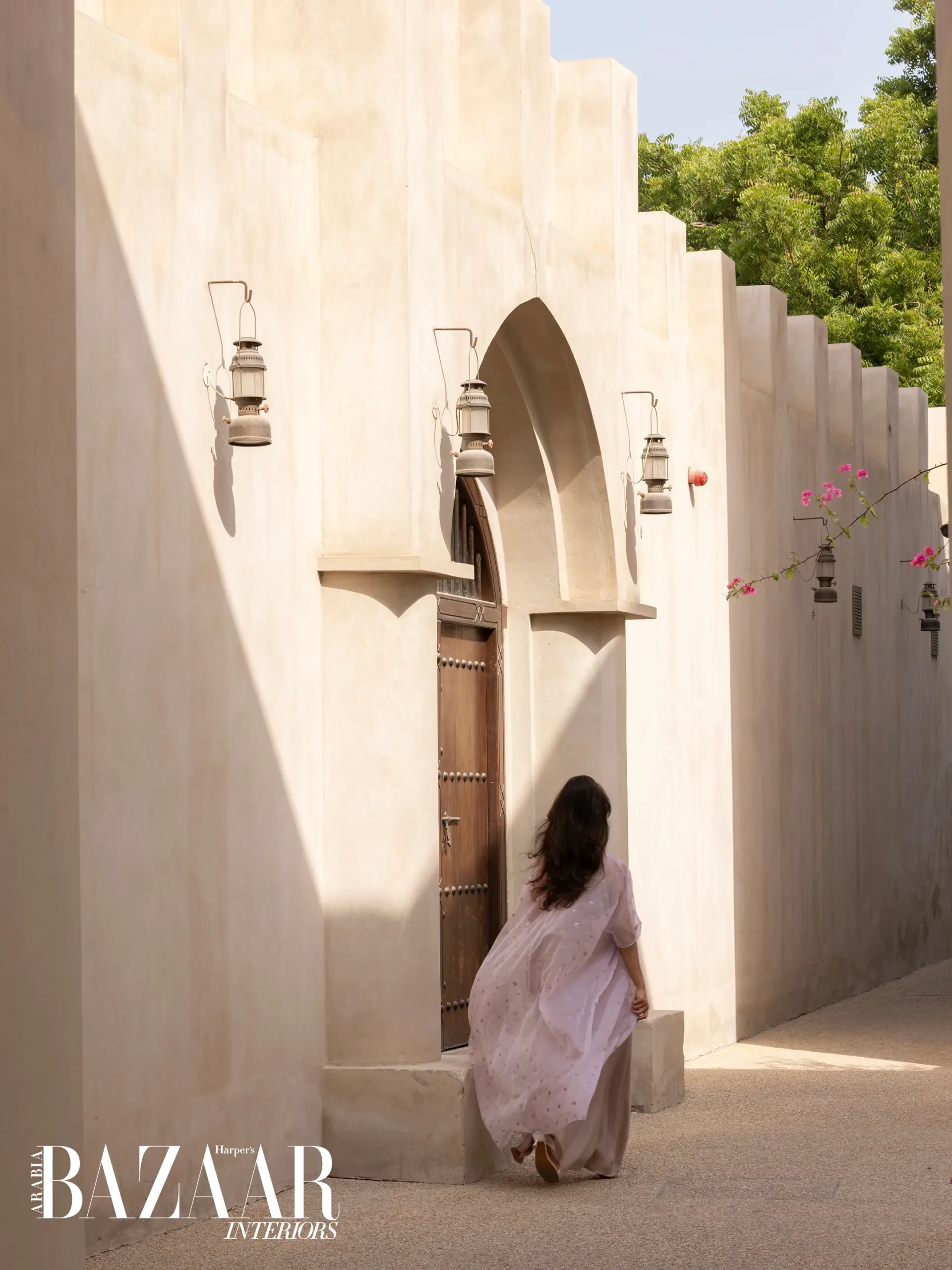
Even its name is telling. Al Bait means ‘the home’ in Arabic, an apt description for a property that feels less like a conventional hotel than a neighbourhood of residences, gathering spaces and courtyards. Seven heritage houses, once occupied by prominent local families, have been brought together with sensitively designed new structures, following the original urban grain of the district: low-rise buildings, intimate sikkas, internal courtyards and transitional spaces that once allowed domestic life and community interaction to coexist.
Rather than entering a singular lobby and moving vertically through a typical hotel, guests discover the property gradually and naturally, moving through its network of spaces as they might through a traditional Emirati neighbourhood. Architecture becomes an experience of sequence: an opening, a shaded passage, a courtyard, a room. It is a spatial language rooted in privacy and inward-facing domestic life.
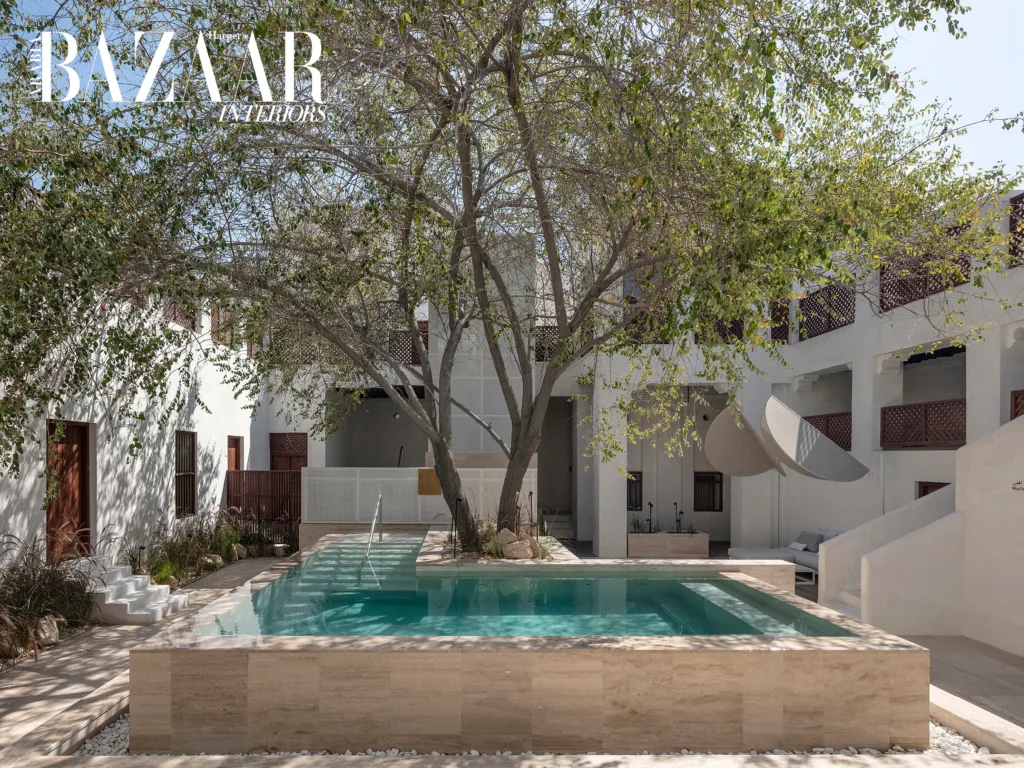
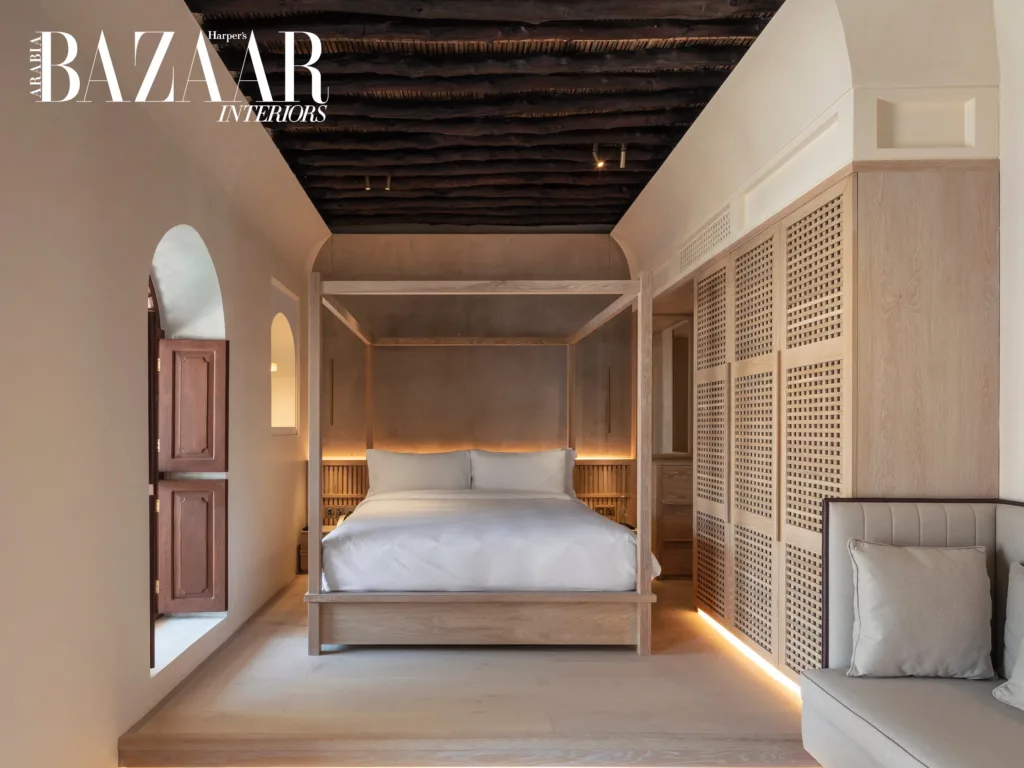
Inside, the design strikes an equally measured balance. Traditional Arabic influences are paired with The Chedi’s restrained minimalism, with textured walls, carved timber, shaded openings and handcrafted details set against a muted natural palette. Contemporary furniture and modern comforts are introduced without overwhelming the historic fabric. Rooms open towards green, water-filled courtyards, reinforcing the sense of retreat and preserving the inward-looking character that defined traditional Emirati homes.
At the centre of this story is the legacy of the Al Midfa family, prominent merchants whose influence extended into Sharjah’s commercial, intellectual and cultural life. Ibrahim Bin Mohammed Al Midfa, a pioneering journalist and cultural figure, launched the UAE’s first-ever newspaper, Oman, and was known for welcoming intellectuals into his majlis. Above this historic gathering place rises one of the property’s most distinctive architectural features: a circular barjeel, or wind tower. Unlike the more familiar square wind towers found across the region, this is the UAE’s only surviving circular example, historically designed to capture prevailing breezes and channel cooler air into the rooms below.
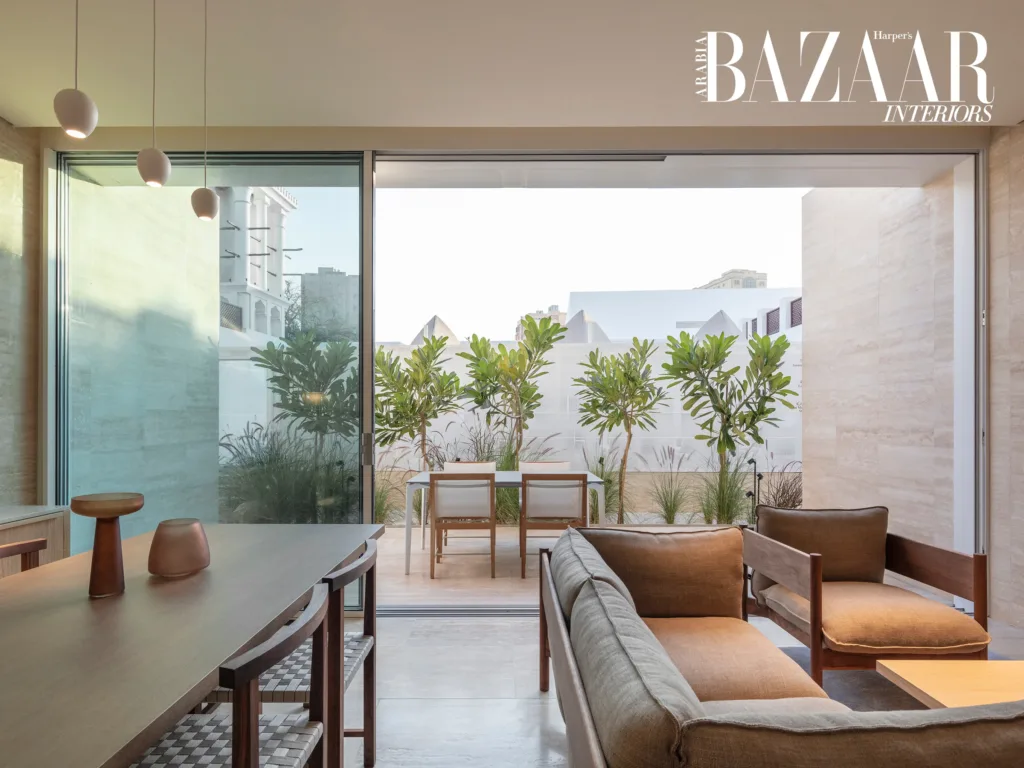
If The Chedi Al Bait, Sharjah interprets the character of an entire historic neighbourhood, its exclusive extension, The Serai Wing, Bait Khalid Bin Ibrahim, takes a more intimate approach to adaptive reuse. Created from two family homes dating to the 1950s, each containing six rooms, the residences once belonged to renowned pearl merchant Khalid Bin Ibrahim. Here, the architecture makes no attempt to erase the passage of time. Instead, old and new are allowed to sit visibly alongside one another.
Original coral-and-lime-mortar walls, feature staircases and diamond-lattice teak screens have been retained, while contemporary interventions arrive through travertine surfaces, perforated white-metal screens and precisely integrated architectural lighting. High ceilings and exposed timber beams sit alongside historic stonework and calm neutral tones, creating interiors that feel both grounded and distinctly current.
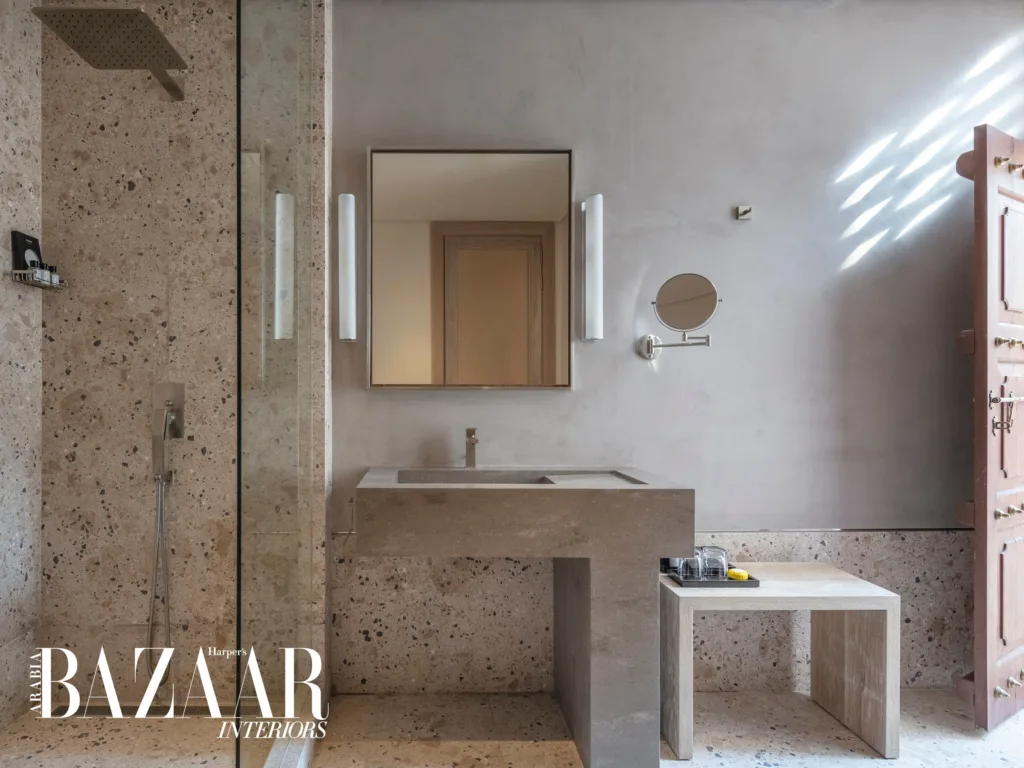
Perhaps most importantly, the two homes retain the courtyard as the social and spatial heart of the residence. Each centres on a private pool and outdoor gathering area, preserving a fundamental principle of the original architecture while giving it new relevance.
Together, The Chedi Al Bait, Sharjah and The Serai Wing offer two complementary readings of the same idea: that luxury and heritage need not exist in opposition. One recreates the atmosphere and social fabric of historic Sharjah on a neighbourhood scale; the other allows the layers of two individual family homes to remain legible. Both demonstrate a more nuanced approach to restoration, one where the objective is not to make history look new, but to give it a future.
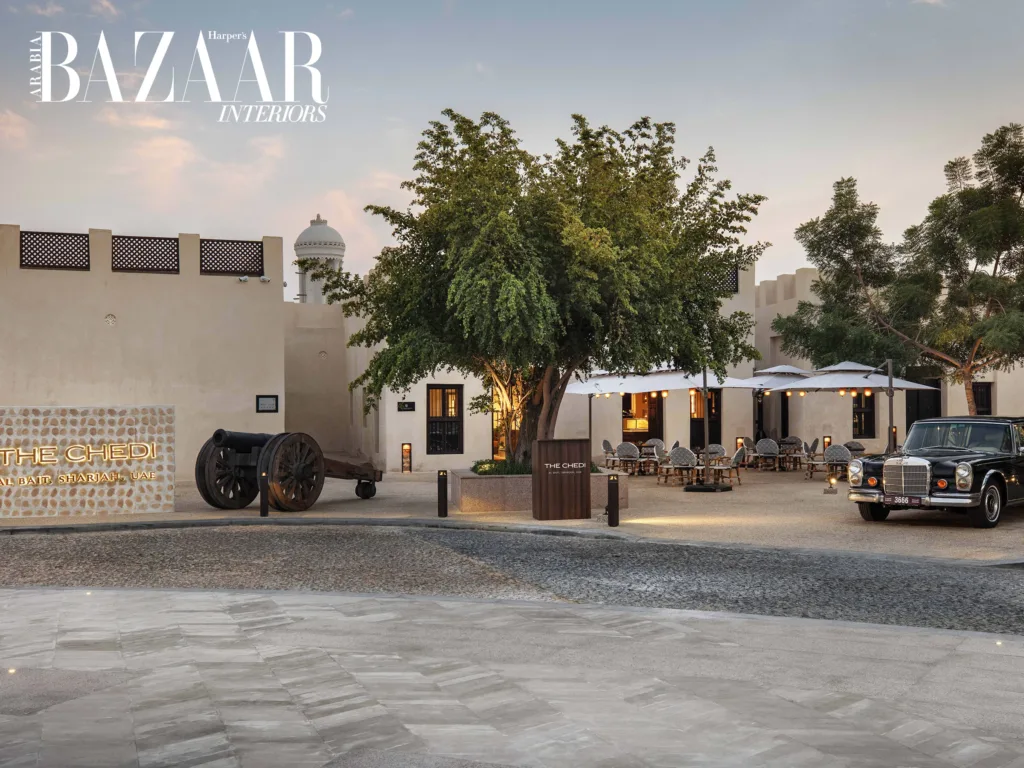
That philosophy extends beyond the hotel itself. As part of the wider Heart of Sharjah regeneration initiative, the property sits within an effort to recover the district’s architecture, streets and cultural life while introducing new artistic, culinary and visitor experiences.
The Chedi Al Bait, Sharjah offers something quieter: a luxury experience shaped by what was already there. Perhaps its most compelling design statement is not the addition of something new, but the decision to let the old remain visible, while inviting contemporary life to unfold around it.
For more information, visit ghmhotels.com; shurooq.gov.ae