
The Fabric Of Life: Discover the Indian-Saudi Collaboration Celebrating Haute Handicrafts
Deebaj unites two powerhouse
brands, blending Saudi inspiration
with Indian craftmanship in a
show of creative and cultural unity
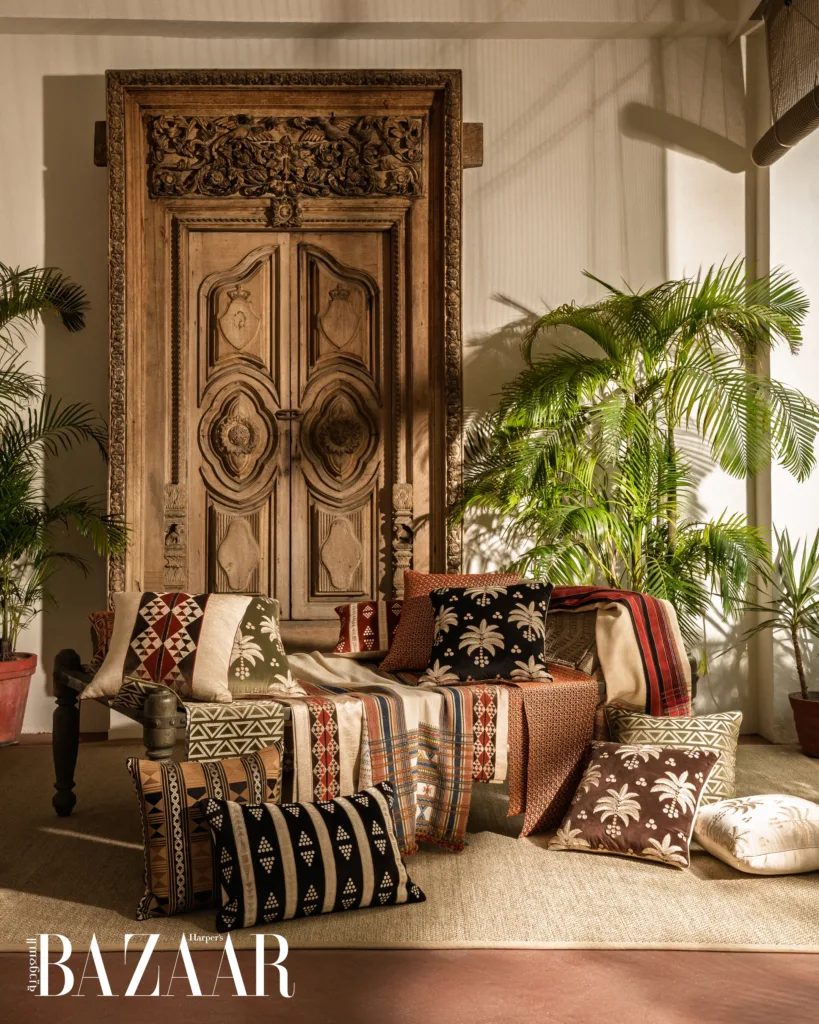
A tribute to the nation’s design which marked 2025 as the Saudi Year of Handicrafts, the Deebaj collection is a celebration of the cultural connection between India and Saudi Arabia, and takes its name from the Arabic word for a luxurious embroidered silk garment. The 45-piece original design drop of cushions and curtains is a collaborative effort between Indian home décor brand Sarita Handa, and Kristina Zanic Consultants.
“People today want design with meaning, things that feel authentic and tell a story rather than just follow a trend,” says Kristina Zanic, CEO of her eponymous Riyadh-based, interior design firm. “Collaborations like Deebaj reflect that shift and is about bridging cultures – combining Saudi inspiration with Indian craftsmanship to create something truly meaningful.”
Sarita Handa, the unofficial authority on textiles in India, is no stranger to the appeal of traditional crafts and contemporary design. The cultural similarities that exist between India and the Arab world became the connecting point, as she points out. “Indian textiles and embroideries were, in fact, used as currency in global trading by the sea-faring Arab merchants, who brought Indian textiles to Indonesia, Bali, China and Japan in exchange for spices, coffee and silks.”
“Embroidery is the common thread between Saudi Arabia and India in the Deebaj collection. It exemplifies the richness and uniqueness of handcrafted embroidery combined with the singular cultural language of Najdi symbolism and culture,” explains Sarita.
Translating Saudi cultural motifs – reflecting Najdi and Salmani architecture, Islamic art, Sadu weaving and the organic beauty of desert flora, each element is carefully planned. Saudi designer Amani Al Ibrahim at Kristina Zanic Consultants took creative lead, ensuring every element and technique paid tribute to the symbols that she witnessed while growing up.
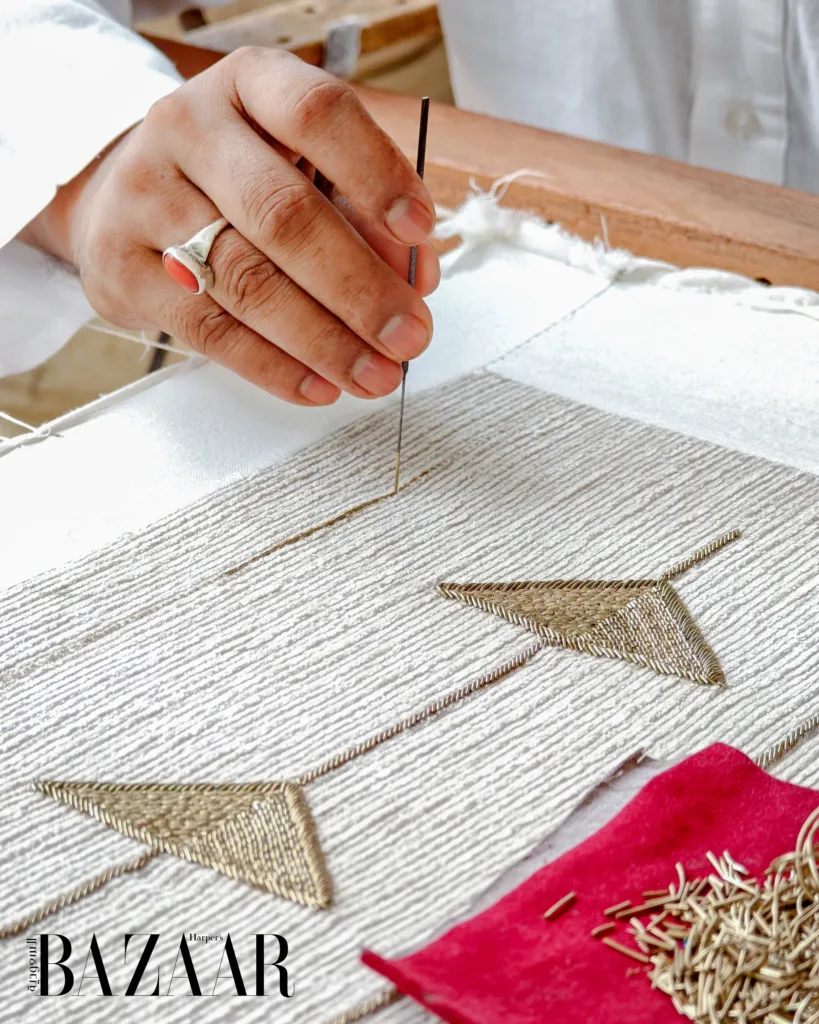
“We worked extensively with various hand embroidery techniques that reflect the craft traditions passed down by Saudi women for generations. I grew up surrounded by these crafts, seeing local women embroider garments and weave textiles by hand,” Amani says. “These elements are not just decorative – they carry so much meaning and identity. With Deebaj, we wanted to translate that spirit into fabric, creating something modern but still deeply connected to our roots. This personal connection made the project especially meaningful,” Amani adds.

“The collection shows how traditional craft and contemporary design can coexist, creating something that feels emotionally resonant and relevant for today,” says Kristina. While the collection took four months to develop, each artisan spent eight hours finishing the intricate hand embroidery on each piece. “There’s a real appreciation for handmade work and cultural references that make a space feel personal,” Kristina shares, and it is evident that the collection speaks to the heart of those seeking tradition, identity and contemporary designs within their home.
Imagery Supplied
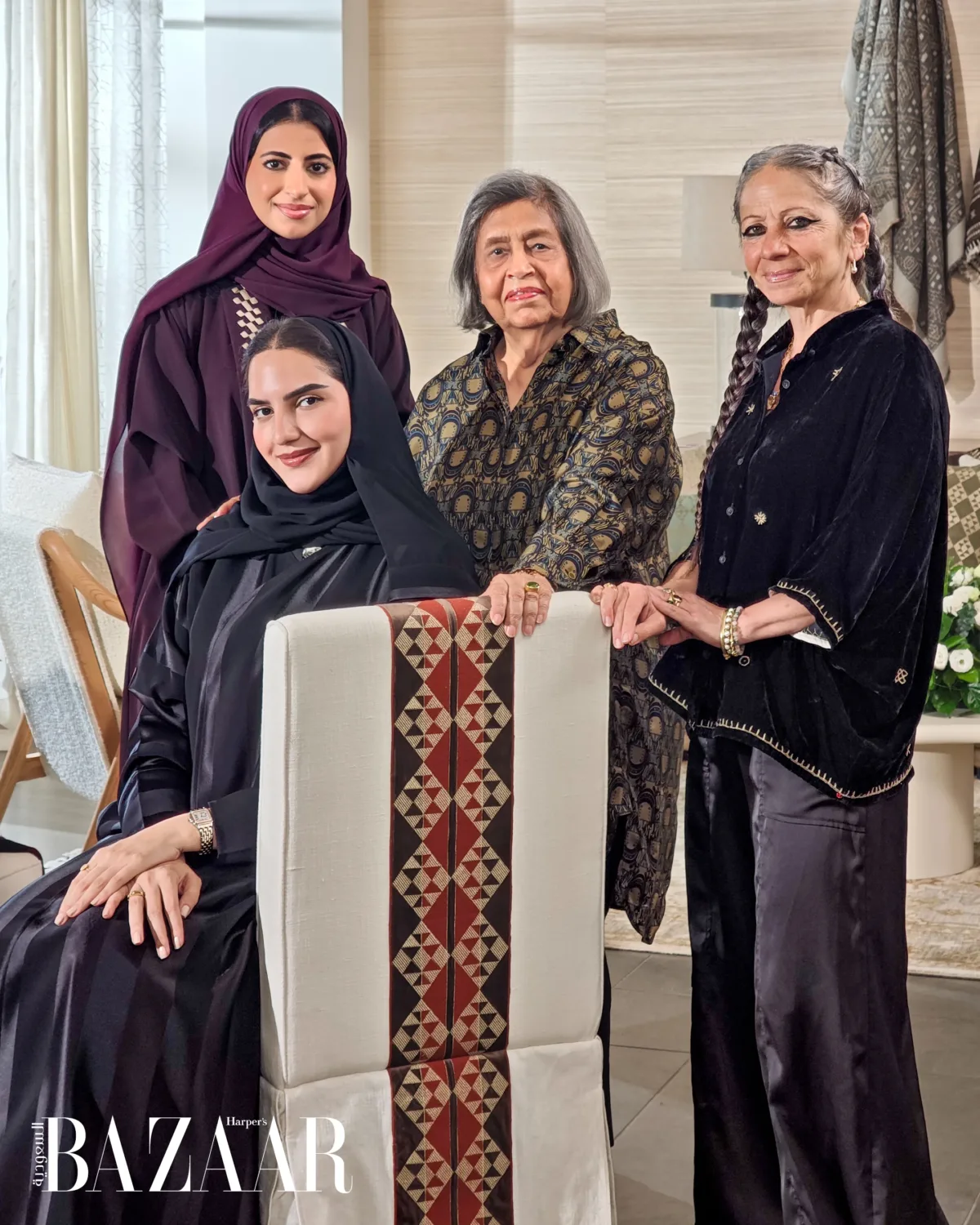
Lead Image Credits: Sarita Handa (middle) with Kristina Zanic Consultant’s Amani Al Ibrahim, Marie-Joie Hughes and Kristina Zanic.
From the Harper’s Bazaar Saudi Spring 2026 issue