
Why Neuroarchitecture Is The Latest Interiors Trend
At E+A Studio, architecture meets neuroscience. Founder Evgeniia Molchanova pioneers neuroarchitecture in Dubai, designing emotionally intelligent spaces that soothe the nervous system, inspire connection, and promote wellbeing through science-backed design
In a world where much of our environment is constructed, designed, and curated, few architectural practices pause to ask a critical question: How does a space make you feel? Evgeniia Molchanova, founder and architect of E+A Studio, believes this question is central to the future of design. With a unique blend of architectural expertise and fine arts sensitivity, Molchanova has dedicated her career to neuroarchitecture, the innovative discipline that fuses neuroscience with architectural design to create spaces that support emotional wellbeing, shape behaviour, and enhance our connection to the world around us.

At E+A, “we don’t just design spaces—we design how people feel inside them,” Molchanova explains. Her journey began with a deep curiosity about why certain places anchor us, inspire us, or make us feel at ease, while others quietly drain our energy or stir unease. “I was fortunate to grow up exploring various art forms, drawing, sculpture, and performance, which naturally developed my emotional awareness,” she says. This emotional sensitivity, she realised, was crucial to understanding the ‘invisible’ qualities of space: its energy, atmosphere, and how it influences people subconsciously.
Surprisingly, when Molchanova entered architecture school, she found the emotional and behavioural dimensions of design were often neglected. The curriculum emphasised structure, proportion, and aesthetics but rarely addressed how architecture affects mental states or nervous system responses. This gap propelled her into the field of neuroarchitecture, which combines psychology, physiology, sociology, and cognitive science to explore the powerful ways environments shape human experience.
“Neuroarchitecture gives us a language and a scientific framework for what I had long felt intuitively,” Molchanova reflects. “It’s about more than how a space looks. It’s about how it influences mood, attention, stress levels, memory, and social connection.” In a world saturated with stimuli, environments are like the food we consume: they can nourish or deplete us. Unfortunately, many spaces function like ‘fast food’, designed for visual appeal but stripped of deeper psychological nutrients, leading to overstimulation or mental dulling.
Design, Molchanova emphasises, is never passive. It either supports our biology or disrupts it. “Our bodies and minds are in constant conversation with the space around us. We scan for safety, openness, rhythm, and balance, often unconsciously,” she explains. Poorly designed environments elevate stress, reduce focus, and increase fatigue, with effects spilling over into how we work, rest, and relate to others. This understanding places emotional and neurological intelligence at the heart of architectural responsibility.
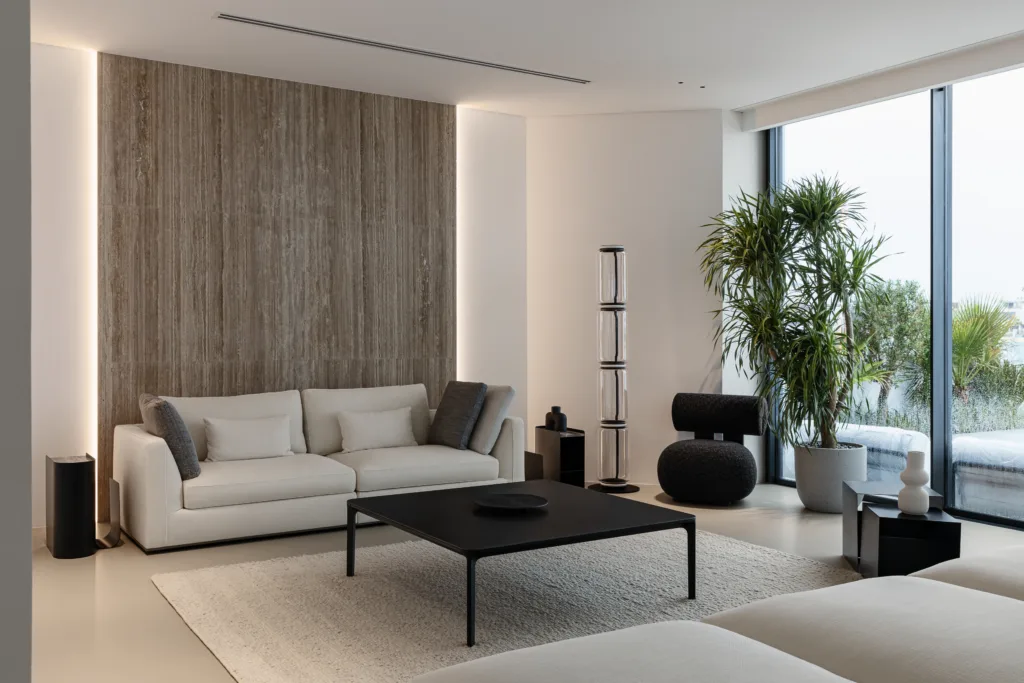
Molchanova also points out that her design process starts with intent rather than form. “We ask: what emotional and behavioural impact do we want this space to have? Do we want people to relax or energise? To linger or move quickly? To connect or find solitude?” This clarity informs everything from the sensory palette to spatial layout. The studio studies end-users carefully, co-develops goals with clients, and designs subtle sensory cues such as lighting, textures, and spatial rhythms to support the desired experience.
This approach is not linear but iterative. “We gather feedback, observe how people behave post-occupancy, and stay flexible. Adjustments and refinements are part of the process,” says Molchanova. The final space might appear conventionally beautiful, but something deeper is at work: an invisible shift in how the nervous system settles, or how the mind clears. “That’s when we know the space is truly doing its job.”
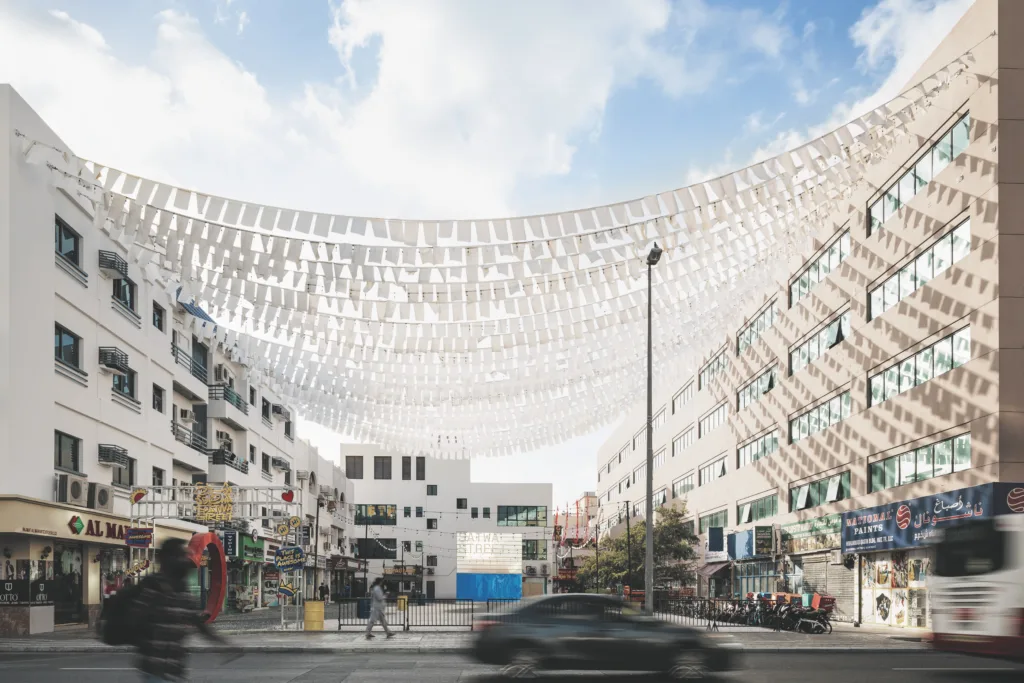
Several projects illustrate E+A’s philosophy in action. The Satwa Streets initiative transformed a bustling urban area lacking calm into a series of sheltered pockets with seating and greenery. These micro-interventions create ‘affordances’, spatial invitations to pause, breathe, and connect. Research confirms that perceived safety encourages social openness and belonging, and Molchanova often observes people using these spaces exactly as intended, providing real-time validation of the design’s emotional impact.
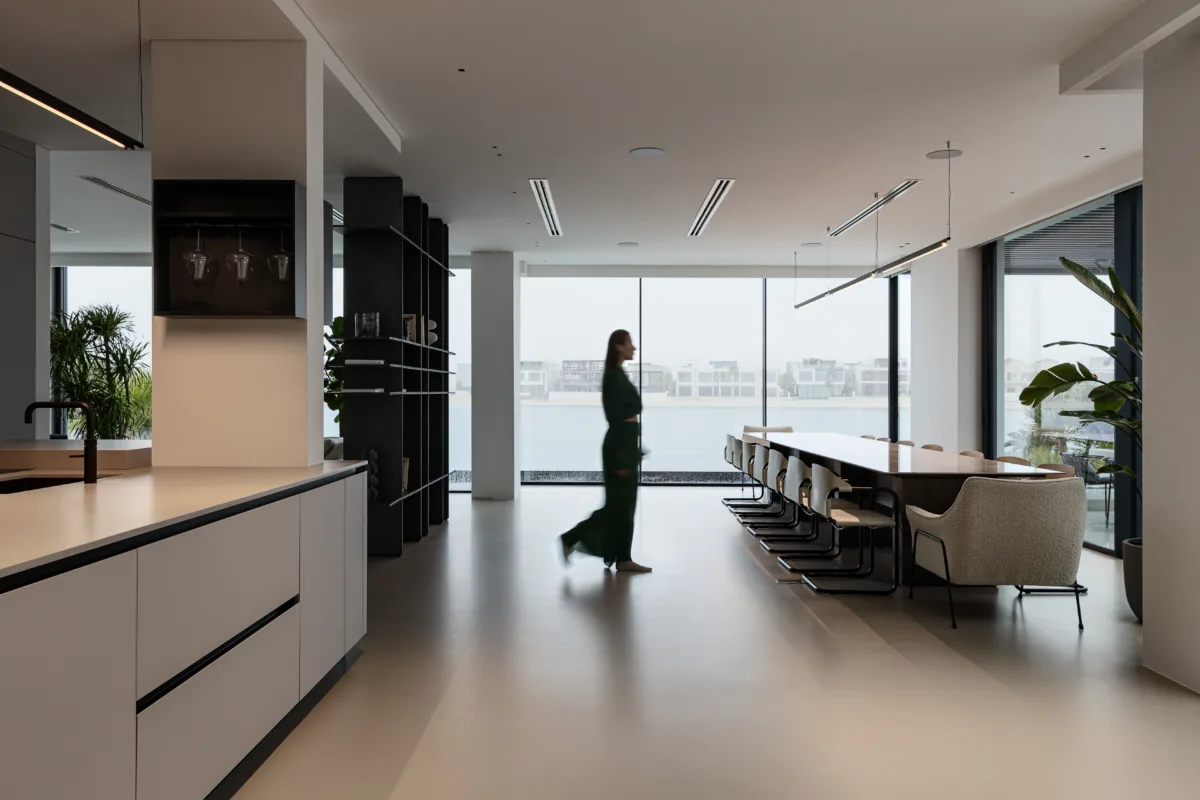
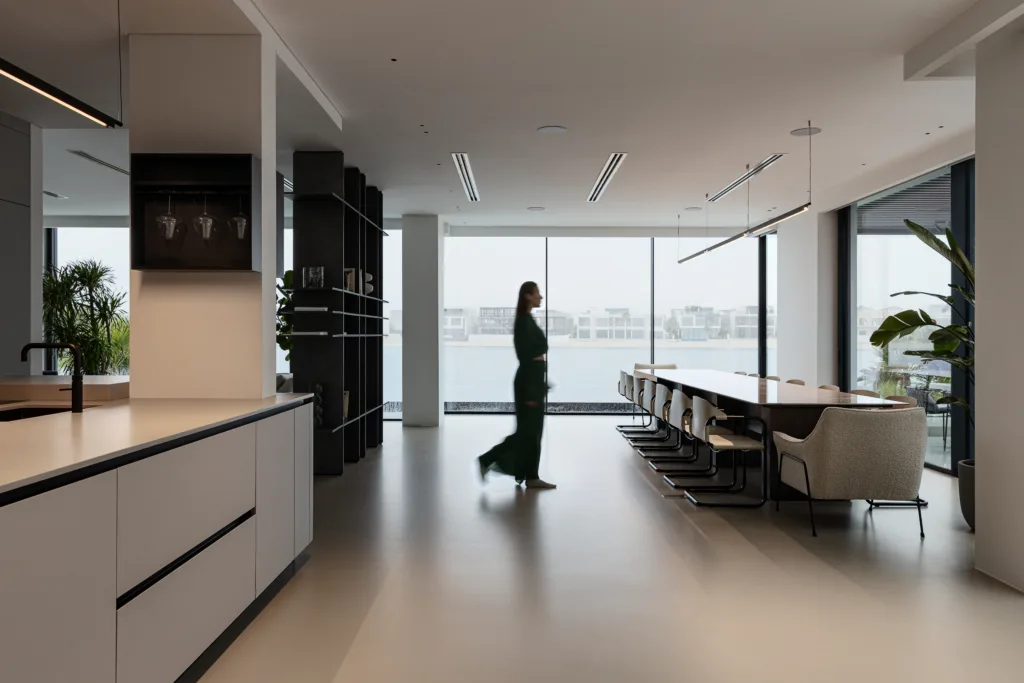
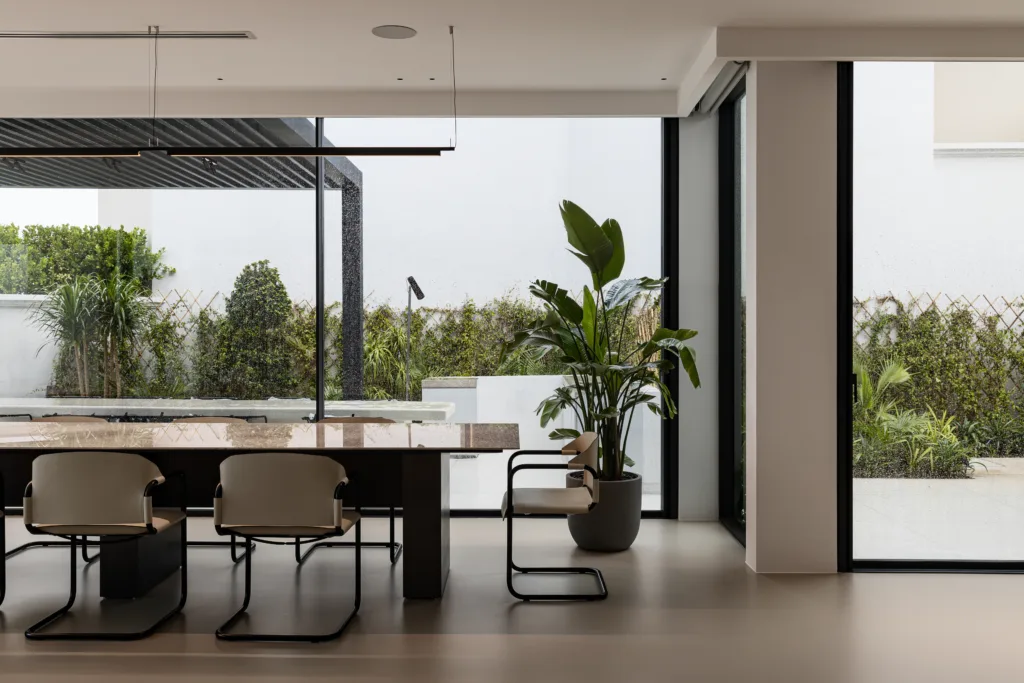
Meanwhile, the Palm Jumeirah Villa exemplifies spatial serenity and sensory restoration. The design gently guides the eye from the garden through the architecture toward the Gulf, employing natural materials, water features, and minimal visual noise to foster spaciousness not just in form but internally. “This home doesn’t perform; it holds. It soothes,” Molchanova says. “That was our intention from the very beginning.”
While neuroarchitecture is gaining traction globally, Molchanova acknowledges it is still emerging, especially in regions where fast urbanisation and industrial-scale construction dominate. “For decades, architecture focused on scale, speed, and visuals. Now we’re seeing the psychological costs—burnout, anxiety, emotional detachment,” she says. More people are waking up to the reality that space is never neutral. It either amplifies who we are or slowly erodes our wellbeing.
The practical benefits of neuroarchitecture are increasingly clear: it can boost focus and clarity in offices, accelerate healing in hospitals, foster community in public realms, and improve sleep and memory in homes. “It adds a measurable layer of impact beyond form and function,” Molchanova notes. “Good design uplifts quietly, while bad design wears us down over time.”
However, this approach also faces challenges. Awareness remains limited, with many unable to grasp how deeply space affects their brain states and biology. There’s a misconception that neuroscience-informed design is costly, yet when executed well, it often reduces waste and long-term expense through better upfront decisions. Methodologically, neuroarchitecture demands custom solutions tailored to each project’s unique users and context, which requires experience and flexibility. Real-world constraints, budgets, timelines, and urban density also shape the process.

Despite these hurdles, Molchanova is confident that emotional and neurological intelligence in design is essential, not optional. “When you understand the true cost of poorly designed environments, you realise this isn’t an extra, it’s foundational to human wellbeing.”
As E+A Studio continues to champion neuroarchitecture, it offers a vital reminder that at the end of the day architecture is not just about buildings. It’s about the invisible, transformative experience of feeling at home in the spaces we inhabit, spaces that hold us, inspire us, and help us thrive.
Imagery supplied