
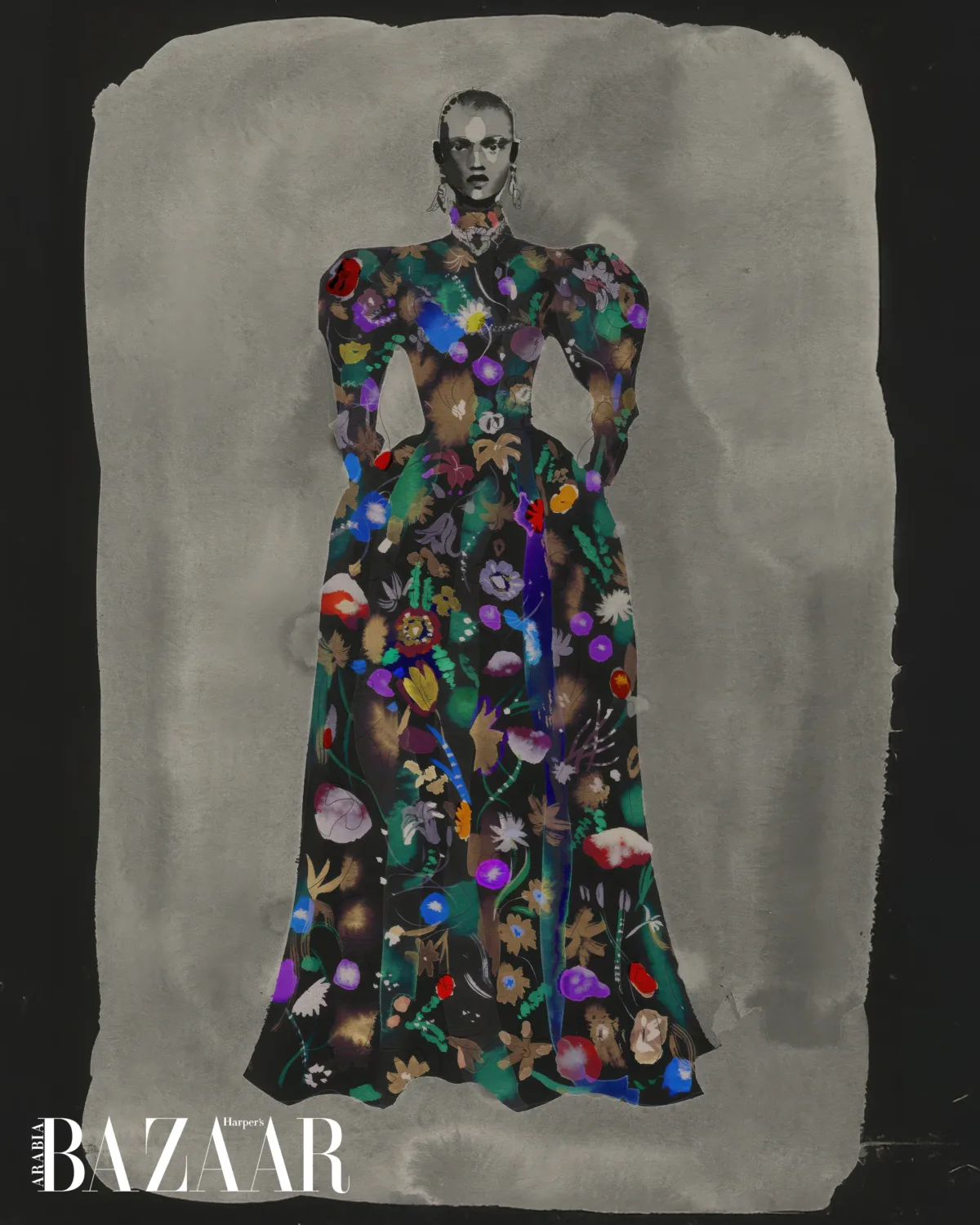
Details That Dance: How The S/S26 Collections Are Bringing Feathers And Fringe Back To The Fore
In a season that is increasingly interested in tactility and in craft that proves itself up close, S/S26 details are a quiet return to something fashion should never have abandoned. Glamour is not a static pose. It begins in the cut, it continues in the finish, and becomes real when the wearer steps into the room
If you watch a room long enough, you start to understand that glamour is rarely still. It arrives in fragments. A shimmer that crosses the floor before the wearer does. A tremor at the hemline when someone turns to greet a friend. The soft commotion of feathers as a sleeve brushes past a chair. Fashion, at its most persuasive, has always understood this. It is not only an image, it is an event.
S/S26 brings that truth back into focus. After a long stretch of silhouettes designed to read instantly, clean, controlled, perfectly legible from across the room, the season’s most telling gesture is movement. Not movement as chaos, not movement as performance, but movement as refinement. Kinetic finishes, fringe that behaves like punctuation, feathers used with restraint, trims that respond to air, light, and the simple fact of the body existing in time.
It feels, in a way, like a return to a lost luxury. The kind you cannot screenshot properly. The kind that only makes complete sense when you see it lived.
This season, the idea surfaced repeatedly as a mood rather than a gimmick, texture that held its nerve in the hands of designers who understand that drama is most powerful when it does not beg for attention. The details do not read like party tricks. They read like control. A dress that looked almost calm until it moved, then suddenly the whole silhouette had a second life.
The real story is not simply that fringe and feathers are back (they never truly left). The story is that designers are now using them differently. Less costume, more intention. Less theatre, more rhythm.
This distinction matters in the Middle East because our relationship with evening dressing has always been about a certain kind of contained glamour. We do not need permission to dress well. We do not need the excuse of a carpet. We dress for dinners that become late nights, for weddings where elegance is not optional, for the subtle social choreography of arriving, greeting, sitting, standing, moving through rooms where the lighting is flattering and the expectations are quietly high.
We also dress for climate, for the contrast between bright streets and cooled interiors, for the way air conditioning makes fabric behave. In a region where the evening is often the real day, movement details are not just pretty, they are useful. They create impact without heaviness. They photograph beautifully without shouting. They add a sense of life to silhouettes that might otherwise feel too polite.
There is something deeply modern about choosing movement over overt display. A moving hemline does not scream status. It implies it. It suggests you have chosen something with construction, something with finish, something made to be experienced in person. It is the opposite of logo logic. It is luxury that performs in real time.
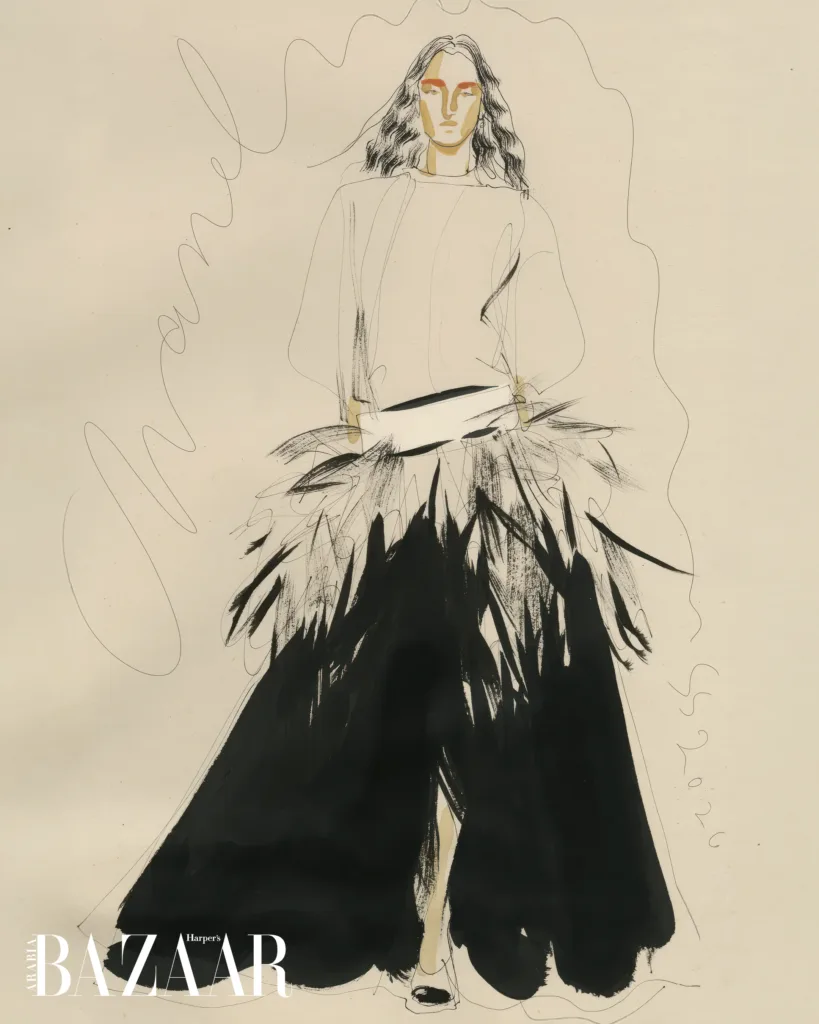
Think of fringe, for example, when it is done properly. Not the thin, flimsy stuff that reads like costume trim, but dense, deliberate fringe with weight and intention. It can make the simplest silhouette feel expensive, because it changes how the garment occupies space. A long dress becomes an atmosphere. A clean skirt becomes a story. The body is no longer only the body, it becomes the centre of a moving composition.
Feathers, too, when they are treated with taste, are less about flamboyance than about softness with authority. A feathered edge is a sensual detail, not because it reveals, but because it suggests touch. It is a texture that belongs close to the skin, even when it sits on top of fabric. In a season that is quietly obsessed with tactility, feathers are a perfect shorthand for intimacy.
The key – and this is where the edit becomes a critique – is restraint. Movement details have to be placed like a thought, not merely like a decoration. They cannot be everywhere.
The most compelling S/S26 movement looks are the ones that feel almost minimal until they move. That is the trick. The garment looks resolved in stillness. It has a strong silhouette, a clean line, an elegance that stands on its own. Then, only when the wearer steps forward, the detail comes alive. A shimmer of fringe at the hem, a feathered edge at the neckline, a tasselled sleeve that responds to gesture. It is an effect you cannot fake, and you cannot overproduce.
Movement also changes the psychology of dressing. A garment that moves changes how you move. It makes you more conscious, in a pleasurable way. You become aware of your pace, your posture, the way you enter a room. You begin to inhabit the look rather than simply wear it. That is the difference between being dressed and being styled.

Where our social evenings are often long and layered, that psychological shift matters. Clothes cannot be one-note. They have to last. A dress that is dramatic only for the first fifteen minutes is not truly glamorous. A look that becomes more interesting as the night goes on, because the detail keeps catching light, keeps responding, keeps living, that is the kind of glamour that earns its place.
It is worth saying, too, that movement is a kind of modesty, in the most modern sense of the word. It creates allure without requiring exposure. A feathered cuff, a fringe hem, a kinetic trim, these details do not ask for skin. They ask for attention. They reward the eye without resorting to obviousness. In a region that has moved beyond simplistic ideas of modest versus not, this feels like the most intelligent middle ground, sensual without being literal, dramatic without being crude.
For March, in particular, movement reads beautifully because it suits the rhythm of the month. The evenings tend to be the focus. The social mood is softer, more intimate, more intentional. This is not the season for dressing that feels aggressive. It is the season for dressing that feels luminous. Movement details deliver luminosity in a way sequins cannot, because they are less blunt. They flicker rather than flash. They create a sense of quiet celebration. A long sleeve silhouette with a fringe hem, for example, can feel almost devotional in its elegance. It moves when you walk, it responds when you sit, it comes alive when you rise again. A cape or wrap with feathered edging can feel like modern eveningwear, especially in the kind of soft lighting where everything becomes slightly cinematic. The detail does not need to be large. In fact, the smaller it is, the more expensive it can feel.
After Ramadan, the energy shifts, and the movement trend becomes something else again. Wedding season returns with its particular pressures and pleasures. Dressing for weddings in the Middle East is not simply dressing for a party, it is dressing within a culture of taste where everyone understands the difference between impressive and elegant. Movement details are a clever solution here. They create the sense of ‘special’ without relying on heavy embellishment or obvious sparkle. They photograph beautifully, they create dynamism, they hold up in rooms where everyone is dressed.
There is a reason a moving hemline is so persuasive on a wedding guest. It creates a moment without demanding one. It allows you to look extraordinary while still feeling like yourself.
The same is true for events, openings, dinners, the recurring social rituals that fill a spring calendar. A dress with a kinetic finish is not a costume. It is a mood. It is a way of signalling that you understand the occasion, but you are not trying to dominate it. That kind of confidence reads as the highest form of glamour.
From a market perspective, this is also a trend that encourages longevity. A movement piece does not date as quickly as a graphic trend because it relies on technique, not on novelty. Fringe and feather are ancient ideas in fashion terms, but they remain fresh because they are about physics, not marketing. They are about the relationship between fabric and body, and that relationship does not go out of style. What changes is the attitude. S/S26’s attitude is disciplined. The movement is not chaotic. It is placed, curated and controlled.
There is a particular kind of elegance in allowing one element to do the work. Movement interacts with jewellery in a way that feels very now. A fringe hem and a strong bracelet can look extraordinary together because they both respond to light, but in different registers. A feathered neckline can make a diamond earring feel less formal, more alive. This is where the Gulf has a natural advantage. Our wardrobes are built for jewellery. We understand the balance between ornament and restraint. We know how to let a piece speak, then stop.
If you want the most expensive expression of this trend, look for garments where the movement detail feels integrated, not attached. It should not look like an afterthought. It should look like it belongs to the garment’s architecture. These details read as design.
The other marker of true luxury is how the piece looks in stillness. A movement garment must be beautiful when you are not moving. It must hang correctly. It must feel resolved. If it collapses into mess when still, it will look less like glamour and more like styling effort. The best pieces hold their shape, then reward movement as an additional layer. They do not rely on movement to be convincing.
That is why this trend feels like a taste test. It is not difficult to buy fringe. It is difficult to buy fringe that looks delicious. It is easy to add feathers. It is harder to place them in a way that feels modern rather than nostalgic. Choose carefully as the most elegant S/S26 pieces will be the ones that do not ask you to perform. They simply move when you do.
Lead Image Credits: Gucci
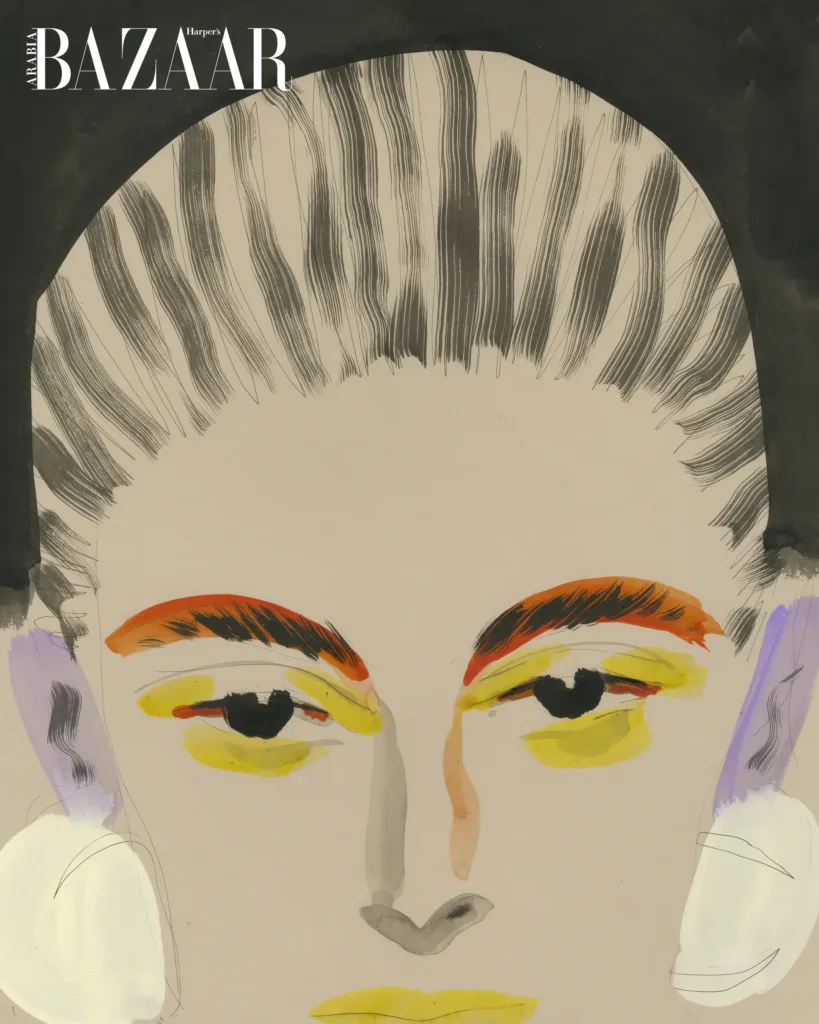
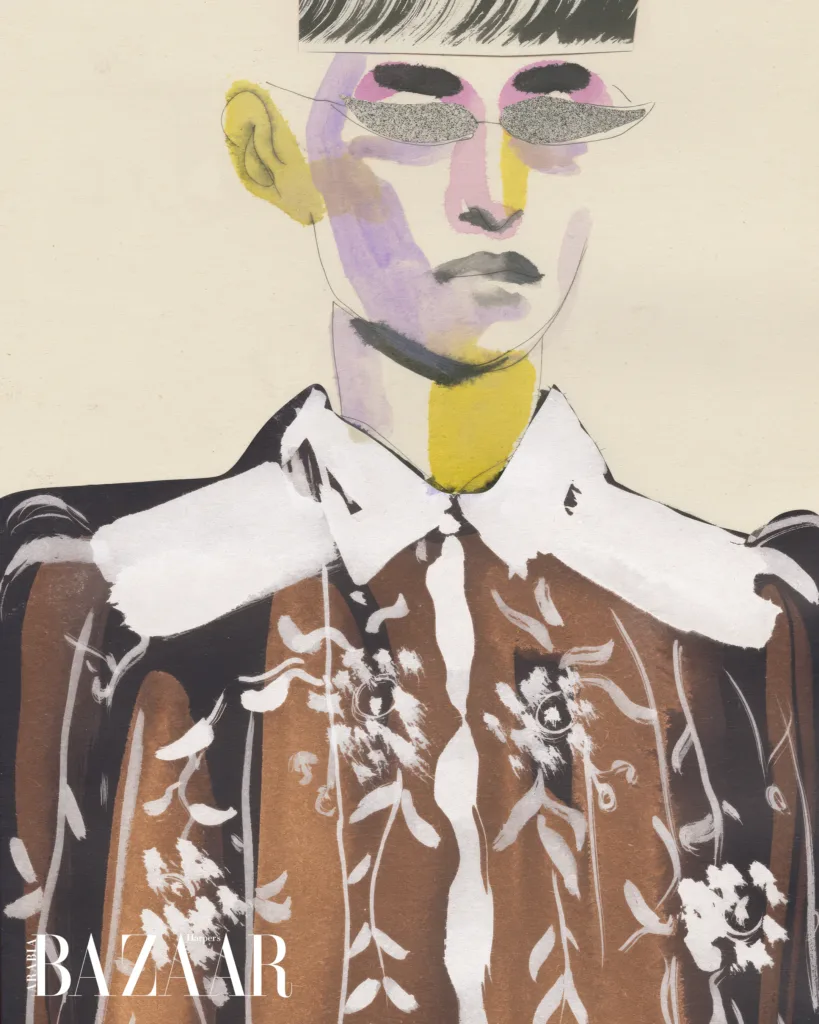
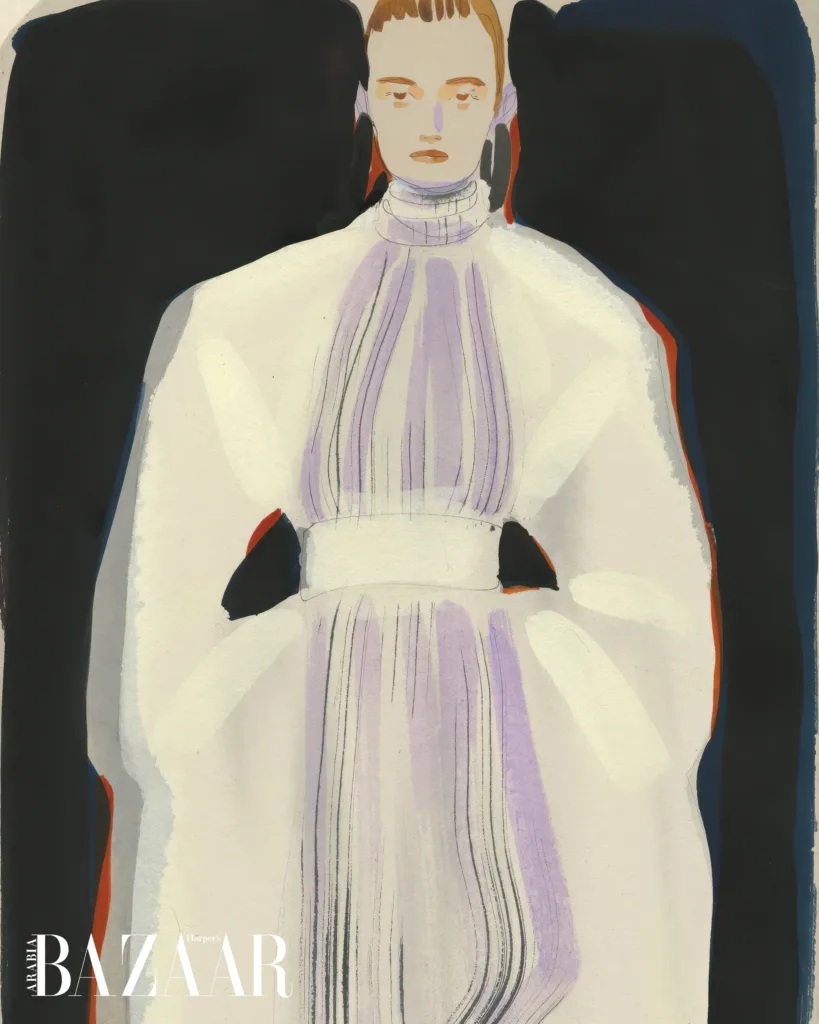
Illustrations by Cecilia Carlstedt
Note: This content was created and printed prior to February 28, 2026
From the Harper’s Bazaar Arabia March 2026 issue