

Fifty Years Of Youssra: The Art Of Thriving Half A Century In The Spotlight
For fifty years, Youssra has captivated the Arab world—now, the queen of Egyptian cinema looks back on a legacy shaped by courage, grace, and unstoppable glamour
In her hotel room, where she’s getting ready for another day at the Gouna Film Festival (GFF), Youssra sits in front of the mirror. A makeup artist leans in, brushes moving quickly across her face. Two hairstylists tug at her hair, her assistant flits in and out, and her phone does not stop ringing. But she is calm in the chair, the ritual of preparation one she has repeated for decades.
With more than a hundred films, countless television series, and songs that have become the soundtrack to pretty much everything, Youssra is Egypt’s – and the Arab world’s – enduring icon. GFF had been her territory from the very beginning; its unofficial queen. This year, though, feels different: the festival is celebrating fifty years of her career with a museum-style exhibition in collaboration with Instagram.
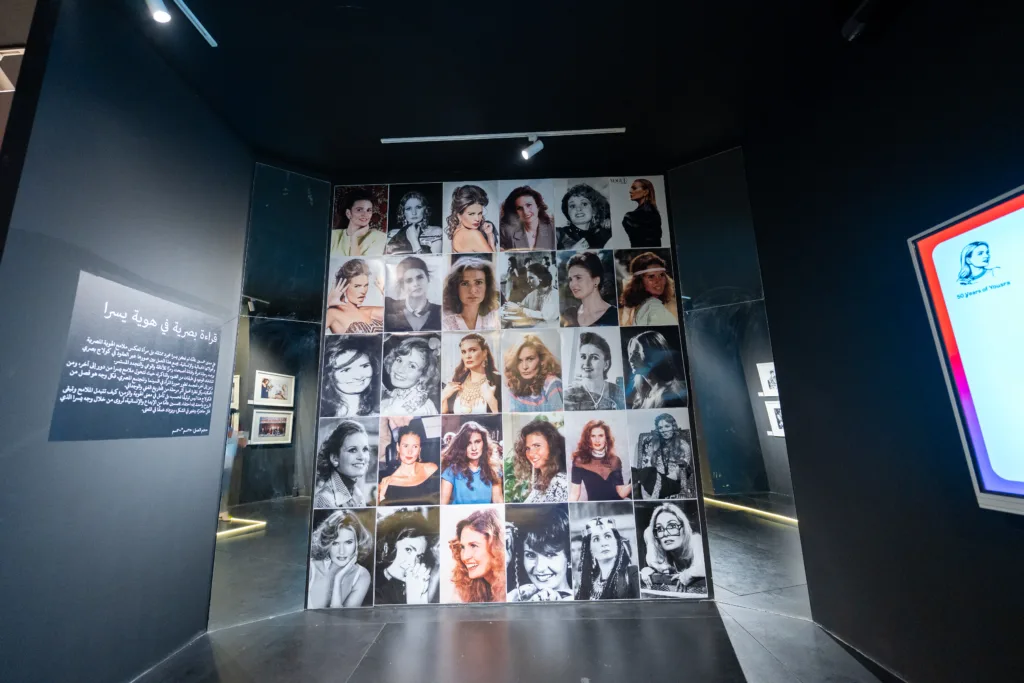
When her friends at the social media platform first suggested the idea, she was taken aback. “I thought – Oh my God, this is half a century!” she tells Harper’s Bazaar Arabia. She hadn’t realised the milestone. “For me, this is really big. You can work for a lifetime and you don’t have a legacy – [but] today, I do.”
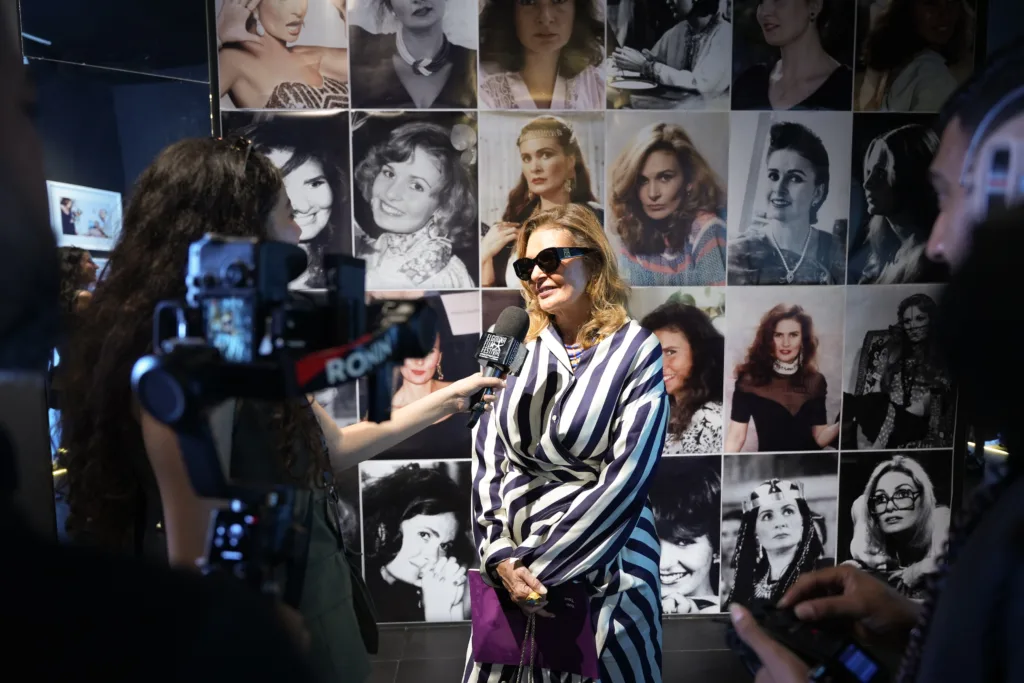
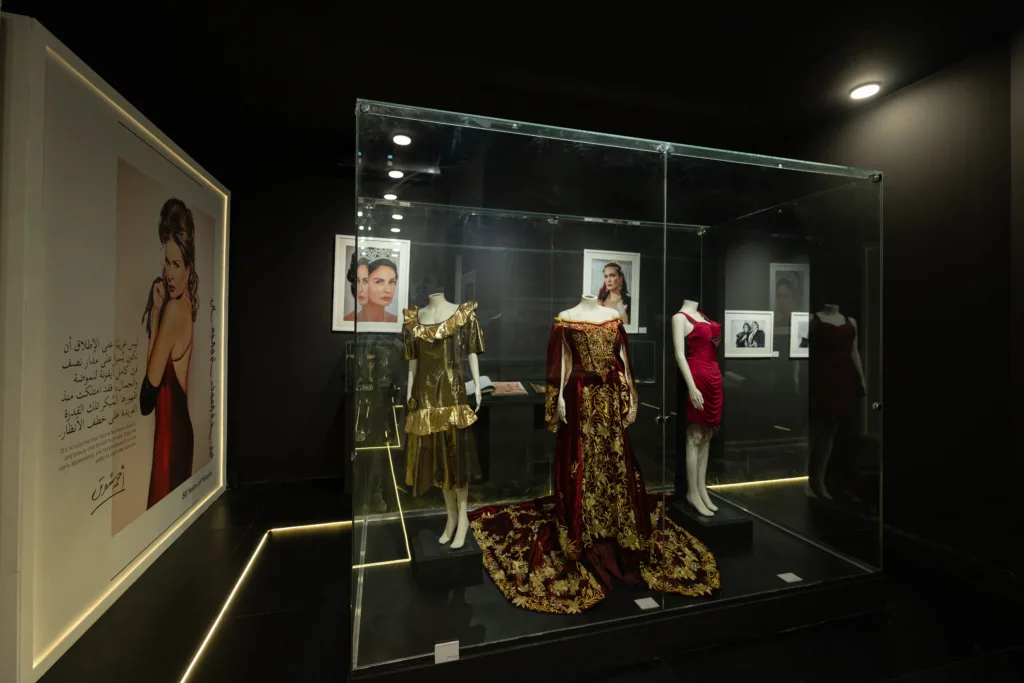
The exhibition traces fifty years through rare photographs, original posters, iconic outfits and panoramic film clips. “When I first saw it, I saw my whole life,” she says. “Friends I lost, friends that are still there… my mother, my colleagues. It’s amazing.”

I’ve been lucky enough to know Youssra as Siva – the human behind the star – since I was six years old, when she married my father’s childhood best friend. I pretended to cry the first time we met – a child’s attempt to impress her. She was encouraging then, as she is now – I’ve watched her stopped everywhere – in the street, mid-dinner, on the beach – in every country we’ve visited. She always smiles, takes the picture, is unfailingly kind.
“It does take,” she admits. “It’s a hell of an effort. But I owe the people who love me unconditionally ten seconds of my life.” Yet alongside this openness is a fierce commitment to privacy. “Yes, I am private,” she says. “I have to be, and I’m going to be like this till the end of my life.”
Though keenly aware of being watched and interpreted, pleasing everybody has never been her aim. “I know that I can never make everybody happy, and it’s not my job to do that. There’s an expression in Arabic which is: people disagree about God, how can they not disagree about us?”

A few years ago, she reclaimed her online presence from a fan account. Since then, her covers, red-carpet appearances and selfies with legends and rising stars have reached nearly four million followers. Still, she is cautious: “Social media can put you on top of the world, or it can make you underground. It’s how you use it, how you need it, how much you want it.”
What she doesn’t give in detail about her inner life, she gives in principles. Responsibility is a word she circles back to again and again – responsibility to her fans, to the stories she takes on, to society at large. In 2016 she was appointed the UNAIDS Regional Goodwill Ambassador for the Middle East and North Africa, and she has long lent her voice to campaigns for women’s rights and children. “You cannot only be in your own bubble,” she says. “You have to live with others, live in their problems.”
Her sense of responsibility extends to her work onscreen, too. She recalls insisting on an ending where her character had to die. “This was the only way I believed it could end. That’s what the story needed.” For her, cinema is more than entertainment; it implants ideas and prepares audiences for new realities – for worse, or for better. She saw it firsthand in 2007, when her role in Qadeyet Ra’y Am – broadcast during Ramadan – caused uproar, but drew record viewership. She believes it helped push a wider conversation that led to tougher penalties against sexual assault.
At the museum celebration, tributes poured in, each speaker adding to the weight of fifty years. When it was her turn, her voice cracked: “Maybe because of all this love, I didn’t feel the time passing.”
When I ask what she would tell her younger self, she doesn’t hesitate. “Be patient. Don’t rush. Everything comes on time. If it’s written, it’s coming. If it’s not, even if you run after it for ages, it will never come.”
Fifty years on, her patience is not about arrival but endurance – a legacy sustained, a light that never dimmed. “I felt that I achieved something in my life,” she says, adjusting her makeup with a practiced hand. “This makes me very proud.”
Images: Supplied