
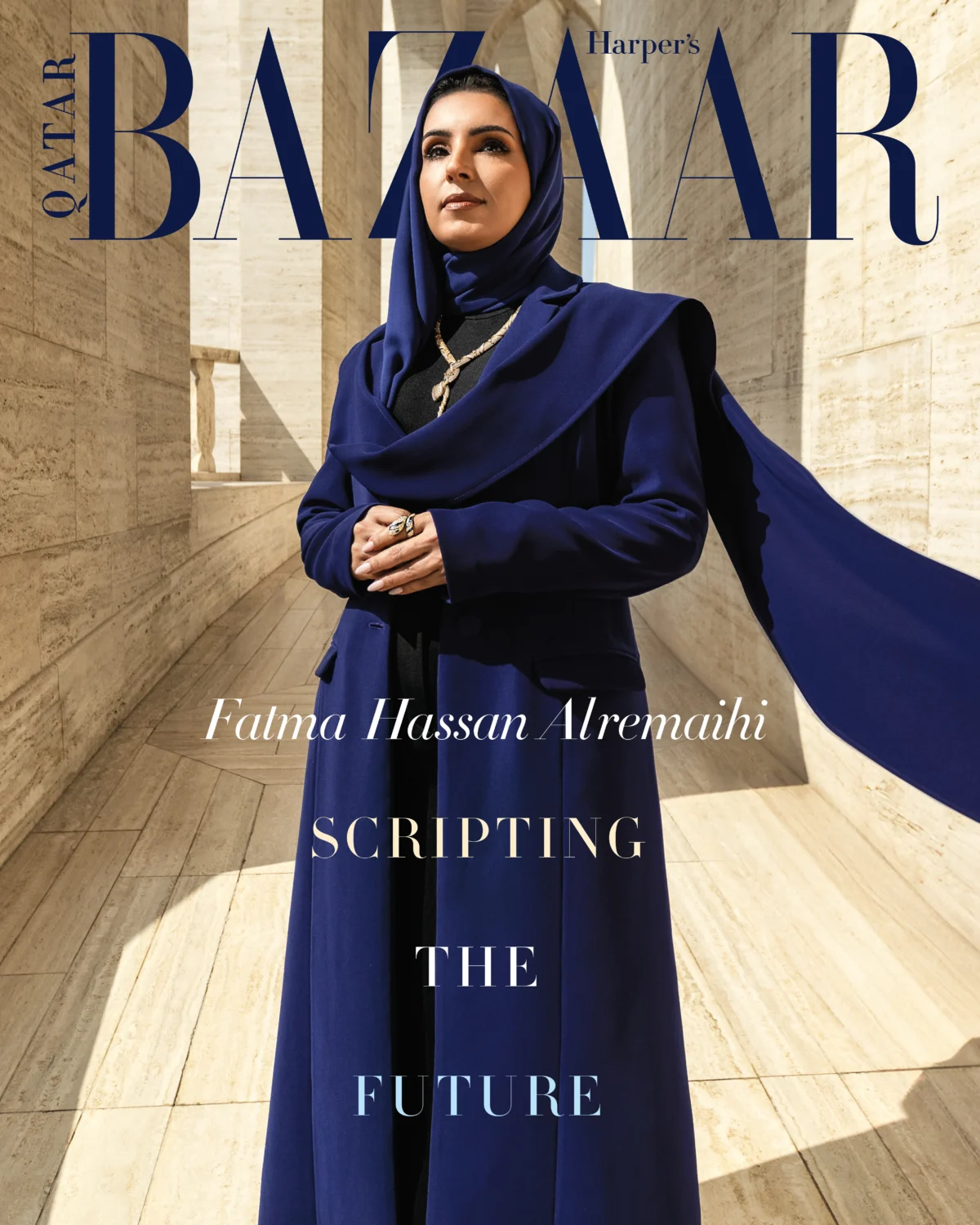
Focus on Film: Fatma Hassan Alremaihi Blazes A Trail for Arab Cinema
The power of Arab cinema to shape and showcase the cultural identity of the region cannot be underestimated. Fatma Hassan Alremaihi is on a mission to spotlight emerging filmmakers and move the world, one story at a time
Arab cinema is making its mark on the global filmmaking scene, and Fatma Hassan Alremaihi is making sure of its success. Her fondest memories are of watching films on video cassettes, and of being exposed to the power of cinema during travels abroad, with films from Egypt and Hollywood planting the seeds for a lifelong passion of storytelling. A young Fatma fell in love with the collective experience of seeing how films can inspire conversations, unravel existing beliefs and unite people from all walks of life.
Back then, Qatar wasn’t home to a dedicated film organisation, and the homegrown cinema culture was only just beginning to emerge. Post-graduation, Fatma entered the workforce with a career in the government sector, “but I always felt drawn to the creative field,” she recalls. Luckily, Doha Film Institute was established in 2010 by Her Excellency Sheikha Al Mayassa bint Hamad bin Khalifa Al-Thani, with a core mission to nurture emerging talent and bring underrepresented voices and marginalised communities from the Arab world and beyond to a global stage. And since its inception, the institute has proudly supported almost 850 films from more than 75 countries, building a global core of storytellers.
For Fatma, who today spearheads the Institute as Chief Executive Officer, it was perfect timing. H.E. Sheikha Al Mayassa became her mentor and muse; “Her vision for building a film industry in Qatar for the world deeply inspired me,” Fatma smiles. “She showed me how arts and cinema could be a powerful tool for cultural expression and exchange.”
Since then, if anyone has seen first-hand the power of cinema and its ability to change lives, it’s Fatma. She ponders, “This journey taught me that film is more than entertainment – it’s an inspiring medium that evokes deep emotions and illuminates the human condition, transforming the way we see the world and ourselves. With creativity and dedication, DFI will continue to draw on the power of film to build a bridge between our rich past and heritage, and Qatar’s cultural and intellectual vision for the future.”
Proud Moments
For 15 years, DFI has been a catalyst in building a thriving film industry in the Middle East region and beyond; through providing resources, mentorship, funding, and cross-cultural exchange, the organisation continues to empower emerging talent. There have been many proud moments to date; films supported by the Institute have received over 1,500 selections at international film festivals and won over 600 awards including wins at Cannes Film Festival, Berlin International Film Festival, Venice Film Festival, Toronto International Film Festival, BAFTA Film Awards, and the Oscars among others. DFI is also the first Arab organisation to score ten Oscar nominations for seven consecutive years. “I’m particularly moved when I see young talents from Qatar and the region gaining recognition at international festivals,” Fatma muses. “Projects like And Then They Burn The Sea by Majid Al-Remaihi competing at Locarno and becoming the first Qatari film in consideration for an Oscar nomination, or Amal Al-Muftah’s Sh’Hab that has screened at over 60 global festivals show how far we’ve come.” These films represent more than just individual success stories – they’re shaping perceptions about the nation’s cinema.
“Each film we support adds another layer to our cultural narrative, and being part of this evolution has deeply influenced my understanding of what’s truly important – giving voice to authentic stories that can touch hearts and open minds,” Fatma reflects. “In a world often divided, the messages conveyed through film have the potential to unite, uplift, and ignite a sense of purpose in the wider society.”
DFI remains committed to influencing meaningful change. “When we screen films about social challenges at our events, the discussions that follow are profound and meaningful,” Fatma tells us. “These conversations continue long after the screenings, inspiring people to think differently about issues they might have overlooked before.”
A Platform For Creative Freedom
A testament to the evolution of DFI’s cinematic journey, the inaugural Doha Film Festival is set to launch 20-28 November. An extension of the thriving and thoughtprovoking Ajyal Film Festival, the Doha Film Festival will be an esteemed platform for self-expression and creative freedom, giving a stage to the voices that otherwise might remain unheard. Fatma explains, “This is simply the next stage of our festival, the next stage of our industry, and the next stage of the Institute, and we have always been evolving and adapting to industry needs to embrace new opportunities. The core mission remains unchanged.”
Why is the festival important now more than ever? “Film festivals have become the microphone for the people in a world of silence,” Fatma asserts. “They create spaces for dialogue and understanding, bringing together diverse voices and viewpoints especially during challenging times. At Ajyal 2024, many guests told me they had never experienced an event like this where people could express themselves so openly.” Fatma emphasises that these events are not just for entertainment. They exist to make our lives better and question our existing ways of thinking.
Embracing Identity
While she can’t pick favourites, Fatma’s personal preferences in film include those that tackle complex social issues and embrace their artistic integrity at the same time, and those that bridge cultural understanding, educate and defy stereotypes. Films like Annemarie Jacir’s Wajib and Naji Abu Nowar’s Theeb, or the opening film for Ajyal Film Festival 2024, Hind Meddeb’s Sudan, Remember Us, are on the list. “[These films] have shown the world the depth and sophistication of Arab cinema,” Fatma declares. “They prove that cinema can be both meaningful and engaging and serve as a mirror reflecting the complexities of our world, fostering empathy and understanding.” Local talents like Amal Al-Muftah, Rawda Al Thani, Khalifa Al Marri, Majid Al-Remaihi, Khalifa Al Thani and A.J. Al Thani, continue to inspire her. “Their work proves that authentic storytelling can resonate with audiences worldwide while staying true to our cultural identity.”
Women In Cinema
Fatma acknowledges that filmmaking is an extremely challenging profession the world over. But when done right, filmmakers from diverse backgrounds can create magic, helping to build compassion across cultures. Arab women, especially, have always had a strong role at the forefront of culture – not only in cinema.
“Although the issues and challenges with an evolving industry are similar for filmmakers anywhere in the world, we are fortunate that women filmmakers in the Arab world have always had opportunities to be well represented. Women were among our pioneers of cinema in the 1920s and ’30s and continue today to drive progression of the industry to new heights. I am proud that Qatar and the region has among the highest female representation in filmmaking worldwide. There’s a new wave of filmmaking in the Arab world, and women are at the forefront, and we are delighted to be leading this change.”
The Next Wave Of Filmmakers
Fatma’s advice for the next generation of filmmakers in the Middle East? Stay true to your voice and never, ever be silenced. “For too long, others have told our stories through lenses of misrepresentation. But we have the power to change that and spark meaningful dialogue. We can show the world who we truly are – through the richness of our experiences and the authentic portrayal of our people.” She continues, stating that every great filmmaker started somewhere. “Persistence is key. The path might seem challenging, but there are more opportunities now than ever before. Most importantly, I urge young filmmakers not to let anyone invalidate their experiences or silence your voice – it’s needed now more than ever. The world is watching and it’s time to share our points of view with authenticity, pride, and purpose.”
A Lifelong Respect For Storytelling
It’s clear that film isn’t just a profession for Fatma, it’s the beating heart of all she does – of all her experiences and passions, and it has hugely informed her way of life. Sharing this with the world has been the greatest gift. “When you’re immersed in a story, you begin to understand lives and experiences different from your own,” she tells Bazaar Qatar. Cinema’s ability to make distant issues feel personal and to create an intimate connection with audiences has long given us a window into other realities, “This understanding can bridge divides and create empathy in ways that other mediums sometimes can’t achieve.”
She opines that in a world of conflict, cinema can remind us of the power of collective action. The capacity to educate, connect, provoke thought, and inspire change has made this form of storytelling a pivotal tool for social awareness. Joining hands with moviemakers from all backgrounds has restructured Fatma’s mindset; perhaps the biggest learning has been of the limitless potential of human creativity: the skill of depicting stories about the most pressing issues of our times through visual artistry and emotional depth. If the question ‘what is cinema?’ could be answered in just one statement, Fatma words it so eloquently: “Cinema is more than entertainment; it reflects our societies, our dreams, and our realities.”
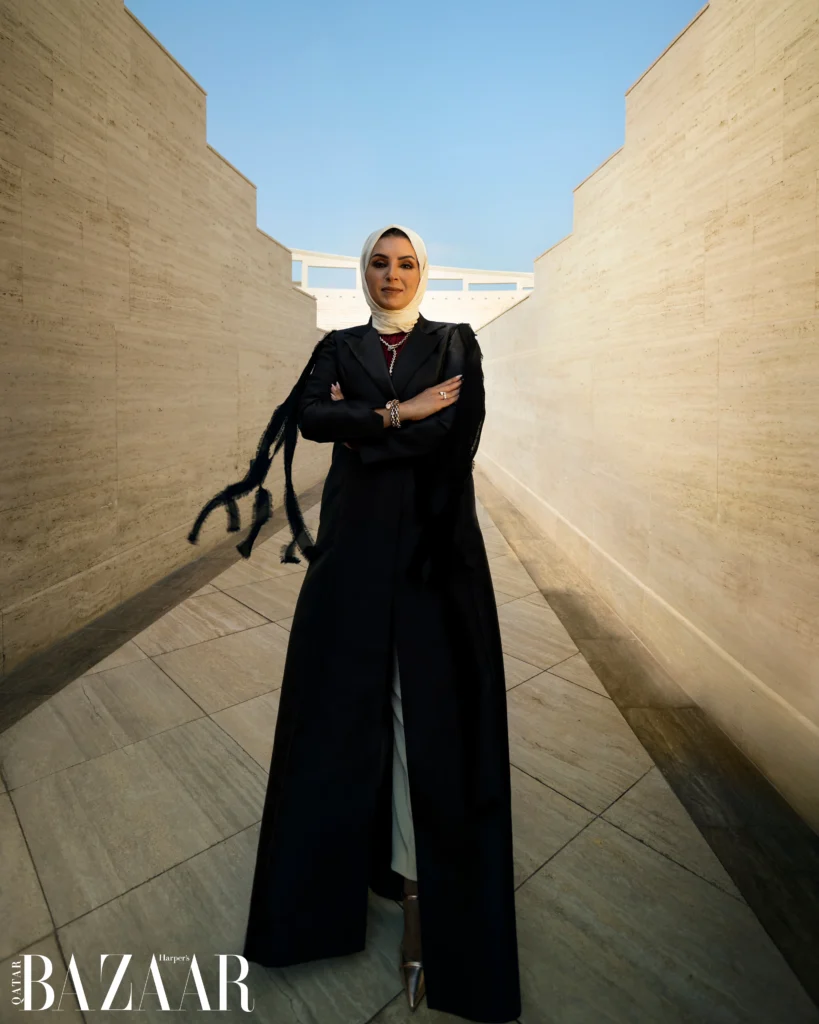
Lead Image credits: Serpenti Necklace in Gold with Mother-of-Pearl, Emeralds and Diamonds, POA, Bvlgari High Jewellery. Serpenti Ring in Rose Gold with Sapphires and Diamonds, POA, Bvlgari Abaya, POA, Harlienz. Shoes, POA, Gia Borghini. Top; Skirt, both Stylist’s own
Photography by Oscar Munar. Styling by Imogene Legrand. Make-Up: Artists Makeup Studio. On-site Producer: Narges Raiss. Senior Producer: Steff Hawker. Fashion Assistants: Fazila Patel and Lucy Semaan. Lighting Assistant: Rajeesh. Special thanks to Katara Cultural Village.
From the Harper’s Bazaar Qatar Spring 2025 issue