
From Café Dior To Ralph Lauren’s Polo Bar, These Are The Most Fashionable Eateries On Earth
Sampling LV-monogrammed waffles to Armani wagyu beef tartare, Bazaar explores the culinary offerings from the new cadre of hospitality players: luxury brands
When Tiffany & Co. opened its redesigned and enlarged flagship store on Fifth Avenue in New York City in 2023 it wasn’t just the spectacular jewellery on display – which included
one-of-a-kind creations for the opening and a new design for the legendary 128.54-carat Tiffany Diamond – that enticed shoppers. Generating as much, if not more, buzz and social media posts was the brand’s expanded Blue Box Café on the sixth floor.
The new café is an updated version of a similar space that opened in 2017 on the fourth floor. When that version opened it meant that, for the first time, customers could literally have breakfast at Tiffany’s – and they flocked to it. While the first iteration of the cafe gained instant attention due to its highly photogenic robin’s egg blue interior – everything from the leather banquettes to the plates was in Tiffany & Co.’s trademarked colour – the new restaurant is a more elevated dining experience, but with a blue box interior on steroids. The daytime café, which is overseen by Michelin-starred chef Daniel Boulud in a space designed by Peter Marino, offers a unique take on the Tiffany dining experience, with a seasonally inspired daytime menu, including breakfast and afternoon tea. The new hospitality space also includes a private dining area and bar and custom art installations. If you’re planning a trip to New York soon you’ll need to reserve a table well in advance – which, for the brand (that has been owned by LVMH since 2021), is precisely the point.

Food, according to the Geneva-based luxury sector analyst Luca Solca from Bernstein, has become a core battleground in the luxury industry as brands strive to make physical retail a more compelling and captivating experience for customers. “It’s no longer just a question of using the most precious materials, such as marble and others, to impress visitors, but transforming the shop into a unique and meaningful place, linked to the brand’s roots,” he says. “The idea is to make this space memorable and non-replicable, with distinctive and Instagrammable elements, to make it a destination in its own right.”
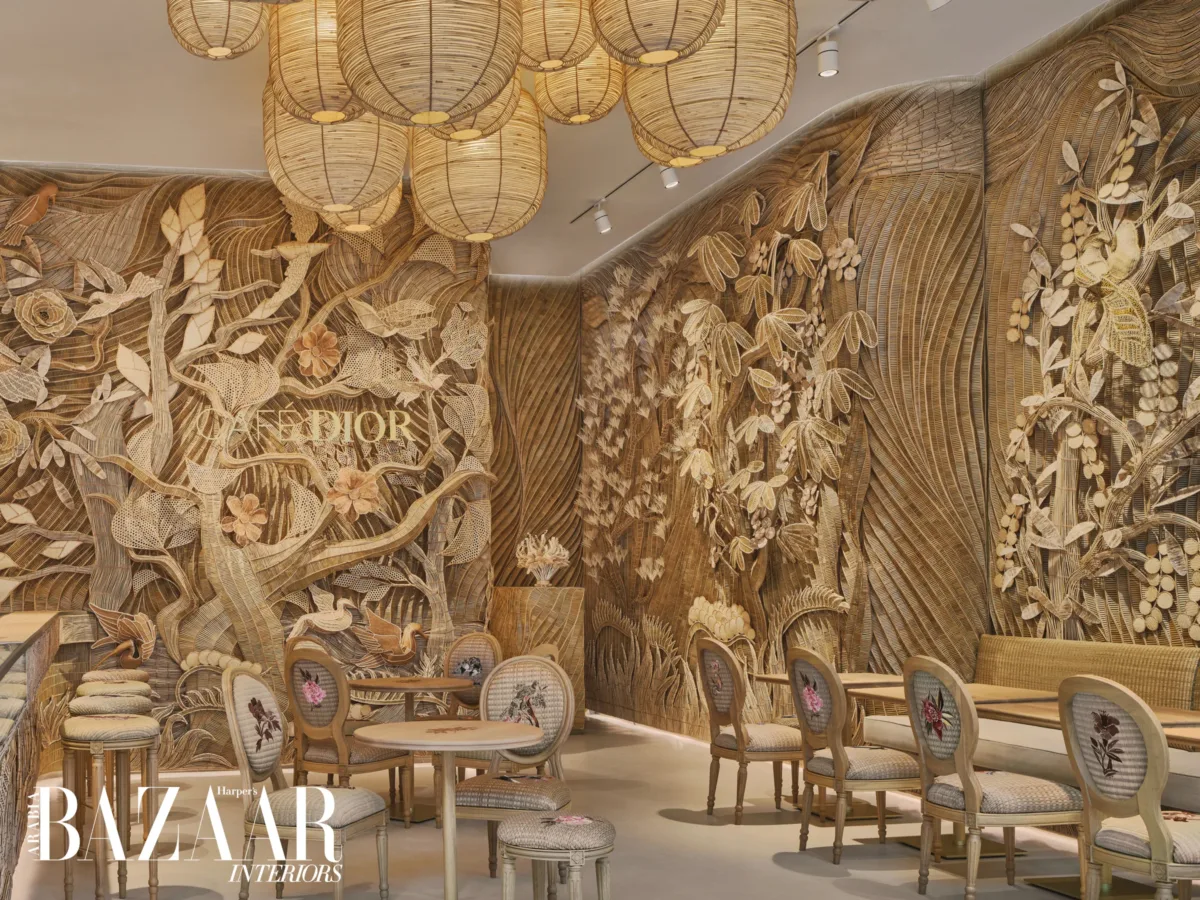
Although the designer restaurant or café isn’t new, the number of new food outlets opened by fashion houses has grown over the last few years. A new flagship store for a brand isn’t complete today without some sort of culinary component. When Dior gave its headquarters on 30 Avenue Montaigne in Paris a makeover in 2022, they didn’t just create a flagship fashion store, they created a bona fide tourist attraction and included a museum, restaurant, patisserie, the restored original office of Monsieur Dior and an apartment for overnight stays for VIP customers.
Then, in 2023, Dior announced a partnership with Anne-Sophie Pic, the world’s most Michelin-starred woman chef, which has since seen the roll out of a Café Dior at Osaka’s Kansai International Airport and, in December, two new Café Dior locations in Ginza, Tokyo and Chengdu, China. In February, a Café Dior opened in Dallas, US in partnership with Dominique Crenn, the first woman chef in the US to earn three Michelin stars.

Louis Vuitton recently opened a 70-seat dining space in its temporary New York flagship called Le Café Louis Vuitton and has a menu that features the brand’s iconic logo on sandwiches, cakes and assorted beverages. It’s Louis Vuitton’s first restaurant in the US and follows venues in Europe and Asia. Next year, the French luxury brand plans to reach even further into the hospitality sector with its first hotel in Paris.

Since 2018, Gucci has opened four restaurants around the world – in Florence, Seoul, Tokyo and, recently, in Beverly Hills – in collaboration with renowned chef Massimo Bottura, called Gucci Osteria. Its signature Instagram-friendly dish is the Emilia Burger, which is packaged in a pink box in a nod to both American fast-food cuisine and Italy’s Emilia-Romagna region, from where Bottura hails.
Giorgio Armani, which has been in the hotel business since opening its first Armani Hotel in Dubai in 2010, also recently expanded its stake in the restaurant game with the opening of Armani/Ristorante inside its new 760 Madison Avenue flagship store in New York in December. Giorgio Armani opened his first restaurant in Paris in 1998 and today operates 24 outposts around the world. The new Madison Avenue branch occupies 385 square metres of a prime ground floor selling space and includes a bar and mezzanine seating area decorated in eucalyptus panelling, lacquer green walls and marble floors (much of the furniture comes from the Armani/Casa home décor line). It almost seems like a restaurant with a fashion store attached rather than the other way around.

Prada is another fashion brand with interests in food. The company opened Bar Luce, a ’50s-inspired café space designed by filmmaker Wes Anderson, at the brand’s art space Fondazione Prada on the outskirts of Milan in 2015. The space was conceived to evoke the atmosphere of a classic Milanese café and the result is like a movie set come to life. Given its Wes Anderson interior, Bar Luce is sought out by tourists for its Insta-potential. In the same year Prada acquired the 19th-century Milanese pastry shop, Pasticceria Marchesi, which was originally founded in 1824 on Via Santa Maria alla Porta and, under Prada’s ownership, has added two other stores in Milan and recently opened a branch on Mount Street in London. In 2023, Prada opened a pop-up restaurant in Harrods department store in London called Prada Caffè with an interior inspired by the brand’s Galleria Vittorio Emanuele II flagship in Milan. Due to its popularity with shoppers, the pop-up has been extended.
Possibly the ne pluzs ultra of luxury-brand restaurants, however, is Ralph Lauren’s Polo Bar in New York. While the brand also operates a series of Ralph’s Coffee shops and branded restaurants around the world, it was The Polo Bar, which opened in 2015, that set a new standard for fashion restaurants. The restaurant, according to the company, features the aesthetic of the Ralph Lauren brand and “is a natural extension of the world of Ralph Lauren as expressed through the culinary arts”. The underground space features a clubby ambiance, with wood panelling, saddle-leather seating and plenty of equestrian art on the walls. The Polo Bar’s menu includes American classics like crab cakes, corned beef sandwiches and the signature Polo Bar burger, with some dishes featuring beef from Ralph Lauren’s Double RL Ranch. And as befits a fashion brand restaurant, the Polo Bar has an old-school New York dress code: men must wear a jacket. The last time this writer visited the Polo Bar (in 2022) Hillary Clinton was seated at one table and Sylvester Stallone at another.
“Consumers are actively seeking a luxury experience over purchasing a luxury item, and luxury brands are redefining their business models to keep up.”
Florent Girardin

Christine Milan, chief strategy officer of Publicis Luxe, an experiential marketing agency with offices in Paris, Shanghai and New York, says that when Ralph Lauren and Giorgio Armani opened their first branded restaurants, they recognised something fundamental: high-end luxury and fine dining were natural companions. “With Generation Z spending more on food than categories like fashion (40 per cent vs. 35 per cent of disposable income, according to research by Publicis Luxe), we’re witnessing a deeper convergence of these two worlds – each drawing inspiration from and amplifying the changes in the other, and reshaping how both industries approach craft, creativity and cultural relevance,” says Milan.
According to Florent Girardin, associate professor of marketing at the Swiss hospitality school EHL, based in Lausanne, the lines between the luxury sector and hospitality have become increasingly blurred. “This is because consumers are actively seeking a luxury experience over purchasing a luxury item, and luxury brands are redefining their business models to keep up,” he says. “These extensions are coherent from a branding perspective as the very ethos of luxury brands lies in the culture of service excellence, attention to detail and personalisation. Hotel and restaurant experiences allow guests to be fully immersed in their favourite luxury brand universe.”

Although a Dhs136 cocktail or a Dhs165 burger or a Dhs250 set breakfast might seem like an extravagance, they’re nevertheless accessible entry points into a luxury brand. And perhaps, more importantly, they’re an experience – even if it’s just an ephemeral one. Besides, they look good on the grid.
Images: Courtesy of the Brands
From Harper’s Bazaar Arabia Interiors Autumn 2025 Issue.