
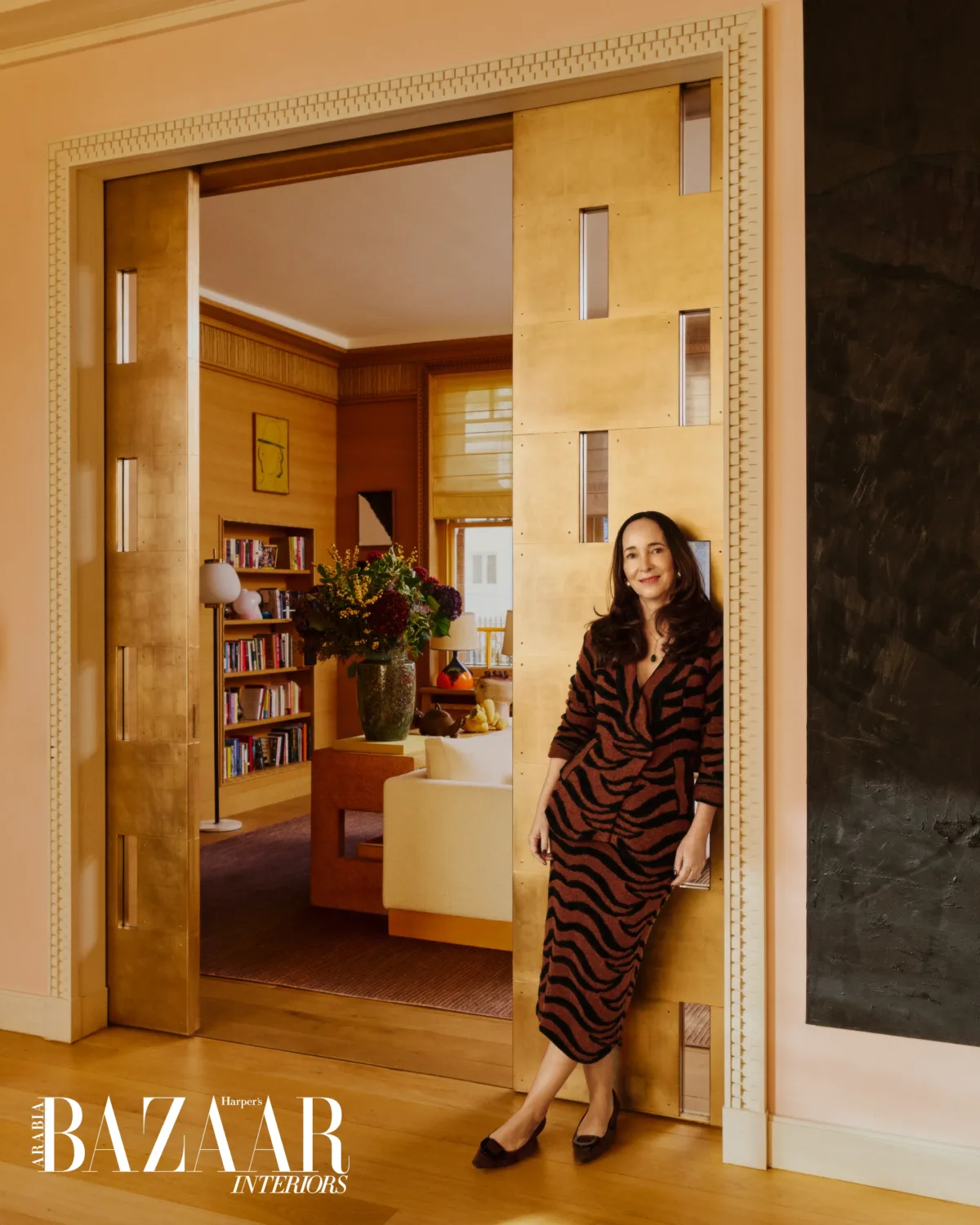
Bazaar Arabia Takes A Tour Around Egyptian Designer Goya Gallagher’s Chelsea Townhouse
For Goya Gallagher, the founder of a homeware brand celebrating Egyptian craftmanship, her London townhouse is an opportunity to display a prized collection of artisanal treasures
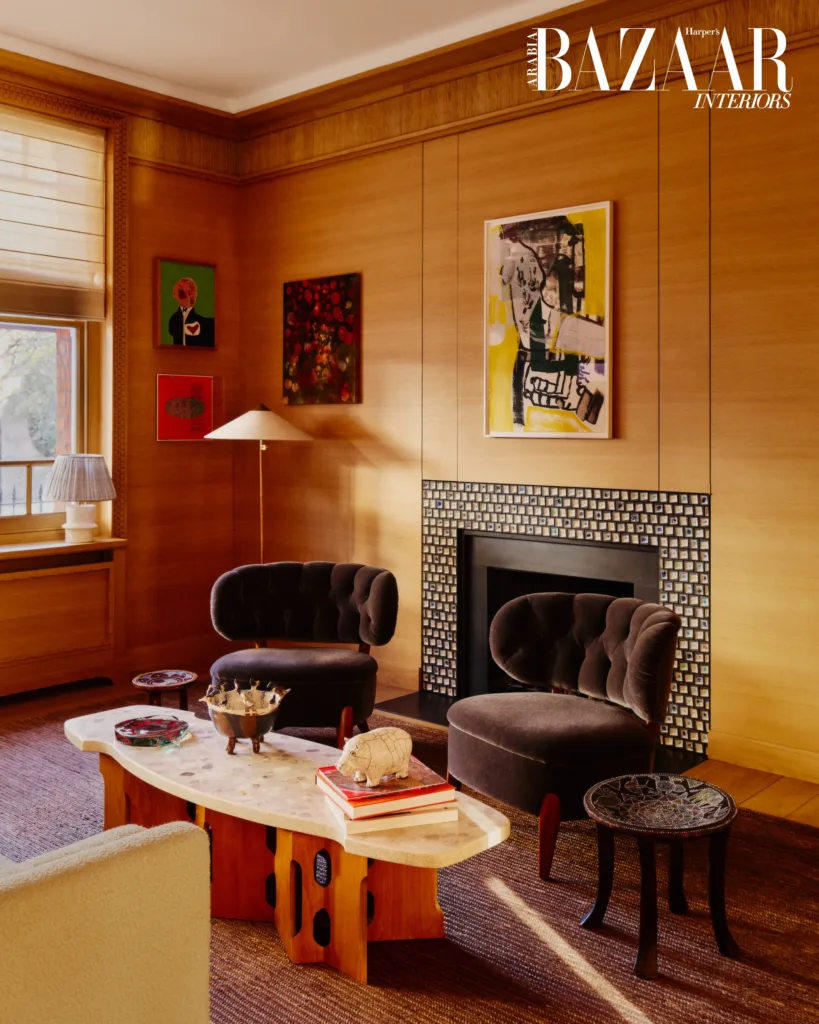
It’s a brisk winter day and the sun is low and strong, pouring through the east-facing floor to-ceiling windows of Goya Gallagher’s Chelsea townhouse. The homeware entrepreneur chose this arts and crafts-style property for the way it lets in light, particularly in the living room, where the walls are painted a shade of pink that she mixed and remixed until it finally felt right. That was just a small part of the meticulous 18-month renovation she undertook with the interior architect Pierre Yovanovitch. While the house’s structure remains as she found it – with vast rooms and soaring ceilings – Goya added custom oak panelling, ceramic-brick fireplaces created by the French artist Armelle Benoit and a serene lap pool in the back garden. “It’s not heated right now, so you have to be brave,” she says, laughing.
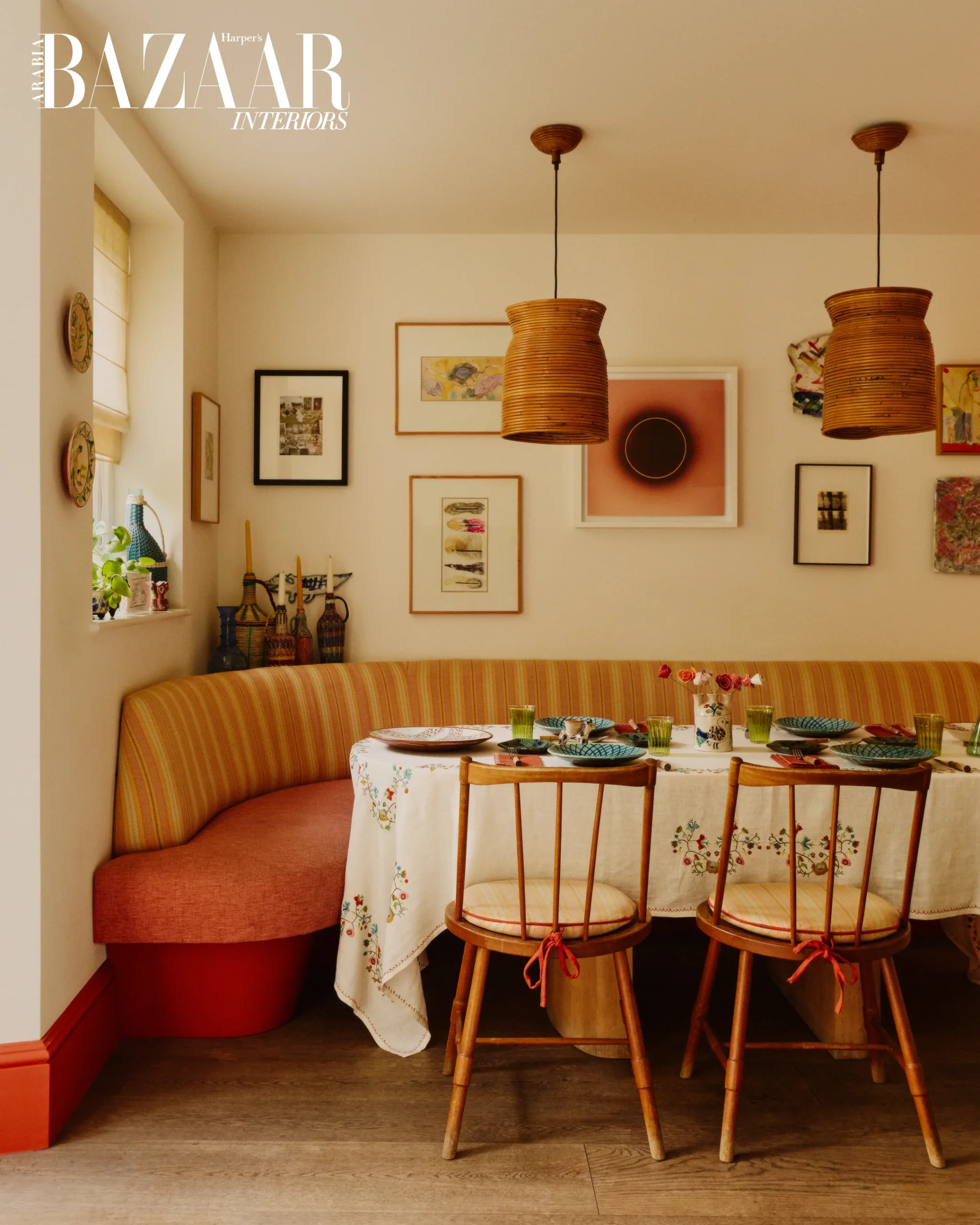
Indeed, Goya prefers a warm climate. Her primary residence is in Cairo, and she and her daughters Talia and Ines, both in their twenties, have split their time between the two homes since moving here a decade ago. During the months they are in London, they like to host lively dinner parties in the red Fortuny-fabric-clad dining room, and often have friends staying in the spare bedrooms. “It’s a rotating door,” she says. “The idea was to have a house that was lived in, where nothing was too precious.” Each room is filled with characterful pieces collected on Goya’s travels, intended to be used and enjoyed. The living room houses a vintage wooden bench from Sweden in one corner, underneath which is a geometric hand-woven rug from Afghanistan, while on top of the coffee table is a large basket bought from a market in Colombia – a nod to her South American roots.
Born in London, Goya moved to her mother’s native Ecuador at the age of seven to live with her, and spent holidays in Chile with her father. She attended Brown University in America, studying economics and comparative literature, with a plan to return to the UK to become an investment banker. But everything changed when she visited a friend in Egypt shortly after graduating in 1991. “I fell madly in love with Cairo,” she says. “There was something familiar about its chaos and warmth, and people were welcoming and generous. At the same time, it felt like this incredible adventure – a whole other world to discover.” She began working at a bank in London, but quit soon after. “I called my parents and told them, ‘I’m going to go and live in Egypt. I don’t know what I want to do, but I’m going to figure it out there.’”
It didn’t take her long to find her feet. After a few months, she had made some like-minded friends with whom she launched Egypt’s first glossy magazine Pose. “It was really fun and completely crazy,” she remembers. “We were doing everything: selling the ads, writing the articles and styling photoshoots with my clothes…” Throughout the Nineties, it became a valued platform for Cairo’s creatives, from writers and photographers to designers and illustrators.
Goya found inspiration for her next venture back in London several years later, while shopping for bedlinen at Peter Jones in Sloane Square. “Egyptian cotton is the most famous in the world, but it wasn’t available in Egypt,” she says. “It was such an enormous thing to have to lug in my suitcase, and it seemed so silly that I couldn’t get it in Egypt.” She co-founded the company Malaika Linens in 2000 with a friend to address this, concurrently launching an embroidery programme to teach women needlework skills as a means towards economic independence. “I owe a lot to Egypt – I’ve made my life there, I had my kids there – and I felt that I needed to do something to give back in some way,” she says. “If your outlook is mindful from the beginning and there’s no contradiction, you can run a business that has impact.”
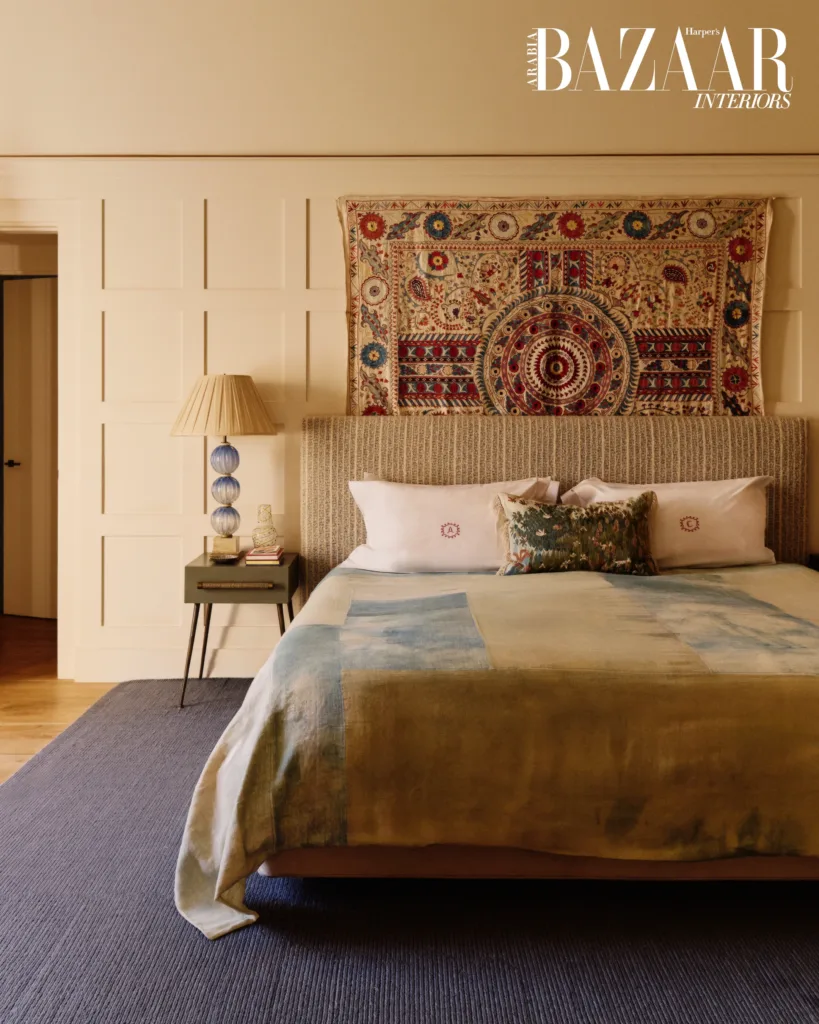
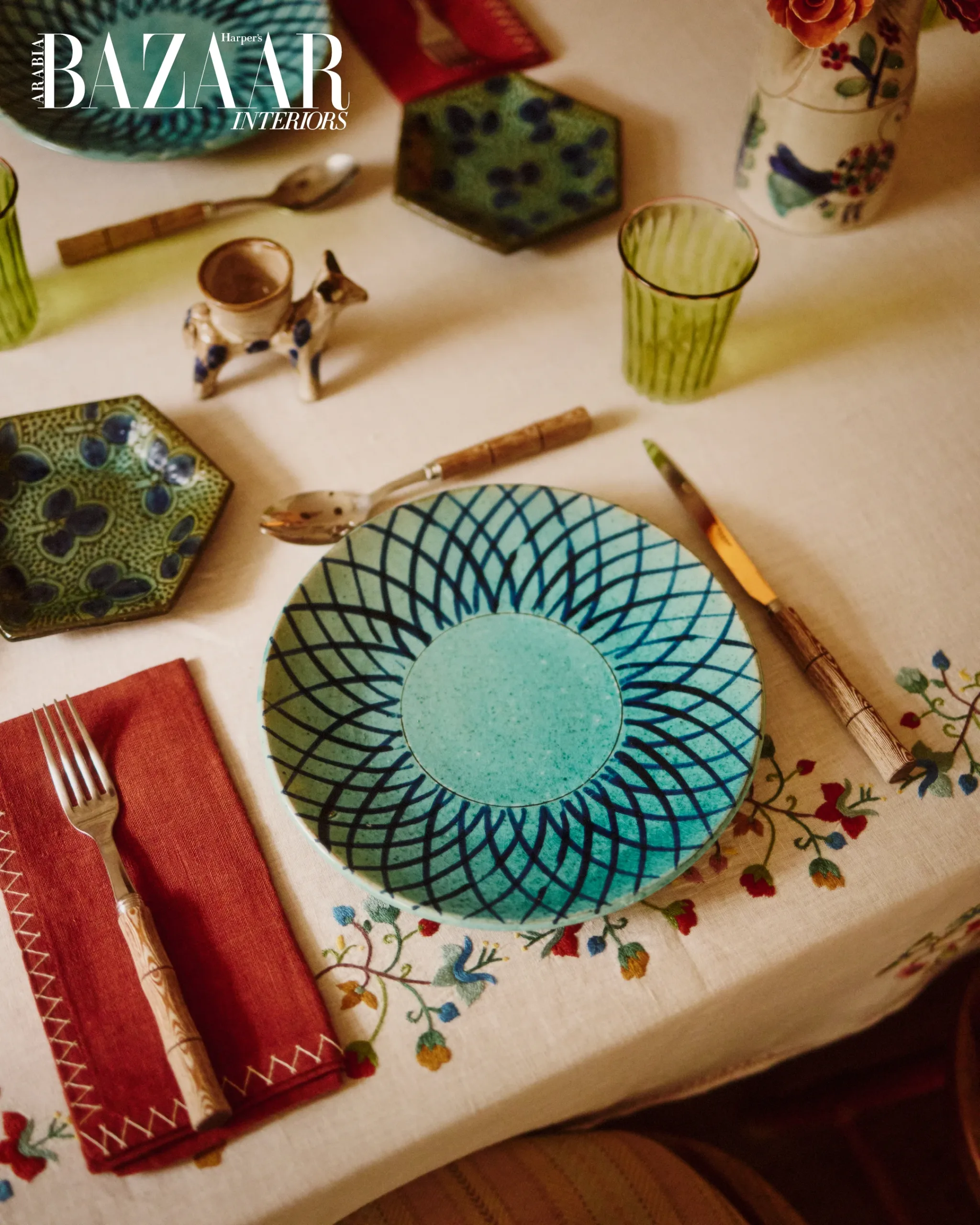
She has continued this social mission through her latest venture Anūt Cairo, which she founded almost two years ago to explore Egyptian crafts more extensively and to keep traditional techniques alive. Through Anūt, she produces pieces including poplin pyjamas, hand-embroidered linen, Fayoum pottery and Akhmim-made bedspreads – many of which adorn her home. “It’s about establishing relationships with artisans, making designs with them and seeing what can happen through that collaboration,” she says, pointing out a pleated yellow and sage-green cushion beside her, from her latest collection, titled Echoes. “This was made through a conglomeration of different hands. The fabric was created by a woman who has been experimenting with making natural dyes from Ancient Egyptian recipes, and the embroidery was done by a woman from the Anūt atelier – the folding is inspired by how mummies were wrapped.”
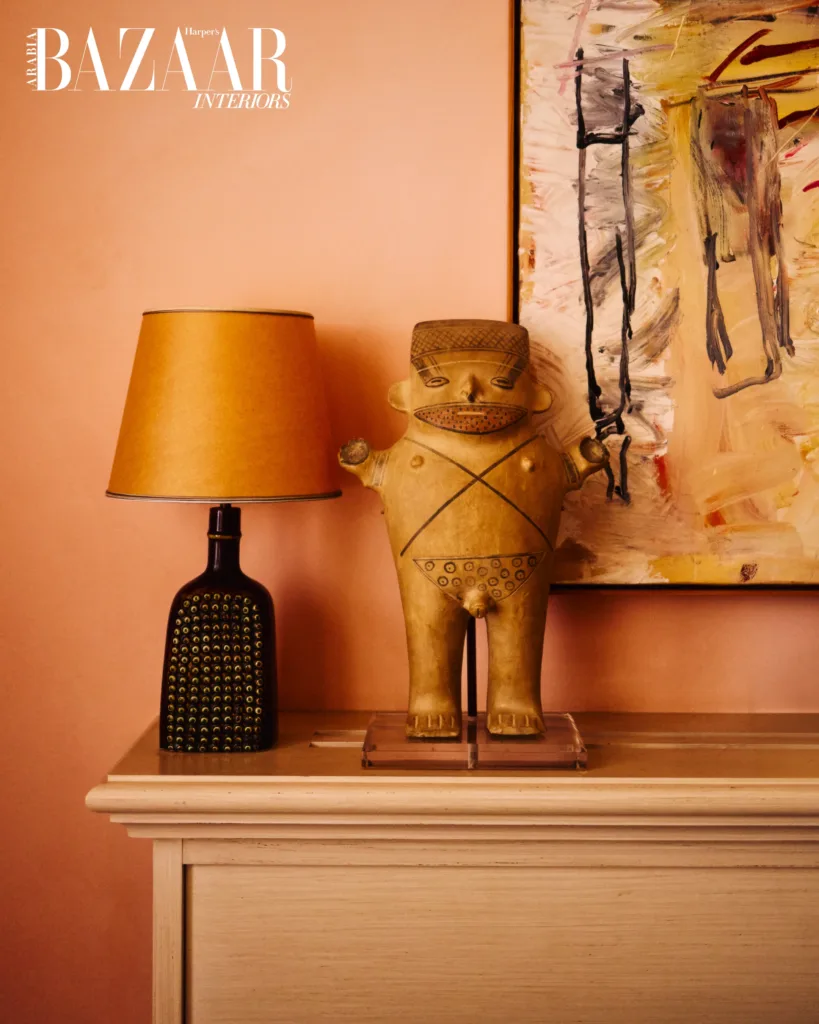
Goya’s home, like her brand, is a joyful celebration of diverse textures, patterns and colours; the only prerequisite for a new acquisition is, she says, that “I have to fall in love with it.” Her cherished collection of art includes porcelain objects by Edmund de Waal, a plaster cicada by Eduardo Paolozzi and a woven jute tapestry by Alexander Calder. Commanding one side of the living room is her favourite piece of all: an enormous painting of a man and a leopard by the German artist Florian Krewer, its dark palette a stark contrast against the room’s muted hues.
As the sun begins to dip, Goya is considering lighting a fire in the drawing room. “When it’s cold and dark, that’s where I like to be,” she says. It is a welcoming space decorated with ceramic figurines, soft velvet chairs and piles of art and historical books. “Did you see the scarabs?” she asks, pointing to the carved beetles in the woodwork. “They were made from a drawing I did. I absolutely love them.”
In a house filled with so many museum-worthy works and handcrafted pieces, perhaps the greatest luxury is the happiness she finds in each one.
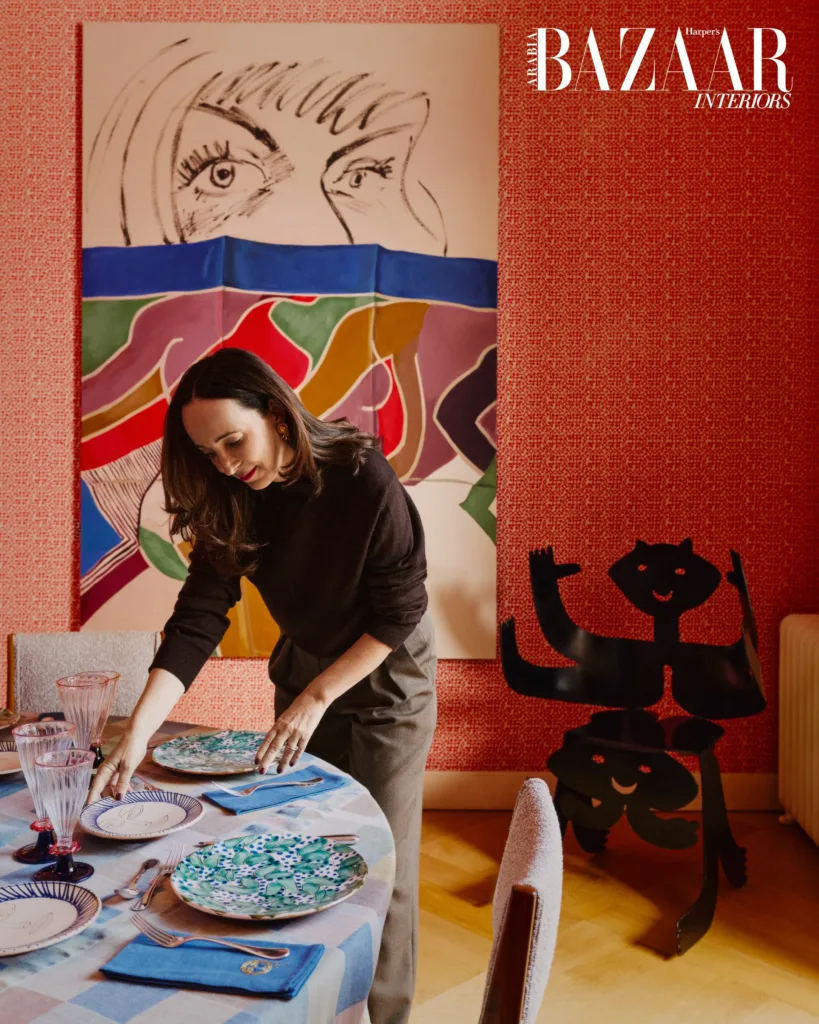
Lead Image Credit: Goya Gallagher in her living-room, wearing a vintage Vivienne Westwood suit (her own).
Photography By Kensington Leverne, Syling By Grace Clarke, Hair And Make-Up: Terri Capon, Using Clé De Peau Beauté And R+Co
From the Harper’s Bazaar Arabia Interiors Summer 2026 issue