
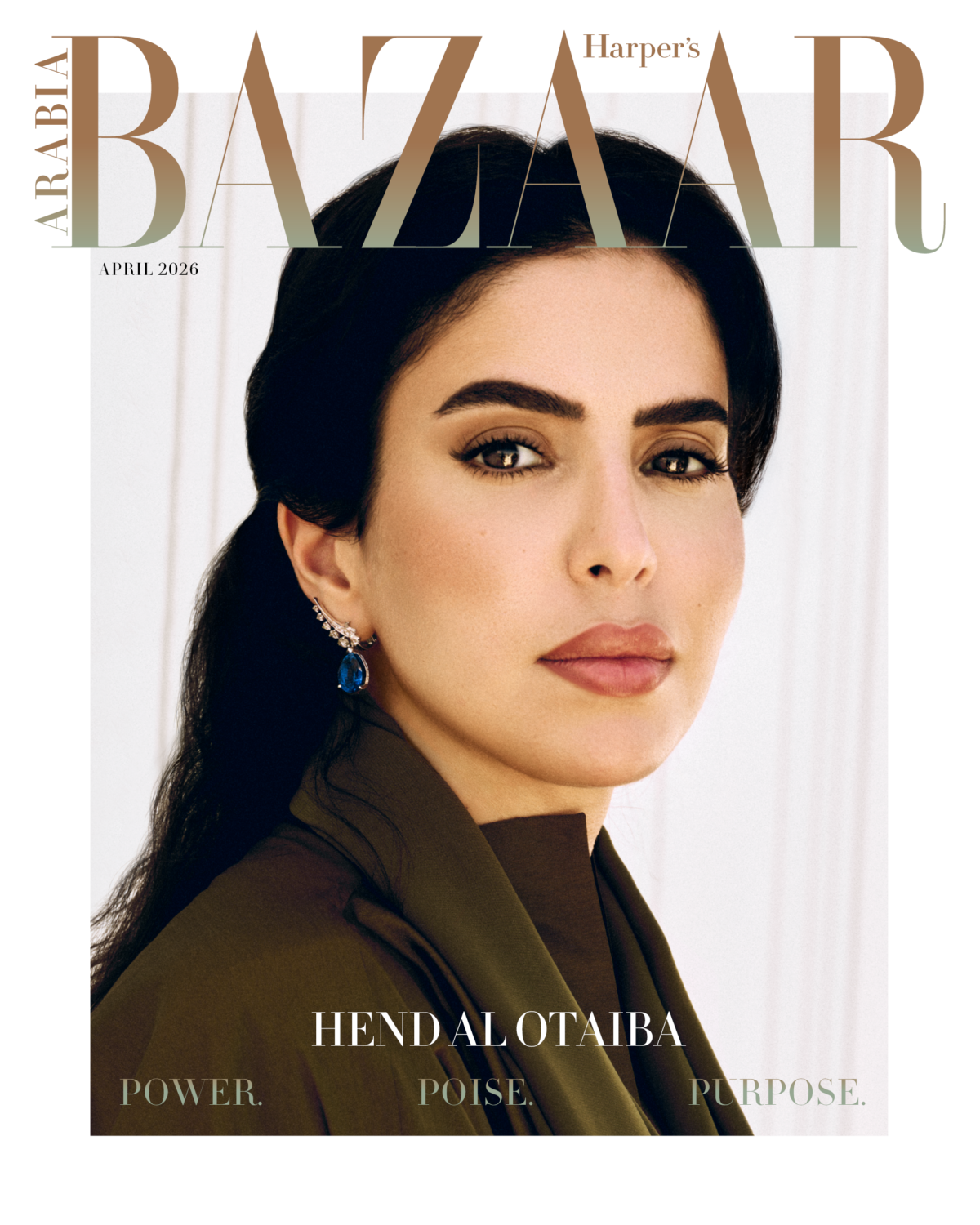
Hend Al Otaiba Is The Harper’s Bazaar Arabia April 2026 Issue Cover Star
An insider by both instinct and invitation, Hend Al Otaiba has rarified access to the epicentre of the diplomatic sphere. In this exclusive interview with Harper’s Bazaar Arabia, the founder and CEO of HAO Strategies and former UAE ambassador to France gives us her insights into the current crisis – and why she’s so confident that her country will emerge stronger than ever
In moments of tension, the quality of judgment matters more than the volume of response,” Hend Al Otaiba tells Harper’s Bazaar Arabia. “That shaped how I work.” And in the current situation – when tension is reverberating across the region – voices like Hend’s are the ones we should hand over the mic to, opinions like hers we should champion, people like her we should platform.
Proud Emirati Hend, an Abu Dhabi native, has not only grown up in a family whose ethos has always been intrinsically linked to public service. Her surname is instantly recognisable to those steeped in the diplomatic sphere. “Our family has had the privilege of serving this country at the highest levels for decades. That is not something I take lightly and it is not something I take credit for. It is a privilege that carries obligation, and that sense of obligation has guided every decision I have made in my career,” she says proudly.
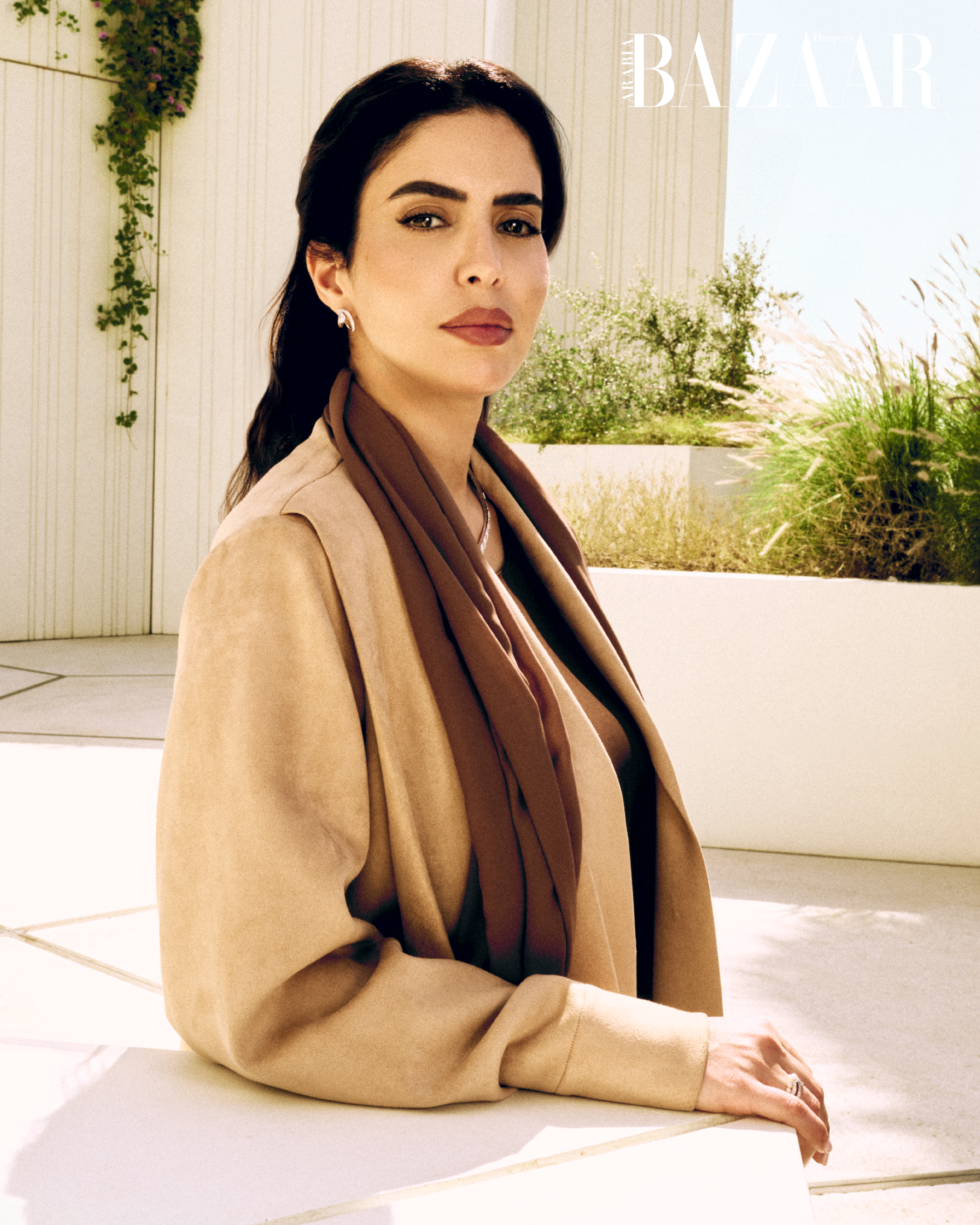
So perhaps it was inevitable that she too would come to hold high-profile office, most recently as the UAE Ambassador to France. “There was never pressure in the way people might imagine. It was more a clarity. When you grow up seeing what genuine commitment to a country looks like in practice, the question of what you want to do with your life answers itself. The UAE was being built in real time around us. Being part of that, contributing to it, felt less like a choice and more like a calling. That has never changed.” She adds, “This country has given enormously to its people. Serving it, in whatever capacity you are called to, is the only appropriate response. Contributing to the country was simply understood as part of one’s responsibility. That shaped how I approached my choices early on and gave me a strong sense of direction.”
The current founder and CEO of HAO Strategies, who has a psychology undergraduate degree coupled with two masters from Paris Sorbonne Abu Dhabi and the UAE Defence College, has always had a clear career path. Stints heading up communications at TDIC and Abu Dhabi Media, followed by a director and spokesperson role at the Ministry of Foreign Affairs led to her being awarded the highly-coveted French Ambassadorial posting.
Setting up her own eponymous advisory firm was the natural evolution, taking knowledge gleaned to assist institutions navigate complex or unfamiliar environments, whether that be establishing themselves in a new market, building a government partnership, or managing a sensitive moment. “Whether in a diplomatic context or advising an institution today, the discipline is the same: understand the environment before you act, and make sure that how you communicate serves the objective rather than creates noise around it,” she explains. “They need someone who has operated in those conditions from the inside.”
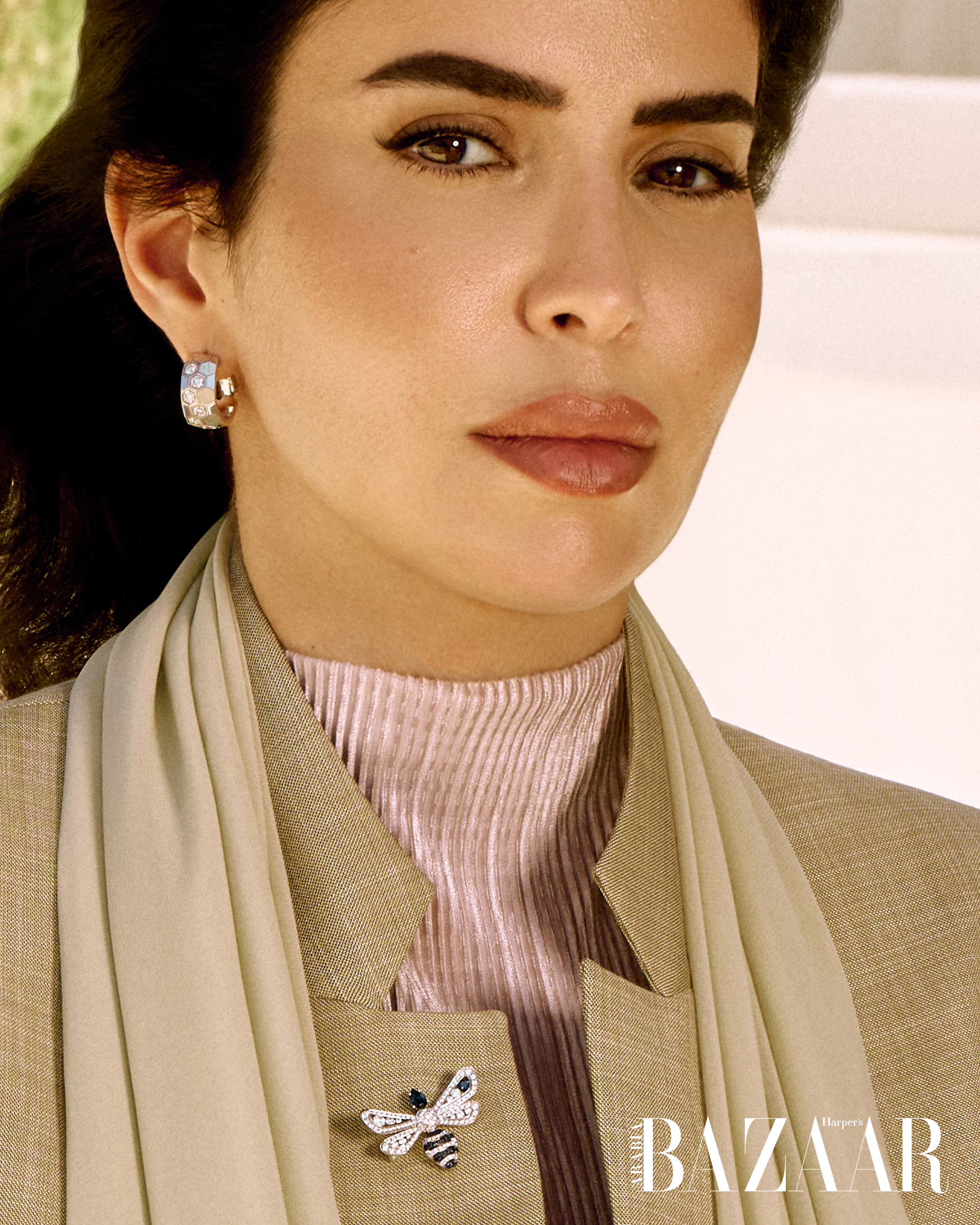
Given her access to the corridors of power, and her first-hand knowledge of the workings of government, Hend is uniquely placed to offer her insights of the current situation. Her memories of that fateful Saturday, 28 February, when everything suddenly changed, is crystal clear. “I was spending time with my family. Like anyone else, the moment I began following the news, concern was the first thing I felt. It is never easy to see your country facing moments like that.”
What becomes evident, however, is that concern is never where the story ends for Hend. It is simply the beginning of a more measured, deliberate process. “Concern is a natural first response. But concern and clarity are not mutually exclusive,” she says. “Learning to hold both at the same time is something that experience builds in you.” It is a distinction that underpins not only her diplomatic career but the advisory work she leads today. In environments where others may rush to react, she has built a reputation on restraint, on pausing long enough to understand the full architecture of a situation before responding.
That instinct was sharpened early. Growing up in a household where public service was not an abstract ideal but a reality meant exposure to decision-making at the highest level was part of daily life. It instilled a particular discipline: to listen closely, to observe context, and to recognise that leadership is often defined not just by what is said, but by what remains unspoken.
Her career, spanning communications, diplomacy and now strategic advisory, reflects that philosophy. “The moments when people are most tempted to react quickly are usually the moments that most require patience,” she says. “The institutions and partners I work with are watching how leadership responds under pressure just as closely as they are watching the situation itself.
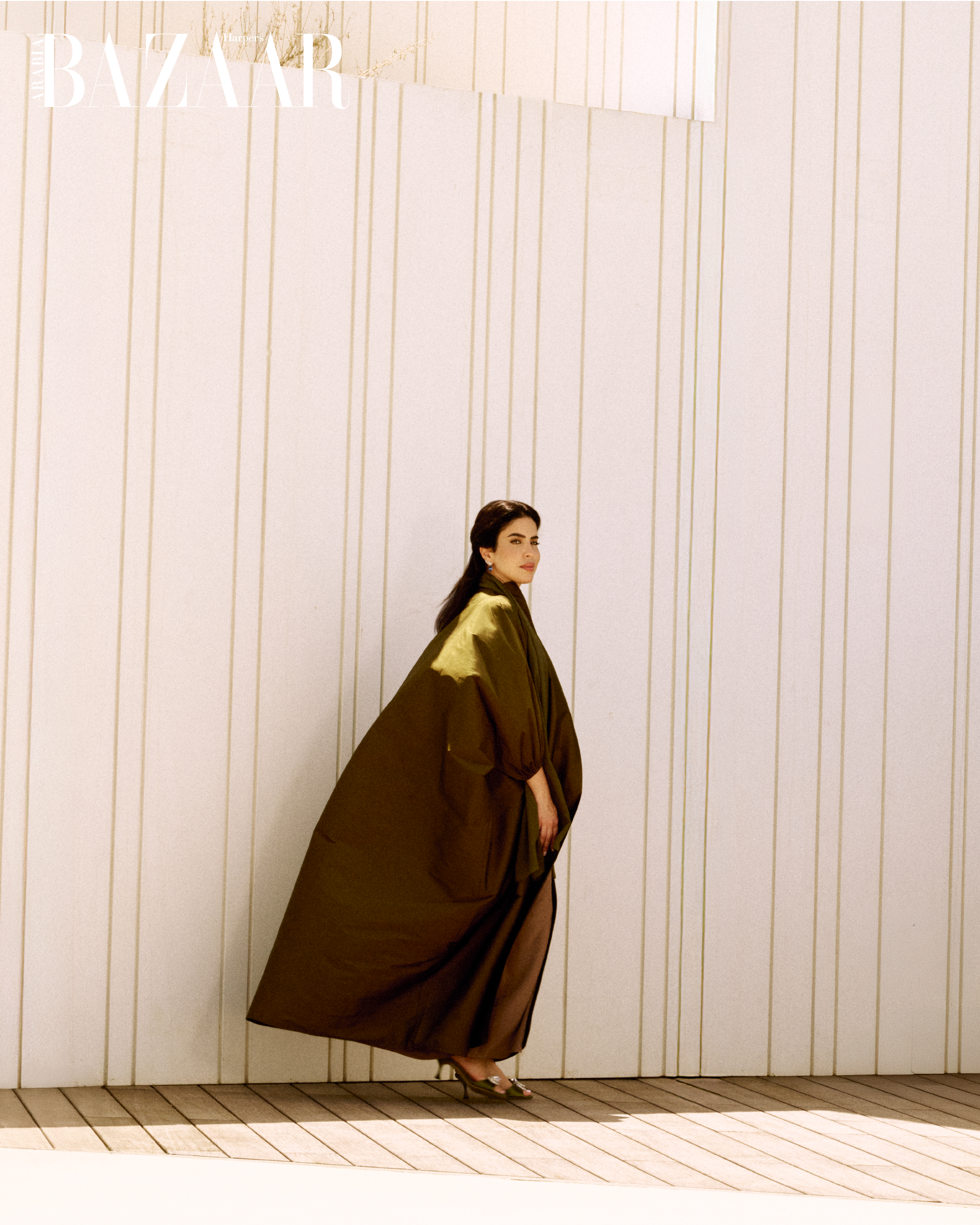
Asked to reflect on other crises during her career, she returns not to conflict, but to the pandemic. Where others might point to geopolitical flashpoints, Hend highlights a moment that tested systems, institutions and leadership. “At the time I was Director of Strategic Communications at the Ministry of Foreign Affairs, and like everyone else we were navigating genuine uncertainty,” she recalls. “What stood out was the clarity and discipline of the response.”
The UAE, she notes, remained engaged internationally while much of the world closed inwards, executing one of the most efficient vaccination programmes globally and maintaining economic momentum in the face of unprecedented disruption. “That is not a story about optimism. It is a story about institutional confidence,” she says.
It is, in her view, part of a broader pattern. From the 2008 global market meltdown to the present day, the country’s approach has been marked by structure, discipline and long-term thinking. “When the global financial crisis reached the region, the UAE responded with a structured approach, recapitalised institutions, and emerged with stronger sovereign credibility than it entered with,” she explains. “The pattern is consistent: crisis tests the architecture, and the architecture holds.”
That confidence extends to how she interprets the present moment. While clickbait news stories may suggest volatility, Hend draws a clear distinction between perception and reality. The gap, she argues, can be significant. “What the headlines suggest and what serious institutions are actually doing are telling two very different stories,” she maintains. “Major international investors made significant moves into the UAE… capital markets held their levels at a point when most analysts expected a sharp correction. Airports stayed open. Business continued.
This ability to read beyond the immediate narrative is, perhaps, one of her most defining traits. It is also what has made her advisory firm, HAO Strategies, increasingly sought after. The work, as she describes it, sits at the intersection of policy awareness, positioning and partnership development. It involves guiding institutions through complexity, often at moments when the stakes are highest and the margin for error smallest. “Understanding context at that level is exactly what institutions need when the stakes are high and the environment is unfamiliar,” she says.
Central to that is an understanding that cultural sensitivity is not peripheral to strategy, but integral to it. “Cultural nuance is not a soft consideration alongside political strategy. It is political strategy,” she states. “In moments of escalation, a miscalculation in tone or timing can unravel what took years to build.
Indeed, Hend is clear that the countries and institutions that navigate periods of escalation most effectively are rarely those that speak the loudest. “They are the ones that read the room most accurately,” she says. It is a skill built over time, across environments, and one that continues to inform her work today.
There is also, unmistakably, a strong sense of national pride running through her reflections. When asked where she finds hope amid regional uncertainty, her answer is immediate: “In the leadership of the UAE and in the consistency of the vision that has guided the country over many years.” She adds, “We have seen how the country prepares for challenges and how it continues to move forward with stability and confidence even in difficult moments.”
Her message, both to those within the UAE and to the wider world, is one of reassurance. “The UAE has always approached moments of uncertainty with preparation, clarity, and unity,” she says. Internationally, she is equally clear: “The UAE remains exactly what it has always been: a stable, connected, and reliable partner.
Yet for all her proximity to power, Hend speaks of her experiences with a notable sense of perspective. Access, she suggests, is not an entitlement, but a responsibility. “I see it first and foremost as a privilege to have worked alongside people with a great deal of experience, judgment, and wisdom,” she reflects. “In the UAE in particular, there has always been a remarkable accessibility to leadership and a culture of learning by doing.
That perspective is perhaps most evident in how she approaches the balance between principle and pragmatism. “I have always believed that principle and pragmatism are not opposites,” she says. “Principles give direction, and pragmatism helps ensure that decisions are effective and appropriate to the context.”
When conversation turns to the future, her goal remains firmly on moving forward. “My focus is on continuing to build HAO Strategies as the firm serious institutions turn to when they are making significant moves in this region,” she says. “The work requires deep familiarity with how this environment actually operates… that takes years to build and I have spent mine building it.
And yet, for all the strategic thinking and geopolitical insight, there are quieter moments that ground her. “Spending time with my family always brings perspective,” she says. “It reminds me what matters and helps keep difficult moments in context.”
There is also a philosophical thread that runs through her thinking, captured in a quote by Soren Kierkegaard that she returns to often: “Life can only be understood backwards; but it must be lived forwards.” It is an idea that speaks to reflection and learning, but also to the importance of continuing to move, to engage, even in uncertain times.
Perhaps that is what ultimately defines Hend Al Otaiba’s approach. Not simply access to power, or even influence within it, but a steady, considered engagement with the world as it is; complex, shifting, and often unpredictable. As she puts it, “Restraint is not a limitation, it is a form of judgment.”
In a moment when noise often threatens to overwhelm substance, her voice offers something much needed: clarity, measured judgment, an unwavering belief in the value of thoughtful, deliberate action and a confidence in the leadership of the country she loves.
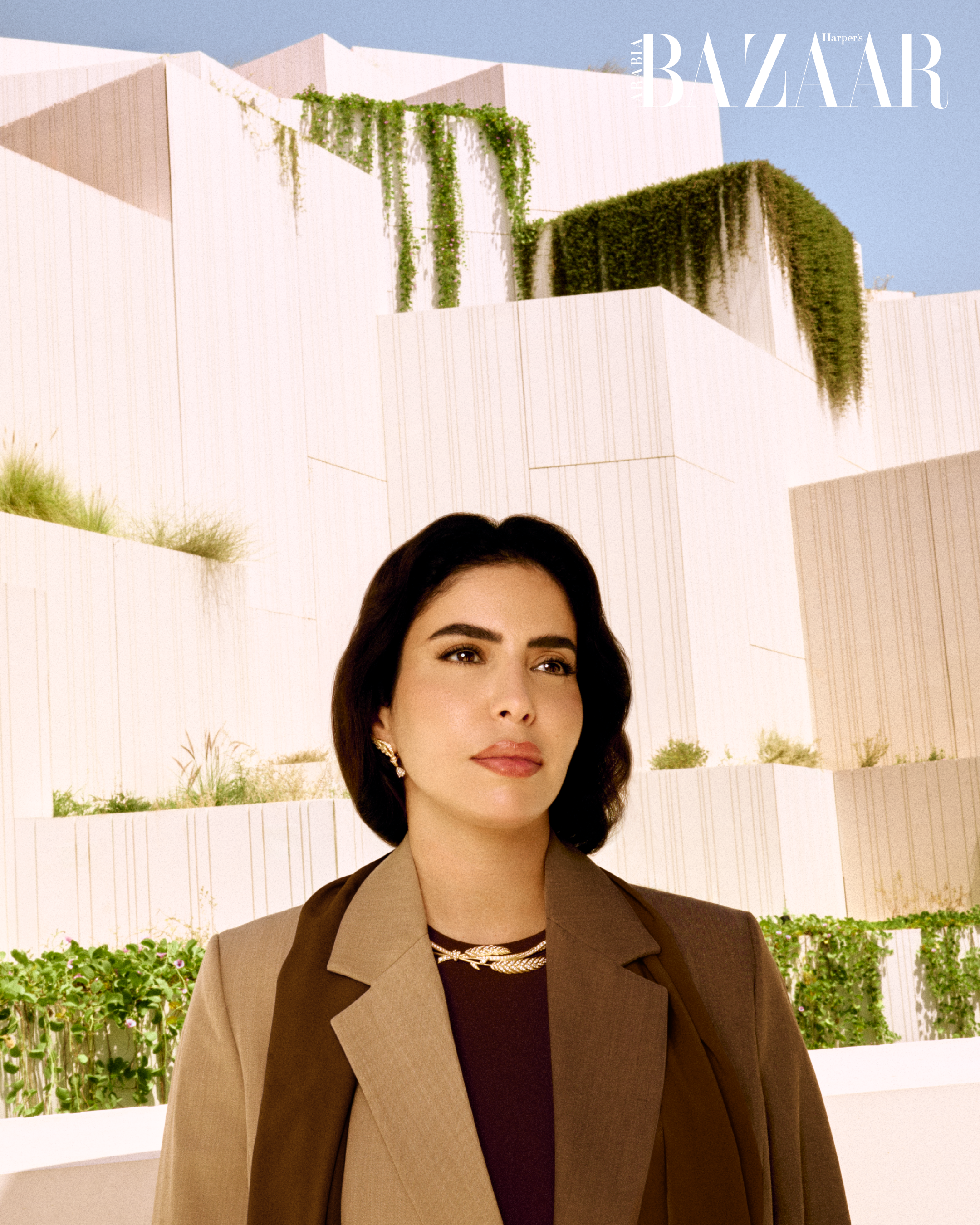
Lead Image Credits: Joséphine Valse Impériale Sapphire Earrings in White Gold with Diamonds, POA, Chaumet Abaya; Scarf, both Dhs2,500, Manaal Al Hammadi
Acting Editor in Chief: Natasha Faruque. Photographer: Fouad Tadros. Art Director: Hesham Rabee. Senior Fashion Editor: Nour Bou Ezz. Hair & Make Up: Julia Rada. Executive Producer: Steff Hawker. Styling Assistant: Rawan Kojok.
With special thanks to the Natural History Museum Abu Dhabi
From Harper’s Bazaar Arabia April 2026 Issue