
How Alyse Nelson is Pushing Forward on Women’s Equality
Bazaar Arabia spoke with Alyse Nelson, CEO of Vital Voices, during her recent visit to Abu Dhabi where she marked International Women’s Day at the Forbes 30/50 Summit with other top global women leaders
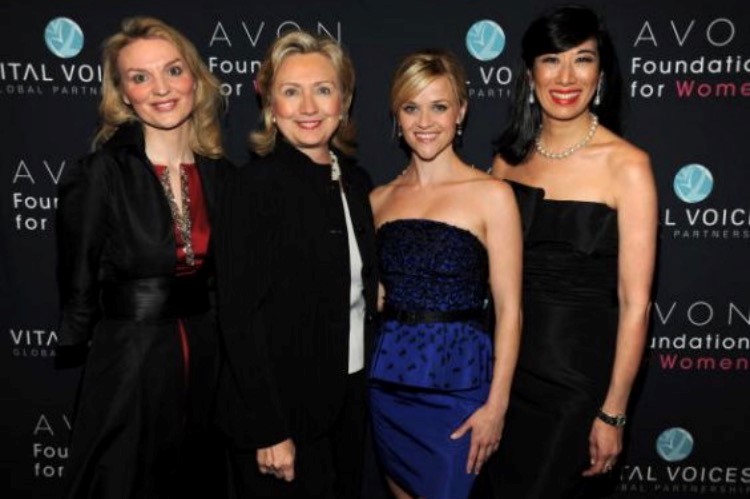
It was over two decades ago that Alyse Nelson discovered her personal mission to which she dedicated her career – to empower women leaders. Today, she is the president, CEO, and co-founder of Vital Voices Global Partnership, a leading non-profit organisation initially established by Hillary Clinton in 1997 while she was First Lady of the United States. Alyse was previously the deputy director of the State Department’s Vital Voices Global Democracy Initiative, working with the US President’s Interagency Council on Women at the White House. She is the author of the best-selling book Vital Voices: The Power of Women Leading Change Around The World, which documents the stories of women leaders who have had an impact on the world.
Her goal, and by extension the mission of the organisation, is to uncover untapped opportunities for women that will allow them to thrive as leaders. Over the years, Alyse has worked to develop a concrete step-by-step strategy for how to best invest in female leadership. This framework is the product of much time spent pondering the question: What do women leaders need from the world?

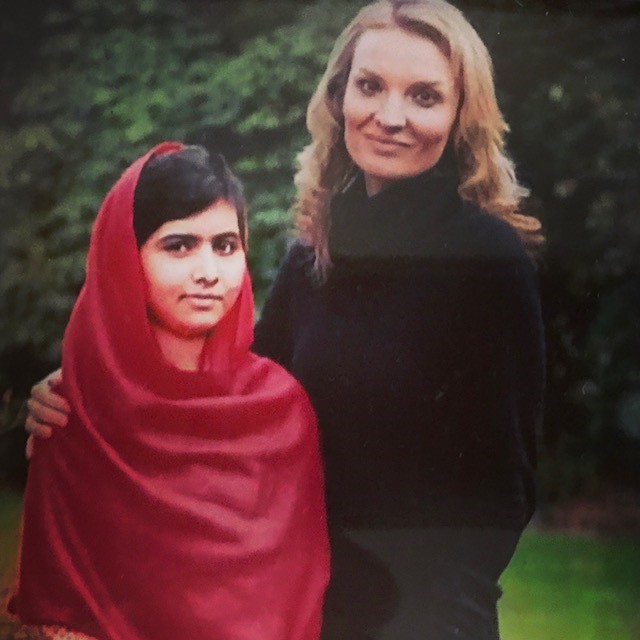
Creating networks in which women can come together and collaborate is at the crux of what they do at Vital Voices. Today the organisation operates across 185 countries and has a network of 20,000 women, some of whom have gone on to become presidents of their countries and to win Nobel Peace Prizes, such as Malala Yousafzai. Notable board members also include fashion designer, Diane von Furstenberg and actor, Sally Field. Just last year, Vital Voices proudly erected the first-ever global women’s embassy in Washington. It is located adjacent to the White House and Black Lives Matter Plaza in the city’s “Equality Corridor.”
It is as poignant a time as ever for the thorny issue of equality. While strides have been made when it comes to reducing poverty, slowing the birth rate, and bolstering women’s participation in health and education, a quick scan of any of the main markers of gender equality, like the UN Women’s annual report, suggests that women are nonetheless losing ground, and fast.
Harper’s Bazaar Arabia spoke with Alyse about the nuances of how women lead differently than men and about the distinct barriers women face. We honed in on how Vital Voices remains laser-focused on its goals, all while being agile and innovative as it adapts to the challenges of our time including digital rights, climate change and the refugee crisis – all of which have been shown to disproportionately negatively impact women.
Harper’s Bazaar Arabia (HBA): We’ve seen progress in the reduction of world poverty, the slowing of population growth and the increased access for women to education. Are you optimistic that these trends will continue?
Alyse Nelson (AN): Looking at the World Economic Forum’s Global Gender Gap Report 2021 after COVID, it revealed that we had lost a generation of progress. The report looks at how long it will take to reach equality at current rates of progress. I’m optimistic that we can uncover ways to speed up these ‘rates of progress’ and find opportunities which will fast track equality. And this is by investing in women leaders. But we are seeing progress. I’ve dedicated the last 25 years of my life to advancing women – so I have to be an optimist.
HBA: What did we learn from COVID? How can we avoid taking steps backwards in the face of global threats like COVID or climate change?
AN: It’s about understanding how women lead differently. Women consider the entire community when they lead and make decisions. We are starting to learn this lesson and we saw this during COVID. We’re starting to learn how women can lead really well in a crisis. Whether it’s on the scale of a family crisis, a community crisis, or a larger global crisis – women always step up. They take risks for others where there is no personal gain. Women led better during the COVID crisis. We saw a different kind of leadership. It was about compassion and about putting other people at the centre of the solution.
From the 100 million people affected by the global refugee crisis, to the climate crisis, economic crises, and natural disasters the vast majority of those who will need humanitarian assistance are women and children. We can choose to see women as victims, or we can see women as solution leaders – as those who are closest to the challenges – who will immediately think about how they can support their families and communities.
HBA: The structures are already in place for men to succeed in the way that they lead. What obstacles do women face? How do we redesign these structures so they support women leaders?
AN: We’ve seen a rise in violence against women online. Women journalists being silenced, women political leaders being harassed and threatened. Any woman who raises her voice and shows leadership online will be cut down. And unfortunately, this has led to less women running for political office. Health and education are gaining momentum, but politics is one of the areas that sees little progress.
If you dig into why that is and talk to women around the world, it is a shared global challenge that women are feeling – like why would I do it? To run for public office, you need to have a social media presence and be online. But if you are a woman, the threats can be so severe, and you don’t have the option to just shut it off. I think many in the tech industry want to figure out how to solve this issue. How we can use technology to identify online violence and root this out. I think it’s important that technology leaders be informed by what women leaders are facing online, and that they look for creative solutions.
HBA: Is there a role for women in big global issues such as climate change?
AN: We don’t have the solutions to currently solve the challenges. I’m a big believer that women are part of the solution, not the whole solution, but they’re a big part of finding answers to the climate crisis – particularly Indigenous women. How do we get them to the negotiating tables?
It’s about activating, listening and investing in everyone. And many of those unheard ideas are coming from women. And that’s what we do at Vital Voices, we search the world and find women who have daring visions for change to solve the world’s greatest challenges and then we support them.
Over the last 25 years we’ve developed an investment model. Basically, a six-part model for what women leaders need, and it’s everything from crisis support to leadership training, communications training, strategic planning training, and then also importantly, connecting them with peers and mentors and giving their voices credibility and visibility whether it’s through media attention or meeting top leaders.
HBA: What are you most focused on at this point in your career?
AN: I’m particularly excited, because we recently opened the first global embassy for women leaders. The idea is that rather than telling people how women lead differently we want to show it. So we created this embassy so that women leaders from different organisations and countries could come together in one place in the pursuit of solving world issues. We’re trying to create a space that’s permanent, powerful.
We want to show what women can do when they have power. And what do they do? They come together and collaborate – they share it.
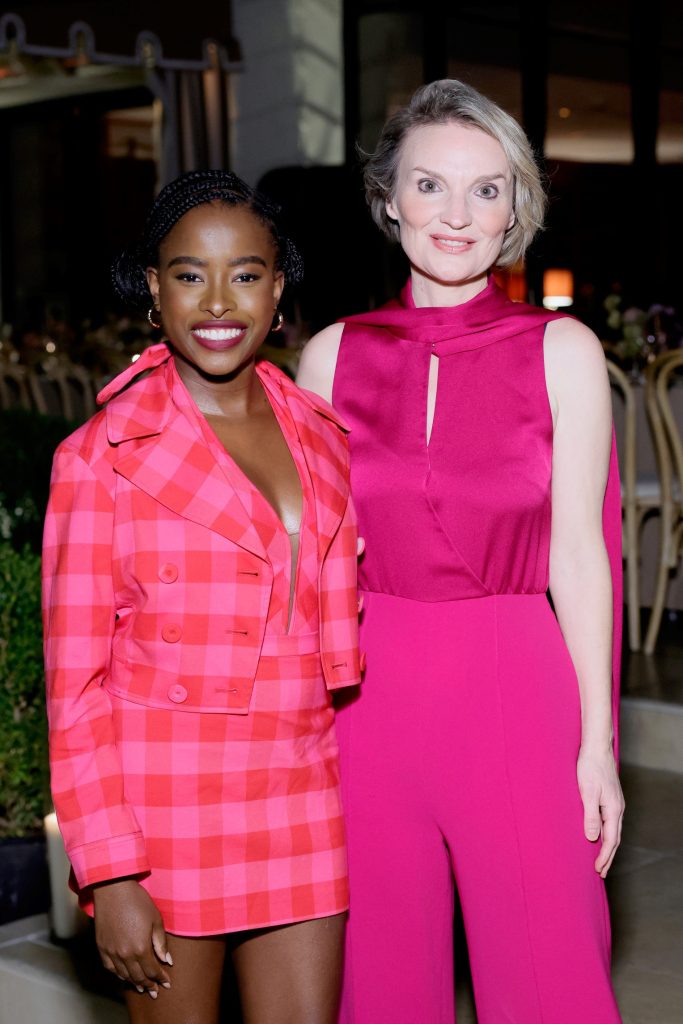
When I spoke with Alyse Nelson, she was calm, collected, poised and ever so eloquent, although there was most definitely an undercurrent of urgency in every word she uttered and she will say: “I’m not very patient”. True enough. There is much to be done. While it appears that Alyse hasn’t skipped a beat over the last 25 years, we women must all take up the drum and continue to pound out the rhythm of change at a steady if not faster tempo.
Images Supplied