
Bazaar Interiors Discovers: The British Interior Designer Bringing A Little Ancient Egpyt To Any Home
British interior designer Birdie Fortescue unlocks the secrets to ancient Egypt through her A/W26 collection, Amunet
Following a long-awaited visit to Egypt, British interior designer Birdie Fortescue found herself captivated by the country from a design perspective – inspired by the extraordinary richness to the colour, pattern and craftsmanship, as well as the level of detail found. Taking that creative impression home resulted in Amunet, a homeware collection designed to capture the magic of Egypt that lingered with Birdie long after she left.
What struck you most about your trip to Egypt?
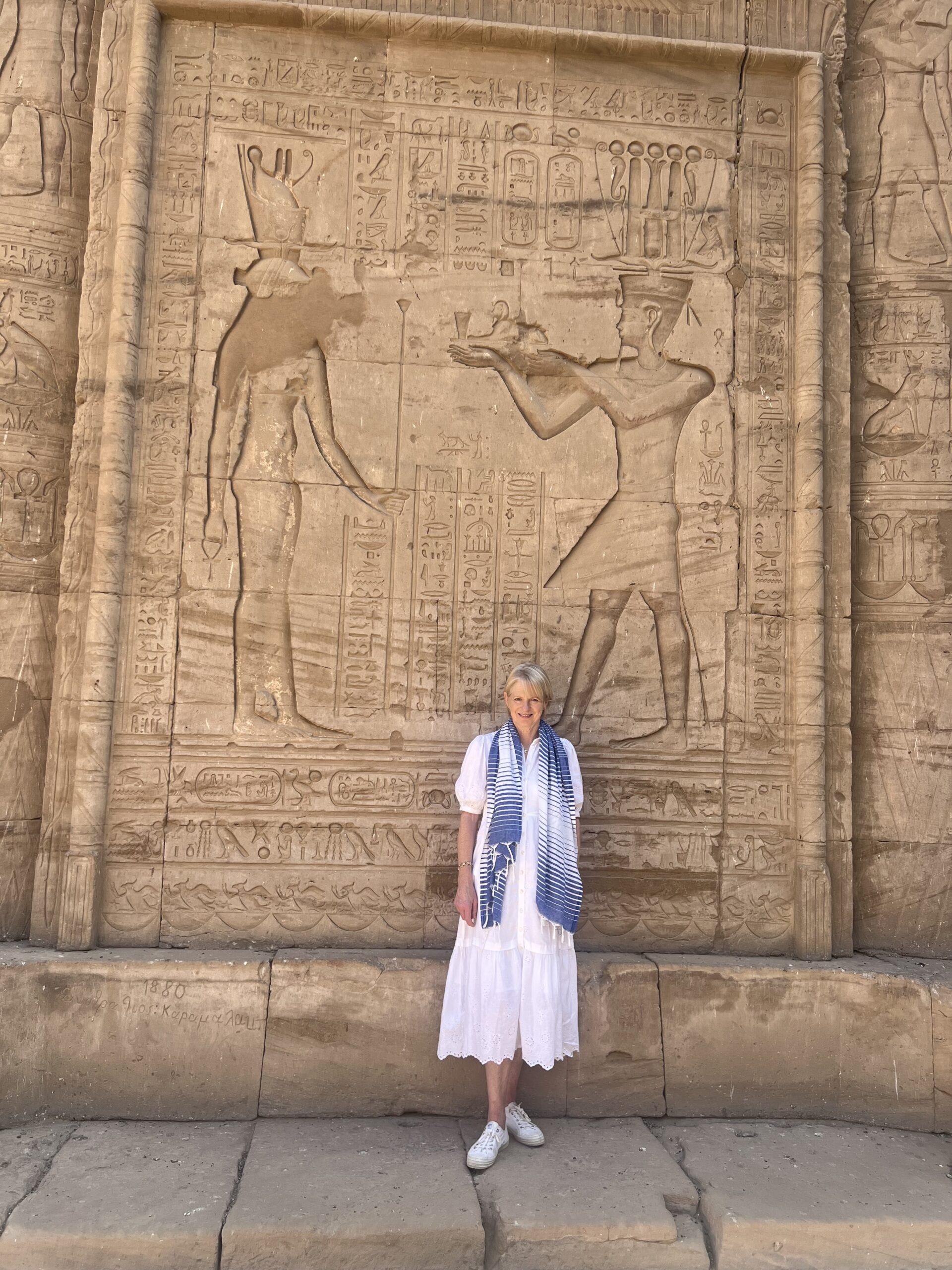
The more closely you look, the more you discover – painted borders, tiny motifs, unexpected colour combinations and incredibly intricate decorative work, much of which has survived for thousands of years. I came home with an enormous amount of visual inspiration and a real desire to capture something of that feeling of discovery. I never wanted Amunet to feel like a literal interpretation of ancient Egypt; it was much more about taking the details, colours and rhythms that had stayed with me and reimagining them in a way that felt relevant and comfortable in a contemporary home.
Where did your research journey start?
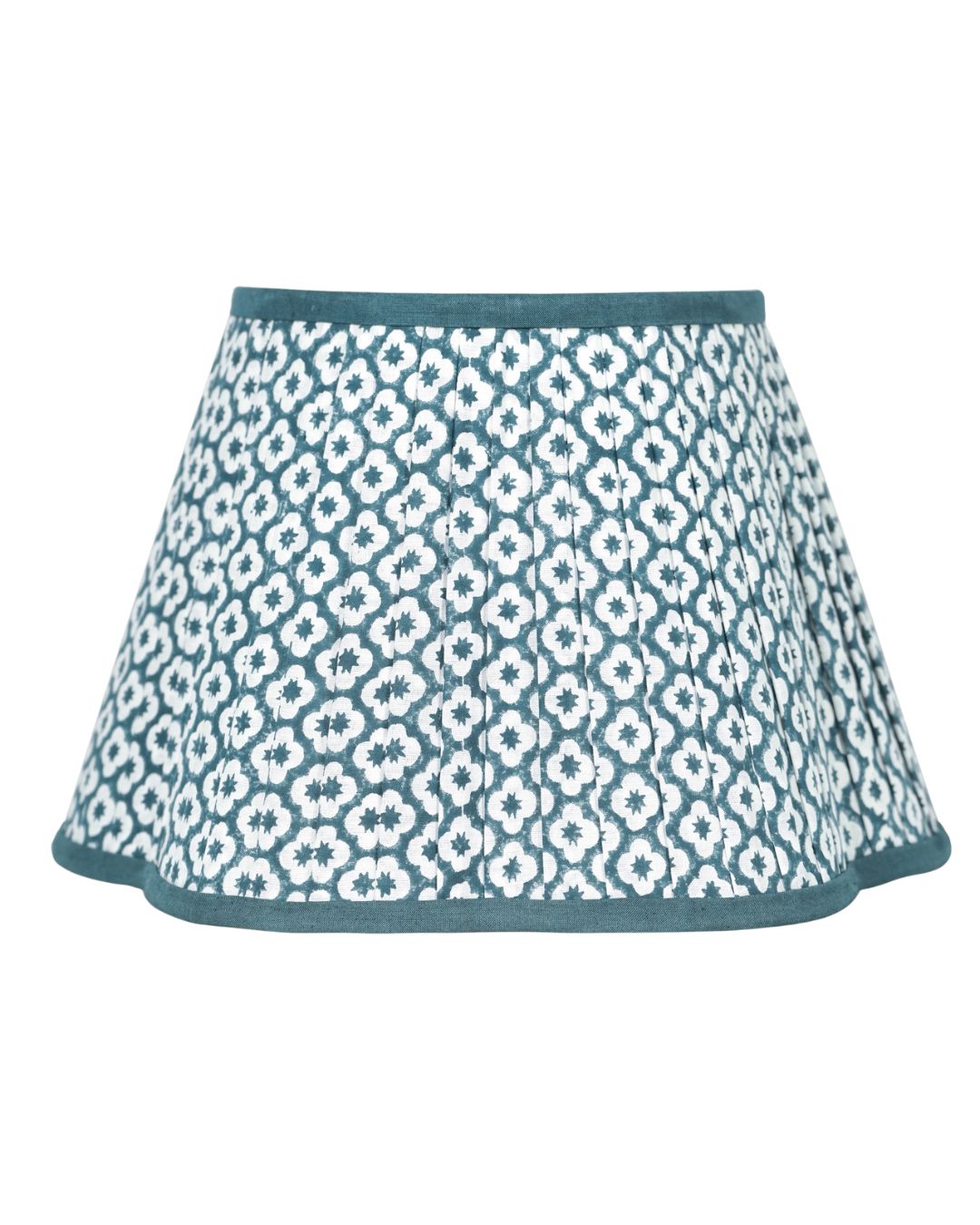
It began while I was travelling. I found myself constantly photographing details – painted borders, murals, architectural elements and geometric motifs – particularly in the tombs and ancient monuments. Often it was a very small fragment rather than the grander picture that caught my eye: the repetition within a border, the shape of a motif or two colours sitting unexpectedly alongside one another. Back in the studio, we began looking at how those ideas could be reinterpreted. A tiny decorative detail might become the starting point for a much larger geometric textile, while the pattern of a painted border could inform the repeat of a lampshade. That process of taking something very old and allowing it to evolve into something completely new was one of the most enjoyable parts of designing Amunet.
There are many Egyptian goddesses featured throughout
history. Why did you choose this one in particular?
I loved both the name and the idea behind Amunet, ‘the hidden one’, because it seemed to encapsulate the way I experienced Egypt. So much of what inspired me wasn’t necessarily the most obvious or monumental element; it was what revealed itself when you stopped and looked more closely. That sense of something waiting to be discovered felt very relevant to the collection, too. There are references woven through the designs that may not immediately read as Egyptian, and I rather like that subtlety. They have their own identity as pieces for a contemporary interior, but there is a story behind them if you choose to look a little deeper.
Can you tell us a little about the themes behind
the collection?
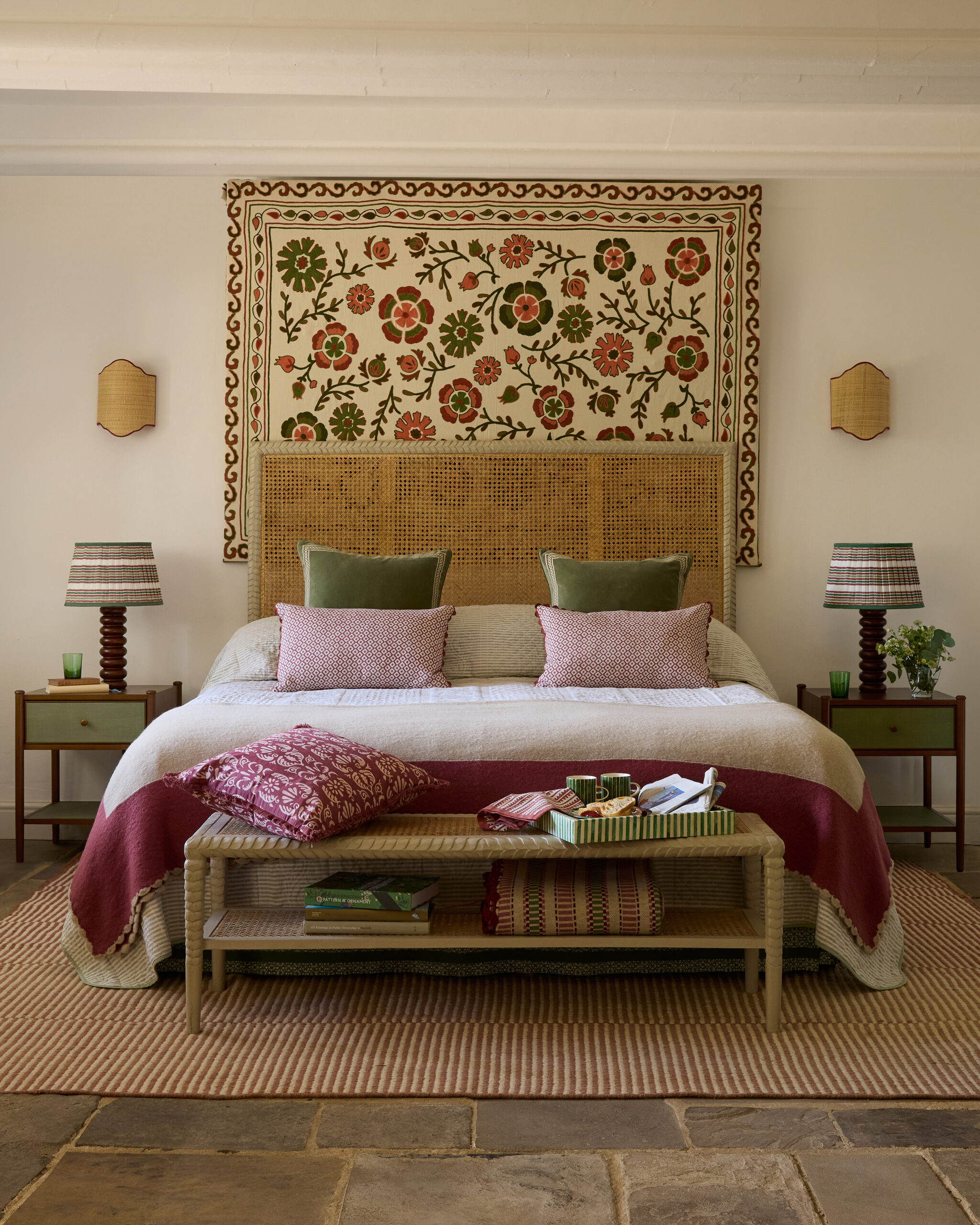
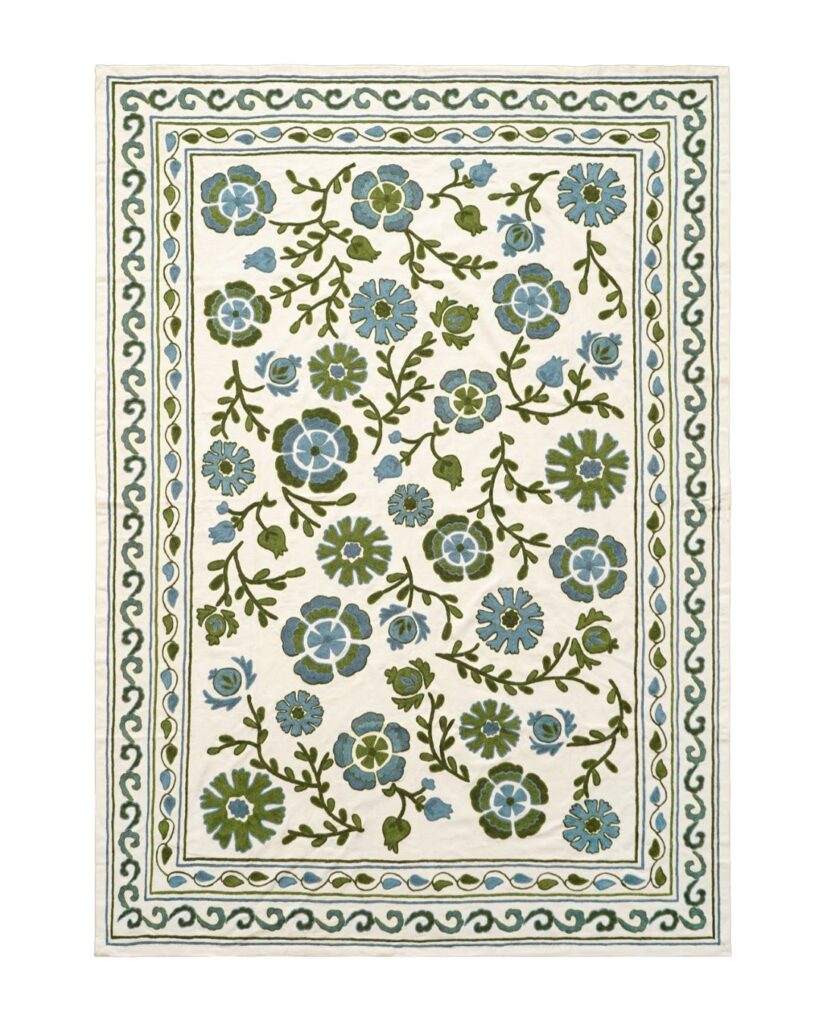
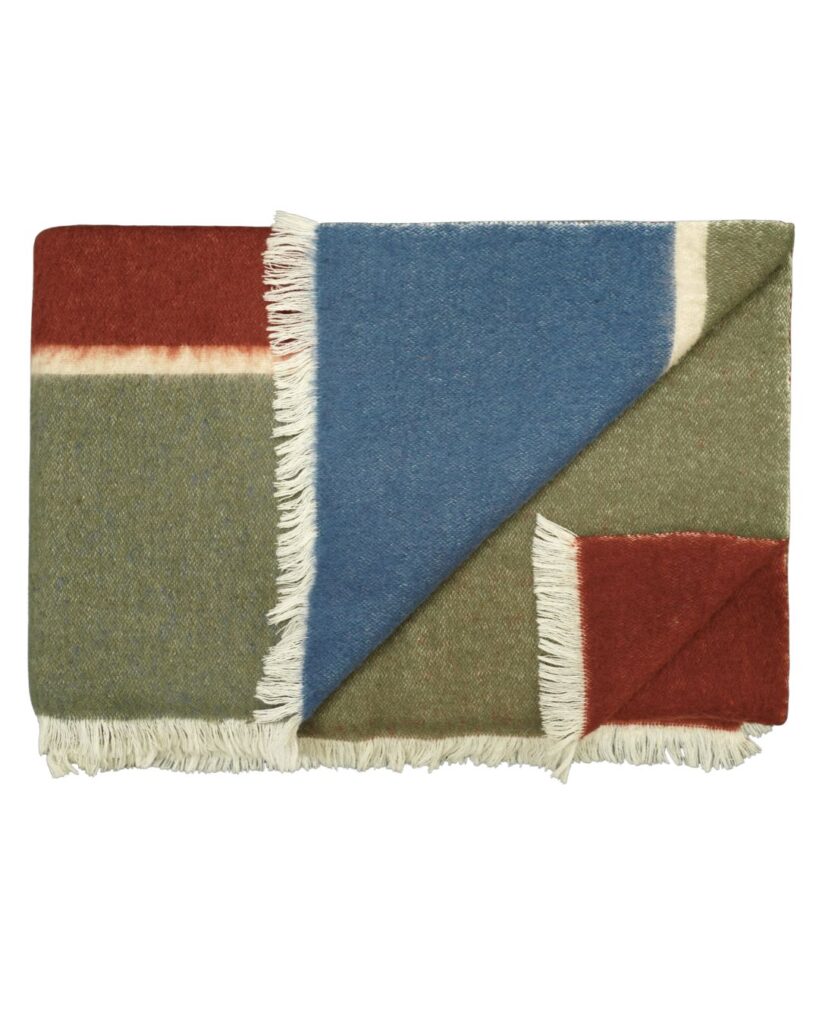
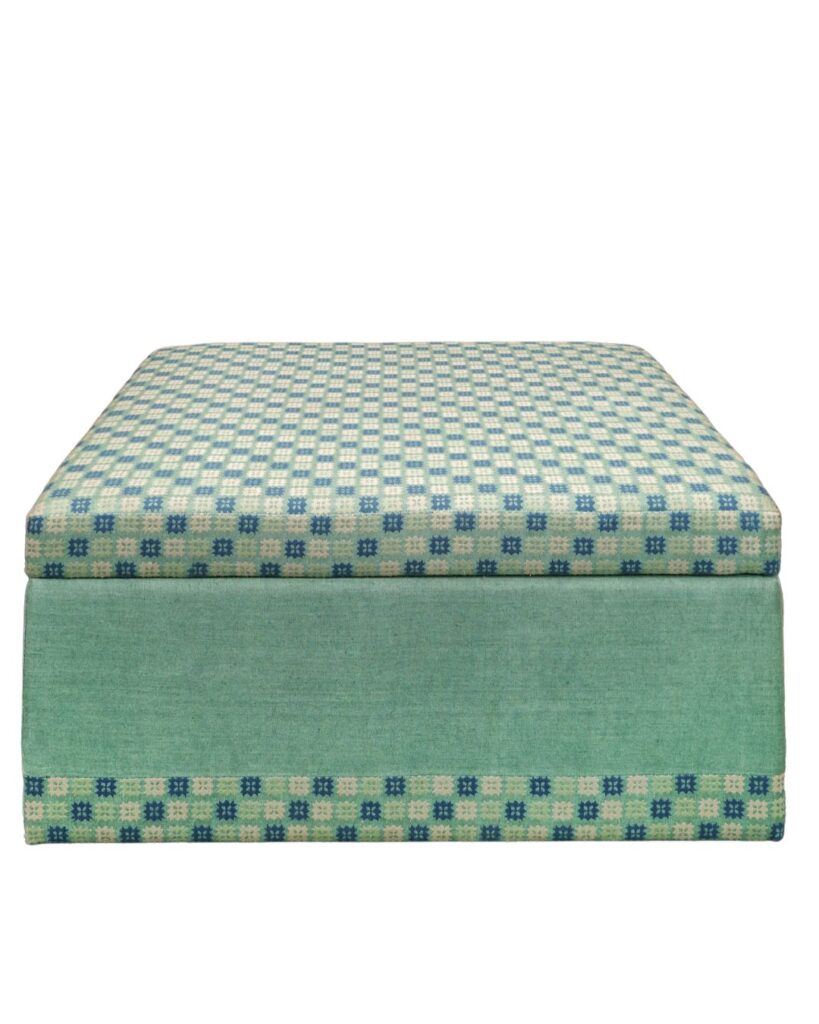
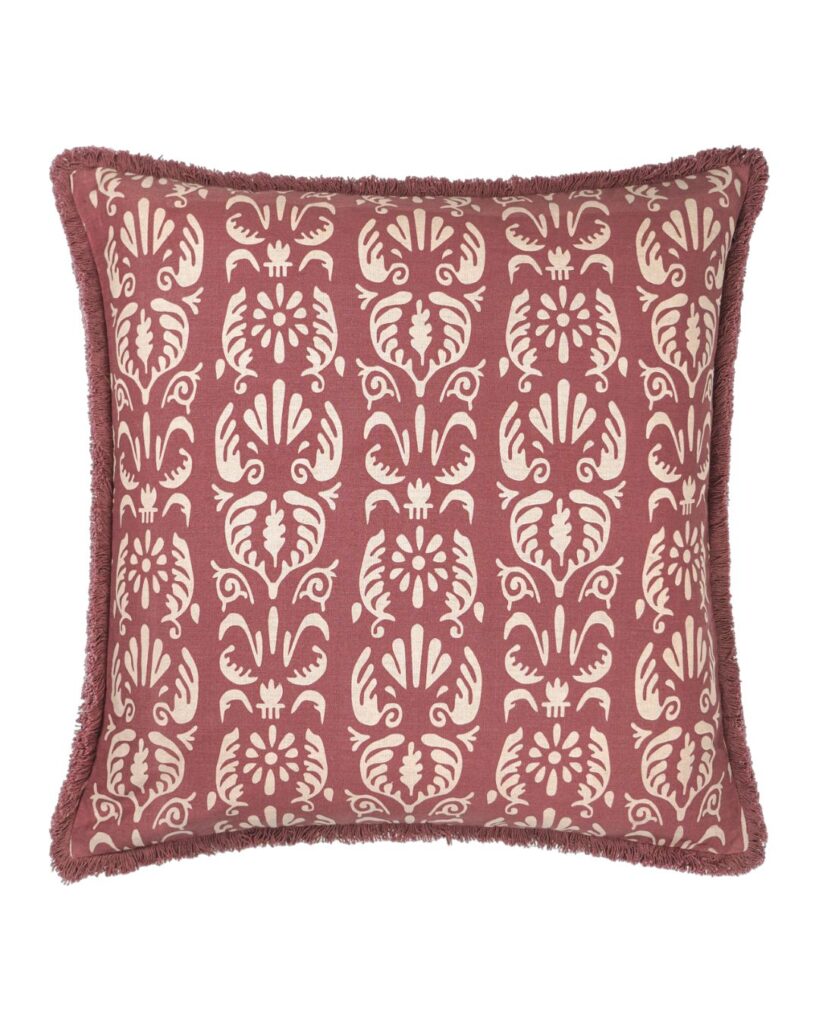
It is a layered collection, bringing together patterned and embroidered textiles, lighting,
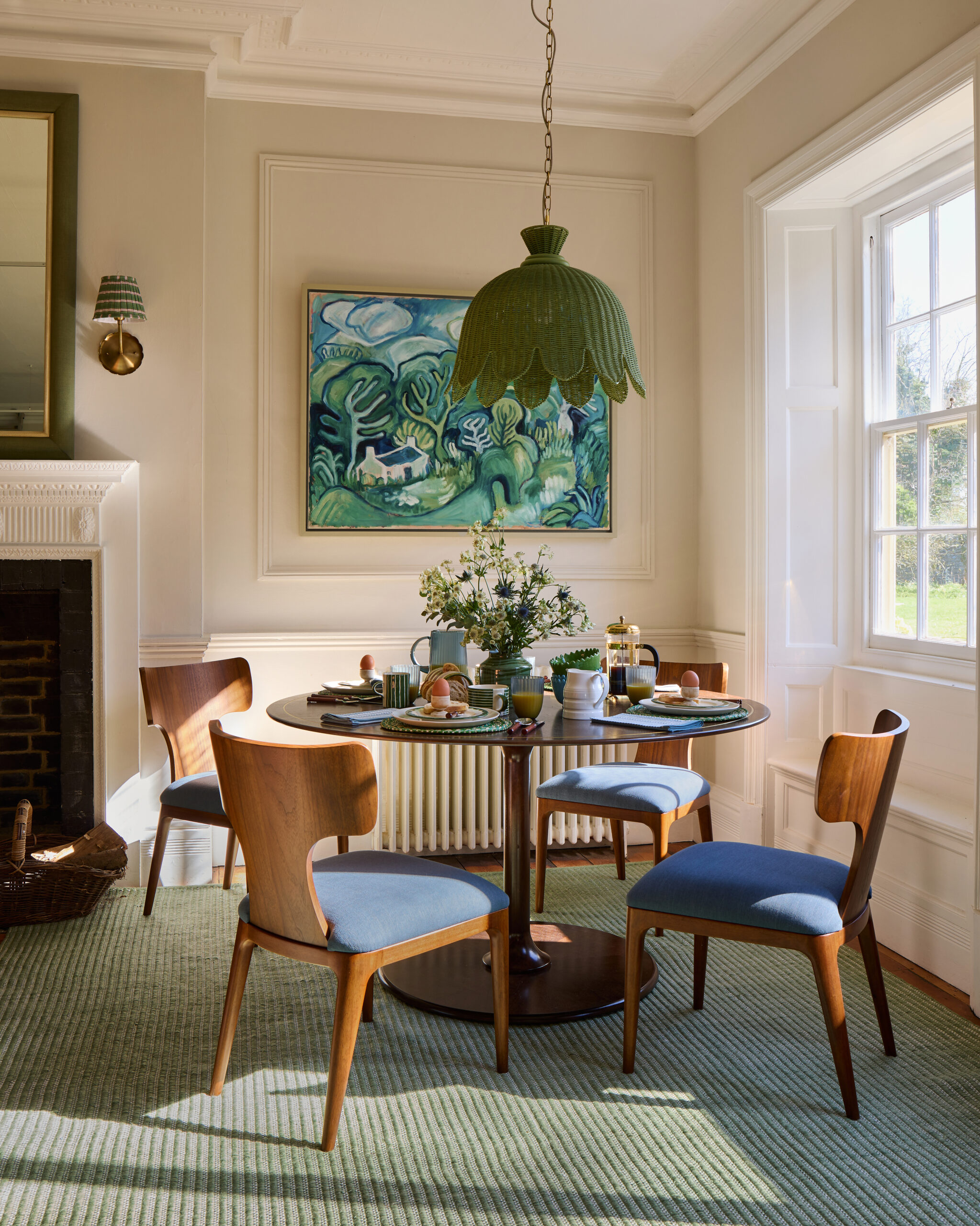
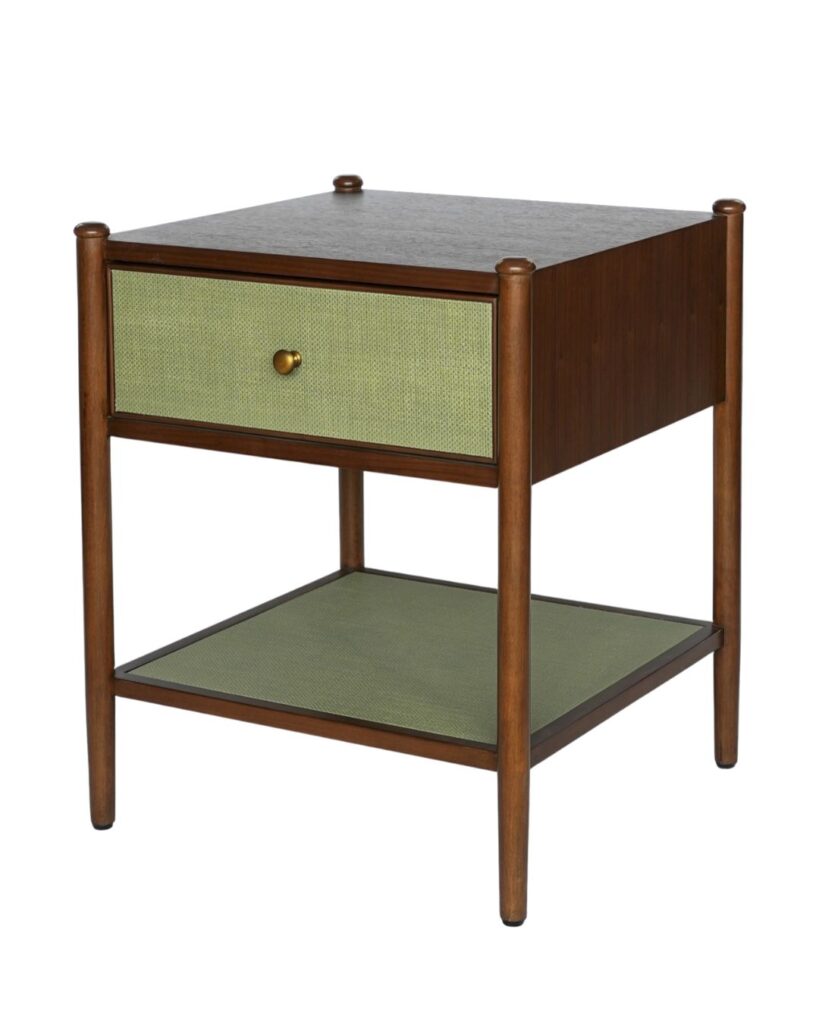
accessories and furniture. I wanted there to be a real richness to it, but also enough quieter pieces to balance the stronger patterns and colours.The palette was very much informed by the colours I encountered in Egypt: deep reds, dusky blues and earthy greens, alongside the warmth of natural materials and rich walnut. What fascinated me was how sophisticated some of those ancient colour combinations still feel today.
And how did you approach the furniture?
The furniture is deliberately more restrained. I have always loved the clean lines of mid-century continental design, so those pieces provide a calmer counterpoint to the more decorative textiles and accessories. My background as an antiques dealer inevitably influences the way I design; I am always thinking about how a new piece will sit alongside something old. I want these designs to feel as though they can become part of a home over time rather than belonging to one particular moment or look.
What do you love most about the country itself?
What I find extraordinary about Egypt is the sheer depth of its visual history. You can be looking at something created thousands of years ago and suddenly notice a colour
combination, a geometric form or a decorative detail that feels remarkably fresh. There is an incredible confidence in the use of pattern and colour, but also enormous precision
and craftsmanship. For me, the inspiration wasn’t about taking one monument or one historical reference and translating it directly into a design. It was much more cumulative. It came from everything I looked at as I travelled – the tomb murals, architectural details, borders, symbols, colours and the extraordinary surfaces that have endured for centuries. Those fragments stayed with me and gradually found their way into the collection.
Tell us about your travels through Egypt…
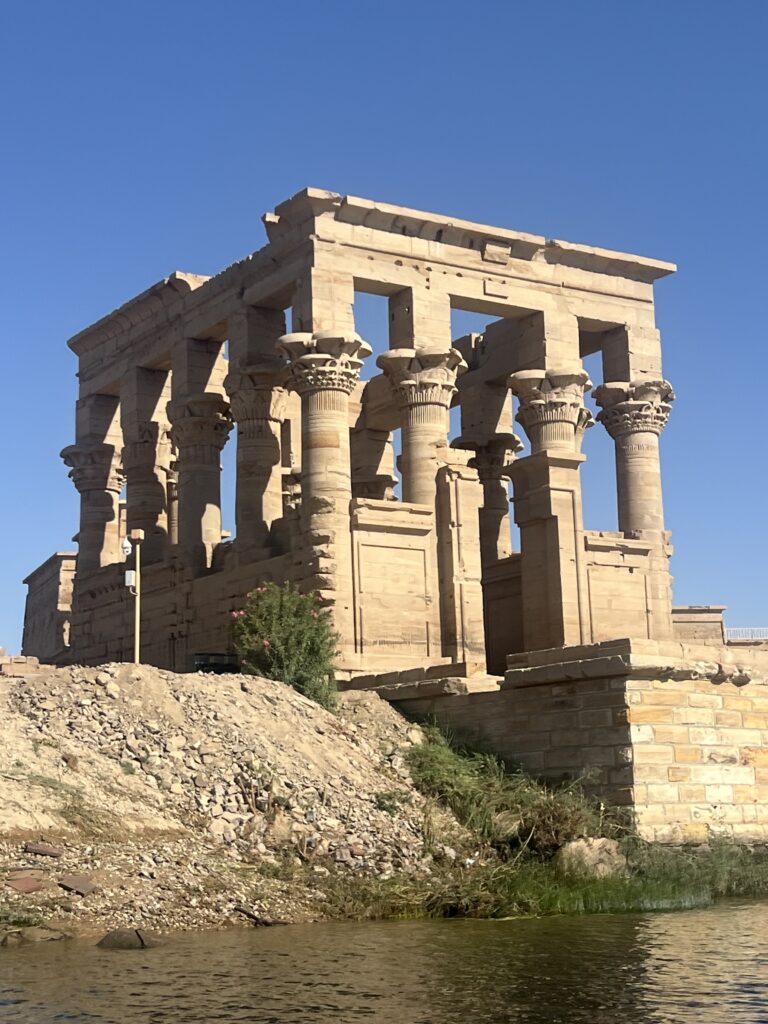
We started our trip in Luxor, visiting the extraordinary temples, tombs and ancient sites there, before travelling by boat down the Nile towards Aswan, stopping at different sites along the way. There was something very special about experiencing Egypt in that way – moving slowly through the landscape and seeing how the river connects these remarkable places. From Aswan we travelled on to Abu Simbel, which was an unforgettable end to the journey.
What was a defining moment from your trip?
What stood out for me the most was the contrast between the extraordinary scale of the monuments and the incredible intimacy of the detail within them. You can enter a vast temple or tomb and then find yourself completely absorbed by a tiny painted border, an intricate motif or an unexpected combination of colours that has survived for thousands of years. As a designer, I found that incredibly inspiring. I also loved the sensory richness of Egypt beyond the ancient sites – the changing landscape along the Nile, the warmth, colour and energy, and the constant sense of old and new existing alongside one another. I came home with hundreds of photographs, sketches and ideas, but more importantly with a feeling I wanted Amunet to capture; that sense of curiosity and discovery, and the idea that the more closely you look, the more there is to find.
Lastly, what do you want your customers to
take away after seeing the collection?
I would hope it conveys the enormous admiration I have for the artistry, craftsmanship and visual history that inspired it. Amunet isn’t intended as a reproduction of Egyptian design; it is a very personal response to what I saw and experienced while travelling there. For me, the most exciting thing about historic references is that they can spark an entirely new creative journey. A detail that has existed for centuries can inspire a new pattern, material or colour combination while retaining something of the spirit that first caught your eye. I hope people see Amunet as celebration of that extraordinary creative legacy, interpreted through the lens of how we live and decorate our homes today.
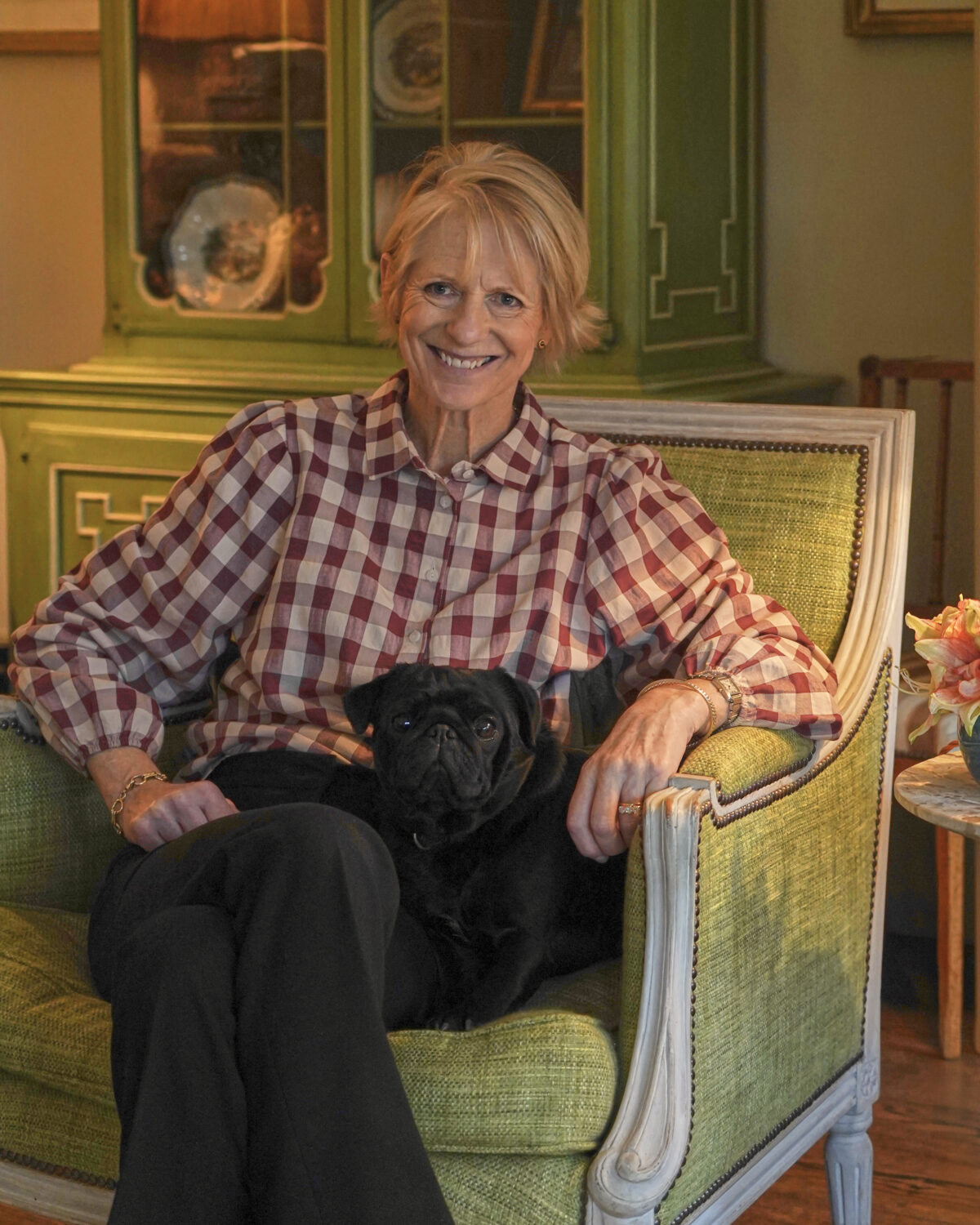
Lead Image: British interior designer and antique dealer; Birdie Fortescue
Imagery Supplied
From Harper’s Bazaar Arabia October Issue