

A Bumper Year: Luxury Maisons Are Celebrating Big Birthdays Like Never Before
In light of Bazaar Arabia’s 200th issue, we highlight the houses that join us in hitting major milestones in 2025
Fendi 100 Years
Distilling a century of heritage from a legendary fashion house like Fendi is no small feat. When Silvia Venturini Fendi, the brand’s artistic director of accessories and menswear, picked up the baton for the AW25 centenary show – following Kim Jones’ departure as womenswear creative director, the co-ed collection she presented transcended a celebration of milestones.
Founded in Rome in 1925 by Adele and Edoardo Fendi, the brand was later steered by their five daughters, who appointed Karl Lagerfeld as womenswear artistic director. Karl’s 54-year tenure, the longest of any designer at a single house, helped shape Fendi’s global identity, pushing the boundaries of technique and design particularly with respect to fur, the house’s signature material.

Over the decades, Silvia Venturini Fendi has left her own indelible mark on the brand, most notably with her 1997 design of the iconic Baguette bag, immortalised by SATC. For 100 years, Fendi has stayed true to its legacy of fearless creativity, led by visionary designers and strong women. Here, Silvia shares with Bazaar Arabia what this milestone means to her and her family, and how the AW25 show was a deeply personal reflection of the house – a moment only a third-generation Fendi matriarch could bring to life.
What is the one moment or achievement that fills you with the most pride?
Our last show – it’s been a resumé of 100 years, condensed into ten minutes. When they asked me to design the collection, I knew I didn’t want it to be a retrospective – those are better suited for museums. I knew it had to reference Fendi’s history, but from an emotional side. It was more about communicating the essence of Fendi, rather than any specific period.
My starting point was my personal memories. Being born into this family, at first, it was just like any other family to me. But in 1966, Karl decided to put me in the show – that was the moment I realised the magnitude of what Fendi was. It was the first time I felt the adrenaline and the emotions that fashion can evoke. And now, with my designs, I’m always looking to make people feel that same excitement and passion. This is where I got the idea to have my seven-year-old grandchildren open the doors to the runway. The doors were like a portal linking the past to the future. I wanted them to be very large, in order to reflect how I felt when I was six and it all seemed so big to me.

How do you strike a balance between referencing the past and looking ahead to the future?
You have to look at your past in order to write your future. But always be humble. I don’t go to our archive often, because I have so many of my own memories, but looking through the decades, you can really see the changes in society. So, it’s important to keep that dialogue open and to understand how a certain moment in time had its own needs. And if you’re very good, you’ll be able to anticipate those needs for the future.
How has your own interpretation of femininity evolved over time?
Not only has my concept of femininity changed, but also masculinity. Because I design mainly menswear of course. For the AW25 show, I chose to present womenswear and menswear together, I wanted to have a dialogue between femininity and masculinity.
I remember when I walked in the 1966 show, it was a period in Italy when women were fighting for their rights. And that’s why Karl decided to dress men and women in unisex look. It was his way of championing equal rights for everyone. The reason he decided to include a child [me], was because, working at Fendi, he was constantly amazed at the strength of the Fendi women. They all had such strong personalities and were so committed to their work, while also being mothers and wives. And even though I was only six – I was always around! He was truly inspired by how these women were succeeding at mixing private and professional life.

How has belonging to a legacy of strong women shaped the way you approach your work and your leadership style?
From a personal point of view, I always like to break rules without actually breaking them. This is something I’ve learned from the women who came before me. For instance, if you think of my grandmother in 1925, she was so ahead of her time. In addition to founding a company and living through two wars, she also had five daughters! And through all of it, she never lost her values of motherhood and family. So, for me fashion is a tool that can be used to express a set of values. It can be subtle, it’s not in the way of screaming in the streets.
How do you define success in your own life?
I never feel that I’ve reached success. I’m never completely satisfied, which is not always good. Because the more you believe in yourself, the more others believe in you – it’s something I’m working on. But, if I look carefully, I can say that I’m actually very satisfied with what I’ve achieved, especially on a personal level. Today, I look at my family – I have five grandchildren. I was amazed by the twins opening the doors at the show – they were so professional! I said to myself, they definitely have the double F chromosome.
What excites you about the future of Fendi?
Continuing to work with the same passion and curiosity. We’re not talking about changing the world through fashion – but we can make it more pleasant. If you think too far in advance, you risk feeling blocked. I think that life is tough, and fashion is something that can help give you the strength to express yourself and be ready for the fight.
Vacheron Constantin 270 Years
Vacheron Constantin is marking its 270th anniversary in style, reaffirming its position as a trailblazer in horology while staying true to its core values. To celebrate, the Geneva-based brand has released a Jumbo version of its iconic 1977 Historiques 222, a stainless-steel watch with an integrated bracelet that helped define luxury sports watches.
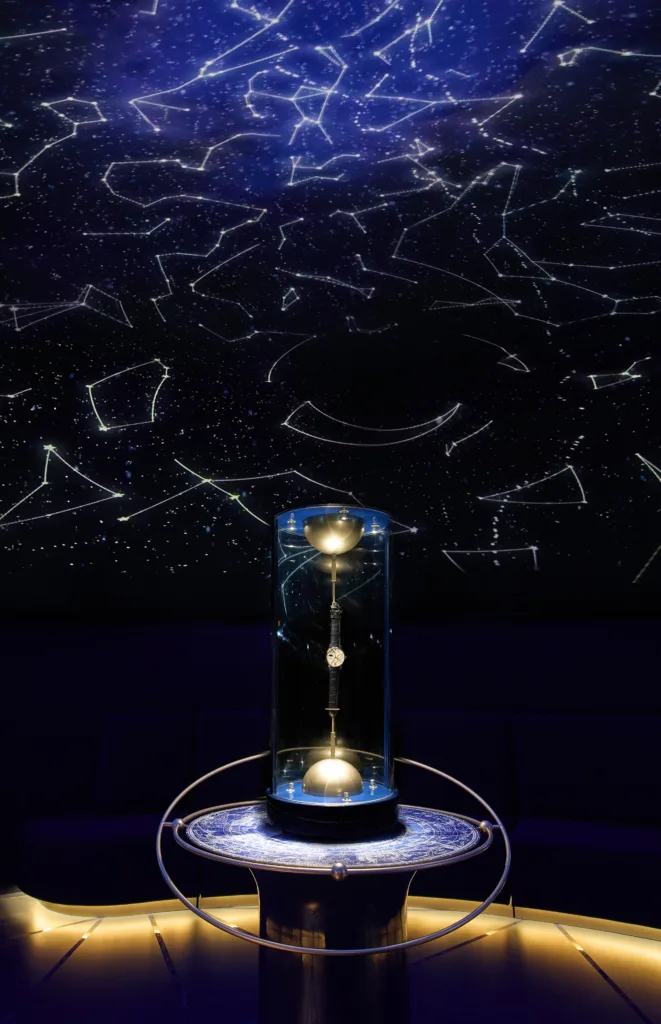
In addition, Vacheron launched a global immersive retrospective, The Quest: 270 Years of Seeking Excellence, beginning in Abu Dhabi and on until 15 April 2025. As part of the exhibition, the brand has unveiled a one-of-a-kind timepiece: the Celestial Astronomical Grand Complication, etched with the celestial sky chart of Abu Dhabi, marking the city’s – and by extension, the region’s – significant influence on the luxury market.

Armani Privé 20 Years
This year marks an historic anniversary for Giorgio Armani, as he celebrates two decades of Armani Privé, his Haute Couture line that has come to define timeless elegance. It was back in 2005, at the age of 70, that Giorgio introduced his first Haute Couture collection, signalling his bold entry into a realm of fashion traditionally reserved for a select few.
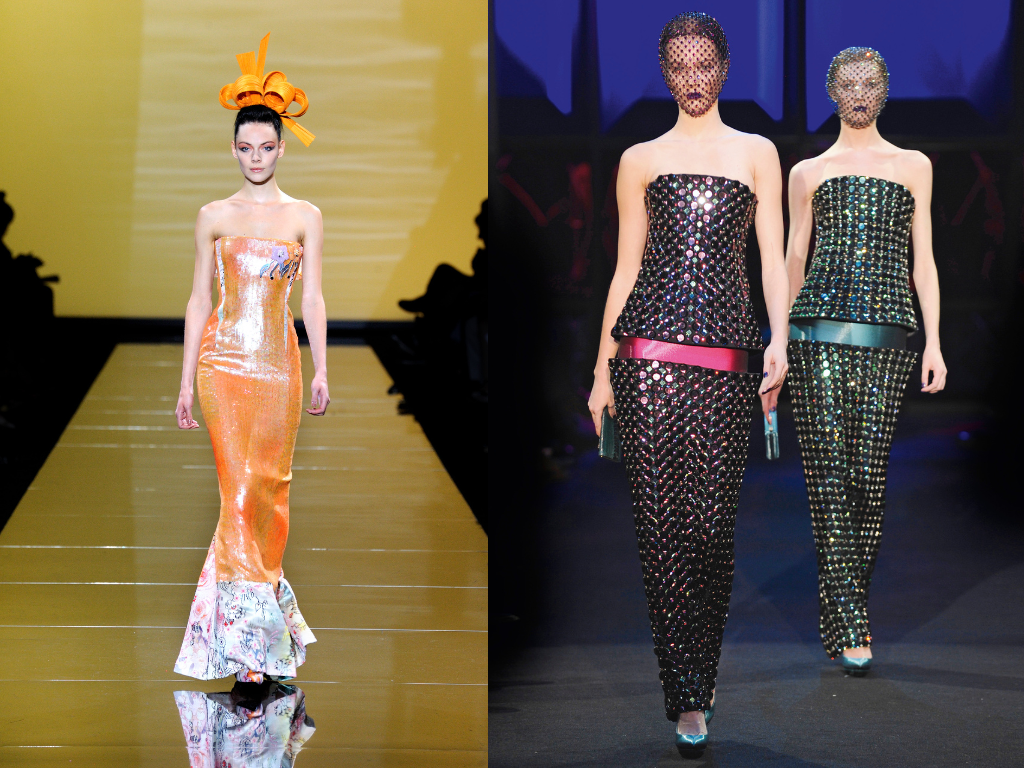

Two years later, the Italian brand made another ground-breaking move becoming the first house to stream a couture show online, setting the stage for the digital transformation that would soon sweep the fashion industry. Armani continues to be at the vanguard of the industry and is a notable celebrity favourite on red carpets. In fact, Armani has dressed more Oscar winners, including Jodie Foster and Cate Blanchett, than any other designer.
Today, Armani Privé holds the prestigious title of a Correspondent Member of the Chambre Syndicale de la Haute Couture, the esteemed French governing body that formally accredits a limited number of fashion houses to officially label themselves as Haute Couture.
When Mr. Armani ventured into Haute Couture, he brought with him a fresh perspective on high dressmaking, one that focused not just on extravagance, but on the subtle, yet intricate details that define true luxury. For Armani, it was never about grand statements —it was about elevating fashion through precision and a disciplined approach to design.
Loro Piana 100 Years
In an era when logos speak loudly, Loro Piana has quietly built an empire on something far more elusive: quality. Last year, the brand celebrated a century of excellence and to mark the milestone, it recently unveiled its very first exhibition at the Museum of Art Pudong in Shanghai, on until 5 May 2025.

The chosen location underscores Loro Piana’s historic relationship with China as having long been the place from which they ethically sourced cashmere. Pioneers of ‘quiet luxury,’ Loro Piana has always shunned bold logos in favour of materials that speak for themselves. From Baby Cashmere to Tasmanian wool, the brand’s origins as a fabric maker have granted it an unparalleled ability to source the world’s finest – and often rarest – fibres. Among its most coveted materials is vicuña, a textile derived from a rare South American camelid. Today, Loro Piana continues to harness its dedication to craftsmanship, sustainability, and timeless elegance.

Chanel 110 Years
There is perhaps no house as synonymous with high fashion as Chanel and in January, it marked a monumental milestone: the 110th anniversary of its Haute Couture line, celebrated with its Spring-Summer 2025 Couture show at the Grand Palais. This makes Chanel the longest-standing fashion house with an Haute Couture collection. Since Coco Chanel opened her first Couture house in Biarritz in 1915, the brand has only solidified its place at the pinnacle of luxury fashion—exemplifying sophistication, refinement, and a unique savoir-faire, all rooted in a powerful, yet delicate vision of female beauty.

The set itself echoed the iconic Chanel logo, doubling as an infinity symbol, representing the endless cycle of inspiration that fuels the collections. True to the house’s codes, the show blended embroidered flowers with timeless tweed suits, beginning with pastel hues before shifting into deep navy blues, embodying the continuous transition from day to night.

Georges Hobeika 30 Years
It has been 30 years since Georges Hobeika founded his namesake label in his native Beirut. His mother was herself a couturière, and though Georges studied civil engineering and architecture at university – it was clear that dressmaking was in his blood. His journey took him to Paris, where he honed his craft while interning at Chanel. Coupled with his formative experience in his mother’s atelier, his time at Chanel forever shaped his approach to couture.

In 2001, a mere six years after launching his brand, the almost impermeable world of French Haute Couture came knocking. That year, Georges made his debut at Paris Couture Week, showcasing his whimsical gowns to a global audience. In 2017, the accolade went a step further when the Chambre Syndicale de la Haute Couture recognised George Hobeika not merely as a guest, but as an official Correspondent Member.

His fairy-tale designs, masterfully draped in shimmering embellishments and hand-crafted embroidery have captivated critics and A-listers the world over. From Adele to Jennifer Lopez and Beyoncé, his designs have adorned some of the worlds most influential women. In just three decades, Georges Hobeika has etched his name into the annals of fashion history. His legacy as an Arab designer is not just one of exquisite gowns, but of empowering women and celebrating their strength via the art of dressmaking. In 2022, Georges appointed his son, Jad, as Co-Creative Director of the brand – undeniably, talent truly does run in the Hobeika family.
Audemars Piguet 150 Years
Audemars Piguet, one of the oldest family-owned watchmakers, celebrates its 150th anniversary this year with The House of Wonders exhibition at the Musée Atelier Audemars Piguet in the brand’s native Le Brassus, Vallée du Joux. The exhibition highlights key moments in the brand’s history, including the 1972 debut of the Royal Oak – a watch that single-handedly crystallised the category of luxury sports watches. The exhibition will run until 2026, with global stops in Shanghai this May and Dubai in November.

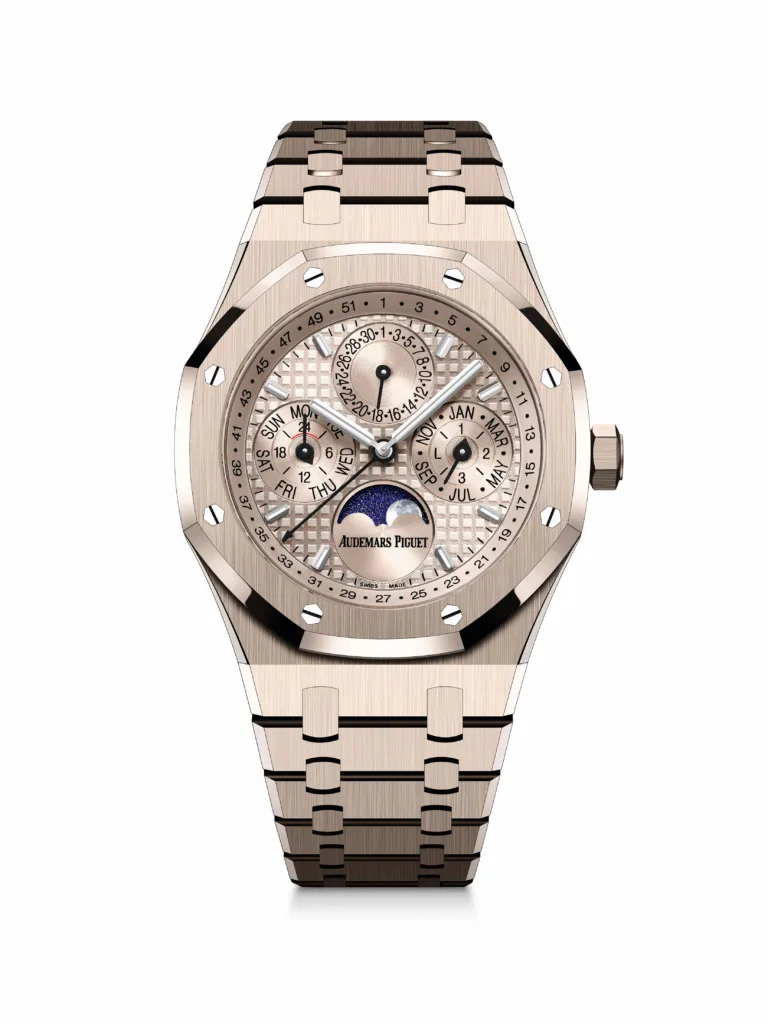
Known for ground breaking achievements like the 1921 jumping-hour wristwatch and the world’s thinnest timepiece in 1946, Audemars Piguet remains at the forefront of innovation. Its latest 2025 release, the Perpetual Calendar Royal Oak, is available in stainless steel with a blue Grande Tapisserie dial or an 18-carat sand gold case with a matching dial. This timepiece integrates all perpetual calendar functions into a single thin layer, with all adjustments done via one crown.
Images supplied.
From Harper’s Bazaar Arabia April 2025 Issue.