

Why Oud Is One Of The World’s Fastest Growing Little Luxuries
Oud is the fragrance world’s liquid gold, steeped in ritual, heritage and emotion. But now that more perfumers are embracing ai, how will technology impact something so human?
I can’t remember a time when oud didn’t scent my world. From incense and hair perfumes to oils, oud has long been a commanding base note – both familiar and endlessly varied. In the Middle East, it has transcended a mere scent to become heritage, identity, connection, and community. It’s cliché, but it’s really one of those things that makes a home, a home. In the Middle East, it’s become a ritual – woven into weddings, Eid celebrations, prayers, and daily life.
Derived from infected Aquilaria trees, oud is considered liquid gold. A high-quality kilo of it can sell for up to $100,000. In the Middle East, expert market research predicts that the fragrance market will be worth $7.21 billion by 2032. It is one of the fastest-growing luxury categories: in Saudi Arabia alone, online fragrance sales doubled between 2017 and 2020.
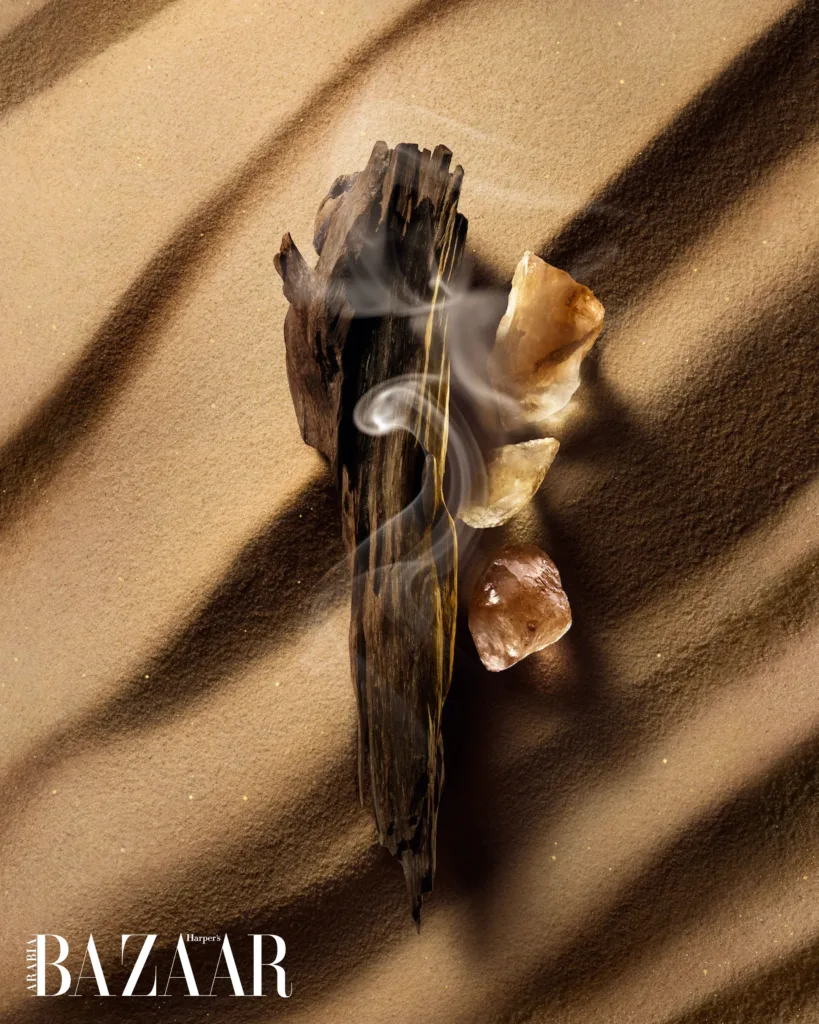
This blend of memory, ritual, and identity is what makes oud more than just a luxury product. Nadia Benaisa, founder of Les Sœurs de Noé, tells us, “Storytelling is essential – it is what links the personal to the universal, and the past to the present. Oud is never just an ingredient; it becomes a story to tell, a tradition to pass down.”
But despite its rich history, oud is entering a new era with the rise of artificial intelligence. Not because AI can create oud – we’re not there yet – but because fragrance houses are beginning to employ it to influence how they source, understand, and share oud with the world, keeping up with the rest of the beauty industry where AI technology is driving
rapid innovation.
Fragrance has always been in the hands of the perfumer. It is considered an art form, a deeply personal journey the ‘nose’ shares with others. However, the use of AI in fragrance has already begun. In 2017, IBM and Symrise created Philyra, an AI system designed to sift through millions of scent combinations to suggest new blends. Other fragrance houses, from Prada to the US-based Osmo, are experimenting with similar tools to explore uncharted ingredients or refine familiar ones. Applied to oud, this means AI could help predict demand, map ethical supply chains, and even imagine how the resin might pair with other notes before a single bottle is crafted. AI is offering a new lens through which to understand fragrance.
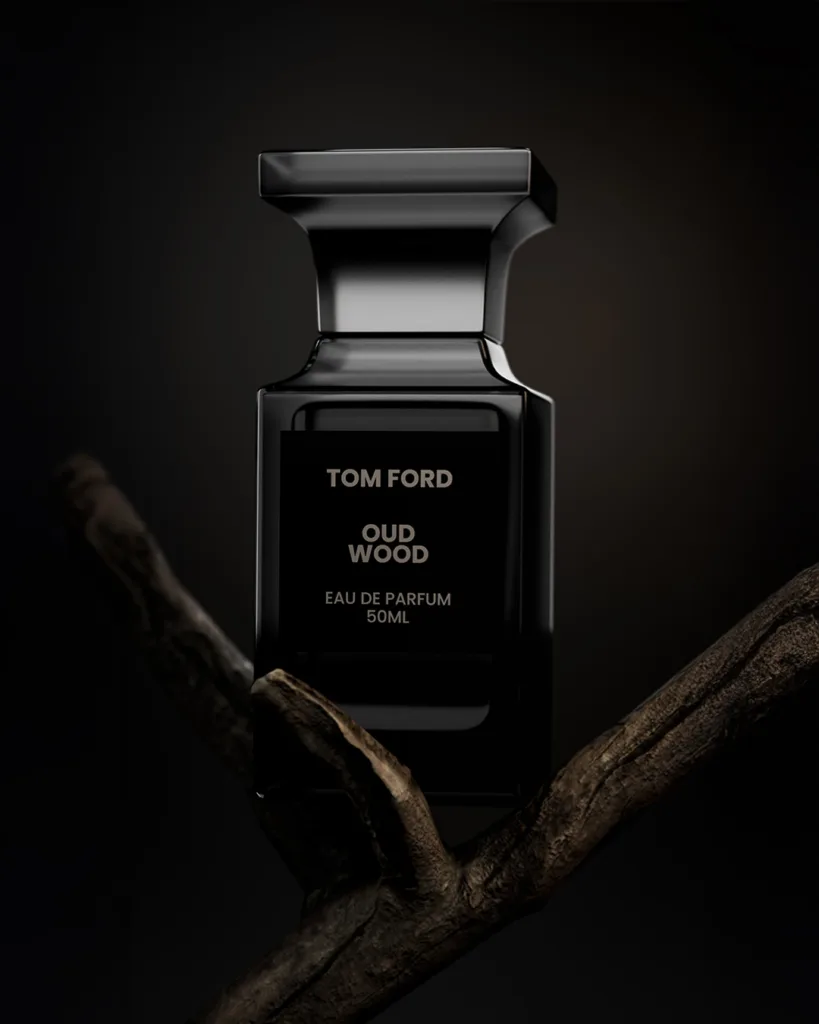
Veronique Gabai-Pinsky, former CEO of Vera Wang and global brand president at Estée Lauder’s fragrance division, is the master behind some of the world’s most famous perfumes. For her, oud remains resistant to reduction. “The material is magical, intriguing, and quite unique. It is very deep, a bit pungent, a bit animalic, very warm, very strange at times. For a perfumer, it is an ingredient to learn slowly, and appreciate more every day,” she explains. While she recognises AI’s analytical power – “AI can help us classify facets of oud, from amber to rosy, animalic to spicy, by mapping its many molecules and the sensations they evoke” – she remains sceptical of its limits. “Associating ingredients is a delicate process and as you refine towards the perfect blend, the nuances are very thin but make all the difference in the world. Add to this the chemistry with skin, which is purely unique and magical. That is what influences the note’s diffusion and the sillage one leaves behind. I think AI will help us improve on existing accords and rough drafts. But I doubt it can be replaced.”
Tomáš Ric, founder of the Czech perfume house Pigmentarium, shares a similar caution. “Oud, like many natural materials, carries centuries of tradition and symbolism. That depth can’t be replicated by algorithms,” he tells Bazaar Arabia. “But AI can help us work more responsibly: by forecasting demand, improving transparency in sourcing, or reducing unnecessary pressure on nature.” For Tomáš, the conversation is not about replacement but coexistence: “The real future lies in this dialogue – between a traditional craft and new technology – so that traditions like oud distillation can continue to live on in a sustainable way.”

Aamna Lone, a certified fragrance expert, echoes this balance, pointing to the latest academic research. “Based on current research in the paper Smell Technology: Advancements and Prospects in Digital Scent Technology and Fragrance Algorithms by Sinha et al., they speak of AI-based outputs that can help predict odour profiles. AI could be an ally by predicting odour profiles, allowing producers to avoid harvesting entire trees that don’t yield desirable fragrance profiles. However, there needs to be a golden means in ensuring AI supports sustainability without displacing the people and traditions central to oud’s heritage.”
Within this region, consumers are putting sustainability at the top of their priorities and fragrance houses are taking note. Leading fragrance brands such as Ajmal Perfumes and Abdul Samad Al Qurashi are introducing initiatives to protect Aquilaria species in Asia. The need for such measures is urgent.
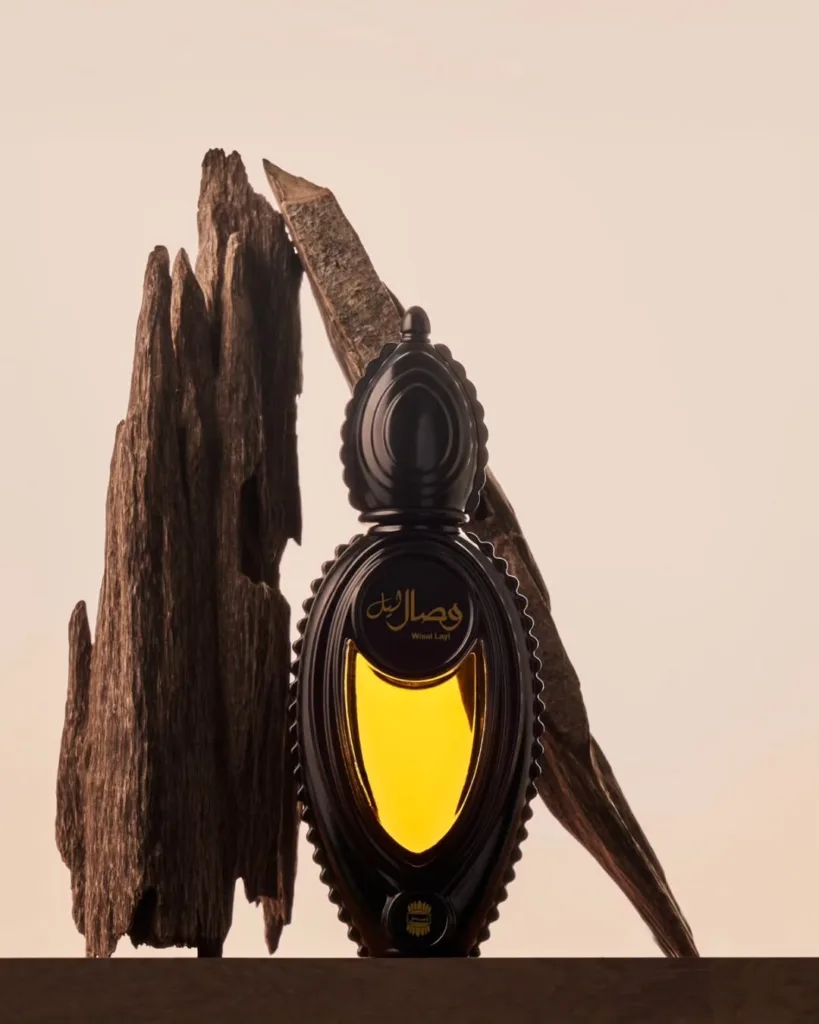
According to the IUCN Red List, several Aquilaria species are now threatened by overharvesting and illegal trade. Here, AI could be transformative. It can support sustainability at every stage of production: identifying demand patterns to prevent overharvesting, analysing environmental impacts to guide decision-making, and even suggesting greener alternatives when raw materials are scarce. AI tools are also being used to evaluate packaging choices, helping brands minimise their environmental footprint.
Still, questions remain. Oud’s beauty has always rested in its variability – each tree yields oil with a slightly different profile, shaped by soil, age, and climate. AI, on the other hand, thrives on consistency, prediction, and eliminating irregularities. Could its growing influence risk erasing what makes oud unique? Among perfumers, however, the mood leans towards curiosity rather than fear.
The idea of an algorithm guiding something so soulful can feel reductive. Yet the urgency of protecting Aquilaria trees cannot be ignored. If AI can help forecast demand, trace illegal trade, and make harvesting more sustainable, then perhaps its role is not dilution but preservation.
The essence of oud – its weight in memory, ritual, and identity – lies beyond the reach of any algorithm. What AI may give us instead is the possibility of a future fragranced with oud.
Images created using AI
From Harper’s Bazaar Arabia October 2025 Issue.